Lockwood & Co.: Interview: Joe Cornish
Joe Cornish’s latest series, Lockwood & Co., brings Jonathan Stroud’s YA series to the small screen. Set in an alternate world where The Problem means that ghosts are real and […]



Joe Cornish’s latest series, Lockwood & Co., brings Jonathan Stroud’s YA series to the small screen. Set in an alternate world where The Problem means that ghosts are real and […]
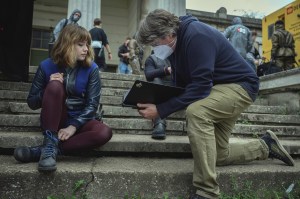 Joe Cornish’s latest series, Lockwood & Co., brings Jonathan Stroud’s YA series to the small screen. Set in an alternate world where The Problem means that ghosts are real and can kill if they touch you, it stars Cameron Chapman, Ali Hadji-Heshmati and Ruby Stokes as Anthony Lockwood, George Kerim and Lucy Carlyle, teenage ghost-hunters who battle deadly spirits…
How did you first hear of Lockwood & Co.? It sounds like you’ve had this on your radar right from when the rights became available for the original movie idea.
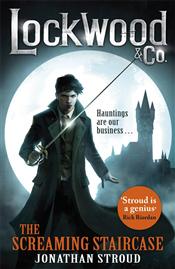 Yes, we came across it when the first book came out. It caused quite a stir, especially amongst movie studios and production companies. We tried to get the rights to it but the rights were snapped up by a big Hollywood studio. So we went off with our tail between our legs for ten years and made other things, and in that period Edgar Wright, Nira Park our producer and Rachel Prior, a close colleague all formed a production company called Complete Fiction who produced Edgar’s movie Last Night in Soho and his documentary about the band Sparks. We were looking for material to try and make our first TV show with and lo and behold there were now five Lockwood books. The movie had never materialised so we thought, ‘Well, this is our perfect chance to try and snap them up.’
I remember while I was on post production on my film The Kid Who Would Be King I had a long phone call with Jonathan Stroud about the books and how much I loved them and how much we would love to develop them. Then we made this deal with Netflix and now here we are with the first season launching.
What is it about them that appealed to you personally?
I think they are incredibly compelling, I think the world building is ingenious.
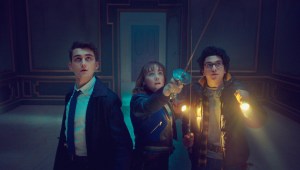 I love ghost stories anyway but the idea that ghosts can kill you by touching you seems to me completely novel and that’s a pretty amazing thing to come up with, such a novel core idea after hundreds of years of ghost stories. And then, on top of that idea, so many other brilliant ideas: that all these base metals can repel ghosts, that these ghost hunting agencies are established by adults that employ young people, the idea that culture and industry would change because of that.
It’s the sort of world building I love, where you just really have one idea, and all the other ideas organically develop out of it – and suddenly you’re in a world that is dramatic and frightening and exciting and satirical, in some ways, and this sort of brilliant reflection of our own.
So I love the cleverness, I love action and adventure, I love ghost stories and I love the characters. Lockwood, Lucy and George are really brilliant compulsive characters with this really addictive, conflictive, affectionate triangle between them.
They bounce off each other beautifully and you had to have that central trio right. Were you doing chemistry reads with different actors together? Who came first of the central three?
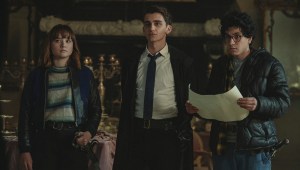 Ruby came first: she was among the very first set of audition tapes we looked at. Her character Lucy Carlyle has a talent called ‘the touch’ so she holds objects and she can feel the psychic emotional resonance of them. We used the audition scene from the first book, which is a very famous sequence where Lucy first turns up at their offices and does these tests for Lockwood and George. We used that scene for the auditions and we just believed that she was psychic. We believed that she was feeling something from these objects she was pretending to hold and we believed they were affecting her emotionally. But weirdly, the shot in the finished show when it pushes into a medium close up of Lucy, is not dissimilar to the shot of her on Zoom in the audition. I think she’s so brilliant in the show and I just believed from the beginning that she was psychic. I think she might actually be psychic, as far as I know.
So she came first, Ali came second. That was difficult because all the characters in the books are described in quite a particular way and we started out looking for actors who fitted the visual description of George in the books. We found a bunch of young actors who looked like him but they weren’t him, they weren’t right, they weren’t George. They didn’t have that very particular intelligence, fastidiousness, awkwardness, passion, irritability – all those things that make George so unique in the book, and it wasn’t good enough for us to have the look but not the character. So Ali came in, who doesn’t necessarily look like George in the books but that doesn’t matter because he encapsulates George in every other way, which is far more important.
We were so relieved when he came in, he was a little bit stoopy, a little bit chubby, his trousers were too short. I think he’d dressed up deliberately to make himself look a little bit like a bit of a reject, because in reality he’s a pretty canny customer. He’s a very wonderful, confident, clever young man but he’s an amazing George and he just encapsulated the feel of the character, the personality of the character so brilliantly.
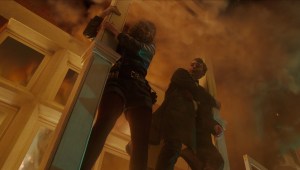 Then Cameron came at the absolute 11th hour. We really thought we were in trouble, actually. We had to start stunt training and we had to start costume fittings and we were at absolute 30 seconds to midnight, in terms of the countdown clock. So we went back and looked at all the audition tapes. A lot of actors auditioned during Zoom, during Covid. So they were at home, they were in isolation, their little brothers and sisters were reading the other parts, they looked kind of dishevelled and I think we just missed Cameron the first time round. We didn’t see it. But luckily we went back and we looked at him again and it was like the Ruby Slippers in The Wizard of Oz, like ‘He’s been there all along.’
And yes, we got all three of them in, we read them together, we did chemistry reads. In fact, as soon as we had Ruby, we read all our potential Lockwoods with Ruby and then we started reading all our potential Lockwoods with Ali, so I think Ali and Ruby thought, ‘Hmm, either they’re exploiting us or we’ve got the part!’
But this was all during Covid so it was weird and wonderful just for us to be mixing with new people. This was 2020.
When you were scripting or overseeing the scripting, how much was the remoteness involved with filming during Covid a consideration? Because looking at the final version, OK, some of the blocking you’ve got them slightly further around the kitchen than you might have done, rather than them looking over each other’s shoulder, but other than that it doesn’t look like it was that much.
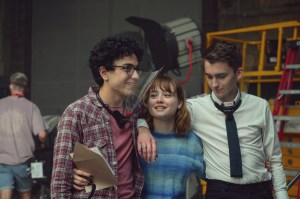 To be honest Paul, that’s not the case. We stuck to the rules very closely but everything on camera is exactly what we would want it to be and I’m very proud that this is exactly the show we would have made had there been no Covid.
We were all really lucky to be working during that period, and the show is packed full of extras and stunts and action and people rolling around fighting on the floor and close scenes with romance in the air but no, there was nothing we couldn’t do, really. We had to be a little bit fleet of foot sometimes if somebody went down with Covid in a department – there was a day when we had no grip equipment so we had to completely rethink an action sequence – but you have to do that anyway to make films and television because you’re always just dealing with the situation on the day. Part of the job is to be able to think on your feet and adapt to any situation.
American director Jesús Salvador Treviño’s an old friend and he was the first one to say to me ‘No plan survives contact with the enemy’ and when you’re directing, that’s precisely what happens.
That’s one of the really exciting things. When I started out, I thought I had to storyboard everything to the nth degree and you definitely have a plan, but one of the exciting things is the chemistry on the day and just standing on the set with the reality of the people and the objects and going, ‘OK, well… there’s a better way to do this.’
In terms of the look of the show, the appearance of the ghosts reminded me of the sequence at the end of Raiders of the Lost Ark where the ghosts appear to the Nazis and then turn nasty but also, that stunning moment from Ghostbusters in the New York library. Were those influences? Am I seeing things that weren’t there?
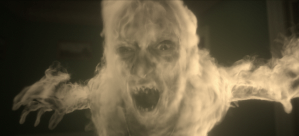 Absolutely. When I saw Raiders of the Lost Ark at the Odeon cinema in Streatham, in those days you just bought a ticket. It didn’t matter if the film had started or finished: you just bought a ticket and the film might be halfway through when you walked in. So I bought a ticket – on my own, I would have been twelve or so – I walked in and it was the last fifteen minutes of the movie, so I picked up enough of the story to know that whatever was in that box was terrifying and critical. I heard Indiana Jones say ‘Don’t look at it Marion, don’t look at it!’ And I was like, ‘Oh shit, I’d better not look at it either.’ So I closed my eyes, just like Indy and didn’t watch, I just heard the sound effects and didn’t watch what came out of the box. I only uncovered my eyes when it had all calmed down, then the movie ended and it started again… and man, that was the most exciting way to watch Raiders, having heard but not seen the ending. I felt like I was Indy, I felt like I’d been in some sort of interactive version of the movie. And there is a moment in the final episode which is a very direct homage to Raiders. The Library ghost scared the socks off me when I was a kid. I thought, ‘This is supposed to be a comedy, this isn’t funny.’
I loved that period in VFX when everything was still in camera to one degree or another. When everything was optical and it was all puppets and water tanks and light flares and, everything was still photographic so they kind of looked real.
 There’s a tangibility that period’s effects had and that this very definitely also has. I think it increases the sense of peril… Was that very much a conscious note to the effects houses, to go with that? Because there’s so many different ways of doing ‘a ghostly figure comes towards you.’
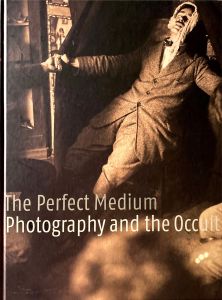
Yes, we definitely wanted that. We went back to Victorian spirit photography. There was an exhibition years ago in London called The Perfect Medium which was a massive showcase of late 19th century Victorian spirit photography. I have the catalogue at home, of these extraordinary pictures of women vomiting ectoplasm and double exposures and dead relatives appearing behind people’s shoulders. They’re all photographic anomalies that we understand now but back then they thought they were discovering a real new science. So we used that for reference, we used Cocteau’s La Belle et la Bête – Beauty and the Beast; we wanted to make ethereal beautiful, simple ghosts really.
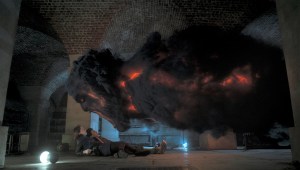
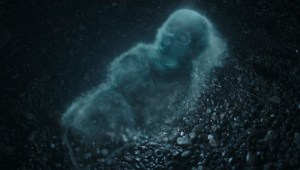
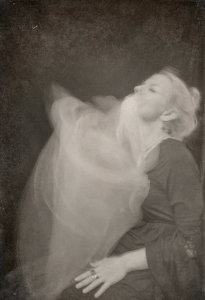 The idea is they’re all made out of ectoplasm, they’re all made out of smoke, but that rule means you can have different densities of smoke, different colours of smoke, different levels of turbulence. You can have a thin suggestive wisp or a fully formed detailed human or you can have what looks like a big tyre fire of angry volcanic smoke. I was excited by that idea because it give you lots of permutations but it also gives you a set of rules to work with, a unity of design.
What was the biggest challenge for you?
I think the challenge for me as a writer/director was working with other directors and letting go. I didn’t really know what to do: half of me just wanted to be standing next to them and backseat driving the whole time!
 I’m sure that would have gone down well.
Well exactly. So instead, I just really backed off. I would visit every few days and really I just let them do their thing and then when they delivered their first cuts, I was able to come in and help them refine the cut and help with the VFX and the sound and the music and the dialogue re-recording.
That was a new experience for me: usually I’m the guy pm the other side of the table where the producers are going ‘Well, wouldn’t it be better to do it this way?’ and I’m going, ‘No, this is my vision!.’ But now, I’m the guy going, ‘Well, wouldn’t it be better to do it that way?’
I think that’s been really good for me and I will be less possessive and less fundamentalist about my vision because I now know how much collaborative input can actually help something. If you weren’t there on the day, you sometimes have a more objective view of the material than if you were.
 There’s obviously always times where you wish that there was some coverage of something that you would have got but they didn’t.
And also, vice versa: there’s sequences that I go, ‘Wow, I wouldn’t have thought of doing it that way.’ There’s a whole sequence in episode 4 around Bickerstaff’s grave that Will does which is sensational – the way he moves the camera and glides from character to character is really impressive
What’s the situation moving forward? A season 2, would that take some time to get into production or are you at that point of ‘If they said yes, we could go quite quickly.’
We could indeed go quite quickly. I mean, that’s kind of what you do, we are working on the scripts for season 2. But there’s no foregone conclusion. The giant Netflix hivemind, the huge computer brain… what was the computer in Blake’s 7 called?
ORAC.
That’s right, ORAC. Netflix’s ORAC is blooping and bleeping and watching closely over the next few weeks, I think.
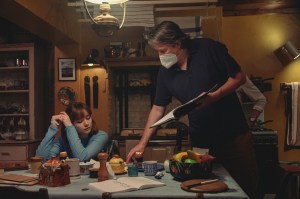 My daughter – who’s reviewed the books for the site as they’ve gone along – has thoroughly enjoyed the series…
Tell her I really appreciate that she enjoyed it and we are very cognisant of the fanbase that the book has. We consider ourselves part of it and it was important to us to get it as good as we could for the fans of the books.
Lockwood & Co. is available now on Netflix; click here to read our other coverage
 Doctor Who News Star Trek News
 Sci-Fi Bulletin: Exploring the Universes of SF, Fantasy, Horror and Spy-fi!