Humans: Feature: Series 3 launch
The stars and writers of Channel 4’s hit sci-fi drama Humans launched the third series at the channel’s London head office, and we were among the lucky members of the […]



The stars and writers of Channel 4’s hit sci-fi drama Humans launched the third series at the channel’s London head office, and we were among the lucky members of the […]
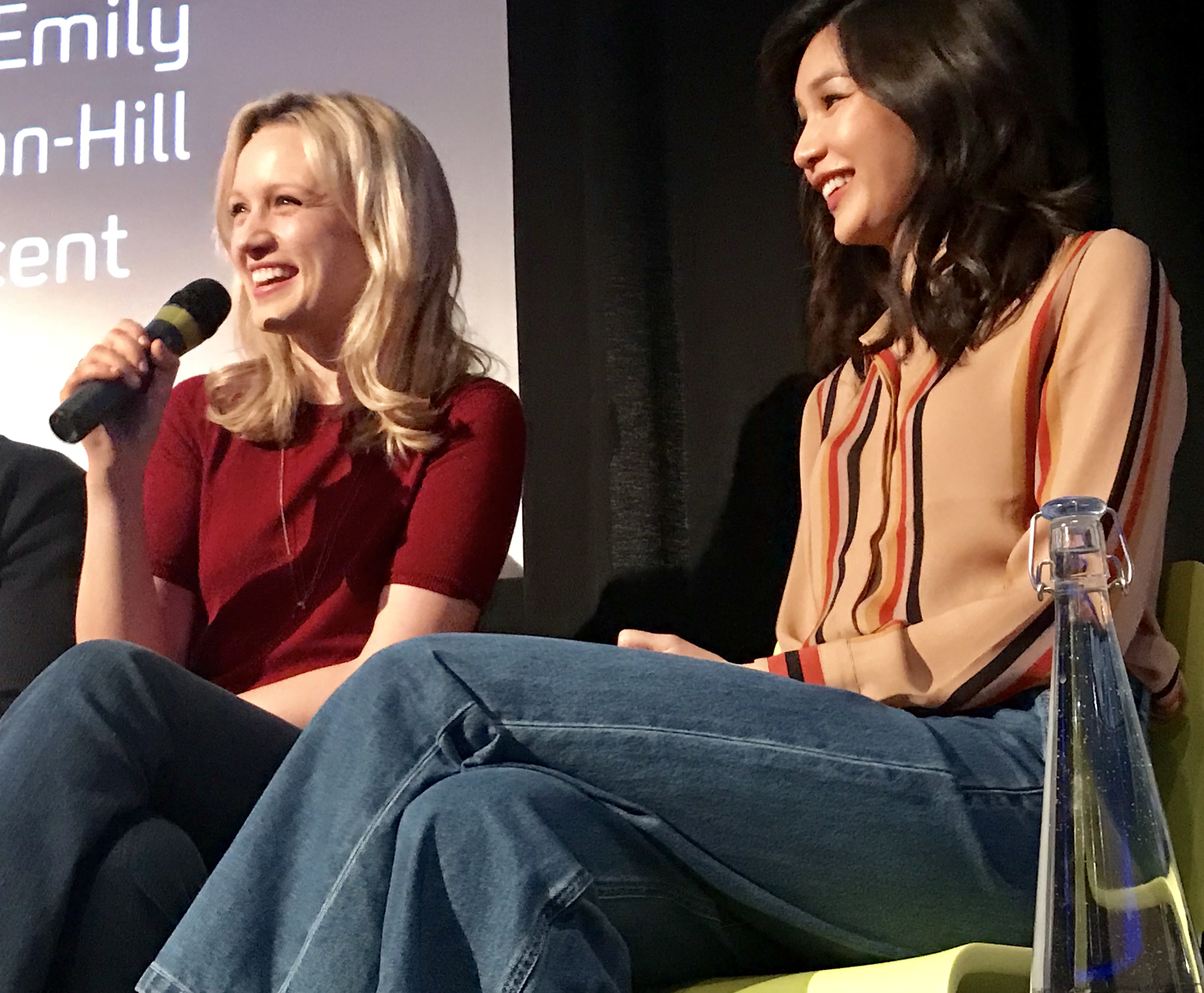
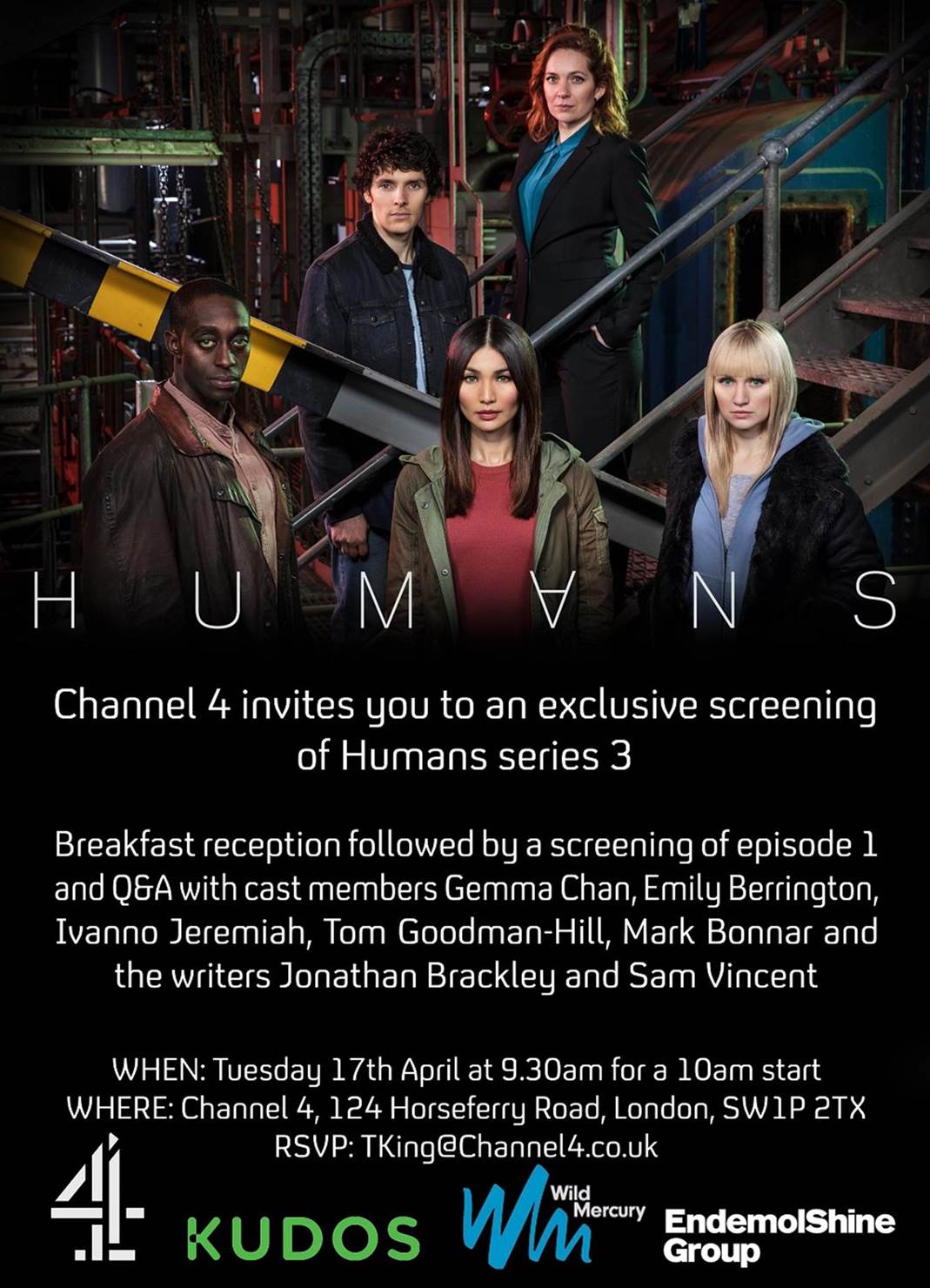 The stars and writers of Channel 4’s hit sci-fi drama Humans launched the third series at the channel’s London head office, and we were among the lucky members of the press to watch the first episode and speak to the creatives.
Sam and Jon, when you came up with the idea of Day Zero at the end of the last series – this mass awakening – did you know exactly where you were going to go next?
Sam Vincent (creator/writer): No. We knew that by bringing all the synths into consciousness we’d created a very different world and wanted to use this idea to explore and do something fresh. Series 1 was about two very different families, Series Two 2 about their relationships, and Series 3 is about society and culture. It’s political and about how we as a society get to grips with a genuinely new, intelligent life-form around us.
It’s a seismic change, but also follows a massive loss of life. Did you have to sit down and work out what the real world ramifications would be?
Jonathan Brackley (creator/writer): Yeah, that’s the way we’ve approached all the series so far, trying to examine what would really happen in this world. We try to put our heads in the space – if all these millions of synths were conscious then there would be accidents, which would lead to a huge loss of life. And we had to work out what those numbers would likely be.
It’s another step into fantasy, away from our real world, so how important was it to keep bringing it back to what’s real and what’s relatable?
Brackley: I think it’s essential. It’s part of the reason why the show has been successful – it has a very grounded way into what is essentially a sci-fi show. We come in on that ground level in a very domestic, suburban way, and even if this series pushes the show to the limits of its sci-fi-ness, it’s essential that we always take it back to real people and families
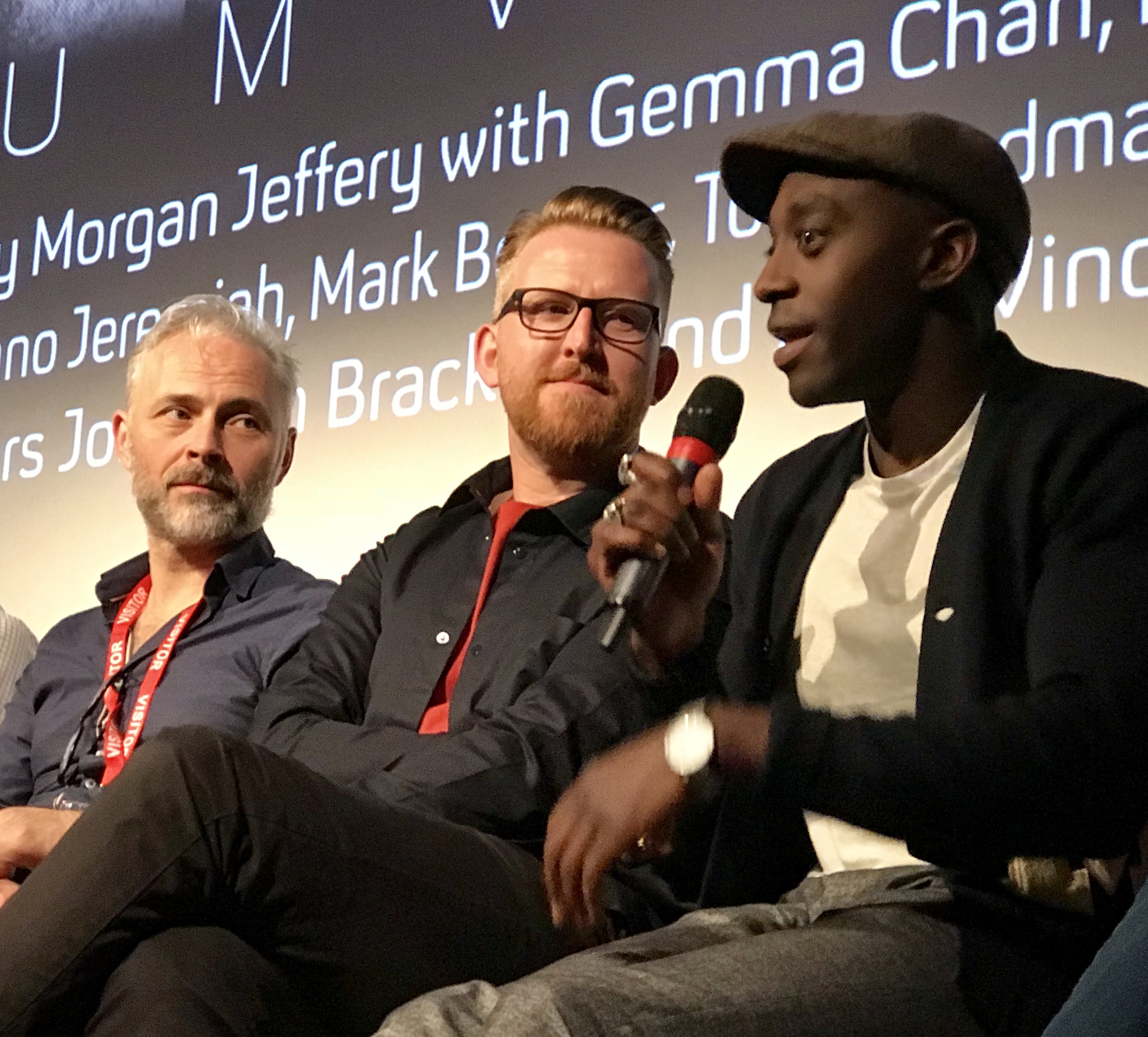 Tom, the Hawkins clan have split. How is Joe coping out there on his own, away from his family?
Tom Goodman-Hill (Joe Hawkins): As usual, Joe makes a decision without really thinking it through and then has to live with the consequences (laughs). He doesn’t really think in political terms, he thinks more about what’s good for him and his children. He is forced into a position where he has to think about what the implications of Day Zero are for him and for the future of his children. So although he’s trying to put a brave face on it and say it’s all great, providing an alternative home and upbringing for his children, he’s got to think about what all that means for the future.
He does seem to have taken to his new life as a greengrocer.
Goodman-Hill: He loves it! Who wouldn’t? The simple life.
Although he’s away from the main Hawkins family, he does find a new family in this series.
Goodman-Hill: Yes. As you can imagine from [a reveal] in the first episode, inevitably Karen is going to be spotted, and he’s going to be pulled into a situation himself, facing the decision of whether to protect two things that he considers are dangerous.
Having Joe and Laura go through so much in the first two series, why did you make the decision to have them split this time?
Vincent: We put them under so much pressure in Series 2, so we thought this was a great opportunity to not only do something new with the characters, but it felt true to follow through on that. Division is a huge theme of the third series and we wanted to mirror that in the family.
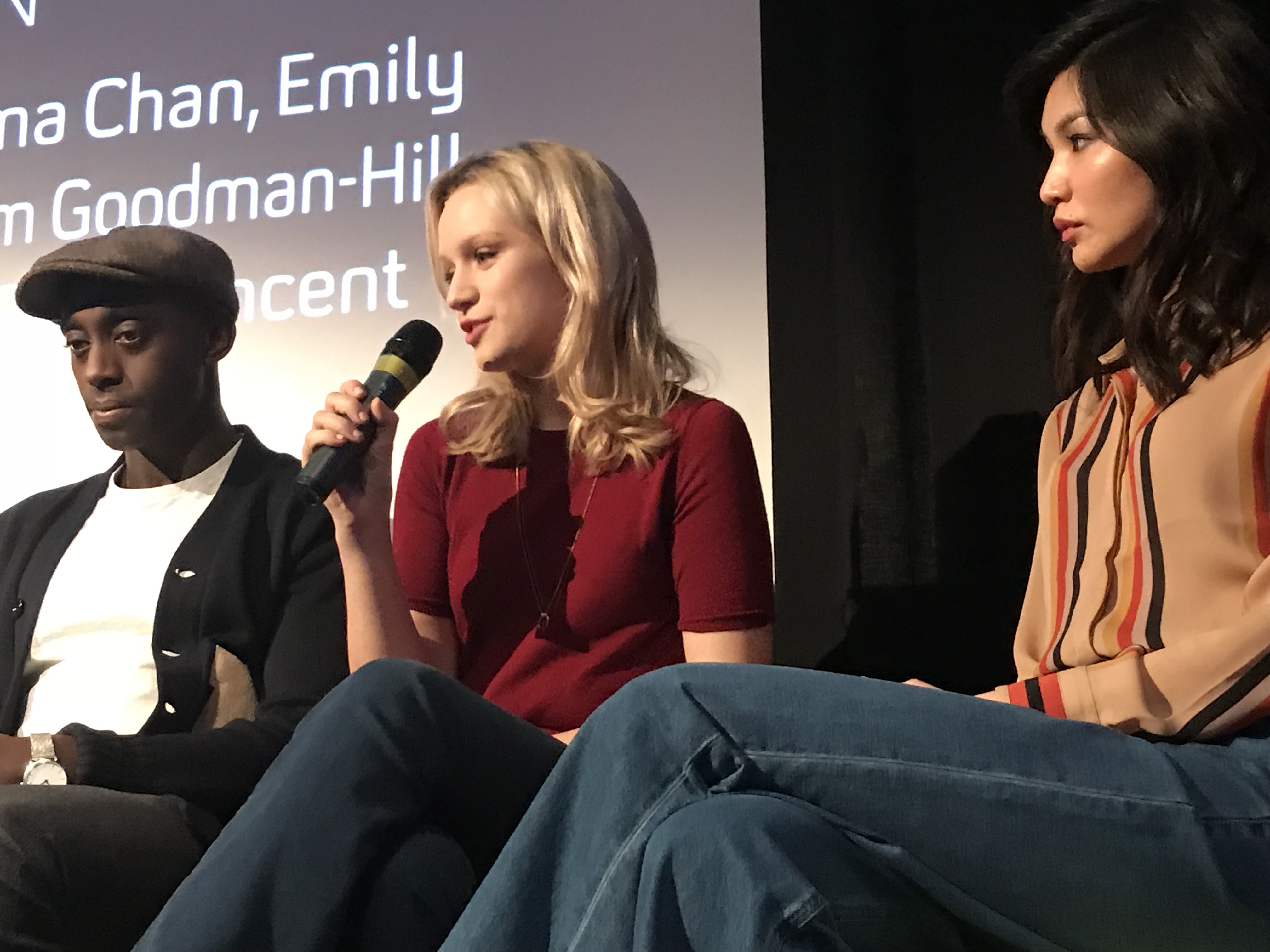 Emily, when we begin, Niska has removed herself from the synth cause. Why do you think she has gone down that path?
Emily Berrington (Niska): I think that at the end of Series 2, Niska was very much part of the decision to release the consciousness code and then the aftermath of that has been I imagine quite traumatic for her, that things haven’t gone quite the way she hoped they would, so she’s focused on the thing that makes her happy, her life with Astrid. She has ended up living this quite domestic, secluded life which is very different to anything she’s experienced before. That’s where she has found some happiness. But as you saw, it doesn’t take much for her to be back fighting the fight again.
Her happiness is quite violently disrupted. How was it filming that bombing scene?
Berrington: It was unbelievable. We were in Shoreditch with this street blocked off and there was this one explosion that could happen – once it had gone off then that was it. Everybody was on set – all the producers were there. But when it happens it was incredible, I hope they warned everybody because it was pretty intense and loud.
Ivanno, we see Max thrust into the role of somewhat reluctant leader. Are we going to see a more determined, ruthless side to him?
Ivanno Jeremiah (Max): There couldn’t be any more things that go wrong under his leadership. Not only is his brother, his love, Leo [Colin Morgan] unconscious, there are people who disagree with his peaceful stance. Many hard decisions do need to be made.
What can you say about Leo’s fate without spoiling too much?
Jeremiah: He’s a strong lad! There are no more synthetic parts in his body after the events of Series 2. He’s a very different person – so let’s see how that pans out.
Max is so innocent. Why do you put him through the wringer so mercilessly?
Brackley: We always imagined from the first series that in a way Max is the most sensitive of all the synths. He’s the most emotional in many ways and feels things that little bit more than everyone else. Because of that he felt like the prime person to be put in charge of the fate of the other synths and to make all the decisions for them.
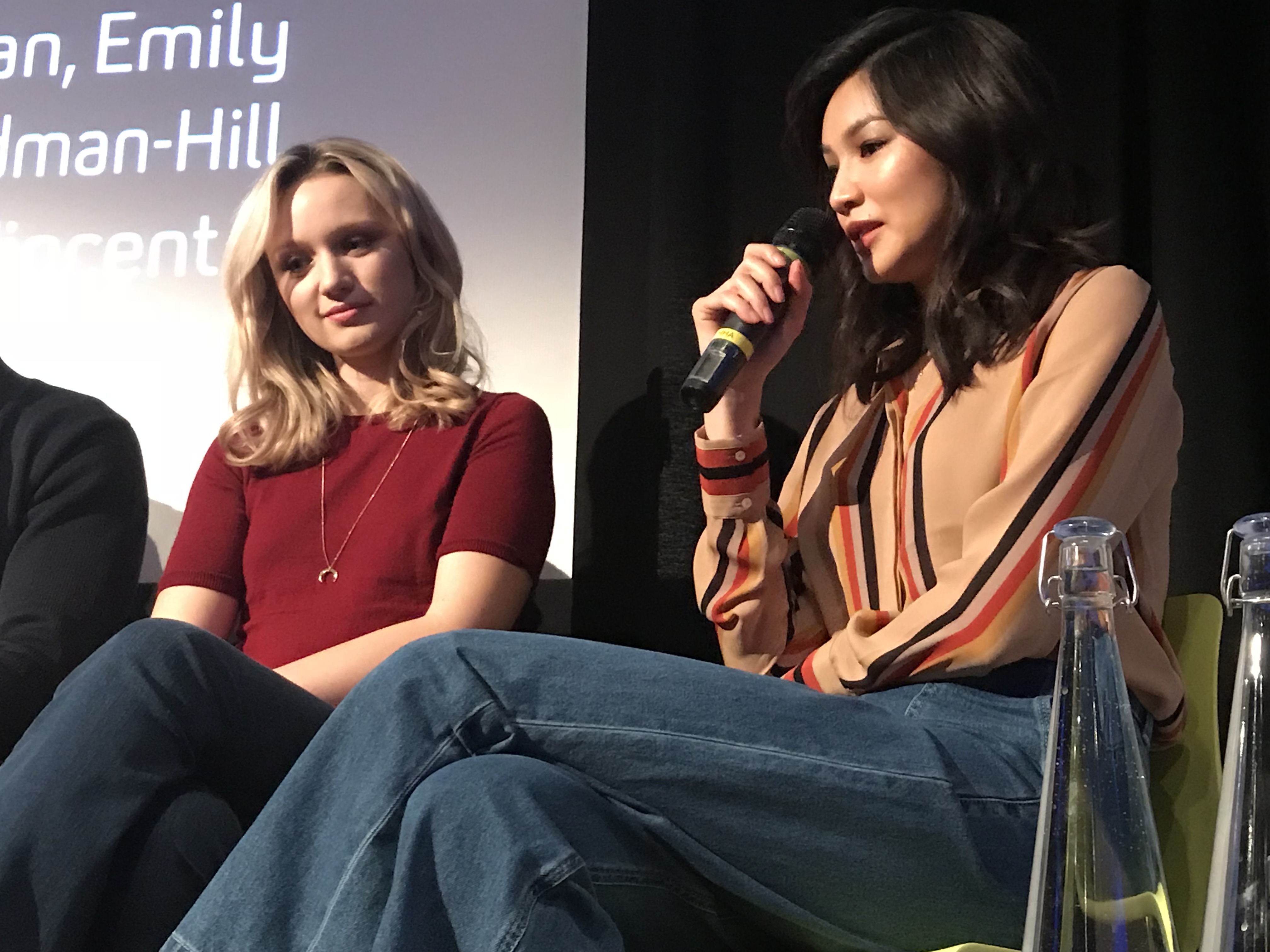 Gemma, Mia has now stepped up to become synth spokesperson what her state of mind as the series begins in the aftermath of Day Zero?
Gemma Chan (Mia): She definitely feels a lot of guilt and responsibility for what has happened because the reason they released the consciousness code was to save her life really, so that’s something that weighs heavily on her and this default position of being the face of the synths: she’s struggling with that, she knows that they need to change tack but she doesn’t know what that is. You’ll see in episodes two and three that goes off on a different track, a different arc.
There’s a division between her and Max eventually, her and Laura as well. How do you fight for the rights of your people? Do you do it within the law, or is civil disobedience right? She doesn’t know what approach is right and is weighing up all the options and goes off in a direction that isn’t obviously expected.
We saw her open up last series and have her heart broken.
Chan: She definitely hasn’t had closure over that whole situation with Ed, the first human that she was very vulnerable with and betrayed her. Ed does come back this series so you do get to see some sort of resolution to that storyline, which is satisfying.
For all the synth actors, I imagine it must be difficult to convey how you’re feeling without showing too much emotion. Is that something you’ve nailed now in the third series or is it a continuing challenge?
Jeremiah: It’s always a bit of a dance, being challenged with a very emotional scene and not being able to emote. It’s quite a cool challenge – it’s all about economy. It’s quite an interesting way to approach a character rather than you would with any other human.
Chan: I still find it difficult.
 Mark, we got a break of glimpse of you in the trailer, but you don’t appear until episode two. What can you tell us about your character?
Mark Bonnar (Neil Summer): Neil Summer is a behavioural scientist who is on the Dryden Commission. He’s attracted to Laura – it’s a mutual attraction – and they get on really well. But he has a difficult past in that his baby died in Day Zero. He is a tie to everything that is going on, whether wittingly or unwittingly. His journey is one of realisation.
Tom, how are you feeling about this new guy on the block?
Goodman-Hill: Again, when Joe went to Altringham he thought he was just providing a second home to the family, so he’s not particularly pleased when Neil comes in on the scene.
Are we going to see a rivalry play out between these two?
Goodman-Hill: You might…
Vincent: I have to say that Mark and Tom gave us one of the funniest moments ever in Episode 5, which is just an incredible treat.
In the first series it felt like humanity was the threat, and in Series 2 there was a great synth villain in Hester. Who is the real villain in the third series?
Goodman-Hill: I think that the villain is the situation, which is epic, huge and far-reaching. What’s great is that it feels completely real, more than ever, now that the real world is bedded in you suddenly stop seeing the synths and see the situations that they are in.
Does it feel like some of the themes are more relevant now than when the show started three years ago?
Vincent: Yeah. We try to be relevant a year in advance! As it turns out, division is still a thing. If there’s a villain of the piece it’s division. We try to be even-handed and avoid saying ‘poor little synths, look how badly we treat them’, we see the emergence of a terror cell from within, we see Joe making a convincing argument for Altringham and what’s good about rejecting synths.
Would any of the panel be tempted if Waltringham was a real deal, would you be tempted to somewhere that was entirely tech free?
Goodman-Hill: Now, more than ever.
Has this changed since you made the series?
Bonnar: It’s changed since Cambridge Analytica!
Berrington: I’ve definitely had my Alexa on mute recently.
Emily, your Niska death stare is a very formidable look. Have you ever been accused of taking that off set to put people in their place?
Berrington: That’s a good question! No, I think it’s so firmly kept on set, as that’s where all the anger and frustration that I very Britishly don’t express in real life is all stored up and released by Niska. I think it’s probably a form of unhealthy therapy in a way, being able to release it.
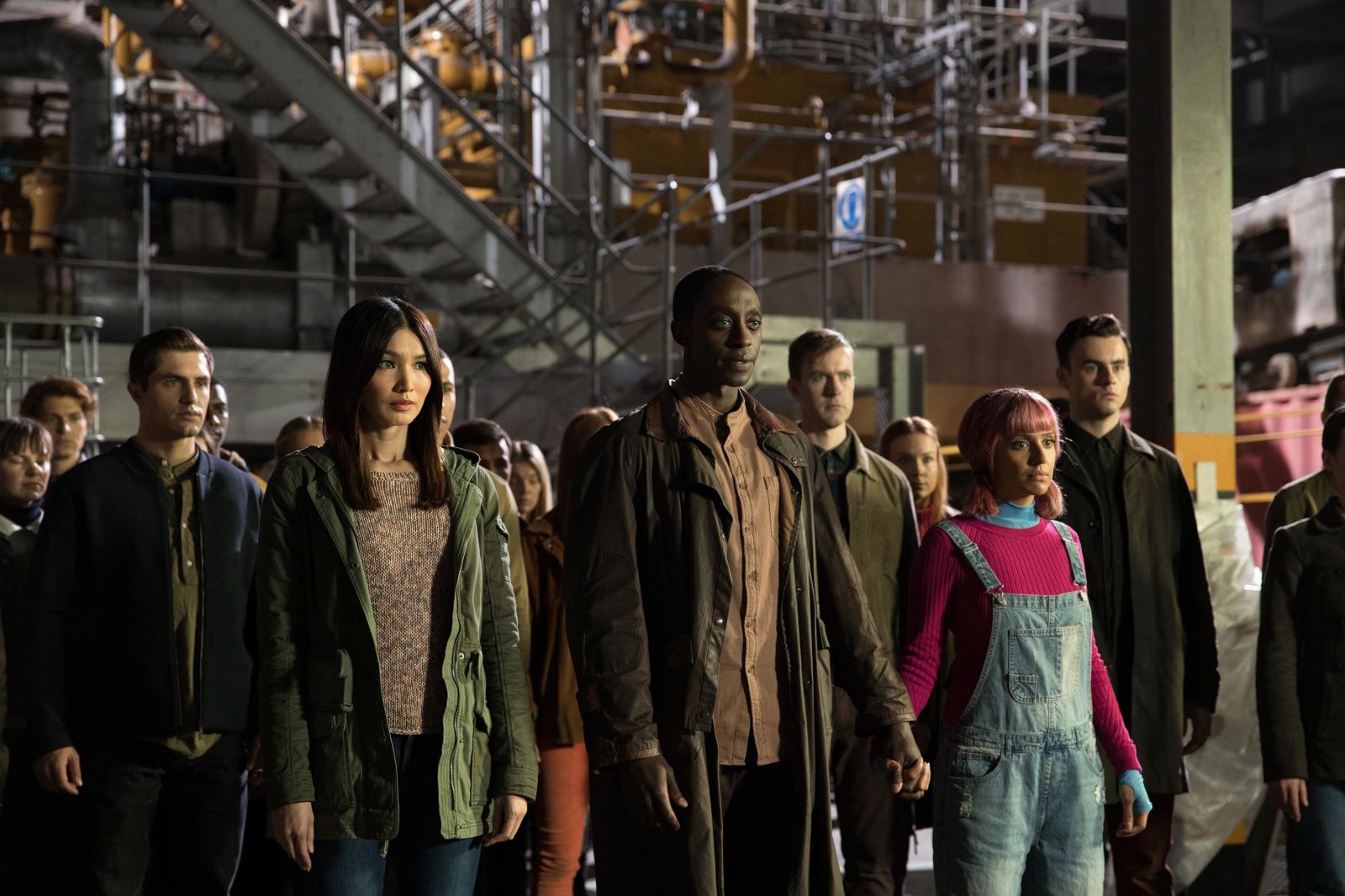 Have you found a shorthand way of physically transforming yourselves to your characters before a scene? Or do you rely on the contact lenses to help you become your characters?
Berrington: They do our eye colour in post-production, so we don’t have to worry about that. There was an experiment at the beginning of Series 1 as to whether we’d use contact lenses or not, but there’s a limit to the number of hours that you can have coloured contact lenses in, and we do shoot for very long hours. I think that when I reach the make-up chair I start thinking about being economical and not fidgeting. Limiting the blinking is one of the hardest things. Our movement director is also on set every day to keep an eye on is.
Jeremiah: I think that there is more of a freedom now considering that this is our fourth year working on this project. Having originated the movement with Dan O’Neill way back in a warehouse in London that there is now a freedom in that movement language. Once you get back on the horse you’re freed up to just focus on the emotional content of the scene.
Chan: I still have to think about it quite a lot. I find that each year has been harder, weirdly, for me. The character had changed as well in some respects. She’s more expressive now than in Series 1 where I was playing two characters. It’s a different challenge with different scenes to play. I’m not sure why it’s so hard – I think it should be muscle memory.
Do you have plans for where you’d take Humans if it was recommissioned?
Brackley: If we’re lucky enough to be recommissioned then we do have ideas. As we’re writing and developing a series we can’t help but imagine where it could go next.
Jeremiah: Indoors. Warm. Caribbean…
The first two seasons were set back to back, I just wondered how you came to the decision to take a jump in time.
Vincent: We thought they we were being clever and then a couple of weeks ago we read an article about how every series on TV is doing a time jump. We knew that when we left the second series what people would expect is to come back into this chaos and upheaval and be in that moment, but we weren’t they interested in telling our story in that time period. It was much more interesting to jump past that initial upheaval and to get to a more interesting place where things have settled down.
E very series brings back the regular characters, as well as some great new additions. What are you hoping to achieve with the new characters in this third series?
Brackley: There is a considerable amount of new synth characters, both green eyes and orange eyes, and that gives a lot of opportunity for fun and playfulness. We needed to be able show a range in the synthetic characters because there’s so many of them now. For Mark’s character we wanted a human who could be on the level of Laura, intellectually.
Goodman-Hill: What are you saying? Unbelievable…
Vincent: Because we knew that the family was divided we wanted to give Laura a new love interest really, then we had the idea to put this character into the heart of decision-making. Then it was really when we came up with the story that he’d suffered this incredible loss on Day Zero, giving him this modern extraordinary ambivalence towards synths, and Mark takes him on this journey with a few secrets and twists as well. We also get this little hint of a love triangle between the three of them.
Where is Waltringham really?
Goodman-Hill: Amazingly, Hitchin.
Mark, by night you are currently assembling a robotic boy on stage at the Royal Court in Instructions for Correct Assembly. I just wondered if there’s a bit of a ‘synthetic person’ theme emerging here.
Bonnar: Involuntarily, yes! Thomas [Eccleshare] wrote the play before Humans was even a thing. Later that year, Humans appeared on Channel 4 and he thought, ‘Oh no!’, but it’s a very different beast. When I first read it I thought it was very strange – come and see it.
As a final thought along those lines, Blade Runner and its replicants has returned, Westworld has successfully brought us synthetic humans, you’re into your third season – what’s the ongoing appeal of artificial people?
Goodman-Hill: I think it’s all about everything getting displaced. So, if you create artificial intelligence and you call it a thing that doesn’t actually exist in the world right now but is imminent, it allows you to discuss the problems that are troubling humankind, and I think that’s one of the things that brings things to the fore.
Humans returns to Channel 4 on Thursday May 17 at 9 pm.
 Doctor Who News Star Trek News
 Sci-Fi Bulletin: Exploring the Universes of SF, Fantasy, Horror and Spy-fi!