Blake’s 7: Interview: Olivia Poulet and John Ainsworth
The first box set of Big Finish’s new series The Worlds of Blake’s 7 was released earlier this week, focusing on Olivia Poulet’s Avalon. With guest stars including Sally Knyvette […]



The first box set of Big Finish’s new series The Worlds of Blake’s 7 was released earlier this week, focusing on Olivia Poulet’s Avalon. With guest stars including Sally Knyvette […]
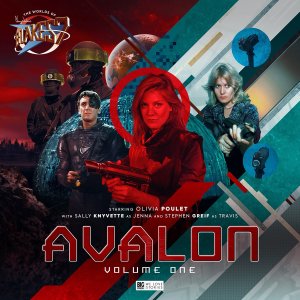 The first box set of Big Finish’s new series The Worlds of Blake’s 7 was released earlier this week, focusing on Olivia Poulet’s Avalon. With guest stars including Sally Knyvette and Stephen Greif reprising their roles from the TV series, the first three stories are set on Earth around the time that Roj Blake is being set up and sent off to a penal colony. During recording of the second set, Paul Simpson chatted with Poulet and producer John Ainsworth.
Why The Worlds of Blake’s 7 and particularly, why Avalon?
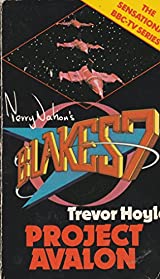
John Ainsworth: Avalon is, as the name suggests, centred around the character of Avalon who actually only appears in one episode of Blake’s 7, Project Avalon, in the first television series.
The reason we came up with this idea was a way of continuing to do full cast Blake’s 7 audio dramas without the full original TV cast, because of course Gareth Thomas passed away a few years ago, Paul Darrow more recently. So it’s become virtually impossible to have the same format as the television series in the audios which we had been doing, but we didn’t want to re-cast either of those particular characters because we didn’t think that was appropriate.
 But we thought we could maybe take a leaf out of what Star Trek and indeed Star Wars is doing now which is,: you’ve got a universe that’s been created there and you can set up adventures in different places and times and see different points of view.
Avalon was a character I thought was very good to use because we’d already brought her back, played by Olivia, in the 40th anniversary story The Way Ahead. The reason we did that then is the same reason why I think she’s a good focus for a series: Avalon shares the same sort of ideals as Blake did in terms of fighting for freedom and humanity against the tyranny of the federation. So you could still have those same concepts and explore the same ideas that the TV series had done but through a different character who’s not exactly like Blake but has a similar goal in mind.
And of course we’re very happy to have Olivia come back and play her some more.
When you did The Way Ahead what research did you do? Did you go back to the original episode or did you just work from what Mark Wright gave you in the script for that?
Olivia Poulet: Yes, mainly just from the script. They said they didn’t want an impression, more an interpretation of the character and just getting that spirit, rather than trying to do exactly what was done before.
With the new stories, we’re right back at the very beginning of Blake’s 7 so it’s quite a bit of time earlier than the character you played three years ago. Have you watched Blake’s 7? Is it a show you knew?
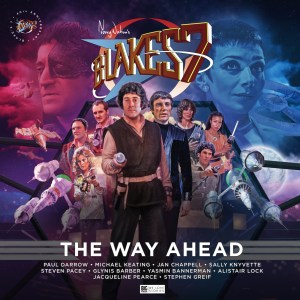 Olivia: No, it isn’t really. I hadn’t seen it. It was great when we did that first one because there were lots of the original gang, wasn’t there, John?
John: Yes, that’s right, as many as we could get in.
Olivia: That was really exciting, I met them lots of them – they talked about it so passionately and it was quite amazing to be a part of. But no, I didn’t know much about it so I’ve just approached it as a new story hence asking John lots of questions because I don’t entirely always understand what’s going on. He clarifies for me what’s gone before and what’s coming up sort of thing.
John: I think for that first one, I think you did possibly look at least a little bit of the TV.
Olivia: Oh yes I did, I definitely did watch a bit but I didn’t immerse myself in it.
John: It was more just to get a sense…
Olivia: Yes, I definitely got a sense of her tone and her spirit and a bit of the delivery but it was just not doing an impression basically.
John: No, no. Definitely didn’t want that.
How would you describe Avalon as we meet her at the start of this series?
Olivia: God…
I don’t think she’s that powerful! For somebody’s coming into this fresh, they know it’s a sci-fi show, they know it’s Terry Nation, it hasn’t got the Daleks, how would you describe your character?
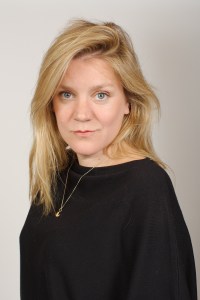 Olivia: Well, it’s been really interesting because the overriding question is of just how mercenary she is. We talked quite a lot about the difference between a terrorist and a freedom fighter and at what point you slip over from one to the other. When you’ve lost any… not a sense of morality but obviously life is quite dispensable on her journey, on her quest.
It makes her an interesting character because I think you do care and there are glimpses of… it’s not even really sensitivity so much as understanding and empathy and then at other times she’s just absolutely single minded and almost like a dictator.
It’s a complicated character, she’s definitely not entirely likeable I think, which is interesting and great. It makes her much more layered.
John: We were talking a little bit about this today: It’s almost like she’s got her eye on the bigger picture.
Olivia: She’s prepared to sacrifice what needs to be sacrificed. I guess it’s that thing of not needing to be liked which I think is such an interesting characteristic in people. As actors, as people, we spend a lot of time worrying about what people think about us and actually she doesn’t care or seem to care, at all. She just has to do what she has to do and that’s quite intriguing.
One of the real people she reminded me of a little bit is Leila Khaled, the PLO terrorist from the 70s, who of course was around at the time that Nation or Chris Boucher was creating the Avalon character in the first place. You’ve got that dedication, that utter almost telescopic tunnel vision for the cause.
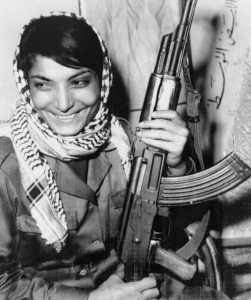 Olivia: Absolutely, I think it is borderline frightening… not even borderline. It is kind of frightening the extremes, the extent she’s prepared to go to, the lives she’s prepared to [sacrifice]. To her, it’s worth it and she’s the only one that’s going to do it, I think, is how she feels.
John: She feels responsible, doesn’t she?
Olivia: Exactly, because no one else is going to step up she’s prepared to take it all on, on herself which is kind of extraordinary.
John: Something we were talking about today is we actually know very little about her, in fact nothing about her background.
Olivia: Yes, her personal life.
John: Should we do more, I think that’s something quite interesting to investigate: what has actually motivated her, why has she become the person she is now?
Olivia: Yes, we haven’t delved at all in these six, have we?
John: That’s been quite deliberate. Steve Lyons, the script editor, pointed out today, we even sort of suggest in these scripts, which wasn’t said on television, that Avalon isn’t even her real name. It’s just a sort of code name. She’s decided to hide herself, possible to protect family and loved ones, maybe so the Federation can’t find them.
Olivia: I think it’s quite interesting because you do feel after the six episodes that you do know more about her. You know she’s let people in just enough, you do learn more about her in them, but you still don’t know the real her. She’s showing the side of her she wants to show.
John: Yes, she’s in control.
Olivia: So yes, there’s definitely more to explore, I would say.
And her relationship with Fay [played by Becky Wright], the young girl who’s helping her…
Olivia: Oh yes, that was lovely. That was interesting because we were talking about that there are moments that are almost, almost maternal and there’s a sort of protectiveness that I think probably surprises her as well. That was quite interesting, that we really saw more through playing it rather than reading it, I think.
John: In the second episode with Fay – which is the third in the first boxset – Avalon has to lie to her because Fay has such faith in Del Tarrant, who the audience knows is a Federation spy, but Fay’s convinced that he’s on their side. Avalon has to lie to her to unearth him and that’s puts a little dent in the trust that Fay has in Avalon. Which is quite sad really – it was the way it got played anyway.
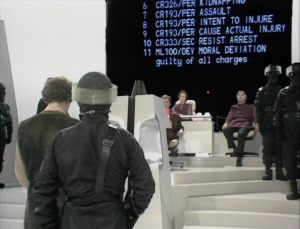 John, doing stories that are in the universe of Blake’s 7 what’s been the biggest challenge? How have you achieved a balance between the audience’s prior knowledge of someone like Tarrant and leading them on?
John: I suppose from an audience point of view, we know the truth about him so it’s when are [Avalon and her allies] going to find out or are they going to find out? What will be the repercussion of them being deceived by him? I think even in the first episode of the TV series, I think we, the audience, probably know Tarrant’s the traitor even before the rebels do and the massacre happens, I think.
So are you assuming knowledge on the part of the listener? Because obviously these are going to be mainly fans who pick this up.
John: To some degrees, yes. One of the actors asked me a question and I think I actually did say, ‘Oh the listeners will know what that means’ although I can’t remember what it was now.
You don’t want to have actors speaking in information dumps, so the characters have to behave in a credible way. Of course because they live in the domed city in the far future, they know how it works so they wouldn’t over explain things [to each other] anyway. So there is that, going for the realism side of it.
I think so long as there’s enough information there for you to understand the story and you can pick up the background colour and world, I think even if you haven’t ever watched Blake’s 7 you could listen to these and still understand what was going on.
Olivia: Yes, you’d get an element more of enjoyment and excitement if you knew the nuances and the world, probably. I think anyone could listen and still find it a good romp.
Olivia, what was the biggest challenge in playing her for you?
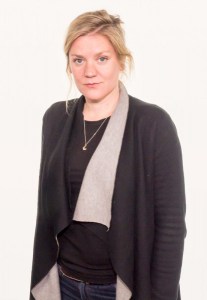 Olivia: I think it’s what I was talking about before, which is the balance between a character who’s a very, very strong decisive woman and also one who’s completely ruthless and brutal, almost sociopathic. She lacks empathy completely in some ways because to do the things she’s done you have to have stepped into some other realm slightly. To be able to gas people or shoot people but in the same breath retaining the element of truth and motivation behind it, I think was interesting.
It wasn’t so much a challenge because the writing was great and it was there on the page but I think the challenge of the character is the two sides to her.
John: I always think from a drama point of view and the audience’s, when you’ve got central characters who are doing fairly unpleasant things, at the same time you don’t want to completely turn the audience off them.
Olivia: Yes, of course.
John: You still want the audience to engage with them. Not necessarily like them, but you could end up with ‘Oh my God, they’re so unpleasant’.
Olivia: I’m not that interested in characters that want to be liked. The characters I like are things like Transparent: the writing and the characters in that, they’re all pretty much universally… not awful but they’re not trying to be liked. They’re flawed and damaged and truthful and it’s just so much more interesting to watch or listen to when someone isn’t just trying to be everyone’s friend.
So what do you look for in a script? You were saying you don’t necessarily need a character to be liked but what is it about a project that attracts you? Is it the character, is it the writing, the people you’re working with?
 Olivia: I think it’s probably elements of all of those things. I’ve been really lucky. I’ve done some really great and exciting projects with Big Finish so I know their calibre and I know the work ethic they’ve got and the production values so I know it’s going to be a good and exciting thing.
I think all the Big Finish scripts have their own unique charm and style, and so long as something’s got a good story, you’re drawn in and you don’t drift off and get bored which is obviously the worst thing that can happen in an audio, book or telly or anything.
Because I write, I think I do know what I like in writing and these have been really fun to do and pacey
John: Yes, you’ve got to keep things moving.
Olivia: It’s a different style of writing, isn’t it? You’ve got to approach writing in a really different way to do these audio dramas because nothing, obviously, can be shown to the audience and yet you don’t want to go ‘Oh look at the red cup you’re picking up’ sort of thing. It’s a sort of fine balance, it’s quite interesting.
John: You’ve written for radio drama as well, haven’t you?
Olivia: I have, yes, and I do remember that I found it really interesting because I found it so different to telly or short films because you’re giving the story and images to people in a different way. And that’s what the guys, all the script writers at Big Finish are very good at aren’t they?
John: I would hope so.
Olivia: Well, yes (laughs)
They’ve been honing their craft for some time! You did Tracks as well quite recently for Radio 4…
 Olivia: Those scripts were amazing, they were amazing, he’s brilliant, Matthew Broughton. Yes, I stepped in as the third version of this character, love it. No problem with that at all!
I interviewed him and he was singing your praises
Olivia: Oh, bless him. Yes it was a really exciting project and I was just pregnant so I was feeling unbelievably sick all the time, which was interesting in amongst being in my cupboard. She’s in every scene talking and screaming a lot but it was brilliant. It was such a beautiful radio series I think, the whole thing.
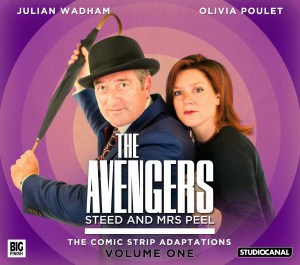
On Avalon you’re playing a part that someone else played 40 years ago and with The Avengers, it’s clear that it’s Emma Peel you’re playing. You’re not playing Diana Rigg playing Emma Peel. Do you go back and listen to or watch what the person before has done or do you feel the best way to do it is to approach from the script?
Olivia: I think probably approaching by the script because I’m never going to be able to do exactly what everyone loved about what Diana Rigg did as Mrs Peel – and the same with Avalon. I do think it’s really handy to get an essence and a flavour of it – with Mrs Peel particularly, it’s very distinctive and her tone is very clear – but actually I think you have to make your choices and go with it. Use the script and create something new, based on something old.
I just think it’s interesting playing someone that someone’s played before; obviously it’s very different doing it for audio as well.
But then you wouldn’t think twice about it if you were playing Ophelia or Juliet or whatever when it’s been played by thousands.
Olivia: Millions of people, yes. I guess that’s true although I think with people like Mrs Peel and probably Avalon as well, it’s so iconic.
When I was reading the scripts to Avalon, there was a Rosencrantz and Guildenstern (or Back to the Future 2) feel to this, that we are flipping in and out of the timeline of specific episodes. Is that a hallmark of the series?
 John: Well, I can really only comment about Avalon because I’m not actually involved directly in any of the other Worlds of Blake’s 7 productions. so I don’t really know in detail. But for Avalon, I think that’s certainly where we wanted to start. I was particularly keen that the first box set of episodes should all be set on Earth because I felt that that first episode of the TV series, you get this glimpse of Earth which is quite interesting, this whole regime of the domed city and all that. I thought that was quite fun to explore more of that but we didn’t want to just keep it there.
They’re going off into space at the end of the third story, so the second box set is all set in other places. It’s more the space opera side of things but at the same time, given that we started on Earth parallel to the opening episode, we also knew that we had to fit in with what had been seen on television. In other words it all builds up to the Project Avalon episode and in fact the episode we’ve recorded today is effectively a direct prequel to Project Avalon, it almost happens immediately before it and leads into it.
By the end of the second box set we’ve actually reached a point where there’s a much freer bigger space. It’s more likely that any future episodes would start to become more independent of the TV series.
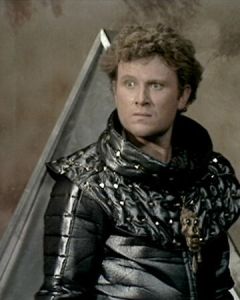 Part of the whole way we’ve constructed it was so we could have guest appearances by the surviving cast of the TV show as well as guest actors. We’ve just done a bit of an episode with Colin Baker.
Olivia: That was funny.
John: Which was huge fun to do.
So that’s why we’ve had Travis in it and we’ve had an episode with Jenna and of course there will be opportunities in the future for Cally and Vila or whoever to make appearances. It was a way of allowing us to continue to use the existing TV cast where we could no longer have the full cast, really.
But I didn’t want it to just be recreating the TV series. In other words I didn’t want a super spaceship with a team of people, so we deliberately haven’t had talking intelligent computers, an amazing spaceship. Avalon’s much more having to live rough and ready and cope. She hasn’t got the same stuff at her disposal that Blake has, which makes it a bit grittier.
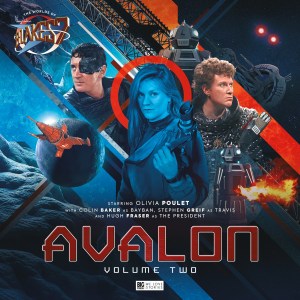 Otherwise you risk diluting the whole point: why the hell are they about to liberate her if Avalon can go off and grab something and have Avalon’s 6 out there…
I think Avalon is still considered a threat, even if you just watch the TV episodes. Even at the beginning of the episode Servalan says ‘So this is the famous Avalon?’. So she’s already got a reputation as being this quite effective freedom fighter or terrorist as far as they’re concerned.
The Worlds of Big Finish: Avalon volume 1 is out now; click here to order from Big Finish.
 Doctor Who News Star Trek News
 Sci-Fi Bulletin: Exploring the Universes of SF, Fantasy, Horror and Spy-fi!