Behind Her Eyes: Interview: Steve Lightfoot
British screenwriter and producer Steve Lightfoot is best known to Sci-Fi Bulletin readers for his work on the Hannibal TV series and Netflix’s Marvel show The Punisher. His most recent […]



British screenwriter and producer Steve Lightfoot is best known to Sci-Fi Bulletin readers for his work on the Hannibal TV series and Netflix’s Marvel show The Punisher. His most recent […]
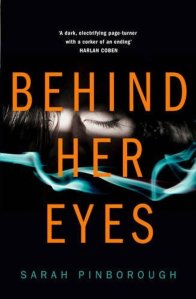
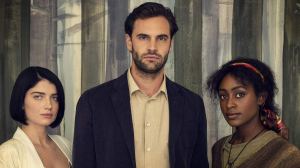 British screenwriter and producer Steve Lightfoot is best known to Sci-Fi Bulletin readers for his work on the Hannibal TV series and Netflix’s Marvel show The Punisher. His most recent series is Netflix’s adaptation of Sarah Pinborough’s Behind Her Eyes, and Paul Simpson chatted with him about the challenges of the show.
 How did you first get involved with Behind Her Eyes?
It came via my agent in the UK who I think Left Bank had approached and said, ‘Might Steve be interested in this?’ The executive who was overseeing it at Netflix at the time also looked after Punisher, which is the show I had on there so I think she had mentioned me. Left Bank and I had known each other for years, so it was one of those happy comings together.
I read the book, I kind of loved it. I thought it was great entertainment, it was very deftly done. I said, ‘Yes, this is a lot of fun’ and different to anything I’d done recently so I was very excited to be asked to do it
What elements particularly appealed to you?
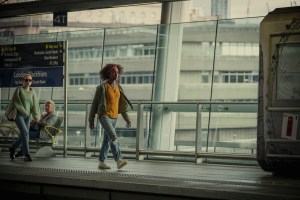
I thought the character work was actually very strong and Louise is a sort of what here in the States they’d call ‘blue collar’ I guess and we would say ‘working class’. I thought the depiction of her life on one hand was very real but it was clear that there was more going on.
I thought Sarah [Pinborough] worked that very well so that you always knew it was more than just a love triangle. I loved that character realism and mad genre storytelling and how she weaved those together.
It was just unashamedly entertaining which we sometimes forget is why we’re all here. We’re here ultimately to entertain people, the book did that and hopefully the show does too.
 The book was a gift, really. I think Sarah had done all the work for me and frankly for Erik who directed it, who I thought did a stunning job.
The issue was, “How do you take a book that’s written as interior monologues and make it a screen story?” Because so often with first person narratives, they’re very hard to adapt because you can’t cheat because the person cheats. The person talks about, ‘I saw such and such’ but we don’t know who or what they look like. Once you start actually having to let the audience see things, the storytelling can get very tricky.
That was the fundamental job for me: to preserve all the fun things Sarah had done and still make them work on screen. I think we’ve pulled it off for a large part.
It’s amazing just how much is almost taken verbatim and put on screen, as opposed to the way adaptations often feel, like that they’ve been filtered through something to get there.
Yes. I’ve done various adaptations both as producer and a writer and I think it’s always different. Sometimes it’s about you really connect to something in a book and that’s the thing you concentrate on and you put a little more of yourself in there. But I felt with this book, I really liked it as it was. I didn’t feel any great need to fix anything and there wasn’t anything structurally that made it not work as a screen story. The book’s in three parts and each one of those became two episodes, it was very lined up for that. Other things you do, there’s a lot more heavy lifting. I’m adapting a different book at the minute and it’s a very very different exercise.
You were working with Angela LaManna for the other two episodes; did you work out how the story was going to work or had you worked out what eps 1-6 were and then asked her to write 3 and 4?
A bit of both. Angela and I worked together quite a lot before, we have a good relationship, and once we knew I was doing it, I didn’t want to write all six. I thought it would be nice to split the workload and I also thought it would be really good, given the nature of the story, to have a woman’s point of view in the process as well. Some elements of the book are about the battle of the sexes so it’s always fun to have two of you to wrestle those things.
I had a rough idea how I’d shape it but then Angela came on and we worked out what the six episodes were together and refined it. We always knew I’d do the first two, she’d do the middle and then I’d do the end.
So it was a little of both but yes she was definitely early in the process before we started writing scripts.
One element that there feels more of in this is the backstory, the flashback elements with Rob and the real Adele. I was wondering what the thoughts were behind increasing the amount of time we spend with these two.
 I think it when you finally got to the ending and you understood it was Rob, not Adele, you needed to have spent enough time with him that he was a character for you and you understood him and would feel what he had felt. Which meant he had to have enough screen time and we got a very good actor in Robert Aramayo. He gave him such dimension
For me, the book was in essence was about history repeating itself. A version of the same love triangle played out in history and as we watched it. You just didn’t realise it because you thought it was Adele all along and it turns out it’s Rob.
What I always thought was ‘Oh, Louise has been put in the exactly the same position that Rob was in – is that her fate?’ Then of course the grand great twist is Adele hasn’t been there for ten years.
The apex of the triangle isn’t who you expect it to be.
Yes.
One of the things I loved about it was the use of the overhead camera shots, even early on. Were you indicating that “God’s eye” view of certain scenes in the script?
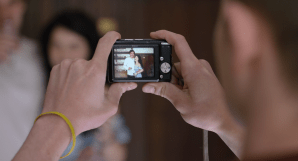 I was and it’s funny, it’s normally a shot I hate. I always think it sort of announces our presence as filmmakers because it’s such an unnatural angle. But we did write it in here because I was very keen that we didn’t cheat the audience entirely. [Director] Erik [Richter Strand] and I talked a lot about how to achieve that in terms of what the script said we needed and then we talked a lot about how to achieve it.
In some ways it was about just making the audience aware of something that felt not naturalistic so that when they got to the astral projection they went, ‘Ahh, OK, that’s what that is. I get it and I understand.’
I’m a firm believer that if you hide all your tricks until the end and give the audience no chance to be in on it, that’s often quite unsatisfying. Whereas I think, truth is, if half the audience get the answer, they feel really clever and satisfied because they got it and if half of them are totally surprised, that’s great because they get a shock. My philosophy with these kinds of things is let’s make it so that either one could happen. I think if I did a murder mystery and no one has a chance of guessing until the last five minutes, I’d feel I failed.
When you read the book the first time, what was your reaction to the twist?
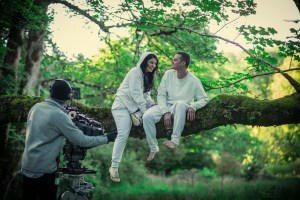 I liked it but in a great wave of ‘Wow OK!’ It was audacious and it was bold. But I also felt like when you look back through the book, it was all earned, it all made sense. I’d be fascinated to know how many people read it twice, went back and read it again. The same with the show, I hope people go and watch it again because I think we did our work right and it holds up.
That’s what’s brilliant about something like The Sixth Sense. I certainly did not see that one coming when I saw the movie but when I went back, you can’t really find any holes either. It was very well done and I hope we hold up the same.
I thought the book did but when I got to it I was just ‘Woah’ – and of course it’s a book I’ve now read about fifteen times.
These things can be very cynical though. But I genuinely feel like Sarah loved her characters. There’s a tragedy to all of them and I think without that, it would be a fairly cold exercise but there’s a lot of warmth there.
To me, the Adele of the TV series feels creepier, nastier than the Adele of the book, which I think a lot is in Eve’s performance, the little half smiles and things like that. For characters like her, when you’re scripting, do you provide motivation in the script or simply what’s there that we’re seeing objectively?
 It depends. Bits of both and it can depend scene by scene. I’m certainly not writing swathes of character description for the actors but in some places you want to make it clear how you want them to feel.
I’m genuinely a “less is more” writer, I think. It changes script to script but with this I wrote quite a lot of visual direction about what we saw and how we saw it because that was in a way the task of how to tell it. Then Erik obviously came in and we very much refined all that.
For the actors, generally, there were little bits here and there but it wasn’t laden with ‘You must be like this or feel this now’ because in truth, that’s what rehearsal and performance is for and you don’t know who your actor is going to be at [the] point [you’re writing it]. I certainly didn’t write it with anyone in mind.
Those conversations change depending on who you’re working with and their process and what they bring, that’s all pretty fluid.
How did you work with Erik?
 Initially I was in LA and he was in Norway, I think, and then in the UK, prepping. Then we had a really great week in LA with he and I just page turning all the scripts – we had all six at that point. He asked me questions about my intent and he had ideas about what he could do with this. Where I’d written a line and he’d say ‘I don’t understand this’ and I’d say ‘It’s a joke’ then he’d get it.
It was this very in depth go through the material in which I essentially handed it off to him. “You know everything that I wanted to do. Put in the things you like, it’s yours now.” Obviously I’m in the US and generally I’m producing, show running, but that was impossible on this one but I felt like it was in such good hands.
Once we’d done that, it was handed off to Erik and the team and I was just very pleased at what I was seeing. For me personally, it was an incredibly easy ride from there on because I felt like what we discussed just kept appearing.
 Was there anything in particular that you can recall that came out of those conversations?
Not fundamentally to storytelling but I think there are things about the nature of the dreams and how those were depicted. For instance, Louise’s dreams and how we depicted the astral projection obviously came out of Erik’s visual ideas and how he wanted to visually tell the story and I think those were things that ultimately he had the responsibility of turning it into pictures and putting it on screen.
There were things like that where his concepts changed the way I’d seen it on the page but nothing fundamental to the story really. I just think the book was so tight and the script reflected the book so there weren’t a lot of things to throw rocks at really.
 You’ve worked on adaptations of [Thomas Harris’] Hannibal, [and Marvel Comics’ The] Punisher, two gentlemen of interesting internal psyche, shall we say. Were there things that you learned during the process of working with developing Hannibal for screen, for developing Frank Castle for screen that came into the way that you approached Adele and Rob?
A little, yes. Bryan Fuller created Hannibal, I worked with him but that was very much his adaptation and I learned a lot from him on that. I can’t take the credit for the adaptation of that one, beyond hopefully being useful to him. But again, it was interesting watching how he would go back to the text all the time and dig into new things and mine it for new things, very much always trying to get back to the spirit of what the author meant or finding things in it. I’ve certainly taken that with me but then also you still have to find something you want in there.
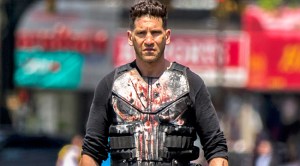 I hadn’t really done comic book stuff before, but Punisher for me was all about two things. It was about men coming back from war, changed and what does that look like? And just grief. Frank was a man who’d had his wife taken from him who I think does that very typical thing that men do which is, they try and get angry, because as long as they’re angry about something they don’t have to admit they’re hurting. Frank is just an insane version of that. ‘As long as I can find someone to kill I don’t have to stop and cry’. I think that’s quite universal.
I think it’s about finding the universal. Most people aren’t cannibal serial killers nor are they murderous vigilantes but I think we all understand grief. I think Hannibal was about loneliness, he just really wanted to find a friend who understood.
Somebody buy him a dog (laughs).
(Laughs) And that’s what Will [Graham] became.
 I think in this, for me, I really keyed into Louise and that need for a new start and find something again because her life was in limbo. I think I really understood that need to kickstart your life again. You knew something was going on with David and Adele but you didn’t with Louise. That’s why she’s the protagonist ultimately. She’s going into it without an agenda and you’re watching going ‘Oh no, don’t do that!’ but I think if people didn’t understand her real need for a change, they probably wouldn’t go along.
 What do you think Louise sees in Adele?
I think initially she sees someone who seems to have everything she would like, someone to aspire to. When Adele takes her to the gym and she goes around to her house, Louise gets a little taste of the life we wishes she had. But then I think it rapidly becomes genuine friendship and care because she feels something’s wrong and she actually wants to help this person.
I think Louise’s fatal flaw is that she always puts other people ahead of herself and that’s what Adele manipulates.
Her relationship with her son is also very nicely done and I think Tyler Howitt pulls that off.
 He’s fantastic wasn’t he? So natural. All the cast, I really enjoyed everyone.
I like the show’s as funny as it is, I think that really helps. Simona [Brown] is incredibly funny which instantly [when someone] says ‘Why do people like Louise?’ Well because she’s actually really good company.
What do you think you will have brought away from having worked on Behind Her Eyes?
Well, and this is always the best part of the job, some great professional friendships and relationships. Some shows you’re sitting there proud at the end but the process was a bear. The process [on this] was a delight, a genuine delight. The people I worked with, I’m keen to work with again, so that’s great.
 And with every one of these books, it’s always about what do you take away? And it’s “less is more”. I think I’ve learned that every time. Just make those scripts leaner and don’t hang around.
This one particularly I learned a lot as Erik and I went through, just about how doing something a slightly different way visually can change the effect you want to have on the audience, which is what you’re here to try and achieve.
Behind Her Eyes is streaming now on Netflix.
Click here to read our interview with director Erik Richter Strand
 Doctor Who News Star Trek News
 Sci-Fi Bulletin: Exploring the Universes of SF, Fantasy, Horror and Spy-fi!