The Prisoner: Review: I am (Not) a Number – Decoding The Prisoner
by Alex Cox Kamera Books, out now Our 50th anniversary The Prisoner celebrations continue with a look at filmmaker Alex Cox’s trawl through all 17 episodes, looking for the secret […]



by Alex Cox Kamera Books, out now Our 50th anniversary The Prisoner celebrations continue with a look at filmmaker Alex Cox’s trawl through all 17 episodes, looking for the secret […]
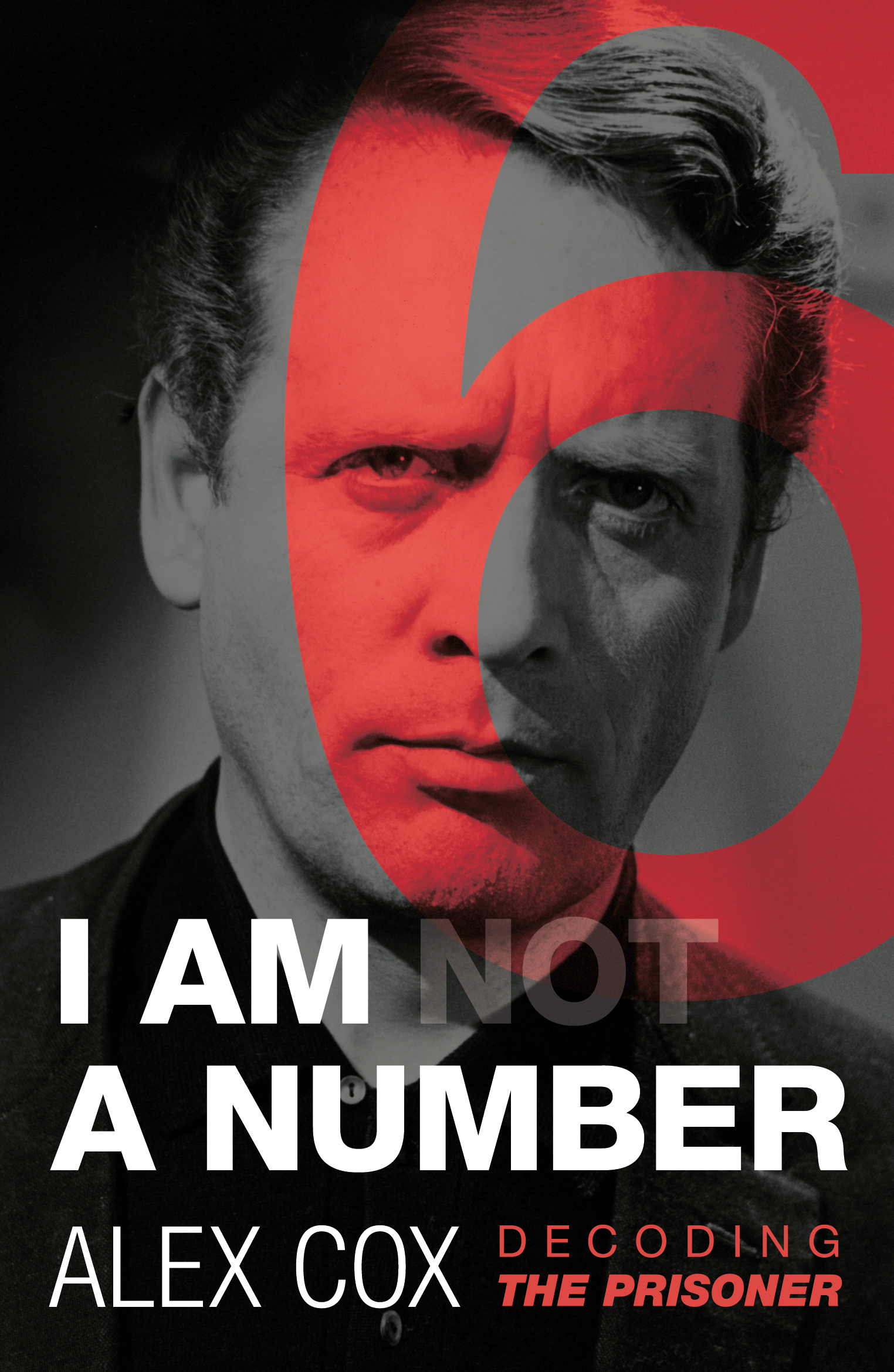 by Alex Cox
Kamera Books, out now
Our 50th anniversary The Prisoner celebrations continue with a look at filmmaker Alex Cox’s trawl through all 17 episodes, looking for the secret clues and meaning.
Those of a certain age will rightly thank Alex Cox for introducing them to the world of ‘cult movies’, his Moviedrome introductions to the weird and wonderful being a staple of Sunday night viewing from 1987 to 1994. What was evident was his unashamed love for these good, bad and frequently ugly movies, his enthusiasm often awash with witty hyperbole. And that’s the voice that I hear when reading this great summary of The Prisoner’s run. It’s pithy, concise, and gets straight to the point.
Cox was lucky enough to be the right age (13) to watch and appreciate the show on its first airing, unlike a hardcore of fans who discovered it during its 1970s repeats on ABC, or Channel 4 in 1983. As such, he’s had the opportunity to ruminate over his ideas for half a century and presents them them now for fans to validate or challenge.
I’d never realised that Cox was a fan of The Prisoner, his films not obviously using any of the trappings, but now I do know his passion for the show, there will inevitably be tells. In his introduction he talks about Patrick McGoohan’s reticence to dissect the show’s meaning, directing viewers to the episodes themselves for the answers. All you needed was up was there on the screen from the outset (albeit a black-and-white 405-line version in 1967 UK).
Controversially (well, for some fans), Cox has gone through each episode with fine-tooth comb, but he has opted for production order rather than the screening order. This means that Free for All is scrutinised as second episode rather than the transmitted fourth, and A. B. and C. is eleventh rather than fourth – and there’s a real logic to this.
Apart from Arrival and Fall Out bookending the series, one could argue that there’s no definitive order for the fifteen that sit in-between. Except that as the writers and producers got more to grips with the eponymous character and how to best make the show, they grew more confident. It stands to reason that episodes made earlier in the run reflect a Number 6 who is more focused on getting his bearings and making his escape than getting to the heart of matters and creating dissent from the inside. In the transmitted order, and maybe in attempt to mix-up the ‘escape’ and ‘duping Number 2’ stories, Number 6’s knowledge and motivation peaks and troughs – and I for one buy Cox’s preferred order.
Each episode has its own short chapter, starting with a synopsis, itself a gem as Cox pulls out inconsistencies or non-sequiturs. Then he summarises what new information we learn from that episode before moving on to the next.
By the time we reach the Prisoner and diminutive butler running across Waterloo Bridge in Fall Out we have a dossier of information with which Cox draws his conclusions. I won’t share what those conclusions are – that would be telling! – suffice to say that they are original and very credible. Controversial? Maybe. You did know this is the guy who directed Sid and Nancy and Repo Man?
Verdict: If Moviedrome had a sister show called Tellyzone about cult TV shows, Cox would present it, and each of this book’s chapters would be delivered by him after each episode. One of my favourite books on The Prisoner – You want information? You WILL get it – in Alex Cox’s essential dissection of this classic show. 9/10 (Though this review is NOT a number)
Nick Joy
 Doctor Who News Star Trek News
 Sci-Fi Bulletin: Exploring the Universes of SF, Fantasy, Horror and Spy-fi!