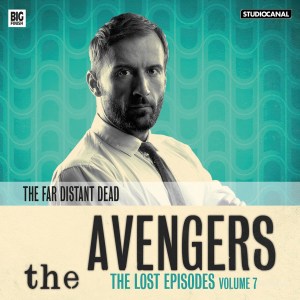
 The first season of The Avengers was built initially around Doctor David Keel, whose fiancée was brutally murdered. For Big Finish’s recreation of the Lost Episodes, the producers turned to Anthony Howell to reprise Ian Hendry’s on-screen role, and on the final day of recording, he chatted with Paul Simpson…
How did you come to play Doctor Keel?
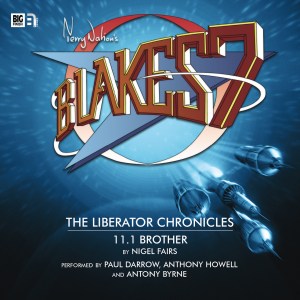
I’ve worked for Big Finish for quite a few things on various things – quite a lot of Doctor Whos, and also a series called Blake’s 7 which I was a huge fan of when I was a child. I mentioned this to [producer] David [Richardson] who said, “Funnily enough we’ve just got the rights to this”, and so a character was written called Gustav Nyrron. He wasn’t in the original TV series, but these new stories included this character, so I played him and fulfilled a bit of a fantasy of being in a series that I used to love when I was a kid.
Then Big Finish got the rights from Studio Canal for The Avengers, and very nicely they thought of Julian [Wadham] and myself for Steed and Keel. They asked and of course we both said yes absolutely. We’ve been doing it for about three and a half years.
Had you seen the programme before?
Yes, I loved The Avengers. When I was very young, I watched The New Avengers, towards the end of that and loved it. Joanna Lumley was just amazing, hugely iconic. And then of course as you get older the earlier ones are repeated, so then I saw the earlier ones with Diana Rigg.
A lot of people came through those Channel 4 screenings!
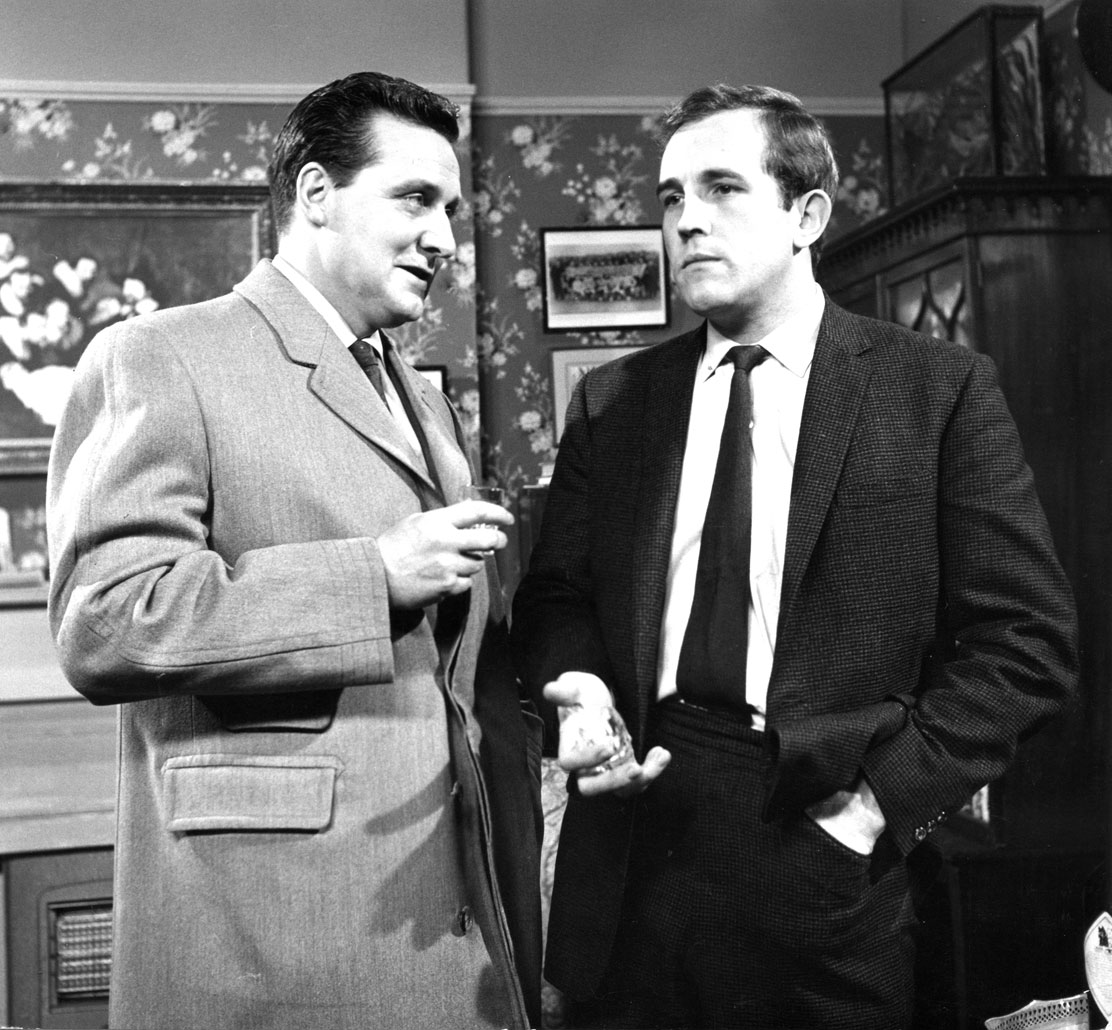
Yes. So I knew the older Avengers with the ladies, and the New Avengers from my childhood, but the original series, with Steed and Keel, I knew nothing about and had no idea about that’s how it started. The original episode started with Doctor Keel losing his fiancée and Steed coming into the narrative, and then the partnership begins… slightly reluctantly. You always believe these things have been established and been going on for a long time but it was a quirky coming together.
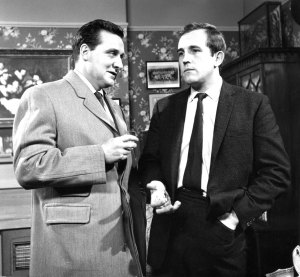 What preparation did you do to play him? There’s the couple of episodes with Ian Hendry playing the part, but not much else? Did you go back to those or work purely from the scripts?
I had a talk with David and Ken Bentley, who’s directing, and we didn’t want to do a copy, something that we were just repeating.
It’d just be a pastiche.
Yes, it would. And there was some bits of original footage floating around on YouTube so I looked at them, and observed them, and got a sense of the period. In the original scripts, there’s a period-ness to the language and you can’t fight it, and try a naturalistic 21st Century approach. You have to respect that the scripts existed at that time in the 60s and most of the characters were probably RP [Received Pronunciation] or close to that.
I’ve made Keel as close to the essence of who Ian Hendry portrayed him as, but obviously it’s my voice. The sound recordist told me that the reason everybody sounds quite clipped in the 1960s shows is because the technology back then didn’t pick up a lot of the bass notes in the voice. My voice is quite deep so I felt the pressure of trying to keep my voice light and quick and make it almost sound like a 1960s show even if the only reason they sound like this is because of this technical thing.
Really all I’ve done is keep him very RP, very clipped and then taken the script as it comes, so you play what’s on the page basically.
Big Finish do expand the universes they work in – as you know with Blake’s 7 – and with the Doctor Who range, they’ve expanded the emotional range of the 1960s and 1970s shows. Has there been much development in that sense for Keel as the season has gone on?
 Yes, I think so. I think there’s been a lovely arc in his character in general, and more importantly for me, in the relationship between him and Steed and him and Carol.
As in life people change you, and I think he and Steed had quite a tricky relationship for quite a few episodes, because they’re very very different people, and have had very very different upbringings, I would imagine, and experiences. Keel was in mourning for his fiancée and got roped into this espionage scene with Steed, so I think he’s gone from grudgingly being part of a team with Steed to having an admiration for him, a fondness for Steed.
The same with [receptionist] Carol: the relationship with Carol in the stories has softened and I’ve said to David as we’ve come to this episode 26, do you think that in the future if there were further episodes, further original scripts, they would Keel and Carol get together? There seems to be a warmth and a bond, and Lucy Briggs-Owen brings such a warmth and a lovely quality to Carol that you can’t help but wonder if Keel and she might get together.
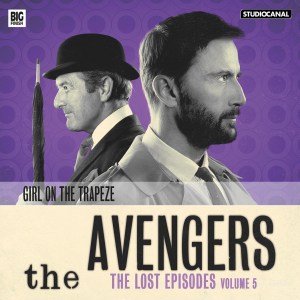 You look at the original version of Girl on a Trapeze, and there’s no chemistry between the original actors playing Keel and Carol, so you can see why the producers at the time didn’t go that route. But your Keel and Carol have developed the warmth: was that something in the scripts or something you’ve consciously brought into it? Your scenes are often expositional but it’s how they’re led in to and out of…
…rather than what happens in the middle, yes. You know what? Lucy is such a gorgeous lady that there’s a natural warmth to her that I defy anybody not to be attracted to, so I think whether it’s on the page or not, playing scenes with Lucy you can’t help but feel this warmth. I think it’s a sort of subconscious thing. I don’t think it’s a conscious thing – it might not be in the script.
Actors are great people but I think you can usually tell when actors get on very well, and Julian, Lucy and I have a great time. We all do. And I think that comes across. Julian’s just the most wonderful man – he’s lovely.
Had you worked with him before?
Yes – he did an episode of Foyle’s War many years ago, maybe about 10 years ago. We worked together then.
What’s been the biggest challenge of playing Keel?
To make him human and real and believable in the 21st century even though the storylines were written fifty years ago. I think back then people were less emotionally available. I think we’re all quite emotionally available now, or often are. He’s a doctor, stiff upper lip, British, part of that kind of mentality which existed back then and we don’t necessarily have as much of today, so it’s finding that combination of authenticity and reservation and also the warmth and humour, and allowing him to have a relationship with Carol and Steed that is believable. I’m enjoying playing that – you have to believe that you’re sort of him and doing the sort of things that he would do that you would do.
Would you get on with him?
Yes, I think I would, but I think because of the way he’s developed in the scripts and the relationships, I’ve got a real admiration for him. I think he’s got a lot of integrity. He’s very caring. I think he puts up with Steed: he’s obviously running this GPs’ practice while Steed is always taking him off God knows where to do God knows what, and he’s always up for it, always gets on with it…
Dumps it on Dick Treading!
Yes, poor old Dick gets all of his patients! But I have a huge admiration for GPs and doctors anyway so any doctor in my books is great.
 When a script comes through, what are you looking for? A particular challenge, or aspects of the character?
First and foremost, how to bring the story off the page, and how to make it interesting for somebody listening. How to bring it to life, how to bring the colour to it, how to make what can sometimes be an uncontemporary-sounding language work, and how to bring that off the page and make it sound conversational – there’s a difference between dialogue for camera and dialogue that’s listened to rather than watched.
It’s a combination of how to bring things to life story-wise and how to bring your character out to the listener as authentically and as interestingly as possible.
What medium do you prefer working in, or do you not mind?
Heavens, no, any medium – work is good, I love work!
I love working in theatre, it’s incredibly rewarding and challenging; camera is again very challenging and fascinating; as are radio or audio CDs or videogames. There’s a whole range of things that you can try your hand at as a performer, and I find them all fascinating. But I think theatre is just, by a little notch, the one that I feel you exercise your muscles.
Is that because of the adrenaline, the live aspect of it?
Yes – and the process. It’s interesting that in television and film it’s very rare that you get to rehearse, other than a camera rehearsal or a lighting rehearsal.
Which is technical – it’s concerned with them not you.
If you’re working on a show that has a little bit more money and time, you’ll often get a rehearsal with the director, but often there’s not. Often the rehearsal is for the camera people, lighting, wardrobe, props, all of that stuff. You’re asked to turn up with your performance and just get on with it. That can be great.
 If you’ve got the self-confidence to produce that, but if you’re the sort of actor – as a number of actor friends are – who wants to play somebody else, then you’re thrown in there…
Yes. Television is a very disjointed process anyway, and theatre is not. Basically you start on page 1 and you don’t stop, all things going well, till the end of the play. It’s linear.
But the great thing is you get rehearsal time. You get 3 or 4 weeks, maybe 5 or 6 weeks, with the people you’re playing with, in a rehearsal room with a director, talking about each scene, talking about each line if it’s Shakespeare. Four years at the Globe, every year you get to learn so much about language and performing, and you have the luxury of weeks and weeks of rehearsal. I can’t help but think it engenders everybody’s performance.
Are there still roles you’d love to have a chance at or are you happy with work that comes in that challenges you?
Yes, there are many roles I’d still like to try in theatre, but then obviously there are fantastic roles that come up in television, film or radio that you don’t know about but present themselves.
Whether it’s film, TV, theatre, if the part’s good, if the role is interesting and challenging, then I’ll do it.
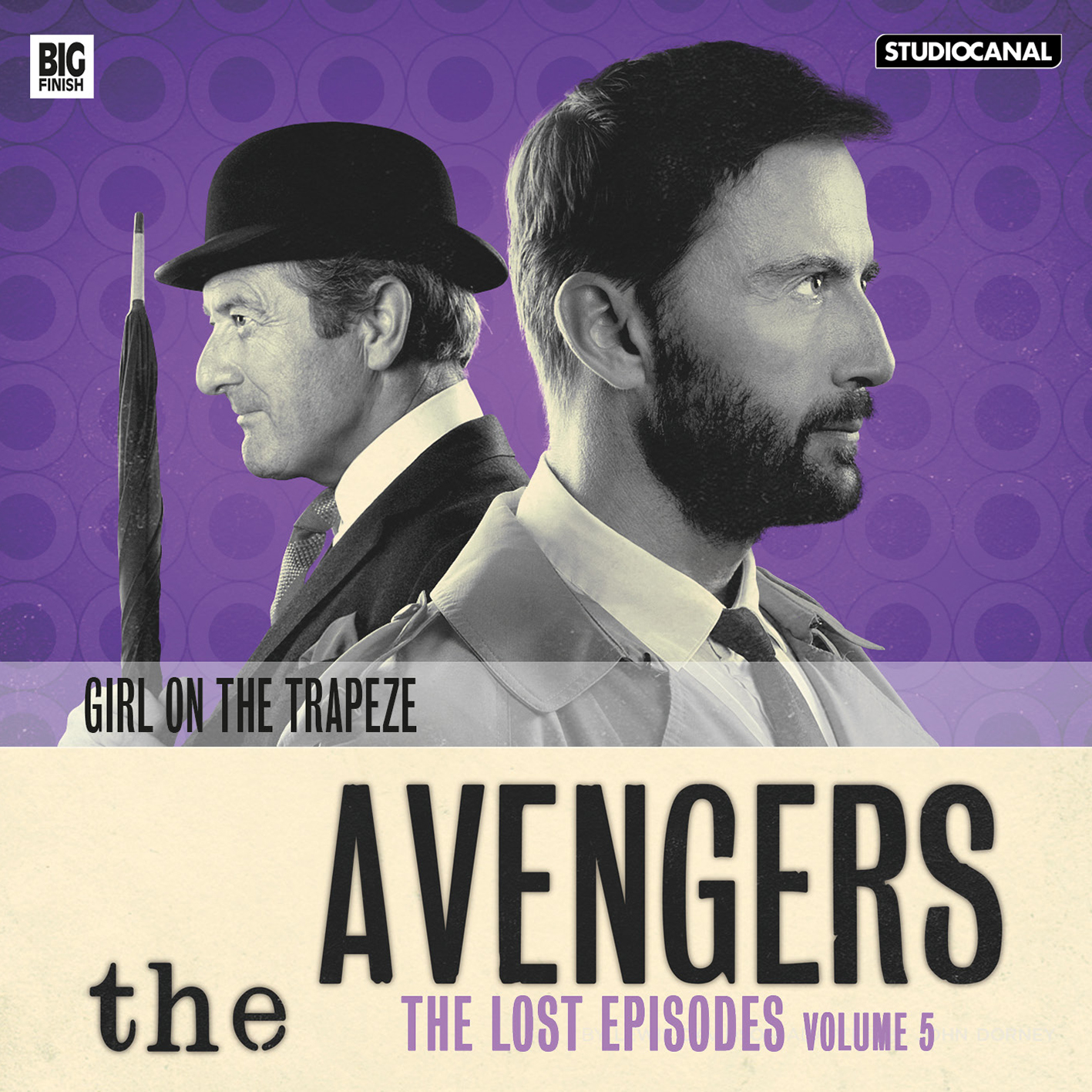
Volume 7 of The Avengers: The Lost Episodes is now available from Big Finish.
Thanks to David Richardson for his help in arranging this interview & all the cast and production team for their help during the recording.







 Sci-Fi Bulletin: Exploring the Universes of SF, Fantasy, Horror and Spy-fi!