Atomic Blonde: Interview: Artist Sam Hart
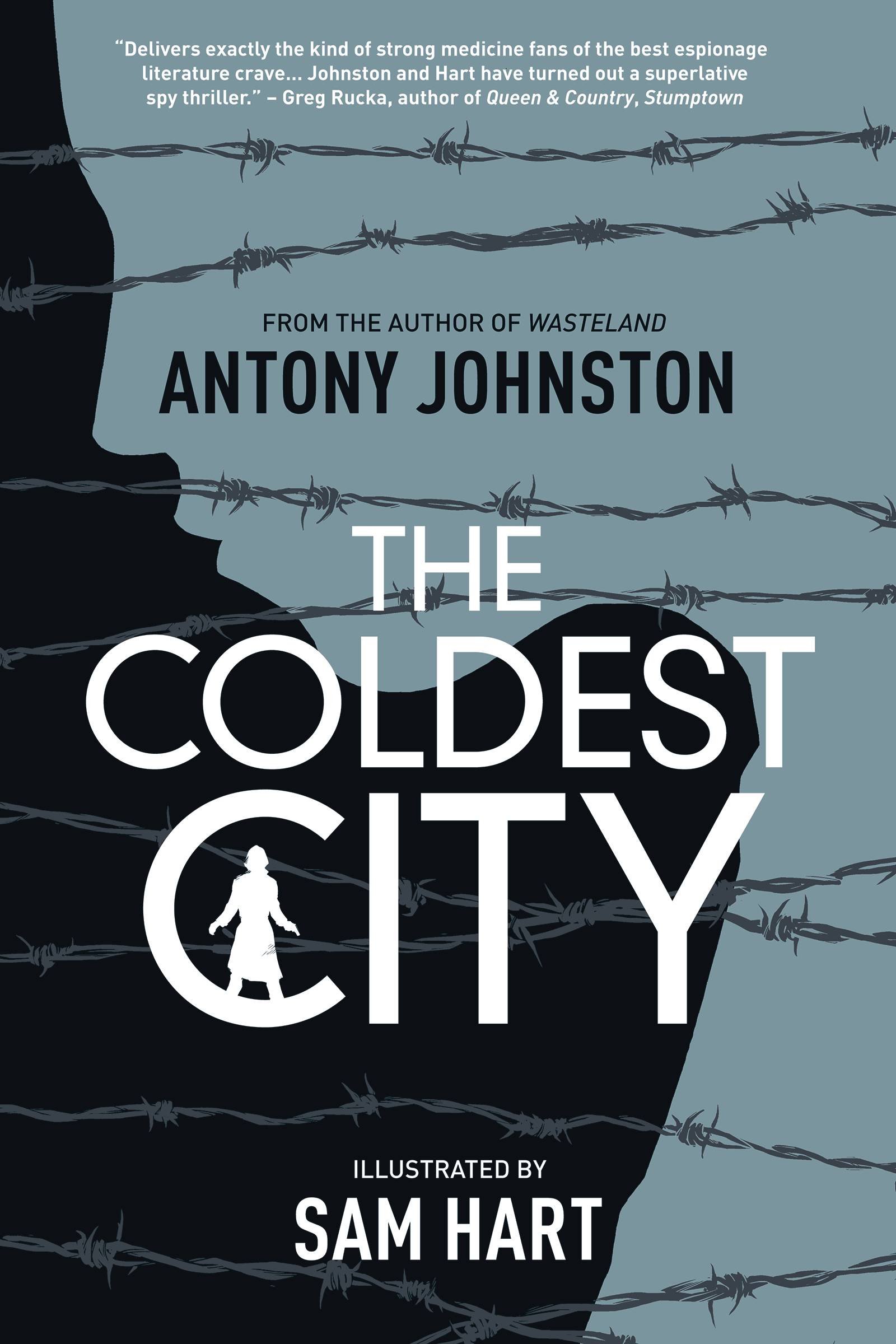
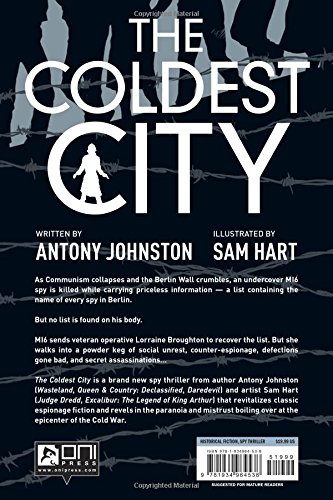
For The Coldest City – the graphic novel that inspired Atomic Blonde – writer Antony Johnston turned to Brazil based British artist Sam Hart, whose other work includes Starship Troopers […]



For The Coldest City – the graphic novel that inspired Atomic Blonde – writer Antony Johnston turned to Brazil based British artist Sam Hart, whose other work includes Starship Troopers […]
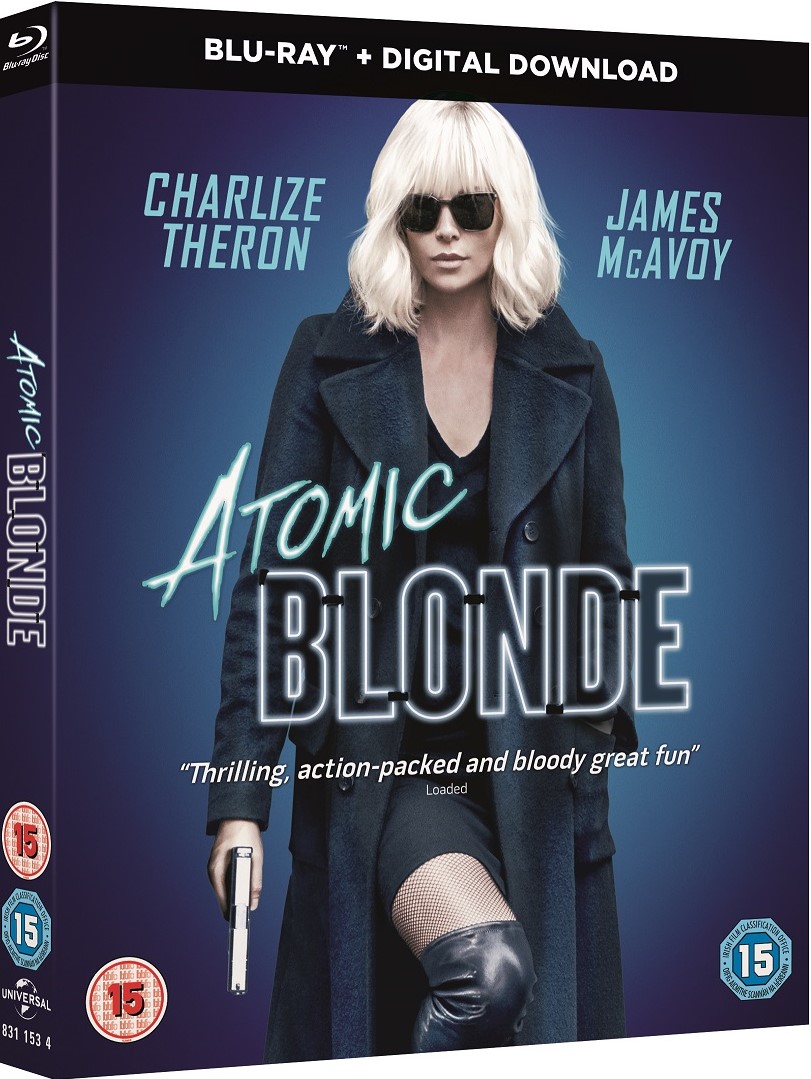 For The Coldest City – the graphic novel that inspired Atomic Blonde – writer Antony Johnston turned to Brazil based British artist Sam Hart, whose other work includes Starship Troopers and Excalibur: The Legend of King Arthur with Tony Lee. Hart kindly answered some questions from Paul Simpson about stepping into the shady world of espionage…
How did you get involved and what attracted you to the project?
I got involved due to Antony inviting me. We had met a few years prior, and seen and enjoyed each other’s work. Working with Antony was basically what motivated me because I really wanted to work with him. He thought I was appropriate for the job because of the black and white style that I was working in at the time.
Doing a spy story attracted me as well. I had been doing a lot of period pieces involving Merlin and King Arthur so to do something more contemporary in the black and white style was really attractive.
 Are you a fan of Cold War thriller stories such as this or was this a departure for you?
I hadn’t done any secret agent stories although I do enjoy them quite a bit. I wouldn’t say I’m a spy story buff but I enjoy them definitely. I’d done a lot of First World War and Second World War comic stories a few years before meeting Antony so it did interest me, this kind of world.
How did you work with Antony? Did he give you a complete script or ideas of what he wanted on each page?
It was a complete script – panel by panel description. His descriptions are very efficient with as much detail as is necessary. He doesn’t go overboard like Alan Moore does but it’s not a sparse script at all.
Was the story always going to be told in black and white?
Yes, that was one of Antony’s requests.
 Have you been to Berlin and seen the places that featured – and what were the best research aids you had?
I’ve never been to Germany or Berlin and the best research was Google! If I remember correctly, [I used] a lot of travel photos from tourists who posted online, so apart from books and movies it was definitely Google.
There’s a fascinating use of shadows within the piece; was that something that came naturally to mind when you read the story?
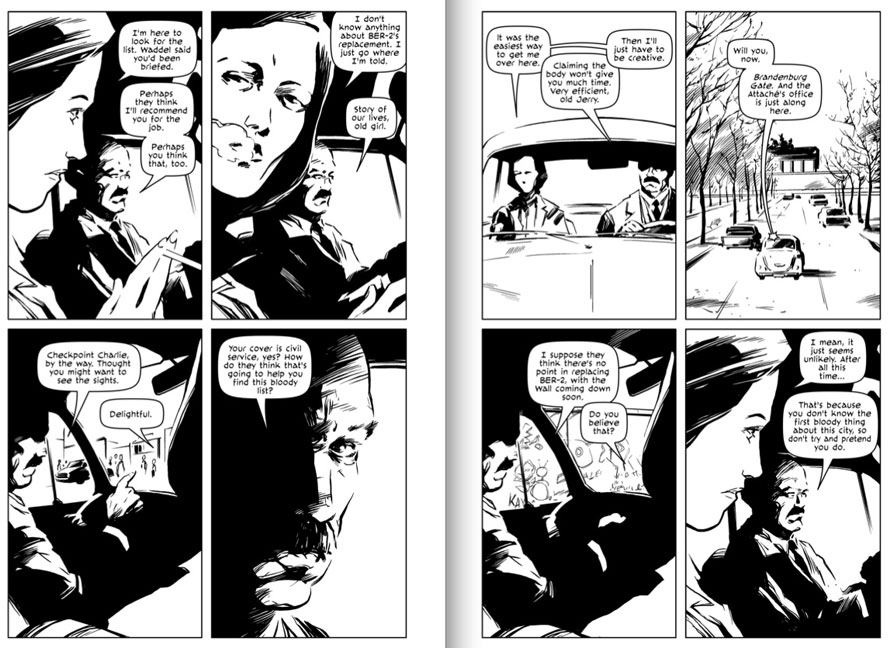
Yes. Antony had asked for this sparse black and white artwork to reflect the Us vs. Them thinking of the period and especially with the secret agents, so I tried to use shadow as much as possible to obstruct our view and give a feeling of dread and danger.
 What was the biggest challenge for you artistically and creatively with The Coldest City?
Artistically, to keep all the characters consistent throughout the story and the places. Creatively, I decided very early on, we have the story told in the same visual sense as a movie would be told. I wasn’t actually thinking it would become a movie eventually but I was thinking in terms of storyboards, and a physical camera with the characters at all times. I didn’t do any crazy CGI shots where you had the camera under something or do something – at all times I was imagining there was a cameraman filming the characters.
Is there a particular page or panel that for you epitomises this story?
The opening scene – where Lorraine is looking on at Percival and there’s a smoking cigarette on the ground – was very symbolic. It had to be visually strong and it obviously kickstarts the whole story – although the movie went a different way to get the story going, in the comic that is definitely the starting point.
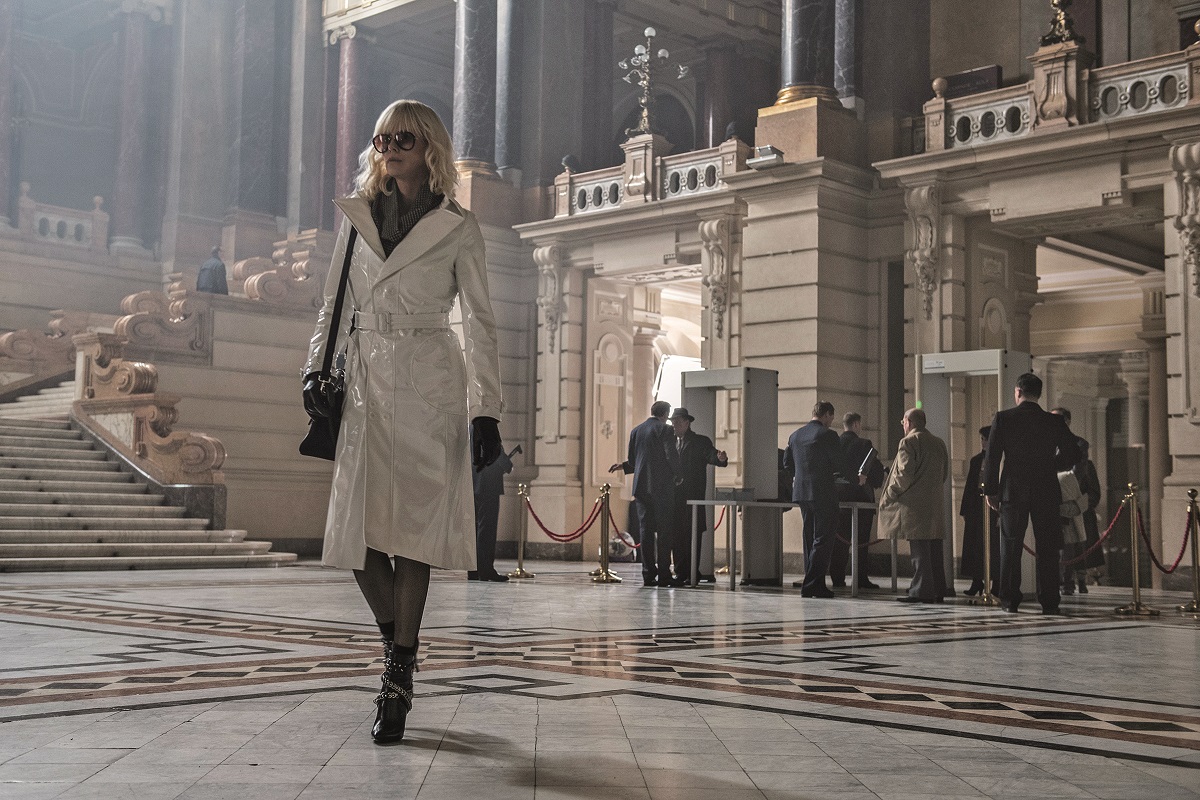
 The movie is very different in tone even though it retains many of the core plot beats and certain visuals, such as Lorraine’s interrogation that are very reminiscent of your art. What did you think of the visual pallet of the film?
I thought it was funny and it completely makes sense to the story and the time period. With a movie it would have been very difficult for them to capture the audience’s interest for almost two hours with a completely black and white pallet so the introduction of the neon colours was very smart. It was brilliant.
ATOMIC BLONDE IS AVAILABLE ON BLU-RAY AND DVD ON 4TH DECEMBER, COURTESY OF UNIVERSAL PICTURES (UK)
Click here to read our interview with writer Antony Johnston
 Doctor Who News Star Trek News
 Sci-Fi Bulletin: Exploring the Universes of SF, Fantasy, Horror and Spy-fi!