The Twilight Zone: Interview: Producer Ron Fogelman (part 2)
In the second part of our interview with the Twilight Zone stage show producer, Ron Fogelman tells Paul Simpson the reasons behind some of the changes between the version at […]



In the second part of our interview with the Twilight Zone stage show producer, Ron Fogelman tells Paul Simpson the reasons behind some of the changes between the version at […]
 In the second part of our interview with the Twilight Zone stage show producer, Ron Fogelman tells Paul Simpson the reasons behind some of the changes between the version at the Almeida last year, and the play currently running at the Ambassadors Theatre in the West End…
Have you taken the opportunity to revise the show in the period between it finishing at the Almeida and starting at the Ambassadors?
Hopefully audiences don’t think about this while they’re watching the show, they’re engrossed in the storytelling, but there are 10 actors playing over 50 roles. There are multiple costume changes. We’re interweaving eight original stories and some new material which is written to weld it all together… That’s a task and we hope the audience don’t consider the complexity until the next day but what Anne [Washburn] and Richard [Jones] have created is something which runs like a Swiss carriage clock. Everything is meticulously choreographed. We have an amazing world class choreographer Aletta Collins, who’s a director in her own right. The process of putting it all together was complex. Making it look like something that was always meant to be takes a hell of a lot of work and huge commitment from absolutely everyone.
When we got up on to the stage at the Almeida it was the first time it had been performed, and what was fascinating was then seeing what the audience reacted to. That was another way of learning about the show; you don’t just learn from previews, you continue to learn.
Theatre by its nature is evolutionary – actors become more familiar, find different things about their characters, and even though the audiences might not spot it if they went to one show one week, and another the next, if you’re behind the scenes you can see it.
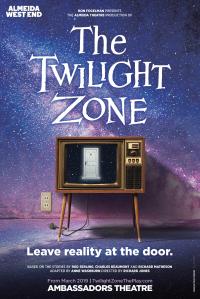 There were various things, either for time considerations or we weren’t sure how they would land with an audience, that we felt could be improved. It’s so complex this construction: it’s edited like a motion picture, which is very rare for theatre, and because everyone has to be rehearsed to the minutest detail, it’s not something you can change when you spot something that’s not quite right.
It did need us to take a pause – we were offered he West End literally straight after the run at the Almeida, but we said no. We wanted to pause, we wanted to think what can be improved. There are some changes in the editing process, in the order and presentation of the stories, in the way they’re intercut, and there’s some restaging where we felt that it might have worked but it could have been improved upon, and there are some new sections that do appear before the end of the play. But we don’t want to spoil it…
It’s one thing sitting down as a creative team and thinking what could work and another thing seeing the audience react, and the audience to me were part of the show. We sold out the run entirely at the Almeida mostly through word of mouth, which is what it should be, and 48% of the audience were first timers at the Almeida, and a significant proportion of those were first timers to theatre itself, which is incredible. Even by itself, in the Almeida’s eyes, I think that justified their backing the project in the first place. We found that incredibly exciting.
I went to see the show at least 6 of the 8 performances a week, to sit and watch and learn from the audience, see what they were enjoying, what they were responding to. Were there areas where they might be frustrated, might want greater clarity? It was great to see how well they reacted to the show. It was a great venue.
 The Ambassadors was very carefully chosen; we were offered some very large venues but for us, particularly in this run, we wanted to find a venue where we could create that atmosphere in the West End, where the audience was just as important, could relate to each other and feed off each other in the same way that we experienced at the Almeida. The Ambassadors is an intimate venue – it was almost as if it was designed for our show. We really hope that the audience will react the same way.
You’ve got the Century 21 team working on the show…
Those guys are amazing; their contribution is greatly appreciated. We’re working with them to recreate some of the film sections of the show.
I don’t want to spoil the show – there’s nothing worse than being told “and wait for the twist in the last five minutes…” in a review or feature…
Exactly. This is why I try to avoid trailers. You’re immersed in the world that we’re in, and storytelling is a large part of what we do, you just can’t help yourself – when you watch something you are then doing the dot to dot and it stops you from really enjoying whatever it is.
 Has this whetted your appetite for taking other such programmes and doing something with them or is it the Rod Serling centre that what makes Twilight Zone unique?
One of the things that we all realised, and something Anne Washburn discovered herself during the process of adapting: Rod was a household name in his own right in the 1950s. It’s overlooked by many because of his role in the Twilight Zone as narrator. He did works like Patterns, an amazing piece of writing about a young man entering a corporation in America in the mid 50s just as the term rat race was being coined, and being told one of his first jobs would be to remove an older member of the board who’s getting in the way. It was about taking a character with moral fibre and compromising him. Things that would be echoed in the Twilight Zone later on were done in a straight dramatic way. The ratings and reaction were so great when it was shown live that I think it’s the first play in American TV history that was recreated days later. He’s also known for plays such as Requiem for a Heavyweight (below right), with Jack Palance.
He was part of the genuine Golden Age of TV, with writers like Paddy Chayefsky who wrote Network which was recently successful here and on Broadway. There was such a great body of work emerging then and when the era was coming to an end as the networks shifted more towards film series, and material that had a longer shelf live, there was a movement away from live TV plays.
 That skill set, that understanding of the craft, of how to deliver live plays, had already been something Rod had immersed himself on radio and TV, and that technique is represented in the writing for The Twilight Zone. I felt this was probably one of the last times in American TV history where the writing for a TV show could be adapted and repurposed for stage.
I’m fascinated by all aspects of this material but for now I’m very much focused on making sure of the journey for the Twilight Zone, and that audiences get the very best show. We have world rights – we’ve been approached for America where it’s very much seen as the Old Testament of television so we need to make sure audiences feel that we’ve treated something very close to them with respect. There’s so much great opportunity over there – we’re very much in the early stages of deciding how to do it for an audience that will come to it with a very different background.
The Twilight Zone is currently playing at The Ambassadors Theatre; thanks to Natasha Haddad for her help in arranging this interview.
Click here to read part 1, and here for our reviews of the Almeida production
 Doctor Who News Star Trek News
 Sci-Fi Bulletin: Exploring the Universes of SF, Fantasy, Horror and Spy-fi!