Review: Harry Potter and the Prisoner of Azkaban In Concert
Royal Albert Hall, October 23, 2018 It’s year three at Hogwarts, and Harry, Ron and Hermione not only have to help escaped prisoner Sirius Black, but turn back time while […]



Royal Albert Hall, October 23, 2018 It’s year three at Hogwarts, and Harry, Ron and Hermione not only have to help escaped prisoner Sirius Black, but turn back time while […]
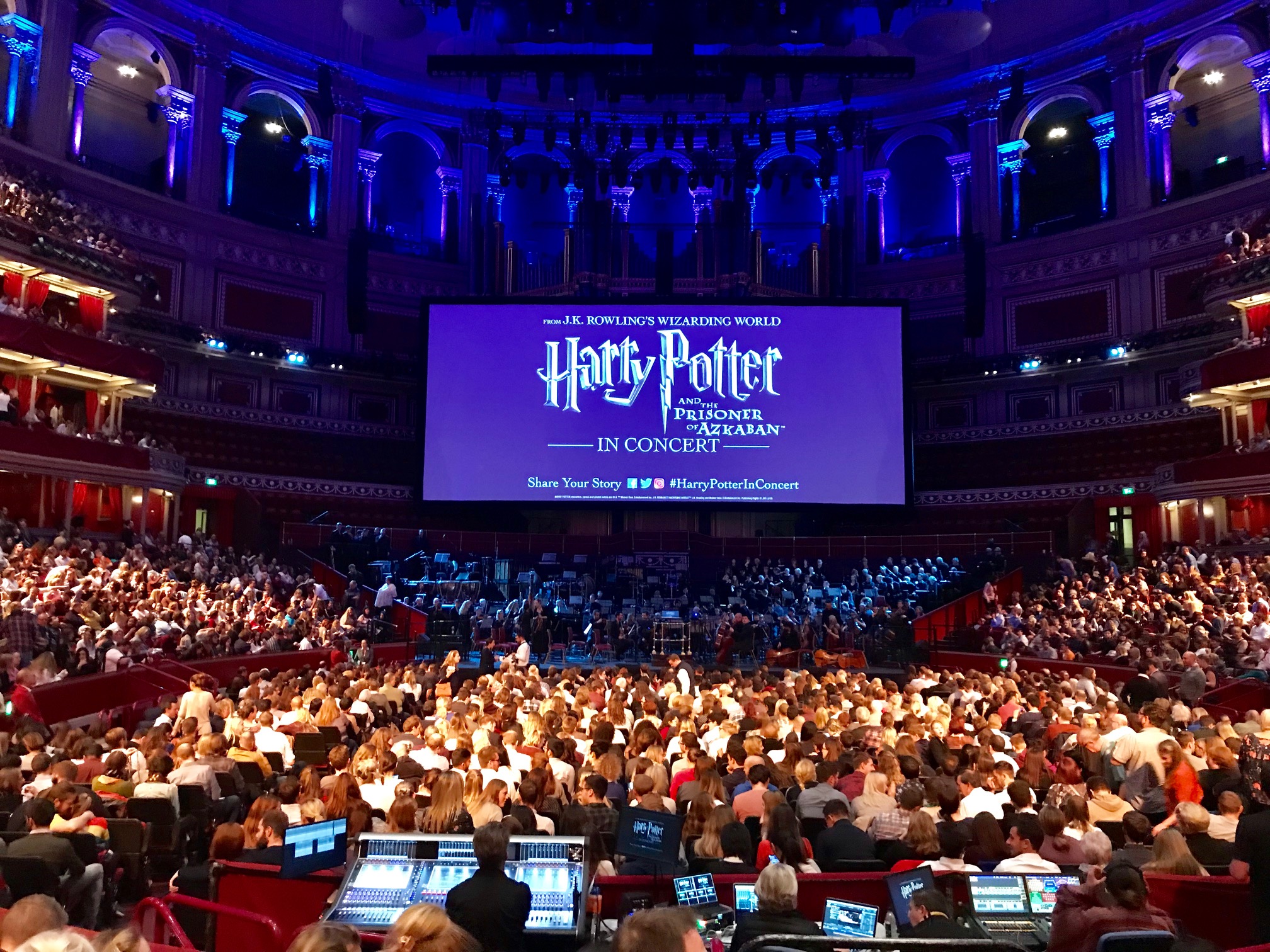 Royal Albert Hall, October 23, 2018
It’s year three at Hogwarts, and Harry, Ron and Hermione not only have to help escaped prisoner Sirius Black, but turn back time while also facing the terrifying Dementors.
After successful ‘live orchestra to film’ performances of Harry Potter and the Philosopher’s Stone and …Chamber of Secrets, the Royal Albert Hall’s ‘Films in Concert’ thread moves on to the third instalment in J K Rowling’s series, which for many signifies the franchise coming of age. It’s personally my favourite of the eight, with assured direction from Alfonso Cuarón (Children of Men, Gravity), a compelling time travel plot and the juvenile leads finally growing in to their roles.
In a week that would conclude with John Williams in person conducting the London Symphony Orchestra here in its main auditorium, Azkaban felt like the perfect entree to the main course, being Williams’ third and final score for the series. As with Philosopher’s Stone he would again be Oscar-nominated for this Harry Potter score, though this time losing out to Kaczmarek for Finding Neverland.
The Royal Philharmonic Concert Orchestra took to the stage under the baton of conductor Justin Freer, who is also the founder of CineConcerts. A sea of Hufflepuff, Slytherin and other ‘house’ scarves greeted them, a large proportion of the younger section of the audience no doubt here late at night in the capital because there was no school the next day. As the celesta tinkled the magical notes of Lumos! (Hedwig’s Theme) the audience was entranced and we were off. As usual the greatest compliment is that you forget you’re watching a live concert, getting pulled in to the movie with the ultimate multi-channel surround. The dialogue is subtitled on screen, not that it’s particularly drowned out by the music, but maybe your seat in the hall may make it more difficult to hear in some locations
The first half ends with Harry’s control of the Boggart, highlights being the jazzy Knight Bus (more Johnny Williams than John), the grand Aunt Marge’s Waltz, the drums that launch into the epic, sweeping Buckbeak’s Flight, and Double Trouble, an Elfman-esque song with lyrics borrowed from Macbeth. Time travel kicks off in the second half and there’s a new motif that’s employed whenever the Time-Turner device is employed – a four-note brass theme overlaid with tick-tocks and string flourishes.
The terrifying Dementors also earn their own accompaniment, a scratching of strings that builds up with brass wails, timpani crashes, ominous choir and then the calm of the harp. But for me it’s the aching, yearning pastoral theme that Williams uses whenever someone looks back or recalls happier times. The lengthy end credits give Freer and his orchestra the opportunity to revisit all of the main themes – it’s a wonderful medley that highlights the range of the new material – and by the time the Warner Brothers logo hit the screen the audience were on their feet, clapping hands and waving wands.
Verdict: For many of the Potterheads in the audience this was a case of ‘three down and five to go’ as they boarded their London Knight Buses to go home – and if you can see your favourite series of films in such a deluxe manner, why wouldn’t you? Justine Freer conducted Patrick Doyle’s Harry Potter and the Goblet of Fire this summer at the Hollywood Bowl in Los Angeles and it feels a pretty safe bet that Potter 4 will soon be booking up at the Royal Albert Hall too. As a night out, you’ll be spellbound. 10/10
 Doctor Who News Star Trek News
 Sci-Fi Bulletin: Exploring the Universes of SF, Fantasy, Horror and Spy-fi!