Interview: Tomorrow Creeps: Writer David Fairs & Director Anna Marsland
Stir in text from across the works of the Bard of Avon, sprinkle with music and lyrics from Kate Bush and season with the ethos and attitude of David Lynch. […]



Stir in text from across the works of the Bard of Avon, sprinkle with music and lyrics from Kate Bush and season with the ethos and attitude of David Lynch. […]
 Stir in text from across the works of the Bard of Avon, sprinkle with music and lyrics from Kate Bush and season with the ethos and attitude of David Lynch. It’s the recipe for Golem! Theatre’s latest show, Tomorrow Creeps, which plays as part of the Vault Festival this week in London. A couple of weeks beforehand, Paul Simpson chatted on Skype with writer/actor David Fairs and director Anna Marsland about things Shakespearean, subterranean… and Galactican…
What was the genesis of Tomorrow Creeps?
 David Fairs: In terms of the way the play is constructed, it’s an evolution of the previous two projects that we’ve done with the company. The first one, Macbeths, reformed Macbeth into a two-hander domestic drama. All of the text of the play was reformed into their own dialogue – the story of Macbeth was essentially happening outside the room and remained the same but you had this focus on the two of them [Thane and Lady Macbeth]. The next one that I developed was I Know of You which took the text of Much Ado and made that into a new play that took tangents and things off the original play.
The idea for Tomorrow Creeps was to extend that idea of adaptation even further and invent a new plot, build that around lots of different raw material and component pieces, some bigger, some smaller.
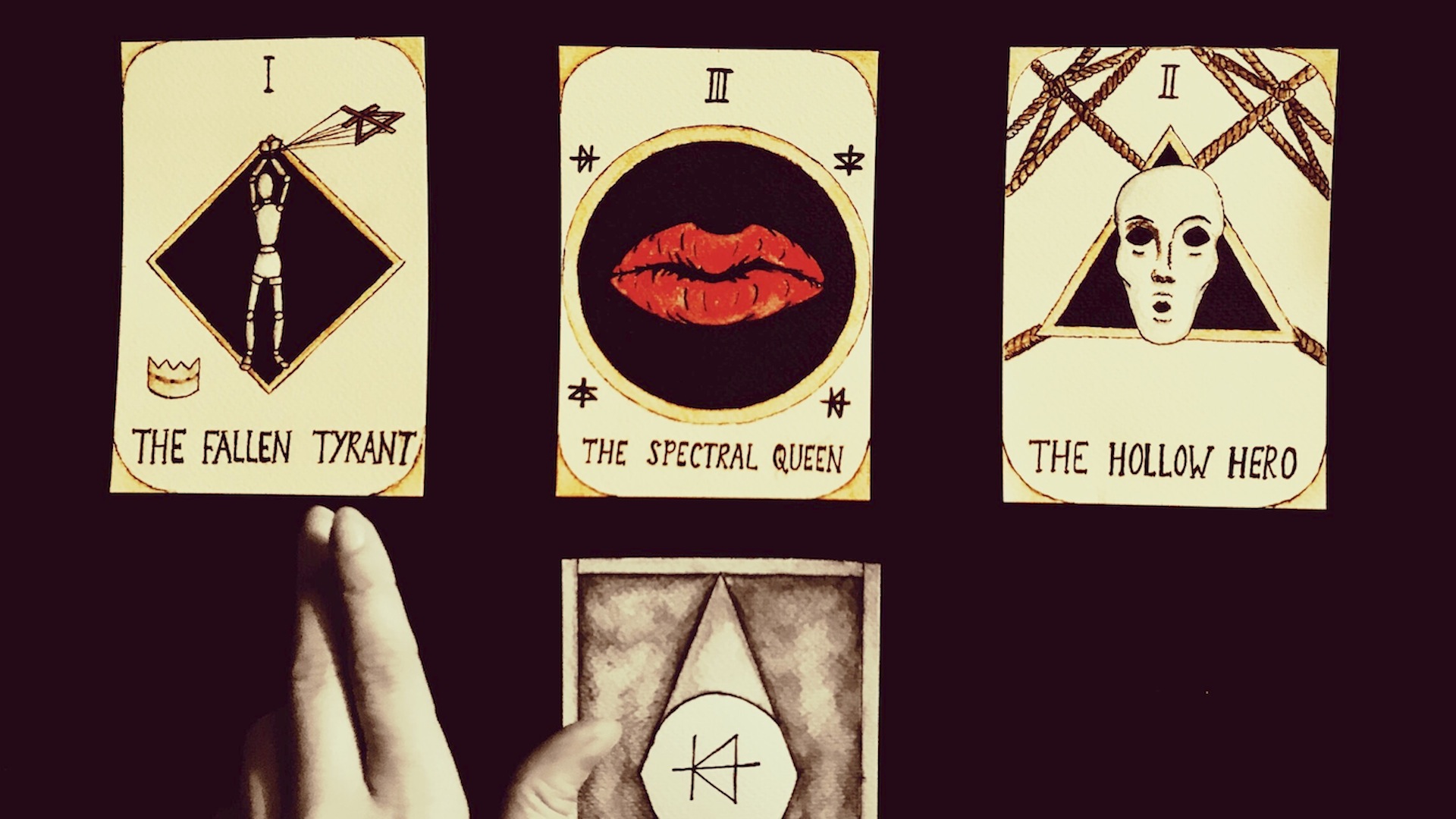
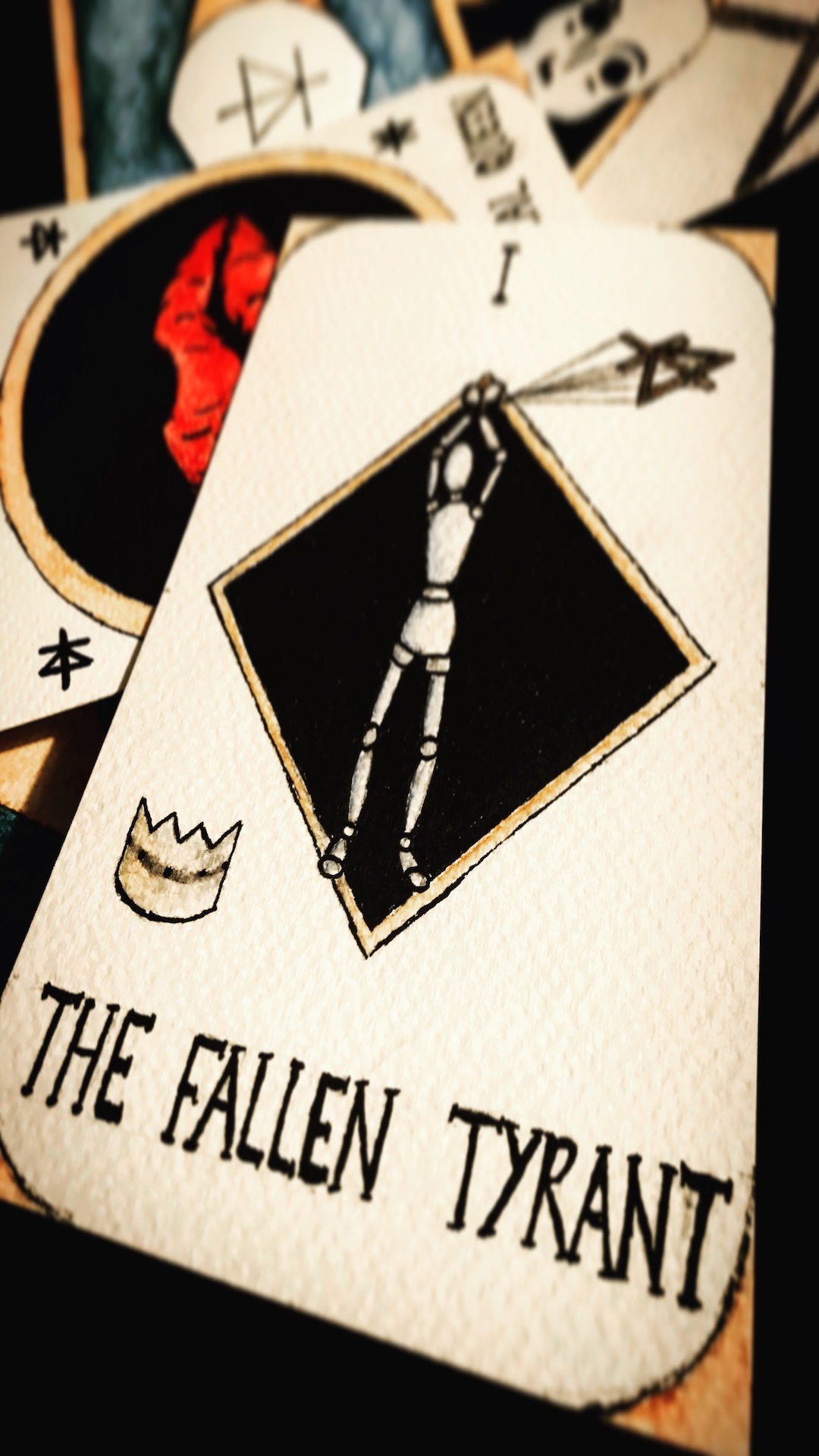
This began with two separate ideas: I began with the idea of the plot, of this fallen tyrant in a prison cell accompanied by something else, meanwhile being visited by essentially his successor, his replacement. And then from that I wanted to explore this idea of adaptation from different elements and including a musical element in this – I became increasingly interested in using music as raw material in the same way [as the text].
Those two different things ended up converging to develop this piece – both the idea for how I wanted to make it, and the idea for the plot – and because we got the slot at Vault Festival it felt like the perfect piece for that festival, because we could essentially create a site-specific piece in this cavernous cell.
Those three elements all converged to spark it off.
What stage did you become involved, Anna?
 Anna Marsland: I’ve been involved since we did our first production, Macbeths, so we’ve been making shows for the last two years. In terms of this project, it was slightly different to the previous two. When Macbeths started, Dave had finished the scripts and I came onboard at that time to direct it. The second time around, Dave had an idea and we had a bit of a chat about the broad concept of what it was going to be – how this would play, this element was going to be changed – but again he went away and wrote the scripts, then we we worked on it and workshopped it and took it forward into rehearsals.
Tomorrow Creeps was slightly different because we got the slot before we had a full script. There was a narrative and there was the space and I knew that I wanted to do a lot of sound within that space. We applied and got the slot based on the ideas, and then Dave has written it in stages. I’ve been aware more of how the script has been progressing throughout the writing process. It’s even more like a new play, because it has completely invented characters.
How much has the venue played into the script creation and production?
 DF: I knew what the room looked like, and what the size and scope and feel of that room was, so to that extent it was in my head while it was coming together. Everything in terms of where people are in the space was written with an awareness that that was what the room was going to like. Which is nice, because you don’t usually have an absolute awareness – it’s almost like a ready made set. That was there in my head, but I didn’t let that too fully dictate what I was trying to do.
AM: There’s lots of things – the atmosphere is very visceral, that smell as soon as you walk in the space. The air’s quite heavy – you’ve got no need for a haze machine in there. It’s very dank and the sound has been a huge influence.
When we first started talking about doing something at the Vault I said that the things that I’ve seen that worked well there have in some way acknowledged the sound as well as the space that it’s in rather than trying to ignore it. It does drip, there are trains rattling overhead every 10 minutes or so. You have to do something that uses that and builds on it.
We are working with a sound designer called Odinn Hilmarsson, who’s essentially creating a durational textural soundscape that’s going to build on things that are already in the space and things that are linked to the musical influences, and imagery as well – we’ve got imagery of the heath, the wind, the cold continually occurring which is part of the soundscape as well.
 The depth of the cavern space [is important too] – the really long space in there seats 90 but even with 90 in there there’s still a vast expanse of space. I’m really excited about what we’re working on at the moment: that use of depth, which is quite chilling, as well [being able] to make things appear in the corner of your eye or things creeping closer, or the dark… It is chilling.
DF: The dark was a big thing that was in my head as well. There is that sense that it’s an enormous space but it can be highly claustrophobic because some bits of it will be very isolated. The sound is so much part of the development of the script as well: the sound is not going to sit on top of anything, it’s very much part of the narrative. It will weave within that.
All of those opportunities came together. Part of what makes it so brilliant as a readymade set is because it’s set in a prison, and such an intrinsic part of the narrative is about stone and masonry, it’s fantastic to have that there.
Interesting – you refer to it as a prison, whereas I saw it from the script as being set in a cell, which is not necessarily the same thing… The Fallen Tyrant is in the basement of where he used to rule from – almost a Dumas Man in the Iron Mask figure – and he’s there as a Hannibal Lector, but Lector very much as Thomas Harris wrote him in the books, rather than as Anthony Hopkins plays him in the films.
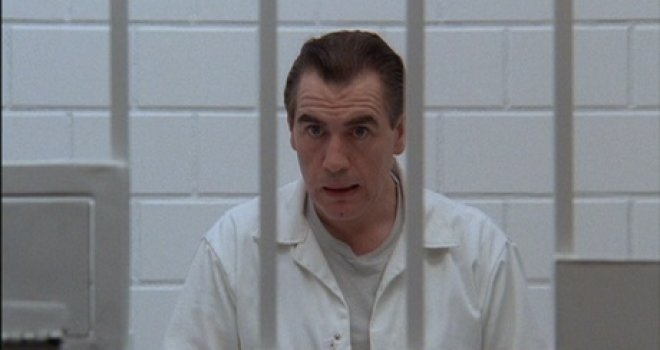 DF: I entirely agree. I’m a big fan of the novels and do you know the film Manhunter? While I don’t think that’s a perfect film either, in a lot of ways I’m more intrigued by the relationship between Will [Graham] and Brian Cox[’s Lecktor] in that one. I feel that that gets more of that Thomas Harris original…
As does the TV series which this very much brought to mind. But let’s talk about another influence: Kate Bush. I’m of the generation that remembers Pamela Stephenson screeching a version of ‘Wuthering Heights’ on Not the 9 O’clock News and it’s hard to take Bush too seriously after seeing that! What was it about her writing and music that spoke to you?
 DF: It’s interesting what you say about not taking it too seriously – I do agree. The interesting thing with this that I wanted to reinvent expectation of how you relate to that song in particular.
It’s not that I’m a mad Kate Bush fan – that’s not where the idea came from in that regard – but I find her a really interesting lyrical musical storyteller. I think she tells stories in a fascinated, unexpected manner. That was my attraction to that.
I was playing around with the idea of Kate Bush and narratives for a little while, not in anything that came to any sort of fruition. Then it just felt like in this, because this play was going to be so inflected by lots of different things, including literary things (the novel Wuthering Heights, the move through it thematically), that this was the perfect opportunity to explore that idea in what was going to be such a sound-dominated world.
It seemed a good place to explore this artist’s work as another raw material, just like the Shakespeare text, perhaps in a slightly different way but perhaps not – it’s very much part of character analysis and all of that. In the same way that I love Shakespeare, I find Bush a very interesting storyteller. I find the way she tells her stories, the way she structures those stories, where she places emphasis, how she uses language as well as how she uses melody really interesting. That worked for me and I understood how that was going to become part of the narrative.
As I developed the script I weaved more and more in, and pieces fell into place. Right now I don’t think of it as any different from the Shakespeare text. It’s just part of that thing.
And Anna – obviously nobody is unaware of Kate Bush, but there’s a great difference in being aware of ‘Wuthering Heights’ and having the knowledge David has – or is there an advantage in not knowing so much?
AM: I really like Kate Bush so that was really a positive thing when Dave suggested that he was going to weave these influences in. I like her songs; I’ve listened to more of her work now than I had done. It’s been a really interesting visual influence as well in terms of some of the other physical ideas. At the moment, nobody is doing a full choreographical rendition of ‘Wuthering Heights’, but we are taking little influences from her videos, that kind of thing.
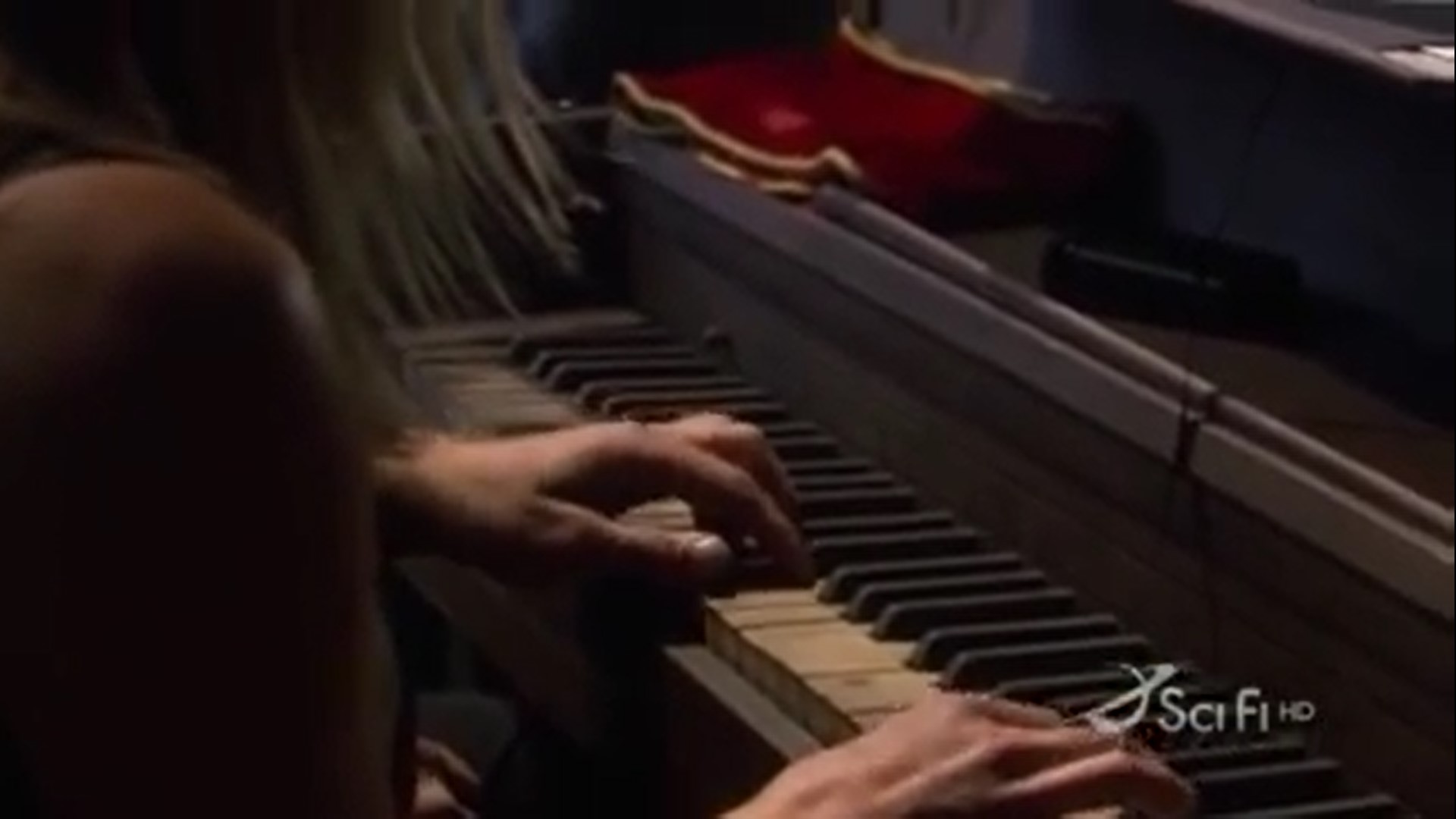 DF: The idea that you can take these little elements and details from a musical thing and build them up was inspired by the new version of Battlestar Galactica, which is one of the best pieces of television ever made.
One of the thing I was really interested in was the way that that show used sound and music as part of the narrative, notably in season 3 with the Bob Dylan ‘All Along the Watchtower’ being slowly weaved through the episodes and the whole season in ways that were completely unrecognisable but completely caught you. It gradually built, and there was the scene with the guy on the piano and it started to seep into the real life, but you still weren’t sure – and then that incredible drop moment. I love the way that piece of music was almost entirely unexplained but so fundamentally part of that narrative.
Although it’s not quite the same as what we do in this, the idea of using that piece of music in that very integrated way was really fascinating and formed the basis of how ‘Wuthering Heights’ began to build through that story. For me that was a huge influence in terms of the tools and the way I went about using them.
 What was the biggest challenge for you, Anna, in terms of envisaging this?
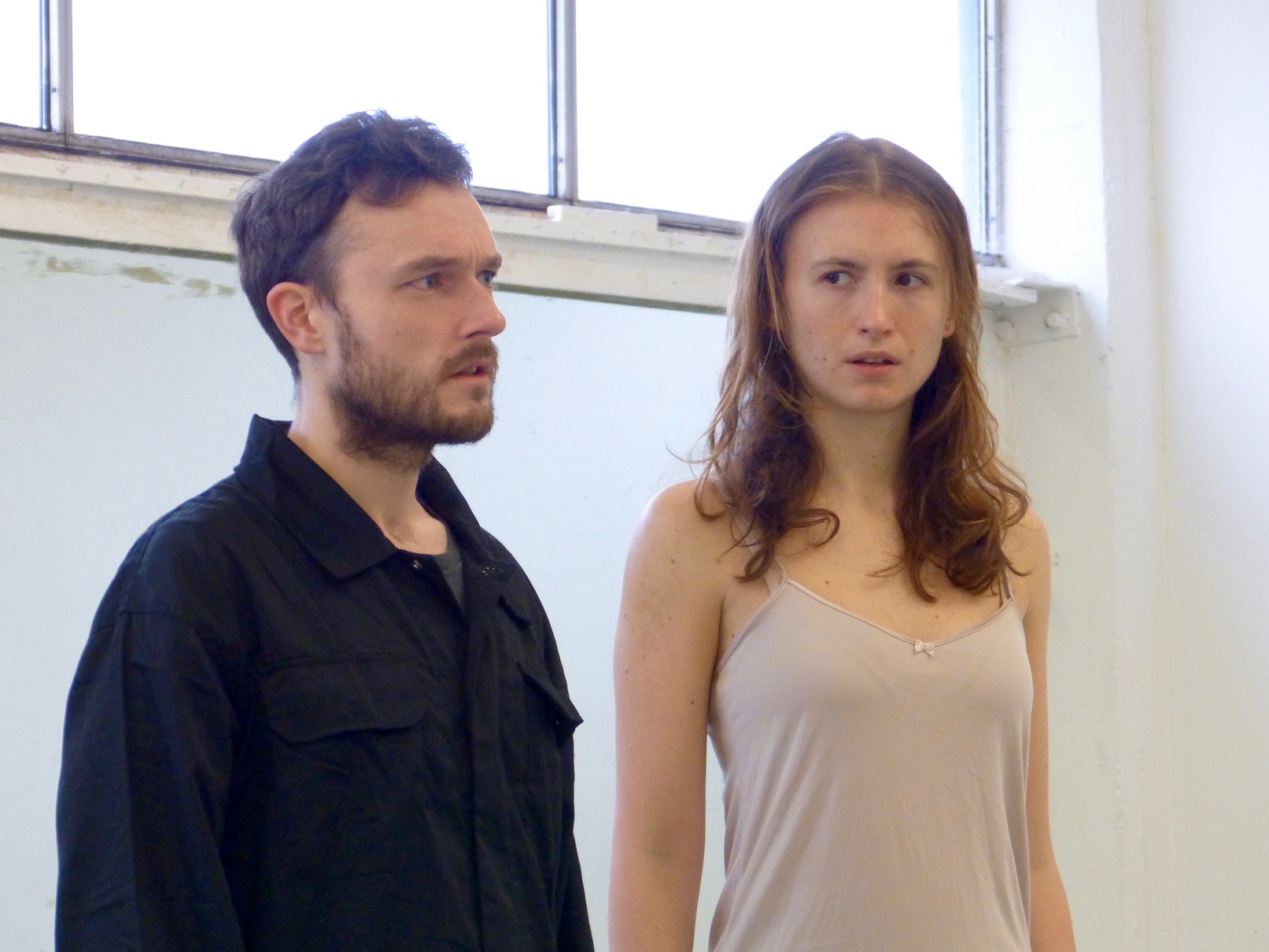
AM: In a way, the biggest challenge to get our heads round really – and it’s been an evolving thing that’s still evolving – is about how these two, the Spectral Queen and this other entity, fit together. For Zena [Carswell], the actor who’s playing that role, who is more prominent at various bits? That level of a spirit driving a spectral entity, that’s been quite a challenge to construct and get our heads around.
In terms of a visual thing, it’s been an exciting prospect, the way that Dave has put the script together. There are so many opportunities to do things that are quite bold staging-wise and visually, and we’ve both used the shared reference point of David Lynch – Twin Peaks, Bob, the Black Lodge – to talk about the way this magic operates in this world. We’ve had quite a few shared visual reference points that we’ve been using. We’re partway through rehearsals so we’re still exploring a lot of that.
No damn fine coffee turning up I hope! In terms of the production, what other influences are you bringing to it?
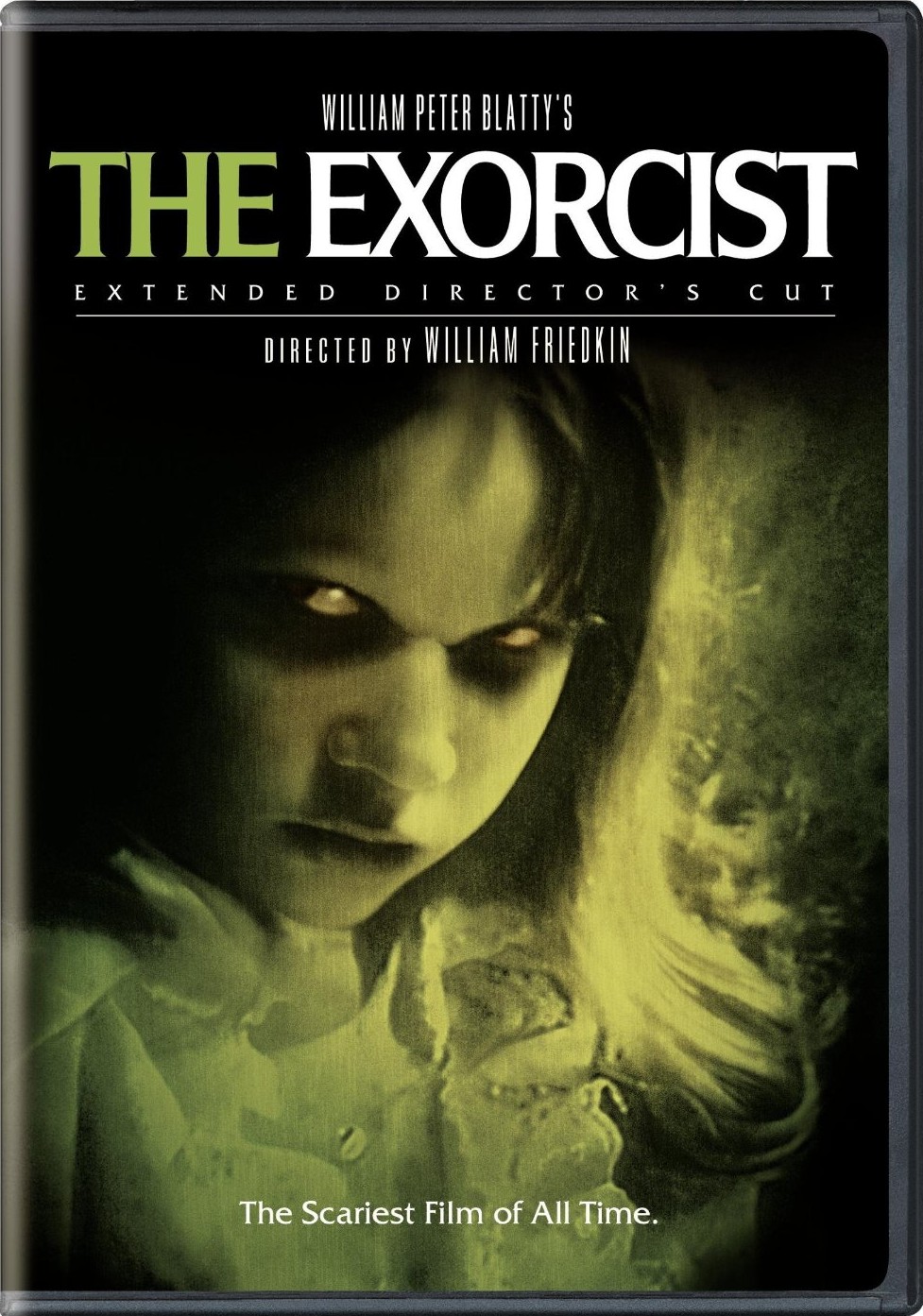 AM: We’ve been watching and referencing quite a lot of supernatural horror films – things like The Exorcist, other things like Alien: when we’re looking at those possession moments and exorcism moments we’re thinking in quite a bodily way. I watched a film recently called The Love Witch, from 2016, which was a pastiche of a Hammer Horror movie, and [I’ve watched] some Hammer horror as well, so it’s got touches of that in there.
In terms of a non-filmic or TV reference, I’ve been looking quite a bit at the Butoh movement as well, a touchpoint of tension and speed of movement – it was influential for a lot of supernatural horror movies like The Ring.
DF: American Horror Story, particularly the second season, Asylum, was a touchstone for us. We were both very interested in talking about Alien, the idea of all of this supernatural stuff being very tangible and very physical. The idea that the possessing entity is a creature, and similarly with AHS, all the ghosts and entitles being very physical and tangible. Everything in the stones rather than in the air – a different inflection on how people would expect a possession or haunting to be and what a ghost can do. Who’s to say what a ghost can be or how they manifest?
What is it about this piece that’s unique?
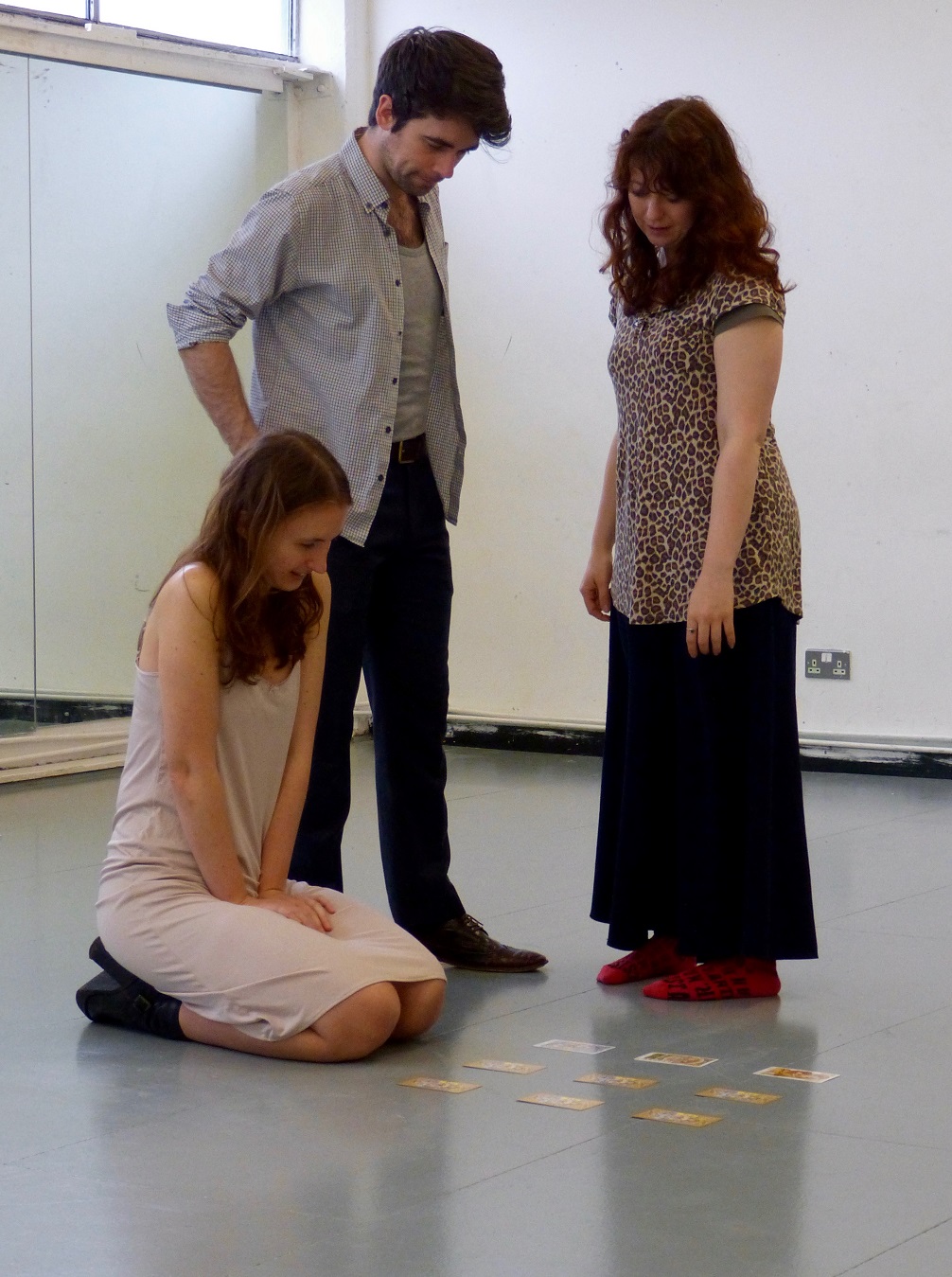 AM: I think the big thing that’s unique is that we’re using Shakespeare’s language in such a stretched way. I hope that the idea of these quite unexpected things that we’re putting together – Shakespeare, horror, Kate Bush – will ignite some interest in people into thinking that’s a very unusual way to be stretching Shakespearean text. I think it is, and it shows how far this language can be remoulded and repurposed and made into something new. That’s one aspect that I think will intrigue and provide something that’s very satisfying and unusual, and different to both other Shakespeare adaptations and also other theatre like The Twilight Zone.
DF: I hope that what this can be in different ways is a very experiential thing for audiences. Obviously they’re going to be in a cavern room on benches but they will be lit in the same way we are lit. There will be that immersive element, that experiential element to them being there, but I also hope that there’s also that experiential element in the way they will receive the narrative.
I was very interested in this being a different sort of narrative. I’m very interested in the way David Lynch constructs stories and delivers those things both through words and the wider pictographic aspects of his scripts. It’s almost that thing where you get the most detailed, the most rewarding incrementally built story but you have to be watching it – more than that, you have to be experiencing it. It’s the sort of thing that’s not an intellectual narrative to follow, it’s a feeling narrative to follow; you will understand it if you’re there with it. I think that can be a very interesting experience.
 What didn’t come across in the script was that I would feel that I was in the cell; I would feel I was watching the cell. In the production will it envelop the audience?
AM: I think “envelop” is the right word. It’s been a continuing idea with all three of the pieces we’ve made: you’re invited to sit in the space with the characters. There won’t be any requirement to place yourself in it but you’re like a visible spectator; you’re invited to sit and watch but that space exists beyond yourself and behind you. You are within that space.
Almost, you are the fourth wall..
AM: Or the ghosts of the space.
 What’s next for Tomorrow Creeps? Could it be expanded? It feels as if there’s more that could be done in terms of the backstory that could be revealed?
AM: We’ve got a couple of ideas about what the future life of it could be after the Vault run. That depends on lots of practical things as well as the ideas we’ve got. It’s something that could go to Edinburgh. Or we have also talked about an option to develop it into a longer piece.
There does seem to be a “Sceptred Isle” link to the pieces…
DF: It shares DNA with some other things that I’ve developed and it would almost be that idea of not necessarily expanding this, in the sense of turning this play into a wider play, but combining it with some other elements that narratively share DNA would provide the backstory, in a not quite linear way. It could become part of a wider piece.
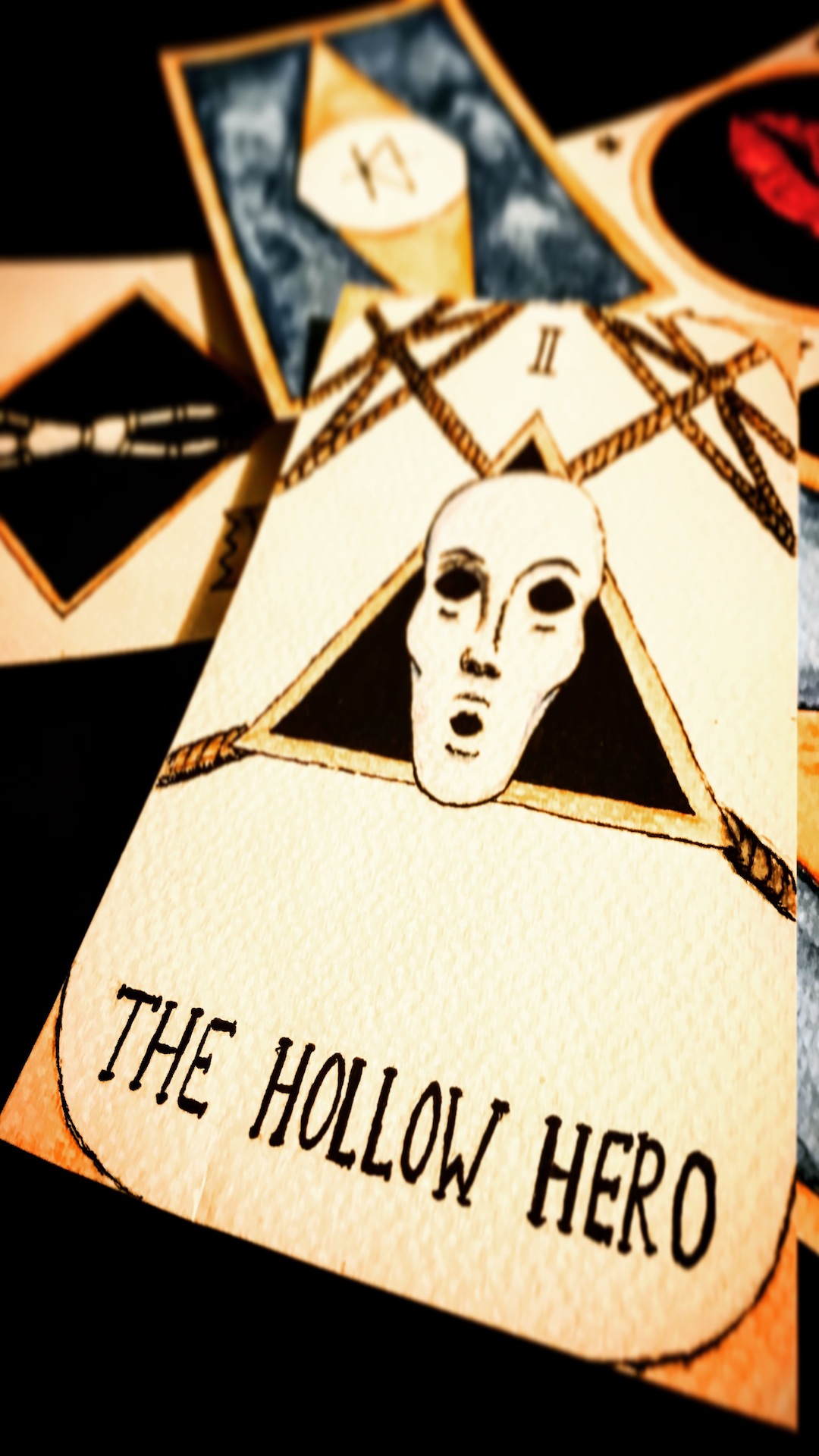 Tomorrow Creeps will premiere at VAULT Festival 2018 from 24-28 January at 7.30 pm with a matinee 27 January at 2.30 p.m. Tickets £10 (+£1.50 booking fee) from here
Rehearsal photos (c) Sarah Lambie
 Doctor Who News Star Trek News
 Sci-Fi Bulletin: Exploring the Universes of SF, Fantasy, Horror and Spy-fi!