Feature: The Voyage to Aquaman Part 9: Justice League (2017)
Having finally cracked the sweet spot of a critically and commercially successful entry in the DCEU with Wonder Woman, WB/DC’s next film in the pipeline was Justice League. Having been […]



Having finally cracked the sweet spot of a critically and commercially successful entry in the DCEU with Wonder Woman, WB/DC’s next film in the pipeline was Justice League. Having been […]
 Having finally cracked the sweet spot of a critically and commercially successful entry in the DCEU with Wonder Woman, WB/DC’s next film in the pipeline was Justice League. Having been announced in 2014 (originally as Part 1 of 2) and being directed by Snyder as a continuation of events set up in Batman v Superman: Dawn of Justice, there was a lot of momentum behind the production before Wonder Woman hit cinemas, meaning there was little chance for any sort of course correction incorporating lessons learned. Could Snyder (and re-shoot director Joss Whedon) between them get one of the most beloved superhero teams in comic book fiction right on the big screen?
With the world a darker place since the death of Superman, Bruce Wayne and Diana Prince search for other meta humans to form a team capable of defending the planet against future threats. That mission becomes more urgent with the arrival of intergalactic warlord Steppenwolf, returning to Earth to reclaim the legendary Mother Boxes and enact revenge for his defeat at the hands of the Amazons, Atlanteans and Men many centuries ago.
 Before I start, I don’t intend to spend time on the manifold and varied dramas that unfolded around the making of this film. Pages of discussion exist elsewhere on the production issues, the reshoots, the departure of Snyder due to personal matters and that moustache, but this is not the place for any of that. The purpose of these essays is to analyse these movies for what they are, which also means I won’t be devoting any time to the ongoing debate over the mythical Snyder-cut of the film, or what might have changed between his original rough cut and the final, re-shot version. The one concession I will make on this score is that – as has been commented on by others elsewhere – it is quite clear that at some point in the re-shoot process, the intended colour filtering for the film was altered significantly, meaning that costumes and makeup clearly designed for Snyder’s signature dark-filtered visual style look oddly coloured, and show off marks clearly designed to be hidden in that original presentation. It’s a minor issue in the grand scheme of things, but it bears at least a passing mention.
 Aggravating the issue that plagued both BvS and Suicide Squad before it, Justice League carries itself with a swagger that it hasn’t earned, attempting a weight and portentousness to its characters and narrative that it simply can’t justify. Making that worse are some extremely ham-fisted attempts to make the film more ‘relevant’ by incorporating the ‘real world’ into its events. So we have an opening montage which shows major international landmarks with black banners of mourning sporting that famous ‘S’ in white draped over them, a woman being racially abused by an angry man, and a newspaper showing pictures of David Bowie, Superman and Prince with the headline ‘Did they return to their planet?’ It feels as if some very ill-advised committee sat down and asked themselves how they could get an edge over the MCU (which cinematically at least has shied away from much in the way of overt or implied political commentary) and plumped on making a political statement but then left the execution in the hands of a high school student. It’s surface level stuff, and the newspaper alone just indicates a level of crassness and basic lack of awareness that should – in a blockbuster with a budget this big – be criminal.
 What hurts more is that because three of the six members of the team here have essentially had a YouTube clip each as their introduction before now, the film has to spend most of its first act introducing them, in-between setting up the main narrative. This leads to an awkward pacing throughout the first two acts, as the film tries to squeeze in the tale of the Mother Boxes and Steppenwolf, introduce three effectively brand new characters, bring us up to date on the characters we already know, and go through the motions of getting the gang together so that they can have the big third act showdown. The problem is, none of it hangs together.
For starters there’s those scenes early on re-acquainting us with Batman and Wonder Woman. Taking the Batman scene first, there’s no internal logic to it. Why is he beating up a criminal just to invoke fear in him and attract a parademon? How does he know they are attracted to fear? Aren’t there ways he could just do this without actively beating people up? Why doesn’t he actually do anything about the criminal in the end? Why, in fact, does he pause for a quick expository conversation with the criminal about what just happened?
 Diana doesn’t get much better – a bank is about to be blown up by the most thinly-sketched terrorists ever, for reasons which seem rudimentary at best and using a method that seems odd, and Diana comes in and saves the day because she happens to be there. It’s undoubtedly a nice action sequence but it attaches to nothing, so it has no impact. It also rather begs the question of why it takes her so long to intervene. We have to assume she was aware of the scheme (otherwise why is she in the area and not at home in France where she lives and works?) but she allows the terrorists to enter the bank and shoot several people dead before she even begins to intervene. This is not in keeping with the character established for her in her own movie, and it just comes off as the second unit being told to produce an action set piece without an actual script and the writers then shoehorning in a rudimentary ‘these men are bad’ narrative at the last minute.
 This kind of lack of logic permeates the entire film, and it’s the most glaring fault. Why does Bruce believe that a man who lives underwater and can talk to fish might be of assistance in opposing a world-threatening enemy? Why did Cyborg’s father think that using the Mother Box (or change engine as he calls it) would save his son? How does Bruce perform the mental leap from ‘The Mother Boxes are a source of unlimited power used for destruction through rampant and uncontrolled growth’ to ‘let’s use one to resurrect Superman’? All these questions and more clearly did not occur either to the scriptwriters or the editors who oversaw this project, if the end result is anything to go by.
 Even one of the film’s few high points – the reinvigorated, joyful performance by Cavill in the third act climax – is somewhat undermined when one stops to consider that there is no arc to Superman’s actions. He wakes up in an intense rage and sets about beating the living daylights out of the other League members, then Lois turns up and begs him to stop, whereupon he takes off to the old farmhouse in Smallville with her, stands and mopes in a field for a bit, and then decides to go find our heroes and help them out. When he arrives, he’s all smiles, quips and jokes – exactly as Superman ought to be, and wonderful to see, but how did he get there? Is this perhaps some attempt at dark humour on Snyder’s part, implying that Kal-El needed to die in order to learn to lighten up? If so, it’s ill-conceived, from concept to execution. Still, credit where it’s due, in those last thirty minutes or so, Cavill shows us what he can be in the role when given the chance, and I for one would happily welcome a Man of Steel sequel in which we got two hours plus of that Superman on the screen.
 If the heroes get a bum deal with their narrative though, it’s nothing compared to Ciaran Hinds as villain Steppenwolf. We start with him returning ‘from exile’ as the Mother Boxes call to him (for reasons which aren’t clear anyway) but then later it transpires that this ‘exile’ seems to have been self-imposed as he fled from Earth in shame at having been defeated by the grand alliance of the Kingdoms of Men, Amazons and Atlanteans (something you might have thought would have come up at some point in Wonder Woman among all those tales told to Diana of the origins and deeds of her people). We’re also told that the parademons are created by him from his defeated enemies, so either he’s been on some massive intergalactic crusade lately to have so many or something is off. If the former, well, hardly much of an exile, is it?
Leaving aside the logic of our villain’s narrative, the main issue is that he’s just a shouty CGI cliché. He wants to destroy the world (of course) but there never really seems to be any clear reason why, beyond that he’s the villain and that’s what the villain is there to do. Making it even worse is the fact that they leave in a mention of Darkseid, which is clearly a remnant from when this movie was one of two, and bigger, darker threats were imagined to unfold. Here, it has the curious effect of defenestrating the main villain of the movie by his own hand, as he effectively declares one second that he will be the end of the world and the next that he’s laying a path for his boss.
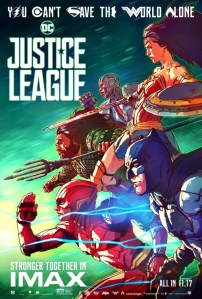 I mentioned cinematography earlier and it’s worth returning to for one particularly egregious point that bugged me on the first watch and was still there second time around – the tendency of the camera to instantly find an angle on Gal Gadot’s backside in nearly every scene in which she appears. Director of Photography Fabian Wagner seems to have a certain…appreciation of Ms Gadot’s appearance that just makes the whole thing feel leery. It stands out to me especially because one of the most often-levelled criticisms against Snyder himself is that he’s a bit of a sexist when it comes to his filmmaking (despite wife Deborah acting as producer on every film he makes) but it’s odd how none of these creepy backside shots happened in BvS (where the DoP was long term Snyder collaborator Larry Fong) and it’s so blatant in this film that it bears mention. Others made much of the distinct shift in the costumes for the Amazonians between Wonder Woman and this film, focusing mainly on how much more flesh seemed to be on display. That’s true, to an extent, though what struck me more forcibly was how most Amazon warriors (including Hippolyta herself) now seem to be sporting armour that’s essentially like Wonder Woman’s but different colours.
Those who imagined that Danny Elfman returning to scoring duties might have some major impact will have been left disappointed too. Though there is the occasional reprise of a beloved classic (Elfman’s classic 89 theme makes a brief appearance and Williams’ signature Superman theme is in there too) mostly the music is buried under the loud explosions and shouting. Honestly, it feels like whoever mixed the sound for this movie was told to prioritise everything over the score, meaning that for the most part it’s just washed out, making the tidbits we do hear feel more frustrating than enjoyable.
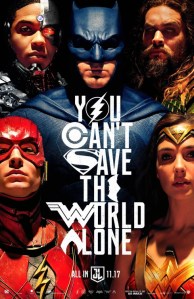 Mostly, the whole thing plays out like it wants to be a Marvel movie. Not to ape one, but to actually be one. There’s a feeling of desperation to the way it carries itself. It inserts jokes where it doesn’t need to (even if some do admittedly raise a chuckle). It undermines its own sense of threat by having our heroes act like idiots (see, for example, their leaving of the Motherbox unguarded for Steppenwolf to just swoop in and take while they deal with the resurrected Superman) and it soaks its frame with bright colours that clearly neither the costumes nor the sets were ever designed for. It doesn’t just clash with its predecessors (although it really does clash with them) but it clashes with itself, tone and narrative in a constant conflict which feels more like a half-hearted slap fight than an actual war, with both giving up long before the third act and just hoping that it’ll all end of its own accord soon. Again, it doesn’t feel like it earns its lighter moments, any more than it does its moments of drama. It just runs in place for two hours, desperately lunging for jokes, pratfalls and quips as it goes ‘Look! We can do this stuff just as well as Marvel!’, all the while missing the fundamental point that Marvel balance this stuff out with intelligent writing, developed characters and most importantly investment of time. Avengers Assemble worked because five previous films had built up (or at least introduced) all the characters. Here, the film attempts to introduce so many elements that none really stick, and all are executed poorly.
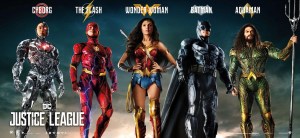 When I saw it at the cinema, my initial response to Justice League was that it was neither terrible nor especially good. On a second viewing, it doesn’t even merit that sort of faint praise. Narratively incoherent, lacking any of the ambition of Man of Steel or BvS, and with paper-thin characters and a complete absence of any weight, this is one movie that deserves to be forgotten altogether.
 Doctor Who News Star Trek News
 Sci-Fi Bulletin: Exploring the Universes of SF, Fantasy, Horror and Spy-fi!