Feature: The Road to Infinity War Part 7: Iron Man 3 (2013)
With ‘Phase 1’ closed off by the spectacle cinematic event of Avengers Assemble, the second stage of the MCU was kicked off with another entry from the character who started […]



With ‘Phase 1’ closed off by the spectacle cinematic event of Avengers Assemble, the second stage of the MCU was kicked off with another entry from the character who started […]
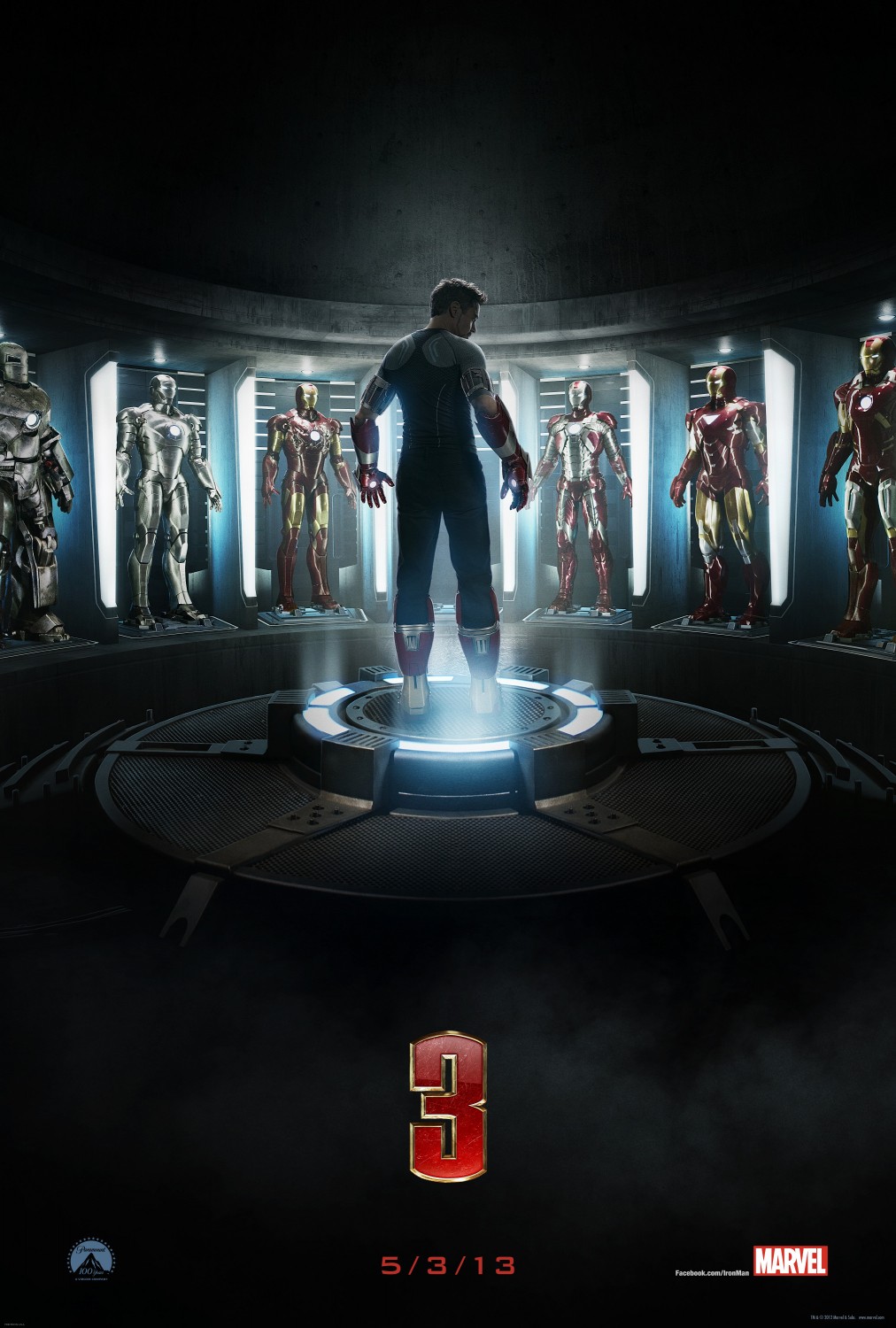 With ‘Phase 1’ closed off by the spectacle cinematic event of Avengers Assemble, the second stage of the MCU was kicked off with another entry from the character who started it all, as Greg D. Smith explains. In the wake of the devastating battle of New York, and his own near death during it, Tony Stark is suffering clear signs of PTSD. When a new threat emerges in the form of the sinister Mandarin, is Tony even in a fit state to face him, let alone save the day?
Following on from the phenomenal box office success of Avengers Assemble, Disney-Marvel made their statement of intent with a solo film from old reliable himself. The question was, after a critically lauded debut and a less warmly-received sequel, could Robert Downey Jnr pull it out of the bag again?
For me, it’s a yes, although this is one of those entries that seemed determined to polarise its critics from its opening scene, accompanied as it was by Eiffel 65’s Blue (Da Ba Dee). Freed from the constraint of sharing the screen with several other big hitters, and with Shane Black taking over the directorial reins from Jon Favreau, the studio had a lot of room to play with, and play with it they most certainly did.
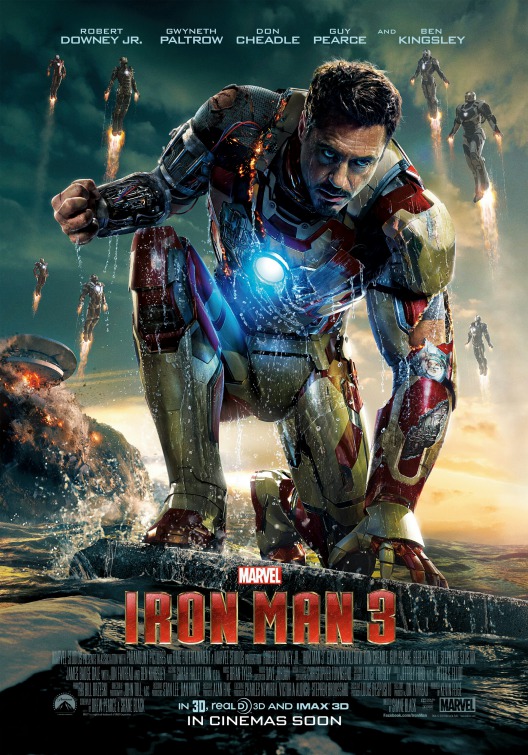 Opening with a flashback monologue to a party Stark attended at the turn of the millennium, we see Yinsen and that encounter we had relayed to us back in the first movie, and then we see Tony brutally dismiss a cloying, needy scientist looking to speak to him in favour of spending the night with a Botanist called Maya Hansen. Over parts of this, we have narration delivered by Tony himself, as if speaking directly to us, the audience.
As we had established from the previous two solo entries, Tony Stark is not a man who reacts ‘normally’ to events. Having literally crossed through a wormhole into deep space, lobbed a nuke at an alien mothership and then fallen back to Earth and barely survived, one might forgive Tony’s suffering a few issues with his mental health. One might also expect – now that he’s in a healthy relationship and has grown immensely from our first glimpse of him on screen – that he might address those issues sensibly, and seek the help he so clearly needed.
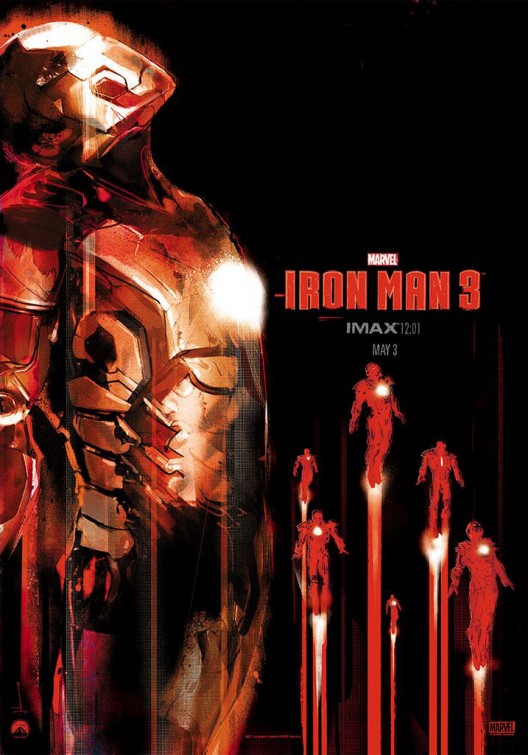
Instead, he chooses to do what he does best: tinker with something else to keep him distracted. In this case, many something elses, in the form of a whole plethora of tweaks to his Iron Man armour as he goes through revision after revision. This is partly a wheel-spinning exercise but also partly the genesis of the same train of thought that will eventually lead to Tony’s creation of Ultron. Having seen what’s waiting for the world out there in the big bad cosmos, having had a taste of fighting a threat from another world, Tony is terrified. The very relationship that should save him is instead contributing to his paranoia, because now he has something he’s afraid of losing in Pepper, he cannot stop worrying about the ways in which that could happen, nor tinkering on ways to make it not.
 Some take issue with the fact that here, after several movies, Tony’s character has not grown ‘enough’. I say that this is absolutely realistic. This is a man who reached his forties (I’m guessing, we are never given a solid age for Tony in the movies) without having had anything to occupy him but drinking, high living and an endless parade of no-strings encounters with ladies. So he has a proper relationship now, so he’s grown up a bit and stopped selling weapons and taken a bit more of an interest in something other than himself. You don’t just undo four decades of learned responses and personality overnight. Tony is trying to be better, but he’s not really got the tools yet to know how – witness his gift to Pepper of an enormous soft toy bunny. It’s a wildly inappropriate, even creepy thing, but you can see a genuine intent of affection there, albeit a misguided one.
However, Tony is soon confronted with bigger issues. When long term employee and friend Happy is injured in an explosion, he’s devastated. When responsibility for the explosion is claimed by the Mandarin, just the latest in a string of similar attacks on the US by this horrific terrorist leader, Tony does the exact worst thing possible – he goes on TV and calls him out, giving his address as he stares down the camera asking the Mandarin if he’s man enough to come and take him on. The emotion in the speech is palpable, Stark’s voice always close to breaking as he delivers it – it isn’t the declaration of a man who is rationally angry, but the act of a man backed into a corner and trying to prove he isn’t as damaged as he knows he is.
Unfortunately for Tony, the Mandarin takes him up on his offer, and the resultant attack destroys Tony’s home and sees him fleeing in the one remaining Iron Man suit he has left, which runs out of power and pitches him into the snow close to the site of what he suspects is an uncredited Mandarin attack. Thus, the first act of the movie ends on a low note, and transitions into the part that really polarises people – ‘The Kid’.
 For me, this is actually a fun part of the movie. Tony is on his own, at his lowest ebb and in need of help. But he’s Tony, so he can’t easily ask for it, and when it’s given freely by a young boy with no friends and an enquiring mind, he can’t just accept it and be nice about it – he has to be a dick about it instead. Again, he’s growing, but it’s a long journey.
More importantly, the movie’s second act sees Tony stripped back without any of his gadgets to rely on. His suit needs to be recharged and with the jury-rigged setup he has that’s going to take a while. Meanwhile, he has to try and get a lead on what he’s up against, and that involves using his formidable intellect rather than a big powerful suit of armour or even Jarvis to solve the mystery. It also involves help from the kid. The interesting thing here is that the PTSD that Tony is suffering is not a thing which is instantly solved – it recurs in painful episodes throughout and there is a scene in which the kid must help Tony to calm down as he’s in the middle of a full-blown panic attack. It’s an odd inversion, and another reminder of how, for all his intellectual genius, Tony has a lot of growing to do.
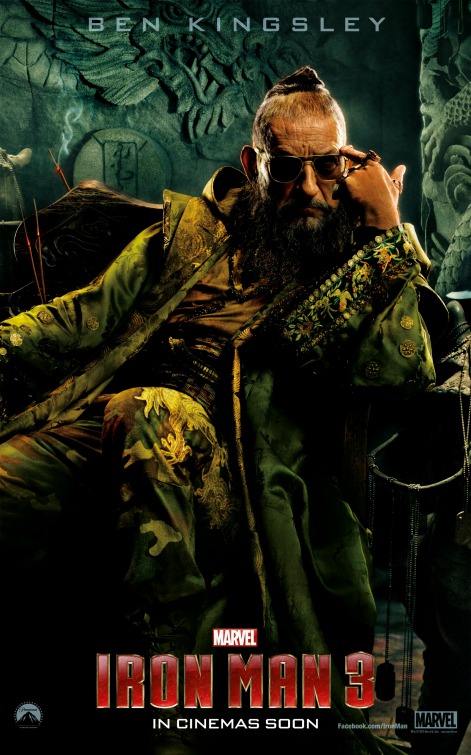 Of course we then get to the next contentious part of the movie – the revelation of the Mandarin. Again, many were furious at the reduction of a storied and long time foe of Iron Man in the comic books being reduced to what they saw as a cheap gag. The revelation of actor Trevor Slattery, a cowardly, drunken, drug-addled ne’er do well down on his luck, as the man behind the performance that was the Mandarin was a masterstroke from the studio, who had managed to keep a lid on it all through the production until the film hit theatres. It was a divisive mood, but I would argue that it angered a lot of people who didn’t really understand it, or who weren’t paying attention through their rage at the initial reveal. But it’s all there – Trevor recounts how his performance is calculated to take advantage of basic American fears in the modern age, sculpted to work off the very tropes which terrify the modern western consciousness. The explosions were merely an unfortunate by-product of the work done by AIM, and the Mandarin a convenient way of both covering them up and taking advantage. Far from a joke, the Mandarin is a creation of purest cynicism, a sinister construct of a mind with a devious masterplan. The juxtaposition of this with the comical, helpless Slattery is a necessary moment of lightness in a plot point that skirts perilously closely to serious political comment.
As the third act commences, things settle down into a more standardised pattern – the kidnap of the president to execute him live on TV, the showdown between Tony, Rhodey and the super soldiers of AIM with Tony bringing a whole legion of suits to his aid – it’s all very much a standard superhero movie type round off to what to that point has been a fairly unique and daring entry in the franchise. The death of Maya towards the end of Act 2 feels like an afterthought because of course it was – the story being that originally she was to be the villain of the piece, but that the studio nixed this idea because a female villain wouldn’t work. I think there’s a certain Goddess of Death who might have a thought or two on that. Nevertheless, the final act does feel a little rushed and generic in comparison with what preceded it, and that likely comes down at least in part to this change. The revelation of Killian as the villain of the piece lacks impact because it feels rushed, and as a result we get another MCU entry in which the main ‘villain’ can be said to be the weakest link.
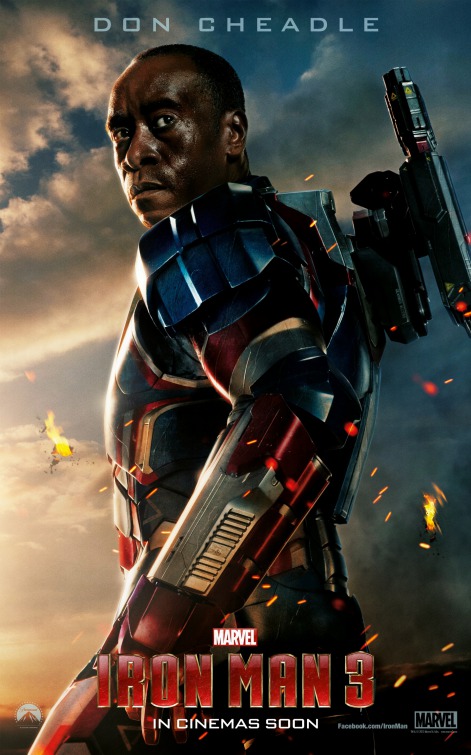
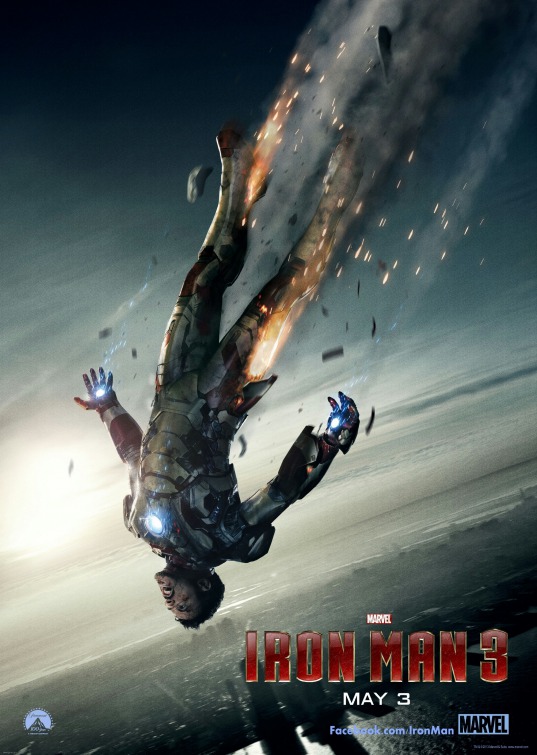 Which isn’t to say that it isn’t an entertaining finale. As Stark jumps from platform to platform, various suits coming to his aid, it’s a visual spectacle easily on a par with any other move in the franchise to date, and the satisfying conclusion of Pepper herself not only not being dead, but getting to be the one who delivers the final blow to Killian is undeniable. Rhodey gets to have plenty of fun too, saving the president and looking awesome while he does it.
Where it gets even sillier is in that ending. After so many hours of films based around how irremovable the ARC reactor was from his chest because the slightest attempt would result in his death, it feels a little cheap to just suddenly go to an ending monologue in which a doctor removes it after Tony has ‘cured’ Pepper by also apparently fortuitously figuring out the shortfall in the AIM formula. It’s that element of ‘handwavium’ again, brushing over an important plot point for the sake of convenience and again, in a mostly well-plotted and thought out movie, it’s a bum note.
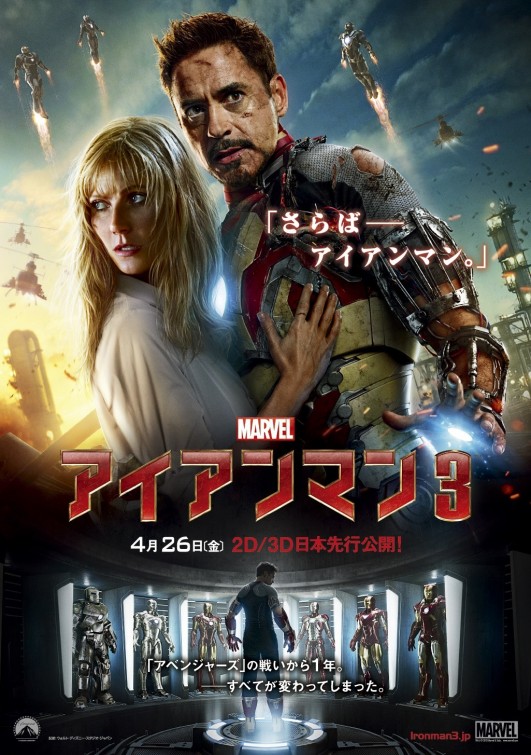 That said, it does tie in nicely with the overarching theme of the movie – that of Tony finally coming to an important realisation on his road to gradually growing into an adult person. Contrary to his assumptions, he doesn’t need the suits or the ARC reactor to be Iron Man – he’s that all by himself. The suits are a mere accessory. Some ask why he turns up with more suits in subsequent movies when he enacts the ‘House Party’ protocol at the end of this film to blow them all up and gives the monologue about not needing them, and again that’s to miss the point. The House Party protocol and Tony admitting he doesn’t need the suits is about him letting go of the obsession of building endless permutations of them in order to embrace life a little. He’s recognised the habit as unhelpful, and this is reinforced by the revelation that he’s talking to Bruce about his progress, trying to learn how to grow and deal with his problems. Of course, Bruce isn’t that kind of doctor, but again, Tony is taking steps, albeit tiny baby ones.
It’s a slick, well put together package that in keeping with the aesthetic of the director is also set at Christmas. A slightly by-the-numbers third act keeps it from being one of the truly great entries in the MCU, but it is a solidly entertaining, well-acted and charming film, and certainly not the worst of the sequels of Phase Two by a long shot.
 Doctor Who News Star Trek News
 Sci-Fi Bulletin: Exploring the Universes of SF, Fantasy, Horror and Spy-fi!