Feature: The Road to Infinity War Part 5: Captain America: The First Avenger (2011)
One more element was needed before The Avengers were fully assembled, and Greg D. Smith now steps back 70 odd years for the fifth part of our prelude to war […]



One more element was needed before The Avengers were fully assembled, and Greg D. Smith now steps back 70 odd years for the fifth part of our prelude to war […]
 One more element was needed before The Avengers were fully assembled, and Greg D. Smith now steps back 70 odd years for the fifth part of our prelude to war in a story that features Steve Rogers – tiny, plagued by ill health but possessed of the heart of a lion, all he wants is a chance to serve his country on the battlefields of World War II. When he’s given that chance, he may be the only thing that can stop the rise of HYDRA under their master, the Red Skull. If he can get away from promoting war bonds for the government, that is.
The First Avenger is possibly the biggest gamble that Marvel has taken with the MCU in all of the ten years and 18 movies of that experiment to date. A bold statement, perhaps, but one to which I absolutely adhere.
So here we were, the fifth movie in what was now very obviously a franchise. Increasingly regular releases, a shared universe, characters we were starting to become familiar with – the MCU was starting to gather a sort of momentum, and that Avengers movie, which had seemed such a far-off dream, was suddenly becoming more of a realistic prospect. But first, we needed to get the First Avenger on the screen, because you couldn’t conceivably have the Avengers without Captain America.
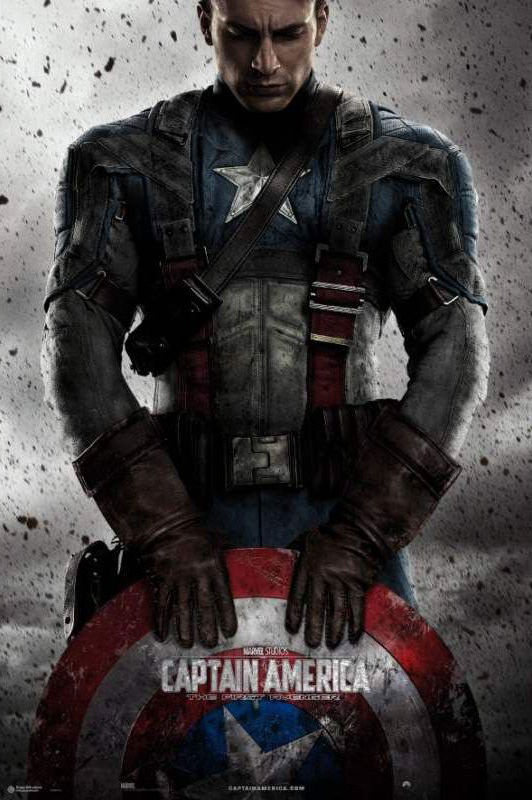 But what a challenge that was. The character was not a stranger to the screen (in actual fact, the well-received 1944 Republic serial Captain America was the first ever theatrical release starring a Marvel character) but his later screen outings had all been poor, TV or direct to video releases, the latter of which, 21st Century Films’ 1990 Captain America holds an 8% on Rotten Tomatoes and was universally panned.
As if to add to the challenge, the studio decided to cast Chris Evans, last seen on Marvel duties as cocksure pilot Johnny Storm in Fox’s disappointing Fantastic Four and its sequel Rise of the Silver Surfer. Though Evans to that point had enjoyed a reasonably productive career, surely few could have looked at him at that point and thought this was the man to helm a franchise which not only had to cement the character’s place as a key Avenger but also redeem the travesties of past screen outings?
Well, someone did, and then they elected to set the movie almost exclusively in World War II, robbing us as viewers of the relatable modern world and cast of familiar supporting characters we had grown attached to over the previous four films. None of that context would be there. Even Thor’s creators had had the sense to set the movie largely on a contemporary Earth, with Coulson running around in the background to provide a bridge for viewers. From the outset, this seemed a venture doomed to failure.
That it didn’t, is testament to the vision of the director, the faith of the studio and the talent on display.
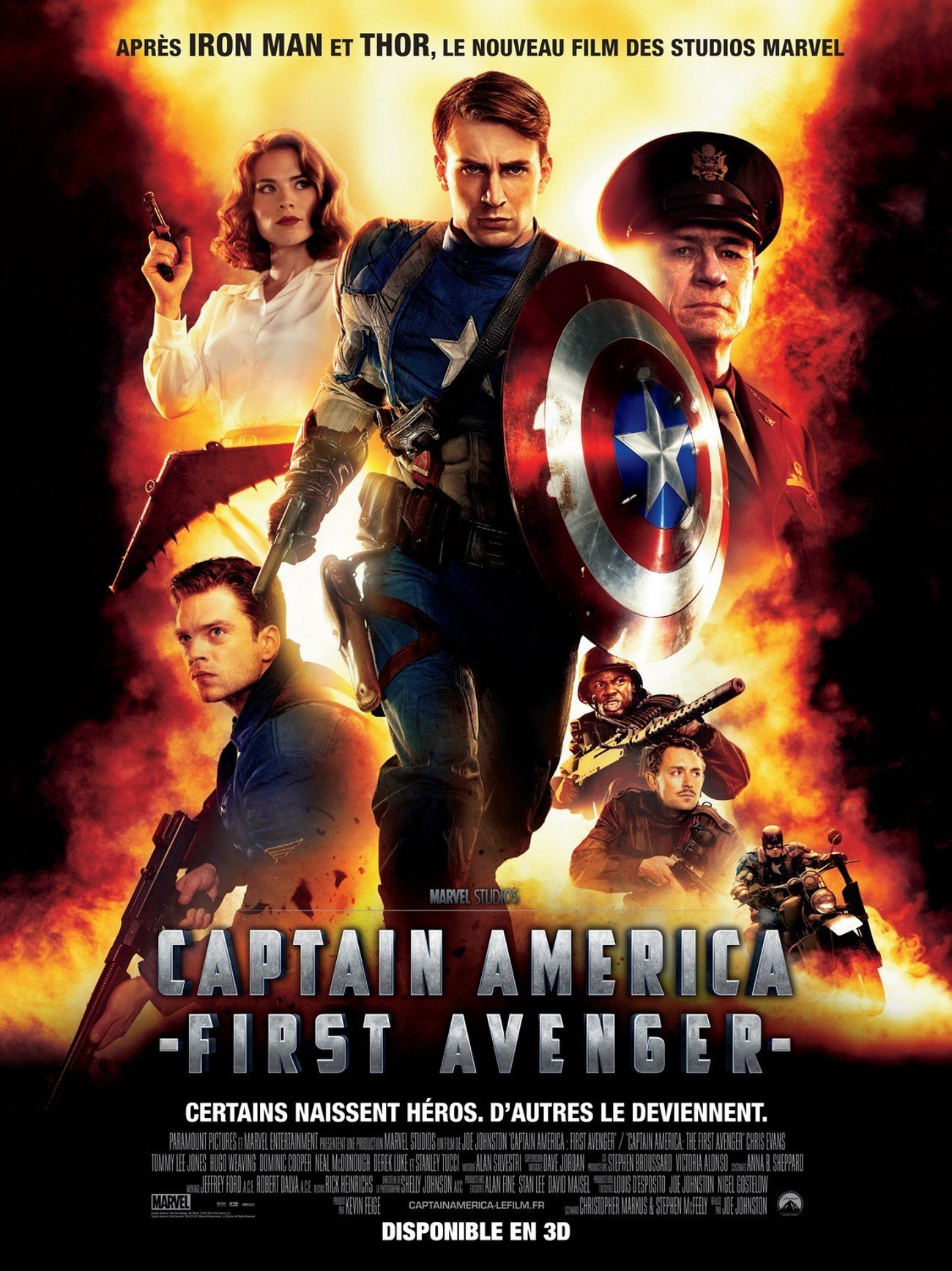 As the film opens, we see the discovery of Steve in the ice in the present day, before catapulting back to a church in 1942 and the discovery of the Tesseract by Johann Schmidt, founder of HYDRA and also known as the Red Skull. Hugo Weaving has remained relatively quiet on his time in the MCU but it seems he has no wish to return. Many complain that the villain is the weakest part of this movie (as they do with most MCU films) and indeed, it’s difficult to see what more could have been done with an actual Nazi fanatic as the bad guy. It was bound to come off as camp, and Weaving does the best with the material he has, his trademark low timbre squashed awkwardly into an attempt at a German accent, and half of his appearance in the movie in full (and frankly not great) makeup as the Skull. That said, I tend to find that I don’t think of Schmidt as ‘the Villain’ of the movie – consider that he is the founder and head of HYDRA, whose own motto is ‘Cut off one head, and two more rise in its place’. Even he had to realise that his organisation, based on its own foundational principle, could never be centred exclusively around him.
Or at least you would think he would – this is perhaps the source of the greatest frustration with the character in this movie – he uses the motto himself, he talks of the entire world (including Nazi Germany itself) being enemies of both himself and of HYDRA, yet he seems oddly unaware of the fact that his own philosophy would surely eventually see him deposed. True, he is ‘special’ in that he has the same strength and abilities (mostly) as Captain America himself will have thanks to the ministrations of Dr Erskine, but still, it’s an odd note of discord. Weaving’s is admittedly not the strongest role in the MCU and mainly he finds himself upstaged by Toby Jones as Arnim Zola, a weaselly, physically unimpressive man who is nevertheless the brains behind the technology which gives HYDRA its edge. Zola is clearly not all that impressed by Schmidt, and it becomes obvious that he uses the man as much as the Red Skull believes himself to be using Zola.
 When we meet Steve Rogers, he’s a weedy kid from Brooklyn with a list of medical ailments as long as your arm but a tenacious refusal to quit. All Steve wants to do is join the army and do his bit to fight against the Nazis, recognising that Hitler is a ‘bully’ and not liking bullies wherever he may see them. A fight in an alleyway with a guy twice his size goes predictably until his friend Bucky turns up to help him out. What’s impressive here is less the wizardry used to digitally place Evans’ head on the body of a much smaller, slimmer man, but the power of Evans’ performance itself which compels you to believe in it. For a man 6 feet tall and powerfully built in real life, it’s quite incredible how authentic he makes these scenes, and it immediately makes you realise why he was the right choice for this role – he can make the audience buy into the character even before the transformation, which is important, because otherwise Captain America is just another musclebound superhero with no distinguishing feature. Instead, as we see him valiantly fight his way through the selection programme that Erskine backdoors him into (much to the chagrin of Tommy Lee Jones’ Colonel Phillips) we are charmed by his courage, his refusal to quit even in the direst circumstances, and his thinking outside the box (the removal of the pin to flop down the flagpole and easily unclasp the flag for a lift back to the barracks is a classic moment, and underpins again that our hero will not just be a brainless meathead with big muscles).
Indeed, we always know that Steve will be the one to be chosen, and so the validity of that journey on the screen was always the important part. When the change comes, and Evans steps out of the chamber as himself for the first time, the movie magic happens and we believe in the transformation the film is selling us (as did Hayley Atwell, whose Peggy Carter absently touching Rogers’ enormous pectoral muscle as he emerges was a genuine reaction from the actress, seeing Evans topless for the first time).
But then the movie takes a left turn again. Now that we have our hero, with his rock solid morals to go with his rock hard abs, surely it’s time for Cap to go charging into the field and kicking Nazi backside? Well, no. He gets the glory of the brief chase through the streets after Erskine’s murderer and then he’s sidelined, made to tour the country (and the rear lines) as a chorus boy, singing, dancing and selling war bonds. There’s also the wonderfully meta cinema serials, showing him in black and white beating up Nazis and fighting the good fight while the real Rogers sits uncomfortably in the theatre and watches. For a man who’s only ever wanted to go and fight, it’s torture.
 When he finally does get the opportunity, it’s not because it’s given to him but because he steals it. Finding that his friend Bucky’s unit has gone missing behind enemy lines, and fed up of being jeered at by the soldiers he’s there to entertain, Cap takes matters into his own hands, ably assisted by Carter herself and Howard Stark (inspired casting with Dominic Cooper, who really does come across as the Elder Stark himself). The mission’s success sees him and Bucky reunited, Carter’s decision vindicated and Rogers himself with the intel the allies need to change the course of the war – the location of every HYDRA weapons facility – because again, smart as well as tough.
The formation of the Howling Commandos and their exploits tearing through these bases and slowly but surely tearing down Schmidt’s empire could have been an entire movie in and of itself. To its credit, the movie makes it essentially a montage capped off with a train-based scene in which we lose Bucky and Zola is captured. The movie never takes its eyes off the wider prize – the proper formation of Cap as a character to move onwards with in the wider franchise – and so it sticks to its main story even as he mourns the loss of his friend.
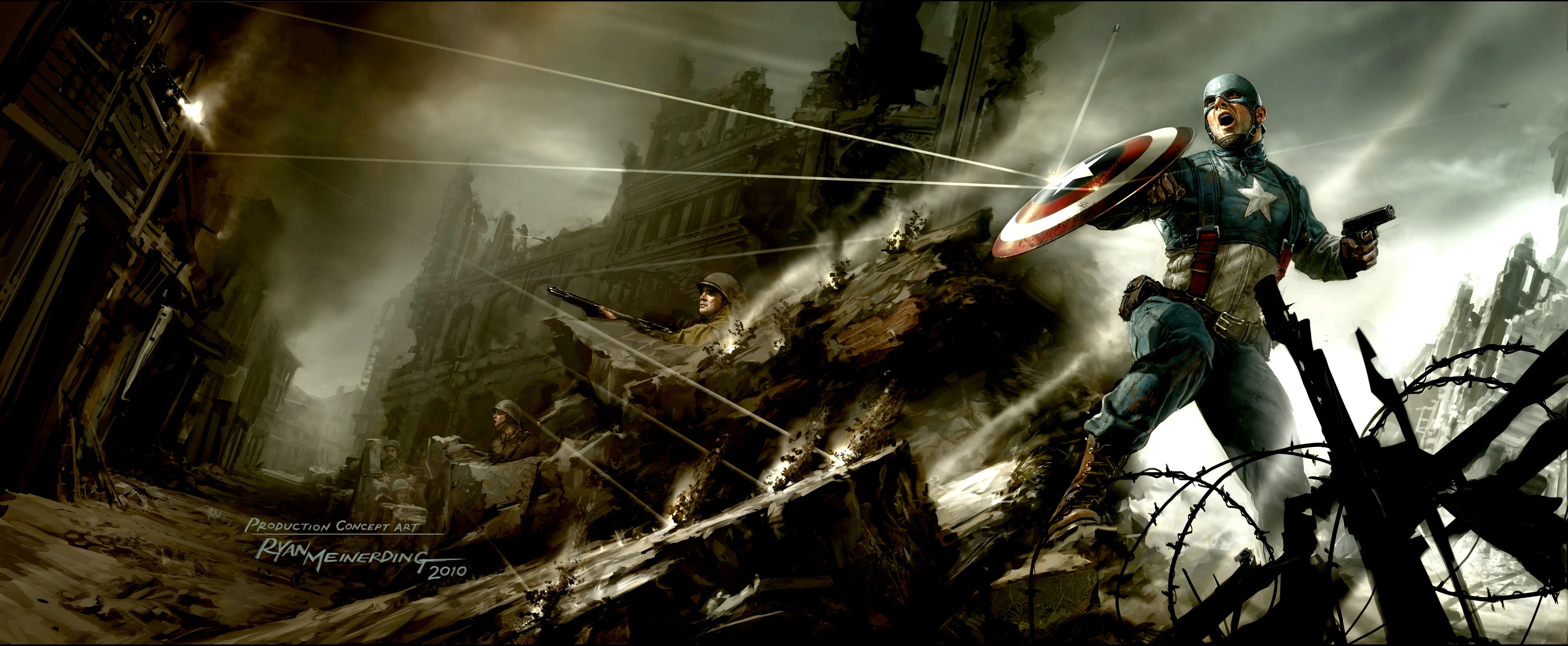 The final showdown with the Red Skull is perhaps a little disappointing, lasting mere moments and with Weaving forced to deliver some fairly cringeworthy lines worthy of a sub-par Bond villain before meeting a very Raiders of the Lost Ark ending courtesy of the Tesseract. But again, this movie is Cap’s story, and the ending he faces is about more than the fight against one man, but about his willingness to sacrifice himself for the good of the world. That last scene, as he speaks to a tearful Peggy before the radio goes dead as he hits the ice, carries genuine weight and emotion, because the movie has invested us in Steve Rogers the man, not just Captain America the costumed hero. His ‘death’ hurts, as it should, even though we know from the prologue that he’s coming back to us.
It’s a fairly universal point of agreement among MCU fans (myself included) that First Avenger was somehow retroactively made better by its sequel, and I’ve long puzzled as to why that was. Preparing to write this feature, it all slotted into place for me. That risk I mentioned at the beginning, that gamble of giving us Cap’s full, no holds barred 1940s origin in a glorious two-hour movie is the very reason why. Back then, five movies into the franchise, we had no particular reason to care about any of the characters we met here. Colonel Phillips and Agent Carter were unheard of to non-comic book reading fans such as myself. Howard Stark was a footnote to the Iron Man movies. Red Skull? Who?
 But here is the crux – the whole central concept of Captain America in the MCU is as the ‘Man out of Time’. The soldier from another era, stranded in an unfamiliar time and world, struggling to adjust. To buy into that – really buy into it – we as the audience had to see him become who he is, and that meant going right back to before he became Captain America, and the travelling on the journey of doing so with him. Think about the core tenets of Winter Soldier – Steve’s struggle to adapt to a world that seems almost like the one he fought against happening so long ago, his emotional unbalancing at the revelation of who the Winter Soldier is, his insistence on fighting against all the odds, against effectively all of SHIELD/HYDRA practically single-handed, and his depthless trust for relative strangers who share with him the unique bond of being soldiers who have fought for their country.
None of that would have a tenth of the impact it does if we hadn’t gone on the journey that First Avenger takes us on. Cap’s endless optimism would seem to archaic, his patriotism and strong morals anachronistic, his devotion to an ex buddy gone bad wilfully dumb. Instead, because we got to know Steve Rogers the man as intimately as we did, these emotional beats land, and then when we go back to revisit that journey, the beats of that land all the harder as well.
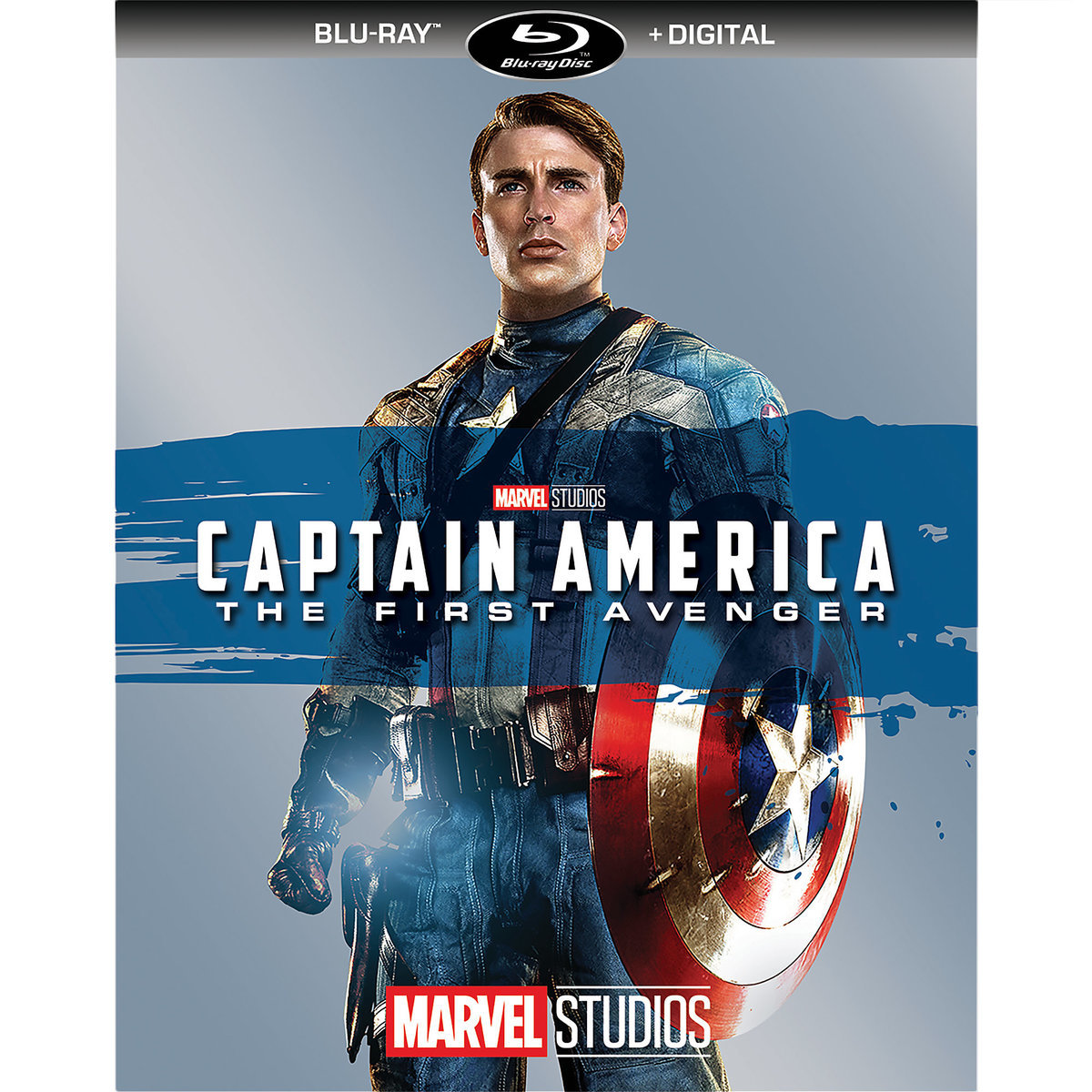 First Avenger is the Movie out of Time in the MCU, about the Man out of Time who wasn’t yet – it’s about as meta as it gets. And the choices could have been made so differently. We could have had a simple montage opening the movie showing us WWII exploits and then leading into a present day film. We could have had the first half of the movie end with Cap in the ice and then concluded in the present day. We could simply have just introduced him in the Avengers. Instead, the studio took a gamble on a character who had proved to be less than cinematic gold, with an actor who had last played comic book in a lacklustre franchise, and they fully committed to it. If that didn’t take backbone and faith, I don’t know what does.
It’s called Captain America: The First Avenger. It may as well have been subtitled The Steve Rogers story. It’s a human tale of heart, courage, and always striving to do better no matter the odds. Without it, one of the lynchpin characters of the Avengers and the MCU in general, could never have been what he is. So its villain was a little forgettable – I don’t care. Like Steve, I could do this all day.
 Doctor Who News Star Trek News
 Sci-Fi Bulletin: Exploring the Universes of SF, Fantasy, Horror and Spy-fi!