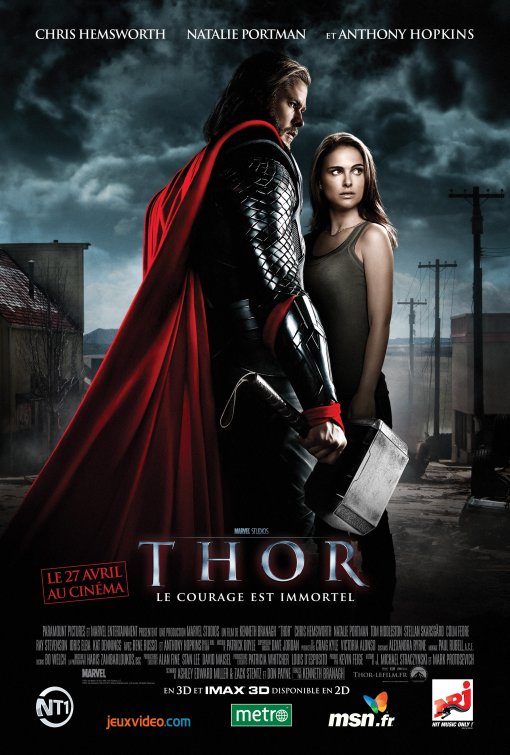
 “From the studio that brought you Iron Man” proclaimed the poster for the fourth Marvel Cinematic Universe movie. Greg D. Smith investigates as the Asgardian royal family experiences some major upheavals which result in Thor, eldest son of Odin and heir apparent to the throne, being banished to Earth without any of his powers. Can Thor prove his worthiness, regain his powers and return home in time to stop the machinations of his adoptive brother, Loki?
As 2011 rolled around, and this movie landed in cinemas, it began to become clear that Marvel really were serious about this shared cinematic universe business. Not just because this was the fourth movie in the burgeoning franchise, but because of who it was about. Banner/Hulk and Stark/Iron Man were all well and good – human protagonists to whom the audience could, on some level, relate, inhabiting a world not so very removed from our own. Thor, on the other hand? The Norse God of Thunder, from the realm of Asgard? This was new territory – the only time Thor had appeared in live action previously was in one of the Incredible Hulk spin-off movies – and would require the steadiest of hands to make sure it was done right. So a movie that stood between two stools, requiring the sweeping, operatic nature of a civilisation upon which the ancient Vikings based their very religion on the one hand, and the slick, modern day-ish vibe of the MCU. Who better to address this than one Kenneth Charles Branagh?
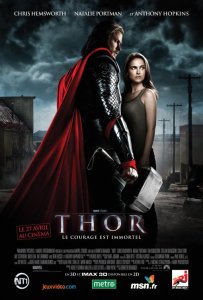 I say this in all seriousness. People talk now of what an enormous gamble Guardians of the Galaxy or Ant-Man were, but back then, after one phenomenally well-received movie and two so-so follow ups, whoever signed off on this entry in the nascent series must have had backbone of pure adamantium. On every level, this movie should not work. The cinematic universe was still so young, not quite fully knitted together and with details still being settled. Yes, we had seen that hammer in the Iron Man 2 post credit scene (audiences now fully on to the gimmick) but surely that couldn’t mean that they were crazy enough to try to bring an actual god to the screen and have him mix it with our flawed, human protagonists?
But they did, and they chose absolutely the best director for the job. With a firm footing as a classical actor and director, as well as a wicked sense of humour, Branagh understood just how to pitch Asgard and its inhabitants. Sweeping, beautiful landscape shots introduced us to the majesty of Asgard, and relatable, boisterous back and forth and ribaldry introduced us to its inhabitants. Thor is not some remote, all-powerful God, but merely a headstrong young man, restless under the patient tutelage of his father, heedless of the feelings of his overlooked little brother and happiest with his hammer in his hand, his comrades at his side and his enemies before him. Odin himself is an old, troubled father figure, concerned with making his son realise the value of peace over war, and of maintaining all that he has diligently worked to build. Branagh uses his experience with Shakespeare to good effect, yes, but he also knows exactly when and how to dial back that aspect, and it is largely thanks to his direction that the movie works as well as it does.
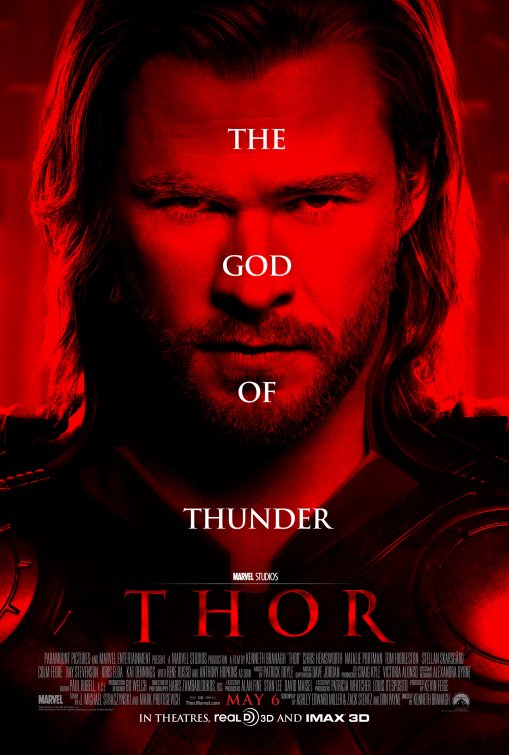
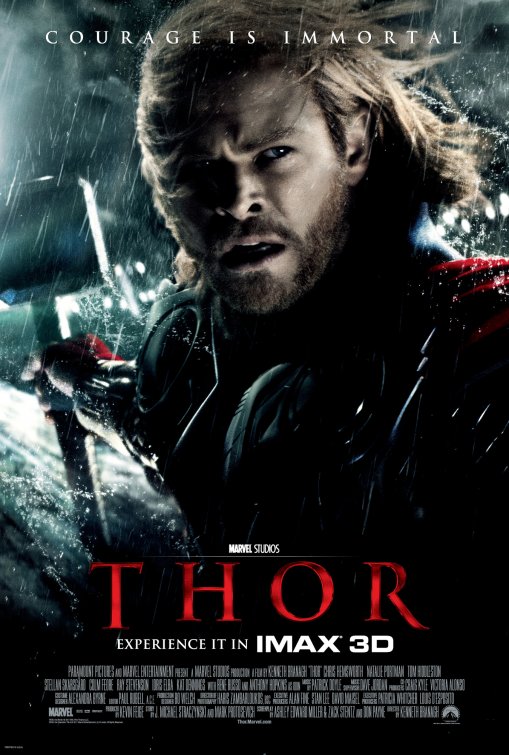
 The other side of that coin is of course the casting. Hemsworth was a relative newcomer to the screen at the time (probably most seen as James T. Kirk’s father at the start of JJ Abrams’ 2009 Star Trek movie), and one could be forgiven at first for thinking that his jawline and physique had been the main reasons for his landing the role. Those factors surely played their part, but I also believe that Branagh saw in Hemsworth something which to the modern audience is readily apparent – his sense of humour. In multiple movies as well as dozens of interviews now, Hemsworth has demonstrated a ready wit and a willingness to play the fool and make a fool of himself as and when required. These shine through in the role, his bellicose and childish bellowing at the beginning a sharp contrast to the fish-out-of-water sequences on Earth and capped off with real balance at the movie’s close as Thor embraces his true destiny, and regains his worthiness.
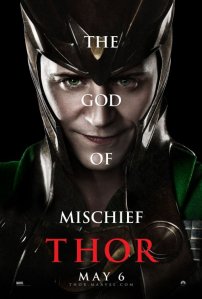 Set against him is Tom Hiddleston’s Loki, to date one of the most well-regarded villains in the MCU stable, as far as the fans are concerned. Loki is of course already an inherently mischievous character (the clue being in the title ‘God of Mischief’) but here Branagh gives us a deep and meaningful motivation for Loki’s aloofness – he is adopted. It’s made clear throughout the movie (and its sequels) that Loki is always closer to his mother than either his father or his brother, and the revelation of his heritage only serves to cement this further. Indeed, Loki is quite happy to act against both Thor and Odin, but always seeks to protect his mother. Where his truly ‘villainous’ aspect really comes out is in his betrayal of his ‘own’ people, as he sacrifices several Frost Giants in a plan to disgrace his brother (about to take the throne) and have him banished, leaving his own way clear to rule. Less of a dark Mirror, Loki is basically the opposite of his brother in almost every respect – Thor is hot-headed, impetuous, but ultimately good-natured and well-intentioned. He has no ‘side’ to him, being upfront and honest in all dealings, and wearing his heart on his sleeve, and he is of course immensely physically powerful. Loki by contrast is a trickster, a conniving, cunning backstabber who uses magic and misdirection to achieve his ends.
 Where the two are similar is in their impatience, though in Thor’s case this is born from genuine impetuousness whereas Loki’s impatience springs more from his selfishness. He cares not that some of his own kin will die in the course of his plan, as long as Thor is gone and he gets the throne. He doesn’t even care about the wellbeing of Asgard, or the effect on his beloved mother of the banishment of Thor and the pain it causes Odin. His self-centredness extends to leading the King of the Frost Giants directly to Odin’s bedchamber to murder the Allfather in his ‘Odinsleep’, only to betray again at the last moment and murder the Giant, not out of any genuine remorse or respect for his father but simply to make him a ‘hero’ and therefore worthy of taking the throne.
And the movie splits well – once Thor is banished, we are left with two parallel tales, one of Thor finding his feet on Earth, bereft of his powers and seeking his own redemption, and the other of Loki on Asgard, orchestrating his own takeover of power. This split is necessary, because it allows us the balance of cementing the movie as part of the MCU by allowing time spent on the same recognisable Earth we are used to as part of the franchise but also showing us enough of the cosmic side as well, which serves as good preparation for later movies down the road.
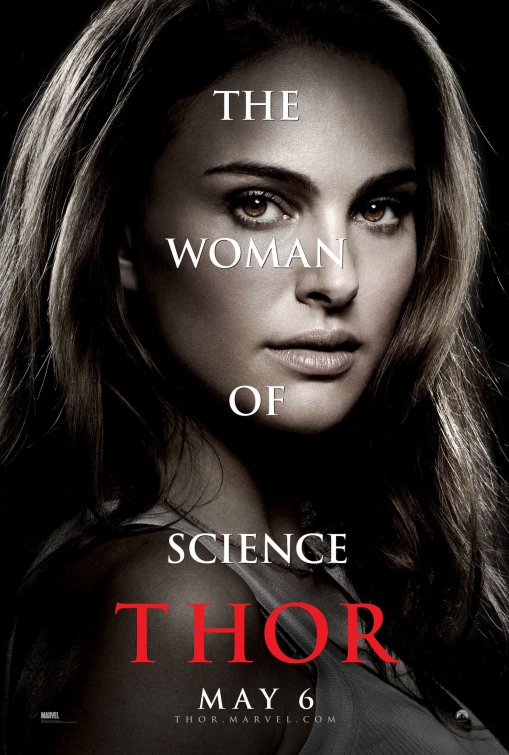
 The Earth-bound stuff is the real meat though. Here, we get to see SHIELD actually starting to make some sense in the universe as an organisation, as well as beginning to see Coulson as more of an active player rather than a sideline guy. His confrontation with Thor on their initial meeting is genuinely fun – the mall cops comment showing the sort of snark that the character would later become famous for. However, the human characters we get to spend most time with are Doctor Jane Foster, Doctor Erik Selvig and Darcy, Jane’s assistant. Now, allowing for another bit of handwavium in the plot (Selvig being of Nordic descent and therefore having been told tales of the Norse gods since childhood) these are actually a greatly unfairly maligned part of the MCU. Jane is idealistic, dedicated to her work and with little time or interest in anything else. Selvig is her mentor, a kindly paternal figure who is in reality ill-equipped to be in the role of caring for anyone but does his best anyway. And Darcy, well Darcy is just trying to earn a buck and get by in life.
From their initial meeting with Thor (hitting him with their van and then tasering him) through to the final climactic showdown of the movie, they provide the warmth and heart of the story, and it is through them that Thor not only appeals to the audience as a character but also grows into the character he needs to be. His fish-out-of-water moments show us his more likeable side, making the character (remember, a near-immortal god like creature from another place in the galaxy) relatable. After all, who hasn’t said a dumb thing or completely missed a social cue at some point in their lives. When he strides into a pet shop demanding a horse or a ‘dog big enough to ride’ it’s ridiculous, yes, but it also humanises him. When he explains to Jane that ‘science and magic are just the same thing’ the difference being understanding, it’s a moment that does so much to knit the two worlds together (of course, this gets complicated by a later film but we will get to that in due course). It perfectly encapsulates the world we know and the newer, weirder one we are being introduced to and allows both to exist alongside one another. Even when Thor first attempts to retrieve his hammer and inevitably fails (as we the audience know that he will) you can’t help but feel sympathy for the guy, because of the way the scene is presented and the performance of Hemsworth himself. There’s genuine anguish and disappointment in his eyes when he realises it isn’t going to work, and his sullen silence in the interrogation bears that out.
 All this builds towards a finale that is often criticised for being ‘too small’. Why are godlike beings fighting in some hick town in the middle of nowhere? Well, if you actually pay attention, it makes total sense. Thor is found in the middle of nowhere, by the three humans who live there. He doesn’t actually move that far because first he’s in hospital, then he’s explaining to the gang who he is and where he comes from, then he’s trying to grab his hammer which landed near where he did (being expelled from Asgard at the same time) and then he’s sulking again. He has no narrative reason to move, not least because the events of the movie take place over mere days.
Similarly, Loki has no reason to conquer Earth at that point (that comes later). The fight happens locally because he’s merely after Thor (and Lady Sif and the Warriors Three who have betrayed him to go to Earth and retrieve their friend). He sends the Destroyer because as the acting regent of Asgard he has control of it, and it should be all that’s needed to kill Thor and his companions and therefore secure his position as ruler. Again, Loki is self-centred and doesn’t think too far ahead. A moment’s reflection may have told him that it was a terrible plan, but he’s not much of a reflector.
And so the final confrontation plays out. The Destroyer wrecks the town, nobody can stop it and finally, after several days of being stripped of his powers, and having had to experience life as an ordinary person, Thor gets it. He becomes what Odin wants him to be. Not ‘worthy’ (because that’s at once a simple and insanely complex vaguery) but what he needs to be to eventually become King – thinking of others before himself, putting the wellbeing of people who are ‘beneath’ him above his own. Thor’s banishment comes because he threatens the peace which Odin has striven so hard to create and preserve. That threat arises because Thor only ever thinks of his personal glory, and fails to consider the consequences of his actions to those he would lead. Odin sees rulership of Asgard as a service to his people, rather than being above them, and he wants Thor to see that too. So it isn’t that Thor ‘sacrifices’ himself, but that he does so with a final plea to his brother – take me and leave the rest of these people be. There’s a moment where Loki looks genuinely as if he might soften, and that also reflects the complexity at play – he hasn’t thought beyond getting Thor out of the way. Confronted with the deed itself, he’s hesitant, because after all this is his brother. When the blow lands, it’s a hammerblow to the audience as much as to Thor himself. Loki has crossed a final line, and is thus irredeemable.
 Thor however, gets all his powers back and saves the day. But things aren’t quite done, because he now needs to go and save his own land. The ensuing fight is emotional, and Thor’s (and Odin’s) attempt to save Loki from falling into the abyss reflects once again that when all the cosmic trappings are ignored, this film boils down to a story about family. Even with all that he’s done, even despite the fact that he’s not his ‘real’ son, Odin fights to preserve the life of Loki.
In the hands of another film maker, with another cast, this could have been awful. Thor was made though, at absolutely the right time. The effects available, combined with the talent both on screen and behind the character, made for a genuinely decent tale of family feuding played out on a half sci-fi, half Wagnerian opera stage. It works because it balances every one of its elements perfectly, doles out its laughs with appropriate restraint, and never loses sight of its key message. Is Thor worthy? Of course, how could he be anything else?







 Sci-Fi Bulletin: Exploring the Universes of SF, Fantasy, Horror and Spy-fi!