Feature: The Road to Endgame Part 21: Captain Marvel (2019)
DC got there first in bringing a female-led superhero movie to the screen in the modern era, with Gal Gadot/Patty Jenkins’ Wonder Woman fairly setting the box office alight in […]



DC got there first in bringing a female-led superhero movie to the screen in the modern era, with Gal Gadot/Patty Jenkins’ Wonder Woman fairly setting the box office alight in […]
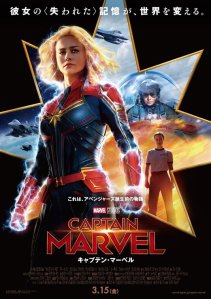 DC got there first in bringing a female-led superhero movie to the screen in the modern era, with Gal Gadot/Patty Jenkins’ Wonder Woman fairly setting the box office alight in 2017 with a global take of over $800 million putting it, if not at the top of the superhero pile, at least with a bigger slice of the pie than the studio was used to at that point. Marvel, lagging behind and with the treatment of female characters in its all-conquering MCU being one of the few consistent faults, needed to get this movie right perhaps more than any other, and in netting an Oscar-winning actress for the lead they seemed off to a good start. In the final part of our lead up to the end of this phase of the Marvel Cinematic Universe, Greg D. Smith assesses just how good a start…
In 1995, Kree Starforce agent Vers finds herself alone on planet Earth hunting down her shape-shifting Skrull enemies while plagued with memories she can’t quite hang on to of a former life. An encounter with mid-level SHIELD bureaucrat Nick Fury will change both of their lives in unexpected ways.
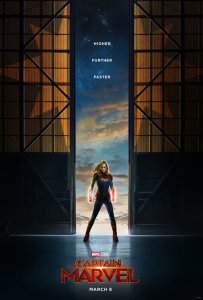 Wonder Woman might have got there first, but I’ll bet the execs and marketing types at Warner Bros are still kicking themselves that they missed the ‘Her/Hero’ thing that Marvel managed to squeeze into the marketing for this movie. It couldn’t have been lost on the studio that representation of female characters wasn’t their strongest suit in the decade of movies they’d put together so far, and this seemed as good an opportunity as they were going to get to correct it. Hope van Dyne’s increased role in 2018’s Ant-Man and the Wasp was a good start, but you could almost feel the House of Mouse still smarting slightly over their rivals beating them to the punch.
And it wasn’t like this was the only weight that this movie had to carry – after that set up at the end of Infinity War, expectation was heaped on the character as to exactly how powerful she would be and why that would help against Thanos, and with the movie being set in the nineties, it would have to lay a lot of groundwork to act as a ‘prequel’ to the MCU, setting up SHIELD and everything that would lead up to Iron Man and the beginning of current adventures. Oh, and there had to be a cosmic as well as an Earth-based element to the adventure, and a full-fledged origin story for the character which could tell its own story while juggling all of those other balls as well.
 It’s perhaps because of this extensive and wide-ranging brief that the movie occasionally starts to feel like it slows in the second act, with certain sections starting to drag ever so slightly under the pull of all those different objectives. It’s also possibly part of the reason that a certain kind of viewer felt the need to forensically dissect the movie and locate all of the ‘plot holes’ and ‘mistakes’ it makes as it picks it way through the earlier history of one Nicholas Fury.
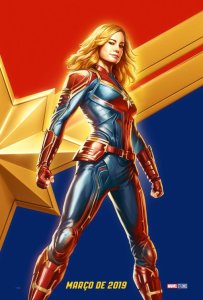
But let’s start with what the movie gets right – the answer is actually quite a lot, starting with that Oscar winner in the title role. A combination of talent and sheer, powerful charisma help Larson make Vers/Carol Danvers into an extremely likeable character right from the first moment we meet her, in a foreign environment interacting with people we haven’t really seen before. To this point, the Kree have been some blue aliens, both in Guardians of the Galaxy and at several points in television’s Agents of SHIELD (it’s never made all that clear in GoTG that Korath – returning here – is a Kree as well). Vers and her mentor Yon-Rogg being white, human-looking individuals comes as a little of a culture shock, as does the idea that the hero we are supposed to be here to root for is actually fighting for a faction the franchise has already told us are the bad guys. There’s an element of She-Ra to these proceedings – a character we know is our hero, but also, in the omniscient position of the audience, we know to be making the wrong choices. In a film which already has so much heavy lifting to do, this feels like an unnecessary burden for the writers to give themselves, but it’s one they manage fairly deftly for the most part by simply not addressing it. Vers simply carries on, distracted by her own quest of finding out exactly who she is and why she can’t remember, while hunting down the supposed villains of the piece – the Skrulls.
 In the present day, Larson nails every scene and makes what could have been a fairly dull character (she’s all-powerful physically, held back only by her own doubts and internal wonderings) into something quite entertaining. Her cavalier attitude to her powers, her assumption that she will simply and easily walk out of every situation as the winner, her upbeat approach to life, all serve as a breath of fresh air in a genre which all too often falls victim to the trap of its heroes being tortured and morally torn to the exclusion of many other character traits. The flashback scenes are a little weaker, purely because they feel a bit too heavy-handed in the message they’re communicating. The scenes like ‘It’s called a cockpit for a reason’, while doubtless accurate in what they are portraying, start to feel a little too caricature. Meanwhile, the endless scenes of younger Carol getting into various scrapes that see her falling down and then getting back up again, a determined look on her face, all again communicate a message but their sheer number and repetition starts to feel rather like we as the audience are having that message delivered via a large sledgehammer.
 Serving as a perfect foil to Larson’s confident snark is a de-aged Samuel L Jackson’s Nick Fury – here a middle-aged bureaucrat at SHIELD who’s been there, done it and now feels like retiring until his first encounter with alien life shifts his entire perspective. It’s refreshing to see a star of Jackson’s stature playing a character like Fury and not afraid to show a softer, slightly less capable, goofier side to him. Fury here isn’t the self-assured, calculated leader of men we are used to, but rather a fairly ordinary human being caught up in extraordinary adventures and simply trying to make the best of it. In particular, his attempts to lay down a ‘badass’ persona with insisting that everyone – his mother included – calls him ‘Fury’ feel appropriately silly when the person he’s trying to impress can fire lasers from her hands. His interactions with Goose are hilarious, and those who complained about the mythos of Nick Fury: Super Agent being debunked by the revelation of how exactly he lost his eye really can’t have been paying attention to the MCU for the last eleven years. Fury has never been a character who seemed to me to be taking his ‘mythos’ all that seriously, and in fairness, as much as it may have annoyed some, his line in Winter Soldier about losing his eye ‘the last time I trusted someone’ doesn’t get ‘spoiled’ by the revelation that it was Goose who did it – if anything it adds to Fury’s aura of keeping a reputation of god-like competence by whatever means he has to, regardless of the reality. After all – look at Black Widow’s declaration in Winter Soldier to Steve Rogers, that she only ‘acts like she knows everything’. She’s one of SHIELD’s best operatives, mentored by Fury himself – it’s not that far-fetched to assume she learned that particular trick from him.
 On the villain side, the movie has a trickier task than the majority of MCU entries, as it must somehow keep the audience at least vaguely on board with the idea of Vers’ Starforce comrades as the nominal ‘good guys’ and the Skrulls as the baddies until around the halfway mark when the movie flips the script and reveals the latter to be refugees fleeing the vengeful and fascistic attentions of the former. Mendelsohn has a lot of fun with his role of Talos, leader of the Skrulls, adopting an American accent when in ‘human’ form and then reverting to his native Australian when appearing as ‘himself’, which helps tremendously with the transition. Still, the movie is asking a lot of its audience here, and it doesn’t help that Jude Law plays Yon-Rogg as unlikeable from the very start of proceedings. One of the core aspects of superhero movies, of which I’ve spoken before, is the ‘dark mirror’ villain. Here, our hero must contend with enemies who are and are not that reflection – in the first half the Skrull are simply shape-shifting enemies who want to take over the universe; in the second half suddenly she has an enemy in the Kree, who are arguably that reflection in that she has fought alongside them and they share similar outfits and capabilities (tactical, if not physical). But she’s also actually Carol Danvers, ace human pilot, and that means that she’s not really got any reflection of who she is in anyone she faces here. She stands alone, much as the film keeps reminding us she did before she ever got involved with the Kree, and if anything this gives her more thematic similarity with Captain America than any other character in the MCU, the difference being that whereas Cap is a man constantly out of his time, Carol is a woman out of her place, and neither of them is ever able to return, instead having to forge a new, different identity for themselves out of the ashes of the old, based on what they can do with their abilities to help others.
 Still, it’s nice to have a movie where that sort of complex bait and switch is attempted with the villains instead of the more conventional ‘here’s a bad guy, we must defeat him’ angle, and even if the movie doesn’t necessarily quite stick the landing as far as the ‘twist’ goes (because how can it?) it does give us a little more complexity to proceedings in a universe where villains have historically been one of the weaker elements.
In terms of its setting, the movie really leans into the nineties theme of everything, with its soundtrack recalling the Guardians of the Galaxy movies without actually aping them. In those movies, songs are used to add to the anarchic, muddled feel of our heroes and the situations in which they find themselves, and occasionally to mark a poignant moment. Here, the songs are all in service of making the action feel like it’s taking place in a specific time and place, in an almost opposite effect to the Awesome Mixes.
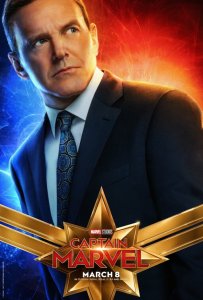 Oddly, for a film that feels in places like it could easily have trimmed some minutes from its run time, there are certain characters who feel under-served. The legend that is Phil Coulson surely deserved more of an intro than the tiny handful of scenes he gets here, and though it’s always nice to see Clark Gregg reprise the role, his involvement here feels a little underwhelming. Strip him out of proceedings entirely, and it doesn’t feel as if the movie would have suffered all that much. On a similar note, while it’s nice to see Lee Pace return as Guardians of the Galaxy’s villain Ronan the Accuser, it feels like a waste when he’s given so little screen time and so little to do. This was an opportunity to flesh out the character of Ronan, to give us some idea of the warrior he was before he became the embittered, fanatical zealot we’ve seen. Unfortunately, he just gets used by the movie as a name and not much else – we don’t get any information as to exactly what the Accusers are, why they are necessary or even what their position really is in Kree society.
 And then there’s Lashana Lynch’s Maria Rambeau, Carol’s best friend and comrade from her days as a human. It felt from the trailers like we were going to get a lot more of these two together and the lack of screentime is therefore already set to disappoint even before we get to see just how good the chemistry is between Larson and Lynch and what a great character Rambeau is. Give the time difference between this movie and the rest of the MCU, who knows whether we will see an up-aged Rambeau (or even her daughter) in future movies, but it feels like we could have gotten more from her here.
Fair to say then, that while Captain Marvel is an ambitious movie in terms of just how much it tries to do within its run time, it isn’t a perfect one. Few of the MCU entries are, and it’s reassuring to see a franchise with such expectations riding on it, owned by a multi-billion dollar entertainment conglomerate, still willing to aim high and take risks. Certainly this film gets more right than it does wrong, and its failings – such as they are – at least come about because of an excess of effort rather than a lack of it. It makes a lot more smart choices than mistakes though – especially in terms of how it develops the central character and handles the challenge of making an interesting movie about someone whose powers and abilities could make them incredibly boring. All we can hope for as Endgame comes into view is that Danvers gets to live up to her own mantra going forward – higher, further, faster.
 Doctor Who News Star Trek News
 Sci-Fi Bulletin: Exploring the Universes of SF, Fantasy, Horror and Spy-fi!