 With X2 receiving both commercial and critical success, and having planted obvious seeds for the Dark Phoenix story, the studio was keen to put out a third instalment, but Bryan Singer’s decision to make a new Superman movie left them without a director. After an early parting of ways with Matthew Vaughan, Brett Ratner was drafted in to tell the third chapter in the X-Men saga. Greg D. Smith analyses what happened next…
When a controversial ‘cure’ which can suppress the X-gene is discovered, the fragile state of human-mutant relations will be tested once again as Magneto emerges from the shadows with dire warnings for his kind of what will follow this development. But a powerful new force will emerge which will change the balance of power forever.
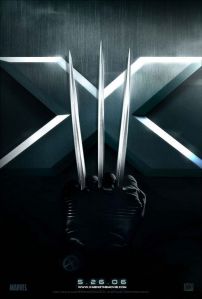 Is there any comparable film in the genre in terms of how maligned and unloved it is by its own studio? Singer – and by extension Fox Studios – regard The Last Stand with such disdain that they would go on to release a movie eight years later which completely erased it from its own continuity, and did so in such an obvious way that it may as well have been marketed with the tagline ‘We’re really sorry about X-Men 3’. But is that level of disregard justified?
Commercially, when it was released The Last Stand was the strongest performer of the franchise to date, and critically it did pretty well, receiving praise from many critics for its action and style, but there’s a reason for that 58% rating on Rotten Tomatoes, and unlike more modern efforts it isn’t because of some perception of ‘agenda’ in the film’s storyline or characters.
 It doesn’t help that the film undoes a lot of the good work done on major characters in the previous instalments. Eternal frenemies Charles and Erik come off badly in their own respective ways here. Charles is portrayed as a controlling, selfish man who has boxed away Jean’s abilities all her life for fear of not being able to control her and who acts like a selfish dick about it when anyone tries to question him on it. If the intention is to extend the idea of Xavier as a noble man always thinking of the greater good, the unevenness of the script misses that mark by a wide margin. He’s patronising to Erik’s initial concerns, he openly admits to having controlled Jean’s personality without her knowledge for years with no apparent remorse despite the obvious parallel between this and what the government seeks to do to mutants, and then he responds to Logan’s concerns on this matter with a level of vicious entitlement and abdication of responsibility which is entirely at odds with the man we have been led to believe he is. Were this a serious attempt to subvert expectations and develop the character, it could have maybe been forgiven, but the immediate lionisation of Xavier in the wake of his death by everyone who knew him (including, oddly Logan himself) and the way in which the character would go on to be treated and portrayed in subsequent movies suggest that this was not the case at all. Instead, the script gives us every reason to dislike Charles as a character, while telling us that he’s actually one of the best of his kind – a tonally dissonant message that serves to undermine the movie as a whole.
 Magneto doesn’t get much better, fluctuating so wildly from one scene to the next that even an actor of Ian McKellen’s superlative stature and talent can’t save it. Consider the scene in which Phoenix kills Xavier – Magneto goes from apparent genuine terror for his friend’s safety to immediately taking his friend’s murderer’s hand and leading her away. He discards Mystique – a woman who has been his most trusted and capable lieutenant in the series to date – without a second’s pause after she is hit by a ‘cure weapon’ and becomes human. He creates massive destruction in the third act, willing Jean/Phoenix to lay waste to everything around her, and then is hit himself by the cure and delivers a heartfelt ‘what have I done?’ to camera. One suspects that maybe Magneto was just not able to think straight, so dizzy was he from his constant pivoting of position throughout the movie’s run time, for what other explanation can there be, aside from sloppy, inconsistent writing.
 As to the main subject (supposedly) of the film – the Dark Phoenix herself, well the good news for Sophie Turner is that she doesn’t have a high bar to clear in this summer’s upcoming adaptation of the same story. It’s ironic that having spent the first two films being ignored, sidelined and talked down to by everyone else in supposed preparation for her emergence from the chrysalis of Jean Grey as the Phoenix, when she does arise, she pretty much gets the same sort of treatment. Scott just wants his girlfriend back (and oh boy did James Marsden get the short end of the stick – difficult to imagine he envisioned quite such a paltry amount of screentime when offered the part of leader of the X-Men originally) and gets instantly blown to bits. Logan also pretty much wants his crush back, but rejects her when it turns out she isn’t just nice gal Jean anymore (which again – how is this consistent with his character?). Xavier seeks to immediately reinstall all the mental blocks it turns out he’s had on her for years because obviously that’s worked out so well before, making him seem dumber than he ever has, and Erik – for all his talk of wanting to liberate Jean from everyone else’s interference – just wants to use her to achieve his own ends. Never at any point, in a film that’s supposed to be about the elemental force that is the Phoenix breaking free of the construct that was Jean Grey, does Phoenix actually get any sense of agency or really achieving anything. She kills Scott almost by accident, she kills Xavier out of spite and then she allows Magneto to wheel her out to do his bidding, spending most of the third act standing around looking absently into the middle distance. There’s very little display of her actual power, no actual development of the character whatsoever and it all just feels like the buildup to it was a waste.
 Speaking of waste, we get a lot of new characters here, but where on earth is Nightcrawler in this one? As one of the standouts in X2, it seems odd to not have the character return. Stories abound of conflict between Cumming and Singer on the set of X2, and there is a tale that the part written for him in Ratner’s The Last Stand was too small to bother with the intensive makeup process, but that just seems odd. If nothing else, Nightcrawler offered what little bits of actual character Storm was allowed in X2 in her interactions with him. Here, Halle Berry gets more action scenes and even a little more to do elsewhere, but frustratingly the same issues re-occur with the character which always have. She essentially mostly uses her powers when someone tells her to, and the only major decision she takes – to keep the school open and run it herself in the wake of Xavier’s death – is robbed of the agency it could have enjoyed by an earlier scene in which Xavier tells her that she has to run the school after he’s gone. Rubbing salt into that wound, he openly tells her it has to be her because Scott (still alive at that point) isn’t up to the job because he has all the man pain to deal with in the wake of Jean’s death. Once again, Berry is left to have precious little dialogue with other female characters, and to serve as essentially the team’s helpful wind, thunder and lightning generator as and when required.
 Rogue doesn’t fare much better. Whether it’s the inane introduction of a ‘love triangle’ subplot between her, boyfriend Bobby and new-ish character Kitty Pryde, or the fact that she gets saddled with the supposedly challenging additional subplot angle of ‘Kid who actually wants the cure’ which is basically so that she can kiss Bobby and see off the ‘threat’ of Kitty. Again, inconsistency of writing frustrates here – an early scene promises a bit of fire from the character as she tells Bobby ‘You’re a guy, that’s all you’re ever thinking about’ before she decides to just give in, go get cured so that she can give Bobby ‘what he wants’ and he won’t get it elsewhere. And that’s essentially it. The film actually contrives to give Anna Paquin even less to do than the previous entries. Even Angel, a new mutant who we know nothing about other than he has a father who doesn’t like his mutation, gets better treatment than Rogue, though I’m sure his being a male character has nothing whatsoever to do with that…
 Perhaps what’s most jarring when considering the film as the third instalment of a trilogy is how the focus departs quite significantly from where it was in previous instalments – namely on Wolverine. Partly this is of course because his ‘story’ (i.e. the mystery behind who he is and who created him) was partially solved in X2, leaving him to mainly be the outsider who isn’t quite an outsider anymore to the X-Men. Honestly, the script seems confused as to exactly what to do with the character from scene to scene. In the first act, he’s a reluctant cover for Cyclops in a training exercise where he makes it clear he isn’t a team player, then in the third act he is somehow both leading and organising the titular last stand while simultaneously nominally deferring to Storm as the leader of the gang. Mostly, he’s reduced to being there as a reactor rather than an actor in proceedings. He’s sad about Jean being dead. He’s rankled by Storm’s attempts to get him to be a part of the team. He’s happy that Jean is alive. He’s mad that Xavier controlled her all these years. He’s anxious at her power and tries to get her to let Charles help her in the way he was mad about five minutes ago. Then he’s sad that Charles is dead. Then he’s sad that he has to kill Jean. Never at any point does Logan feel like the pushing, aggressive character he’d been up to this point and you almost wonder if the studio was forced to offer him a solo film to make up for it.
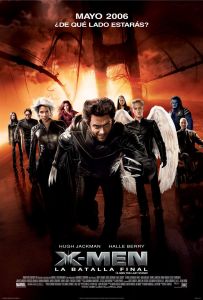 Even the ‘bad guys’ in the film don’t really seem to be able to strike a consistent tone. It starts out as a seemingly well-intentioned attempt to offer the ‘cure’ to people who want it, then immediately pivots into the cure being weaponised so that soldiers can take out any mutant deemed dangerous. It’s never really one hundred per cent clear where this tug of war lies – in X2 there was clear conflict between a government trying to do its best to reach a fair conclusion being undermined by the machinations of Stryker. Here, the government seems to be on the level, as do Worthington Labs – certainly the former has an actual mutant as a Secretary of Mutant Affairs and the latter’s CEO Warren Worthington III seems genuinely motivated by love for his son and a (misguided) desire to try to do the right thing for him, and by extension all mutants. Where the drive comes from between these two forces for the cure to be weaponised and the war declared seems unclear, as the script shrugs and throws another action scene at the screen to keep us distracted.
 Ultimately, it all becomes a bit of a mess. The standout parts people remember – Vinnie Jones’ laughably thinly sketched Juggernaut, the odd blink-and-you’ll-miss-it subplot of the guy on a ventilator with no brain functions waiting to serve as Xavier 2.0 and so on are actually the least of the movie’s basic sins. At a base level, it doesn’t really know what it wants to be. It certainly doesn’t tell the story it purports to – the rise of the Dark Phoenix – and it is so confused and contradictory both within its own parameters and also in terms of how it treats major characters, that it just can’t help but feel like a total mess. It’s hardly the worst film in the genre ever made, but it certainly slithers way below the reasonably mediocre bar its predecessors had set for it. Small wonder that the mainline of the X-Men franchise would take another five years to deliver a further, rebooted instalment.




 Sci-Fi Bulletin: Exploring the Universes of SF, Fantasy, Horror and Spy-fi!