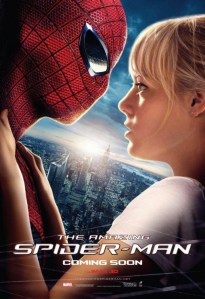
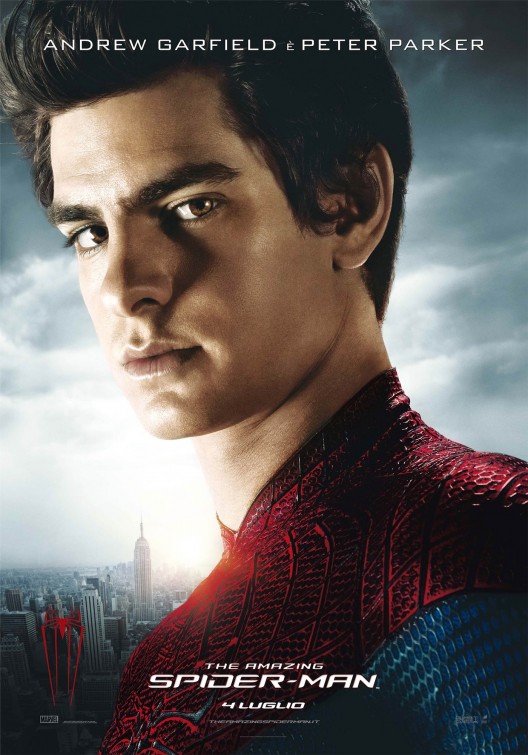
 With Sam Raimi stepping away from the franchise after several attempts at scripting Spider-Man 4, all of which ‘he hated’, the studio sought to re-boot the franchise, keeping many of the same names behind the camera but re-casting the roles and starting the story again from scratch. Andrew Garfield took on the role of Peter Parker with Emma Stone portraying love interest Gwen Stacy. But could the studio successfully reboot a franchise only five short years after the end of the previous, commercially successful trilogy?
Peter Parker is left to live with his Aunt May and Uncle Ben by his parents as they mysteriously go away in the night. Many years later, a teenaged Peter will start to uncover some of their secrets, and his quest for answers will lead him to the Oscorp science labs and a bite that will change his life forever. But will he use his newfound powers for good, and can he be the man he should be when tragedy strikes, and balance the needs of those he loves against the obligations his new abilities impose on him?
 Memory is a funny thing. Going into this re-watch, I had certain fixed certainties in my mind. One was that this reboot came almost on the heels of Spider-Man 3, and the second was that Spider-Man 3 itself had tanked critically and commercially. As it turns out, half a decade separates this movie from its predecessor, which itself did brisk business at the box office and received decent praise from audiences and critics alike.
Still, much as both those things may be true, it’s difficult to escape the feeling as you watch The Amazing Spider-Man that it’s tying itself in some fairly complex knots as it tries to avoid repeating the material that went before even as it must repeat the material that came before. There are certain staples which form a part of Spider-Man’s character – the spider bite, the death of Uncle Ben which must be tangentially related to a moment of selfish petulance on Peter’s part, Uncle Ben’s famous words to Peter which would resonate with him forever. It’s like Batman’s parents – yes, we all know by now that they were murdered in front of him when he was just a boy, but any origin story, however re-imagined, must touch on this in some way.
Perhaps the best example of the twisting is in Uncle Ben’s famous speech – it almost feels like Martin Sheen is playing some elaborate word game, like he has the ‘great power… great responsibility’ lines on a card but has to find a way to get the meaning out without directly quoting them. The problem is, in that instance, it doesn’t work because the message he delivers isn’t the same, doesn’t have the same elegant simplicity that burns them into the brain, and it’s perhaps because of that that Garfield’s Parker never once repeats them to himself over the duration of the movie.
 However, most of what is done here does work, albeit sometimes feeling tonally inconsistent. Sheen and Sally Field play an excellent May and Ben, and what stands out is that it feels like we get to see more of them as characters, rather than ciphers. Rosemary Harris and Cliff Robertson both did fine work in the roles, but there was never much sense of either of them beyond how Peter perceived them. Though the screen time afforded the characters here is probably comparable, it feels more substantive for this. Ben is irascible but wise, capable of being stern but also immensely kind, and he isn’t above teasing Peter and shows clear signs of recalling exactly what it’s like to be his age. When Peter tells him ‘You’re a pretty great Dad’, it feels like a believable moment between two men who hold genuine affection for one another, where the Maguire/Robertson version felt more distant, like respectful affection that couldn’t quite bridge the generation gap. Field gets less to do, mostly being called on to stand around looking worried, but there is a quite strength to her portrayal that goes beyond the old-fashioned stoicism of Harris’ portrayal. She’s shattered when Ben dies, but there is no suggestion that her life is diminished permanently by his loss. There’s also teasing between her and Ben of a sort that wasn’t present before, which helps to make them feel like a believable married couple. All this just makes it all the more peculiar and frustrating that the studio played this word salad game with the speech – if anyone could have believably delivered it without it sounding trite or contrived, it was this incarnation of the character.
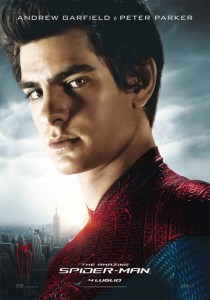 Peter himself also feels better realised here. Firstly, we get a better sense of Peter as a genuine science genius in a way that we didn’t before. Whenever Maguire delivers some scientific answer (which, it has to said, is rarely across the three films) it feels scripted rather than organic, and there is little visual evidence in his life of his capabilities in this regard. Garfield by contrast has gadgets and bits of machinery and computers strewn across his room, including a radio-controlled latch on his door. He also transcends the rather cliched ‘geek’ portrayal of the Maguire version – no reedy thin voice, comical prat falls or unassuming hunch here. Garfield’s Parker is fast-talking – so fast in fact that he often seems to run out of words because his mouth has outpaced his brain. He’s also not afraid to stand up to bullies on behalf of others, and he’s the sort of kid who goes looking for trouble rather than wait for it to come to him.
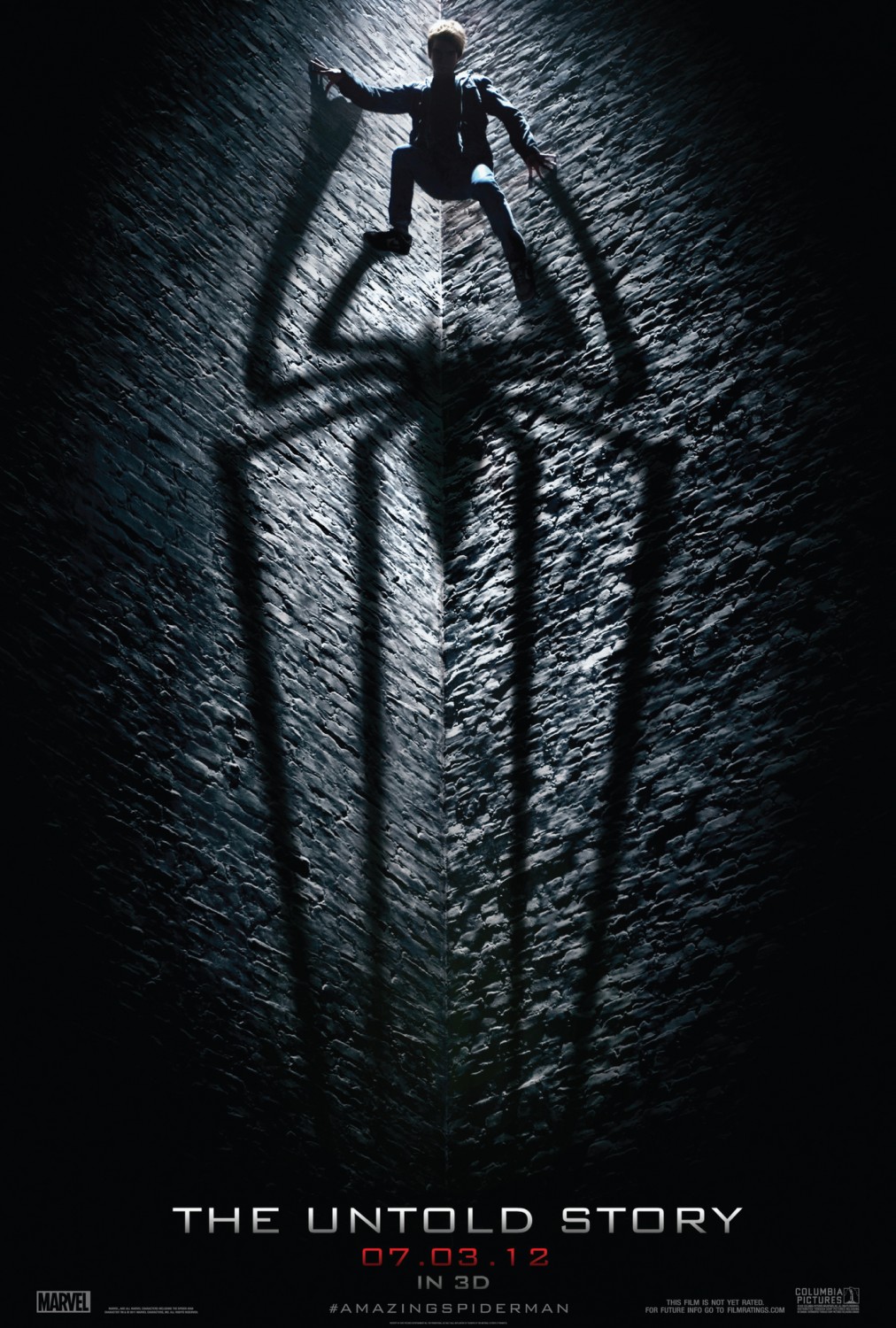
 When his transformation occurs, it’s more sudden and less traumatic – no passing out and waking up jacked. Here, Parker falls asleep on a subway train and when awoken by a gang of guys looking to mess with him, he’s not only sticking to the walls and super quick, but also quite handy with his fists and feet. From there, he goes on to a confrontation with Flash Thompson (again portrayed much more three-dimensionally in this iteration) and we are barrelling toward that fateful moment we all know is coming. Ben’s death makes Peter a vengeful vigilante, on a mission to find the man who did it and bring him to justice. There’s no sign of a costume yet though, beyond a mask done as a necessity after his first attempt goes drastically wrong and he hears the refrain ‘we know who you are, we’ve seen your face.’ This part of the journey is crucial, and portrays Peter much differently from before. He doesn’t become a general vigilante straightaway, he simply wants to ensure that the man who killed his uncle pays for it. Equally, this incarnation of Peter doesn’t torture himself endlessly over his own responsibility for the death. This is logical enough – after all, Peter didn’t pull the trigger, or even ask for Ben to be where he was. It’s a horrible coincidence and nothing more, and though it’s obvious that Peter is upset by the death of his uncle, like a teenager would, he bounces back, learning to live with the grief and finding joys in life rather than adopting some Shakespearian aspect of noble tragedy for the rest of his days.
The transformation into actual hero comes when he faces something which is literally beyond the capabilities of anyone but him to stop. Captain Stacy’s words hit home, when he talks of the strategy which Spider-Man has foiled, and although you don’t have any impression he would stop, it’s obvious he takes on board what’s said. But on the bridge, saving dozens of people including a child dangling in a car over the water, he is forced to acknowledge that without his presence, people would have died. That factor motivates him – he isn’t just some have-a-go hero here to beat up purse-snatchers and car thieves, but a hero who can stand against things the police cannot, and prevent the harm they may cause.
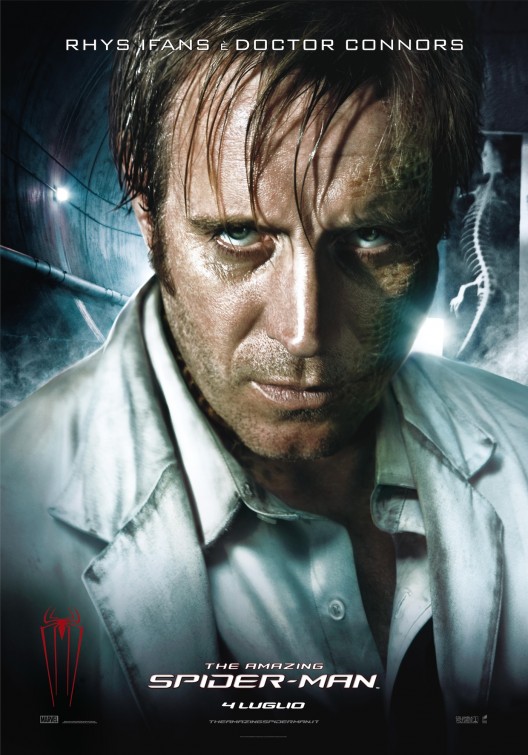
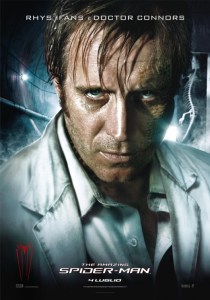 Of course that something is Curt Connors, AKA The Lizard. Rhys Ifans delivers a nice dramatic turn here, which is occasionally a little on the cheesy side but no more than one might expect for a comic book role. The main issue is that his part in proceedings is intimately tied to the most ill-advised part of the plotting, and one that never really seems to go anywhere – the secret behind the fate of Peter’s parents. Here, they (or at least his father) were scientists working alongside Doctor Connors at Oscorp, but they fled into the night for unknown reasons and then died in a plane crash. There’s a hint that some complex conspiracy is at work here, but it’s never quite clear why the film needs it, or what it adds to the narrative, beyond making an already coincidental chain of events just seem overly artificial. True, it’s Peter’s discovery of documents left with May and Ben by his parents that leads him to seek out Connors, but you have that, the spider-bite, the relationship with Gwen who works with Connors and also just happens to be the daughter of the police captain who’s out to capture Spider-Man all thrown together into a narrative at once. Spider-Man has always relied on a certain amount of these kinds of coincidence to link Spidey to his villains, but here it feels like a step too far, and starts to impinge heavily on the ability to suspend disbelief.
That aside, the plot of Connors is a decent one. His life missing an arm, which has driven his scientific endeavours, feels like an appropriate starting point and set of motivations for the villain he becomes. Once again we have a noble but ruthlessly driven man who is sent mad by his own creations. The serum with which Connors injects himself runs rampant, going beyond regenerating a limb and turning him into a monstrous creature but also affecting his mind. He transcends a desire to take away weakness in humanity, instead perceiving all humankind as weak and seeking to transform them all with the serum to attain a higher state. It’s a more believable arc than previous villains and what makes it nicer is that here our villain is given a chance at redemption, changed back to himself at the movie’s end and saving Peter from death before being locked up in a prison cell for all his crimes (including the murder of Captain Stacy).
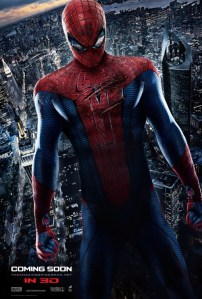
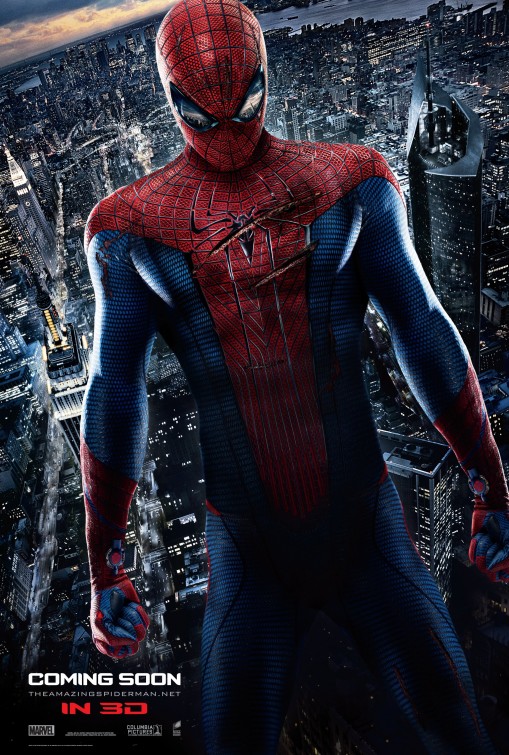
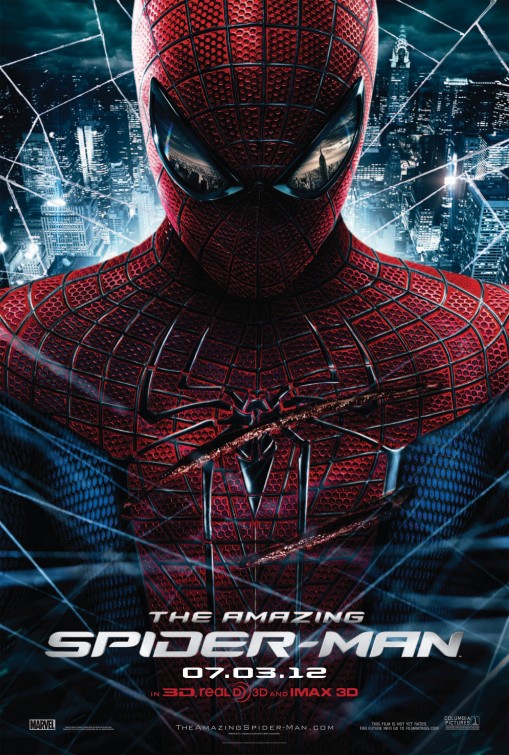
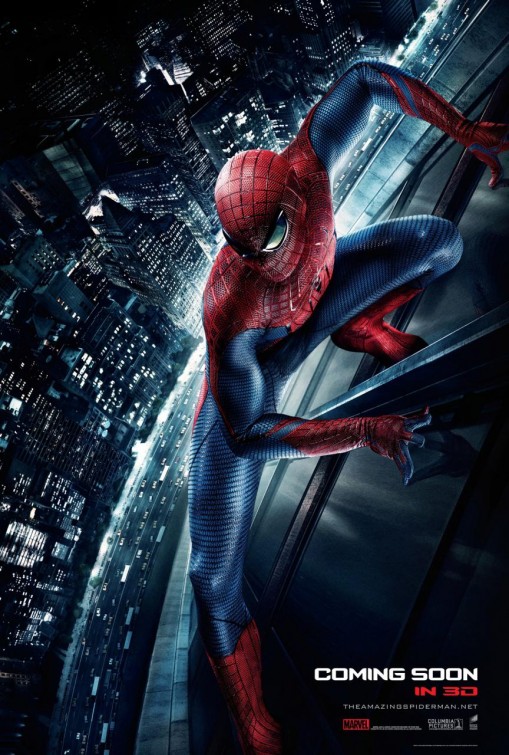
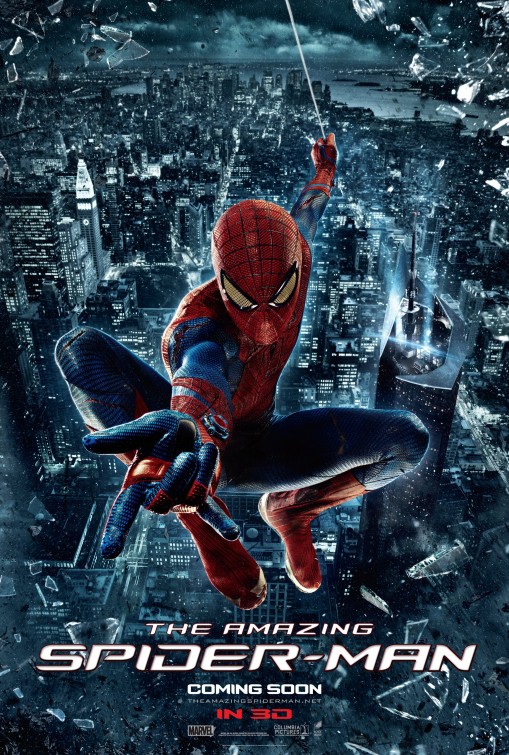
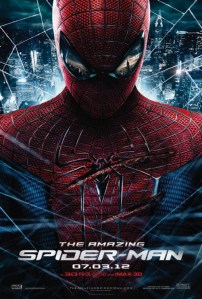 Also appreciated here is the suit and gadgets. It always bugs me when superheroes just produce costumes from nowhere. Here, we see Peter gradually create the suit and again it’s a believable journey that he takes to do so. His webs are launched from gadgets he makes himself rather than being a biological part of him, in keeping with the comics, and this all helps to reinforce the more down-to-earth feel of the hero. Here, Spidey’s stylised eye pieces are just the lenses from some sunglasses, and his suit is spandex because he does homework on what athletes wear for best aerodynamic performance. It doesn’t need to be bulletproof or armoured as he’s (mostly) quick enough to avoid getting hit/shot, and when he does get shot, he doesn’t simply shrug it off. Similarly, this Peter bruises, and there are several scenes of shock from May and Gwen when Peter staggers into their lives beaten and bloodied. This is a Spider-Man who feels his knocks, and again this showcases the point that whereas he has much-increased strength and stamina, he’s not invincible.
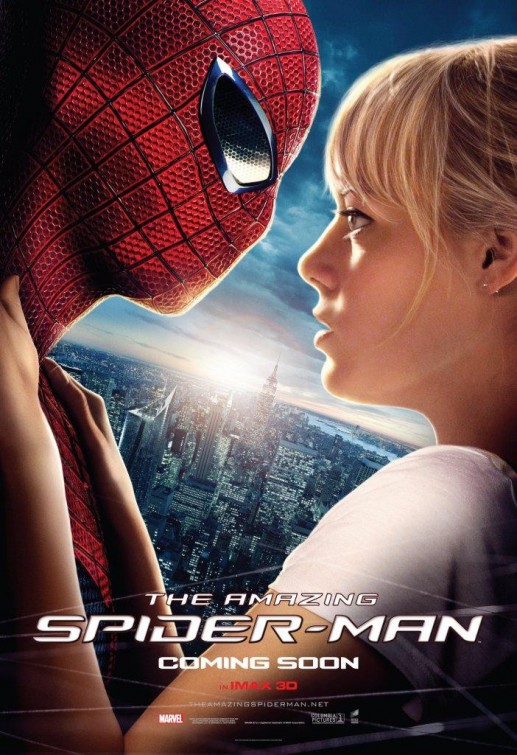
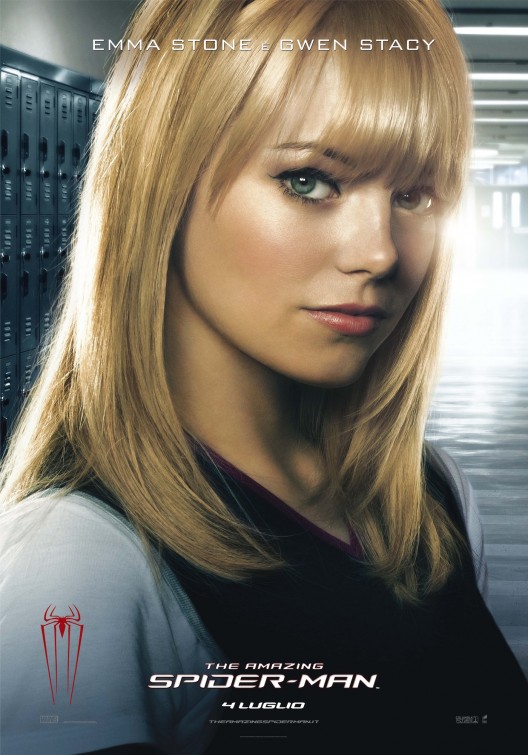
 Stone as Gwen does excellent work with what she is given. The chemistry between the two leads was no doubt helped by their offscreen romance at the time, and it’s certainly nice to see Peter get a love interest who isn’t just there to make doe eyes at the lead and be kidnapped and scream. Gwen here is authoritative, not intimidated by the macho posturing of the likes of Flash Thompson, nor instantly in thrall to Peter. She’s smart, funny and driven, which makes it all the more confusing near the end of the film when her father simply bundles her into a car and send her away after she’s developed the antidote to the Lizard’s serum, evacuated the building and given Spidey enough time to catch up. It’s believable enough that Captain Stacy wants his daughter out of harm’s way, it just feels a little like another female character shoved to one side when the action is happening.
Denis Leary is similarly solid as Captain Stacy himself, never overdoing either the stern police captain or the protective father bit. When he finally confronts Spider-Man maskless, and understands what’s going on, you can believe his letting him go. Similarly, when he tells Peter with his dying breath to leave Gwen alone for her own safety, it doesn’t feel unreasonable for the character, who is simply trying to ensure his daughter (and the rest of his family) will be safe after he’s gone.
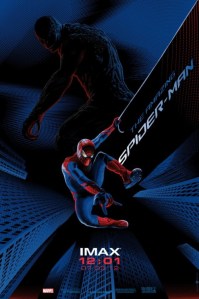 I mentioned that tonally the film sometimes feels a little inconsistent, and it’s tough to know whether this is a bug or a feature. On one hand, as I’ve said it’s believable that tragedy doesn’t cast a permanent pall over the lives of teenagers. On the other, it feels a little jarring to see Peter trading wisecracks with criminals and whooping as he swings through the skies of Manhattan or to see the sly smile on Gwen’s face at the end when Peter whispers about promises he can’t keep being ‘the best kind’. Partly, it’s that the movie is never clear as to exactly how much time has passed after certain incidents, so it’s difficult to judge, but again, it’s not unbelievable that teenagers would rebuild their lives and move on after great losses – certainly it makes a nice change from the overwrought obsession with grief and loss of the characters in Raimi’s trilogy.
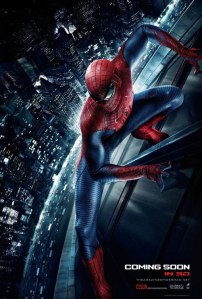 The other news tonally is that the film strikes a balance which the DCEU has failed at for years, getting a darker and more serious, grounded tone than its predecessors, without devolving into angsty, gritty noir. Garfield’s charm helps a lot with this, his motormouth and nervous energy bundling along every scene that he’s in. Combined with that teenaged resilience, it means that emotional beats land when they’re supposed to, without making the film a slog to get through.
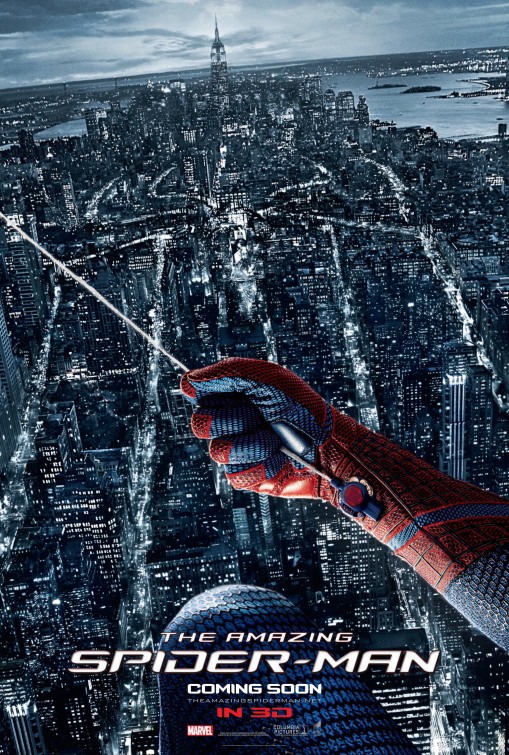
And as to the action, it’s impeccably photographed here. After three instalments in recent memory, it must have been daunting to think of how to best approach the web-slinging antics of Spider-Man for a new film, but Webb manages it with aplomb. The decision to frame several sequences of swinging from a Spidey-eye view adds a layer of excitement and momentum to the shots, and there’s a better engagement with an awareness of the logistics of actually swinging from various landmarks as a method of getting from A to B in the city, culminating in the excellent sequence near the end where cranes are lined up to assist him. The geography of the city somehow feels larger and more real than it did in Raimi’s trilogy, and the action correspondingly larger and more impressive.
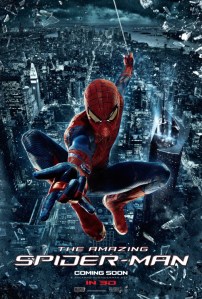 Ultimately, I find it difficult to argue that The Amazing Spider-Man isn’t a better interpretation of the source material as well as simply a better movie, but that’s not to say that it doesn’t come with its own flaws. The odd additional layer of plotting with the conspiracy surrounding Peter’s parents which gets hinted at but never goes anywhere here feels like it could be cut entirely with no issue. Some of the more egregious coincidences start to make the movie feel more contrived than it necessarily needed to be, and given how often Peter takes off his mask here it’s a wonder that by the end of the movie there aren’t more people than the Stacys who know his secret (it’s never quite clear whether or not May has cottoned on but his constant stumbling into the house battered and bruised has to have her wondering). Most important though, it feels like a shame that Martin Sheen’s Ben never got to say those most important words. By mangling the speech to try to differentiate from its predecessor, they robbed one of the strongest characters of one of his best signature speeches, and although this Peter arrives at his conclusion as to his exact responsibilities by a different route, if that was the plan then cut the speech altogether rather than have it delivered as this oddly twisted version that has none of the resonance and little of the original meaning.
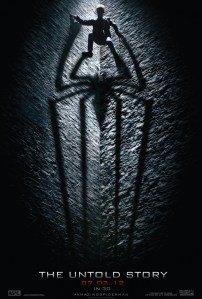 It’s often said that Hollywood these days is far too fond of reboots, and given licensing issues and various other factors this was one whose announcement was greeted with more cynicism than most. That said, the studio delivers enough of a fresh take on the material here to justify the existence of this new instalment, and though it isn’t perfect, it delivers a thoroughly good time. Uncle Ben would be proud, indeed.




 Sci-Fi Bulletin: Exploring the Universes of SF, Fantasy, Horror and Spy-fi!