 Disney’s 2012 acquisition of Lucasfilm from George Lucas brought with it the promise of more movies and TV shows set in the Star Wars universe. With Marvel’s MCU going from strength to strength under the House of Mouse’s stewardship, hopes were high among the fandom that the unevenness of quality of the prequel trilogy could be avoided, and the announcement of a sequel trilogy that would continue the Skywalker Saga was largely welcomed. The addition of JJ Abrams as director was greeted with cautious optimism, after his largely well-received reboot of the Star Trek franchise and its more disappointing follow up. So, wonders Greg D. Smith, could Abrams and Disney succeed where Lucas had so ambitiously failed in the previous decade?
Thirty years after the destruction of the second Death Star and the death of the Emperor, war still rages in a galaxy far, far away. The heroic Resistance, led by General Leia Organa, search for the means to locate missing Jedi Knight Luke Skywalker, who they believe is the key to stopping the evil First Order, led by the mysterious Supreme Leader Snoke. Chance encounters will lead new allies and old friends into the fight, as the fate of the New Republic hangs in the balance.
 When JJ Abrams took on the task of bringing Episode VII to the screen, he cannot have been unaware of the scale of what he was attempting. A devoted, but largely bitterly disappointed fanbase had been – in their minds – burned by the prequel trilogy and its failure to live up to their hopes and expectations. Still, Star Wars is a property that engenders hope and excitement in equal measure in both casual and hardcore fans, and this was reflected in the first teaser trailer for The Force Awakens breaking YouTube records. Millions of people tuned in for 88 seconds of what looked like pure heaven, and debates – good and bad – began to rage.
In earlier essays, I’ve spoken of Lucas’ tendency towards poetic rhyme in his storytelling – of his highlighting the circular paths life often takes and the way in which history has a tendency to repeat itself. Abrams evidently elected to use that tendency in his approach to The Force Awakens, with the end result that the movie contained many echoes of A New Hope. However, what many people wrote off as a simple copy of the 1977 film, albeit with updated characters, others (myself included) actually saw as something a lot cleverer, and a lot more in keeping with Lucas’s original ideas and themes.
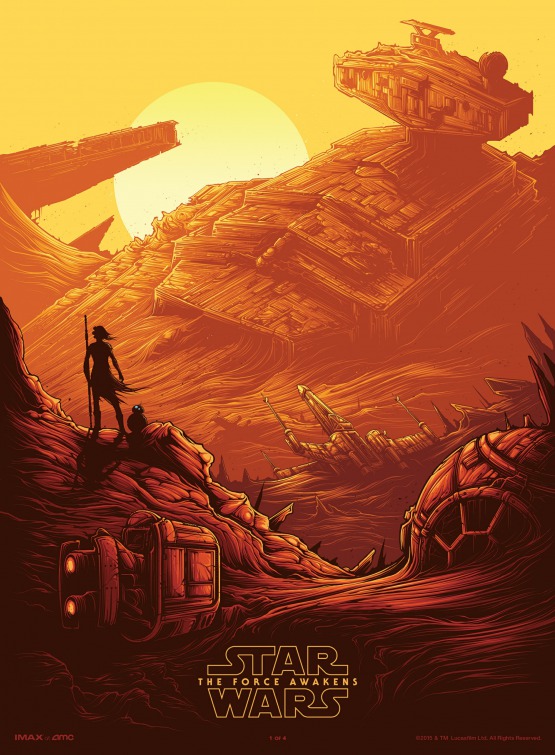
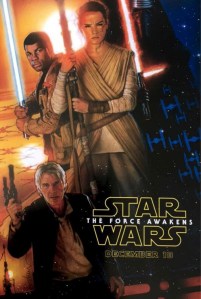 Let’s take Rey – yes, she’s a poor orphan on a desert planet who happens to be strong with the force and a naturally gifted pilot, and yes, she happens upon an astromech droid in the desert who then leads her on a series of adventures in which she ends up discovering her own talent for force usage, gets gifted a lightsaber and joins the fight against an evil regime. So far, so Luke’s journey in A New Hope, right?
Well, no. Leaving aside the obvious difference (in the way that many fanboys couldn’t) of Rey being a female character, let’s examine everything else. She’s an orphan. But not like Luke – a young man brought up by a loving aunt and uncle in the relatively privileged and soft life of a moisture farmer, Rey is a true orphan, practically owned by junk merchant Unkar Plutt, forced to scavenge as best she can to earn just enough food to live. Where Luke lives in a comfortable family home, Rey lives alone in the wreck of an AT-ST. Where Luke is eventually trained to fight using a lightsaber by a Jedi master, Rey has clearly been fighting from an early age, and is very handy with her improvised weapon. Where Luke has to be slowly convinced of his ability with the Force, and gradually learns to control it, Rey has an instinctive gift, able to start manipulating it after no actual training at all.
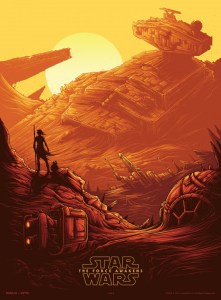 Of course, if people aren’t complaining that Rey is Luke 2.0, there’s that other persistent moan – that she’s a Mary Sue (i.e. the embodiment of a Star Wars fan, put into the story against any logic). Which again makes no sense because Rey has logical reasons underpinning every one of her talents outside Force usage which is a biological thing anyway. She can speak (or at least understand) many different languages because she works in a hostile environment with a range of other scavengers all out to grab the same plunder she is after. She can fly because she clearly has an obsession with flight, as proven by her battered old fighter helmet – maybe she’s even mucked around with machinery owned by Plutt before. She is good with technology because, well of course she is – she scavenges it for a living and presumably has to craft anything she owns to get around the place, feed herself etc. Rey may well be exceptionally talented and intelligent, but part of that can be explained by affinity to the Force, and part of it simply by biological luck. Nobody complained when Luke immediately stepped into the cockpit of an X Wing having only ever flown civilian skyhoppers before, so where’s the issue?
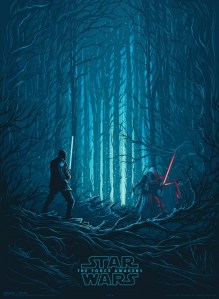
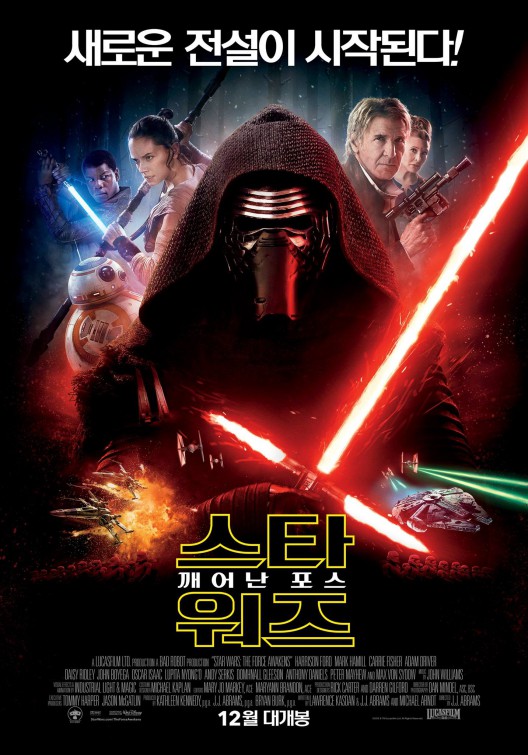
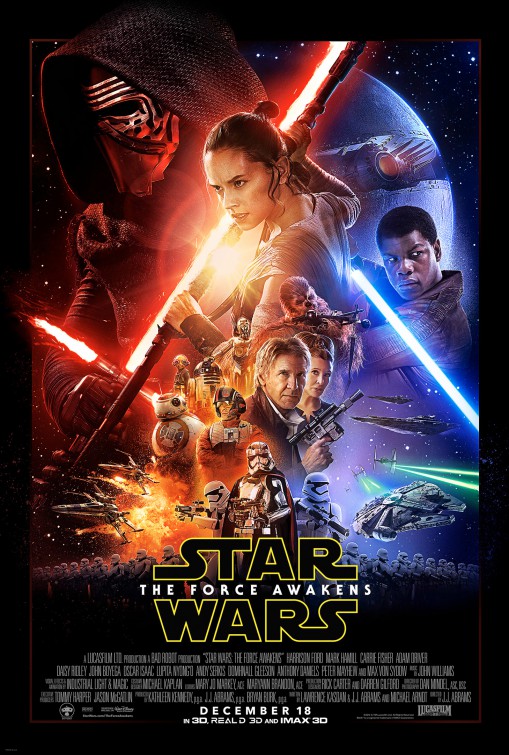
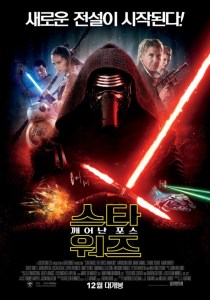 Standing opposite Rey, we have Kylo Ren. Abrams could be accused of getting a little meta here, having an antagonist who mimics Darth Vader because he literally is trying to mimic Darth Vader. Ren’s hero worship of the man he thought his grandfather was goes as far as his wearing a mask he doesn’t need, together with a flowing cloak, but interestingly stops short of his actually taking out his anger and frustrations physically on those around him. When Kylo has a temper tantrum (and it literally is a tantrum), it’s directed at inanimate objects rather than people – unlike Vader before him, there’s never any sense of him being willing (or even able) to do lasting harm to any subordinate who fails him. There’s something tethered within him, some line that he’s unwilling to cross. It’s easily visible in this odd restraint, as well as in his passive-aggressive exchanges with Hux, and his oddly subdued nature when speaking with Snoke. Crucially, there never really seems to be any sense that Ren was ever any different. Leia and Han both have the sort of blinders that only parents ever could, believing that their son was stolen from them by the influence of Snoke, but although there is clear conflict in the young man – never more obvious than when he confronts and murders his own father – it’s obvious that he has made a choice, and whatever struggles he may have with it, they aren’t powerful enough to stop him on his path. It’s also not like he won’t kill – we see his casual disposal of Lor San Tekka in the opening scene, plus there’s Han. There’s a performative element to when he does kill, like a child trying to impress others with how far he’s willing to go, and it serves simply to emphasise how far he won’t elsewhere.
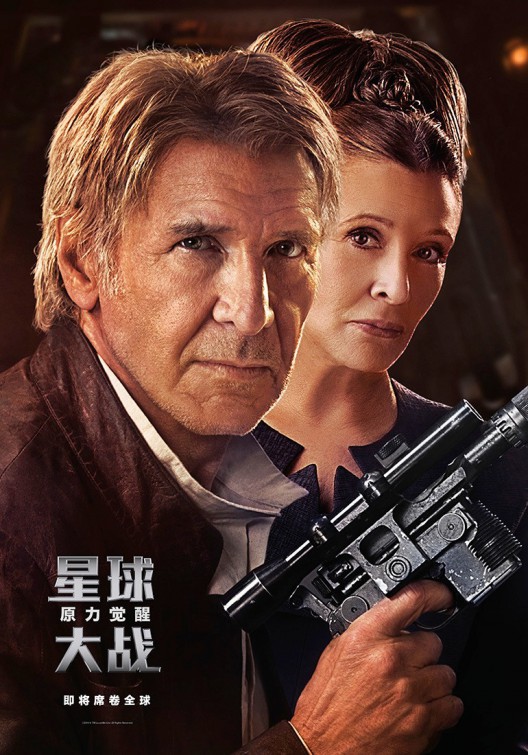
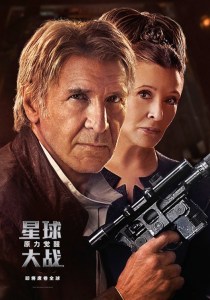 In terms of supporting cast, we get a shade of the old with Han, Leia and the ever-present 3PO turning up to do their little bits towards the lot, but the reality is that they are mainly there to make fans of a certain age like myself feel warm and fuzzy and included. This is very much a movie about passing the torch on to the new generation, and so whereas they have decent parts to play, they are all in service to putting the new guys front and centre.
Finn’s presence really smashes apart any notion that this is a simple re-tread of A New Hope – a Stormtrooper who not only flees his service in the First Order but does so by helping a Resistance pilot to escape. There is no corollary in the original trilogy for this, and certainly not for this sort of characters. Much as the movie wants us to like Finn, it’s also undeniable that he isn’t a hero. He literally says as much. When he rescues Finn, it’s so that he has a pilot who can get him out of where he is trapped. When he volunteers to help with the mission to destroy Starkiller Base, it’s because he wants to make sure his friend is ok (he actually lies about his abilities, assuming that the Force will simply help them out). At the mid-point of the film he literally tries to walk away altogether, stopped only by the First Order assault and Rey’s capture by Ren.
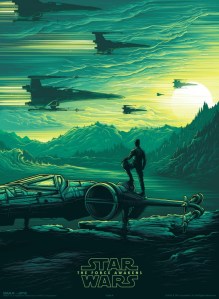 It isn’t that Finn is a coward – he proves more than once that he is willing to put himself in harm’s way – but it’s more that he lacks the general heroic quality we are used to in Star Wars antagonists, who tend to be willing to work for the greater good either for personal satisfaction or at least for a decent paycheque. Finn has no interest in the Resistance or its cause, beyond its ability to help him escape the First Order and save his friend. He’s not a bad guy, but he’s quite a selfish one.
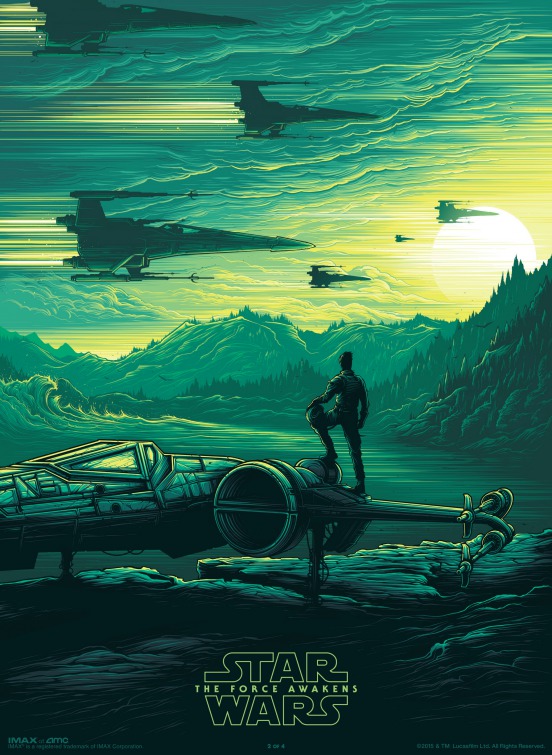
And of course there’s Poe Dameron, hotshot pilot (the best in the Resistance, we are told) and all-round dashing hero. The temptation is to cast Poe as the new Han Solo – dashing, roguish and reckless, but that forgets that Han always has one eye on what he can get out of anything he does, be it money or glory. Poe, for all his faults, is a believer, a true soldier of the Resistance who is determined to fight to his dying breath against the First Order. Sure, he shares Han’s quick wit and amazing talent as a pilot, but he’s no Solo. The fact that the character wasn’t really supposed to survive past the crash on Jakku is sort of obvious, with Isaacs not really having much to do for most of the rest of the film’s run time other than shout the occasional cocky remark as he blows something up. Still, he does his job, and is always fun when he’s on screen.
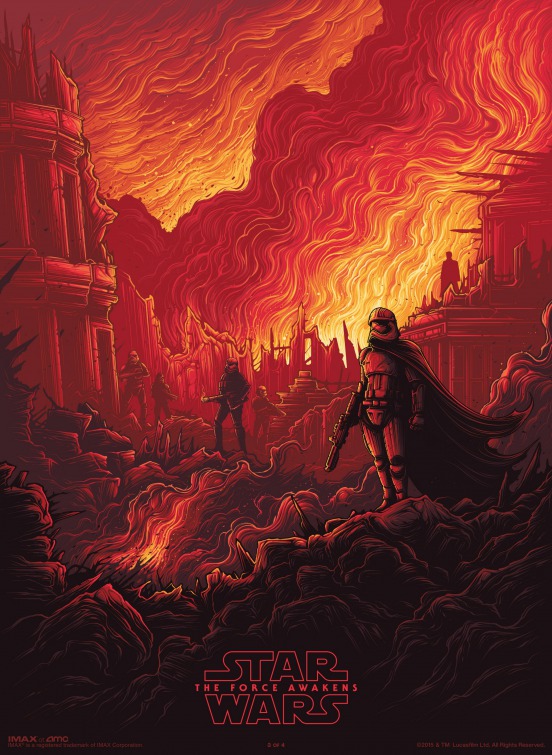
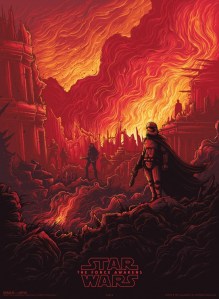 In terms of wasted opportunities though, it would seem that Gwendoline Christie’s impressively statured and exquisitely armoured Captain Phasma takes the crown in this film. Hyped up as a badass leading female character in trailers and promotional hype, it’s fair to say that the handful of minutes screen time she got to do very little at all was a major disappointment. It’s not clear whether Abrams just didn’t know what to do with the character or if the pre-release marketing and hype was deliberately misleading, but it is one of the movie’s few major let-downs.
And of course there’s that plot – the Starkiller Base, ostensibly just an even bigger, better Death Star. Even Han’s laconic observation that ‘So it’s bigger, there’s always a way to blow these things up’ can’t save you from a feeling that this is maybe a little too much in the way of déjà vu, right? Well, not really. Remember the rhyming poetry thing? The First Order bases itself on a sort of fetishized ideal of what the Empire was, but everything is improved. Stormtroopers are vigorously indoctrinated, and equipped and armoured in improved gear. TIE fighters are improved. Ships are bigger. Everything about them is The Empire turned up to eleven, and it therefore makes complete sense that they would seek to imitate the Empire’s greatest weapon but better. Moreover, those who insist that this film has the same trench run as A New Hope aren’t really paying attention. Yes, there’s a desperate fight where Resistance pilots keep getting shot, but they aren’t going for a million to one shot – they’re waiting for the shields to go down, and when they do, they still have to pummel the target multiple times before it has the desired effect, eventually being helped by the setting off of the charges by Chewie on the surface. Han isn’t there to save the day and help Poe make the million to one shot at the end, because he’s busy dying. The Falcon helps our heroes escape the destruction, and there’s the added tension of the plight of Rey and Finn on the surface as the base explodes around them. It rhymes, sure – there are undeniable echoes of the final act of A New Hope here, but it isn’t the same.
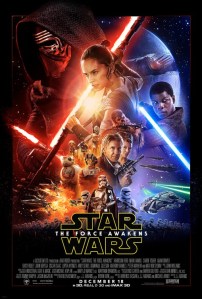 Ultimately, The Force Awakens treads a path that could so easily have gone wrong. Conscious of the rumblings of the fandom, Abrams and the studio obviously made many decisions to try to recapture the feeling of the original trilogy rather than the prequels. From the return to an increased use of practical effects and puppetry, to the echoes of the old movies and the appearance of old cast members, what we got was a film clearly aiming at pleasing everyone but while still doing enough different and new that it doesn’t feel tired or staid. It fairly zips along, its 135 minutes passing by in what feels like half the time, and it hits every one of its beats perfectly, the emotional lows punching you in the gut as much as the emotional highs have you whooping with joy. As a continuation from Return of the Jedi, it does basically the very best job it possibly could have, weighed down as it was by the expectation and cynicism of the fanbase in equal parts. In all the best ways, this is very much exactly how the Force works.




 Sci-Fi Bulletin: Exploring the Universes of SF, Fantasy, Horror and Spy-fi!