2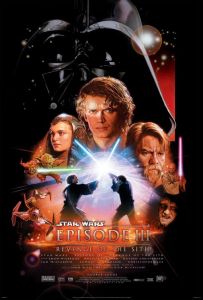 005 saw the culmination of a tale 28 years in the making, as the prequel trilogy came to its third instalment which would cover the final steps on Anakin Skywalker’s journey to becoming Darth Vader. Fans had imagined for years how this chain of events, culminating in the infamous duel between Obi Wan and Anakin might go, and now, finally, it would be realised on the big screen. But, wonders Greg D. Smith, after two instalments released to fairly tepid reception from fans and critics alike, could this be the entry that redeemed the whole trilogy?
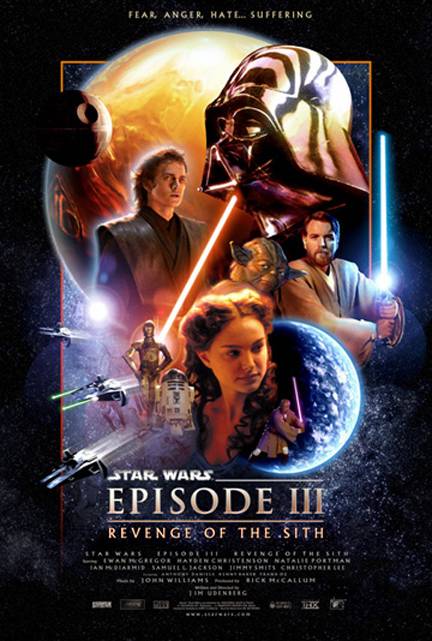
As the Clone Wars head towards their conclusion, Anakin Skywalker’s closeness to Chancellor Palpatine causes the Jedi Council some concern. Meanwhile, Anakin and Padme continue their romance in secret, and news of a Padme’s pregnancy makes their lives complicated in more ways than one.
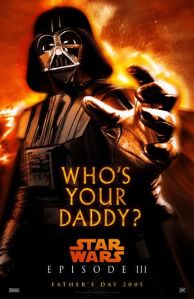 Darth Vader is one of cinema’s most iconic villains. The towering stature and impressive presence of David Prowse combined with the silky, dangerous tone provided by James Earl Jones and that instantly recognisable outfit to make an unforgettable antagonist. And while the story of how he was once a good man who fell to evil certainly adds an air of mystique, it’s that mystique that adds to his appeal – explaining it all away by having the whole story appear on screen in three meaty instalments was always going to be a risk.
The instantly recognisable thing about Revenge of the Sith is that the tone has shifted considerably. Attack of the Clones has its occasional dark moments, but for the most part it’s a light-hearted romp from one action scene to another, spliced with moments of sullen outburst from Anakin. Here, there’s an odd juxtaposition where that sulkiness has mostly disappeared from our central character and he’s become a much nicer, easier to like individual, but the tone of the film has gone very dark.
Typically for Lucas, as a visual storyteller first and foremost, that tone is immediately communicated by the colour palette of the opening shots. The space battle over Coruscant is rendered in glorious detail, easily rivalling the best such shots in other entries in the franchise, but there’s a darkness there that is absent from other entries. The colours are muted, and there’s almost a sense that there’s a shadow falling over everything as the action unfolds.
 That darkness carries over into our cast of antagonists as well. Here, for the first time, Lucas allows Palpatine to be the actual bad guy on screen, the first flash coming in his command to Anakin to murder Count Dooku. It’s a split second thing, as the Chancellor goes from weary prisoner to spiteful goader in the blink of an eye. As the film progresses, and he reveals more of himself and his nature to Anakin, we get to see a real conflict in Skywalker, as he bounces between his genuine affection for Obi Wan and need to do the right thing, and his fear of loss and hurt at what he perceives as the slights of the Council. All the while, Palpatine is there as the willing ear, providing the right nudges as and when required to slowly poke Anakin along the path he has laid for him.
And Anakin himself – despite what some might think – is again very well realised here. The whole point of the character right from those earliest hints of Vader’s history in A New Hope was that he was a conflicted individual – a man who went from being a good and noble warrior to a creature of darkness. That’s not a change that happens overnight, and it makes perfect sense that there would be peaks and troughs in his journey towards the dark side, and that ultimately his fall would be motivated not from some petty desire to do wrong in the world, but from a genuine, if misguided sense that he could do some good or save some hurt.
 The issue is that a lot of the emotional beats of the movie centre around a set of relationships we really don’t get to see develop, and which therefore feel as if they carry a weight in terms of the narrative which has not been earned. The first is between Anakin and Obi Wan – by this point they have been together for nearly a decade and a half as master and apprentice, during which time they have fought side by side, had a variety of adventures and narrow escapes, and developed a bond and affinity for one another which acts as one of the obstacles between Anakin’s impulsive, emotional nature and his journey to the Dark Side. The issue is, we don’t get to see much of it. This is a problem which started of course in Clones, in which the action had skipped forward a decade and so we got the occasional reference to various mishaps and excursions from both in incidental dialogue. Here, that problem is magnified manifold, with constant references to their time together doing many exciting things we the viewer never get to see, all serving as foundation for solemn pronouncements of brotherhood and love between the pair that just don’t quite feel right. All we get to see on screen is the pair of them bickering constantly, Anakin railing against the fact that Obi Wan is holding him back and so on, before we get this sort of presumptive ‘Ah, but they love each other really’ thing which feels far more rooted in the mythos of the original trilogy and Alec Guinness’ twinkly-eyed recollections than in anything we have seen here. It jars, and that’s a major issue, because it’s one of the lynchpins for the emotional heft of the movie.
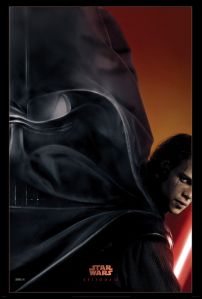 Similar applies to the relationship between Anakin and Palpatine. We get told an awful lot by characters that Anakin and the Chancellor are very close and spend a lot of time together. Various Jedi comment on it from the point of view of thinking that Anakin spends too much time with Palpatine and disapproving of this. We get occasional throwaway lines from Palpatine himself about how Anakin has confided in him about one thing and another, and certainly we know from the insanely complex schemes that Palpatine enacts throughout this trilogy that he is a devious manipulator. But in terms of actual screen time, the pair of them probably share no more than a dozen minutes actually alone together in the entire prequel trilogy. Like the adventures of Obi Wan and Anakin over the course of their thirteen years as Master and Padawan, we hear all about this stuff without ever seeing it, and that detracts from the weight which we can assign to it. The longest scene that the two actually spend together does come in this film, and centres around Palpatine finally making his play, revealing secrets of the Dark Side in his tale of Darth Plageuis the Wise (who the film heavily implies to have been Palpatine’s/Sidious’ mentor – something confirmed by the official encyclopaedia but not as yet onscreen). It’s a pivotal point – the exact moment we see Anakin begin to confront the reality behind his ‘friend’s’ mask of respectability – but it doesn’t quite land, because the weight it presumes rests on the audience investing an awful lot in things they never saw.
There’s an argument that the audience’s appreciation of Vader’s original good nature, and the weight his conversion therefore carried in the original trilogy, relied on similar. Basically all we know is what Obi Wan tells us in a few short speeches on the subject. The difference is that Vader’s past is merely a contributory factor to the main story of Luke’s journey from farmboy to hero of the Alliance. Here, two of the key relationships which define our central protagonist’s journey are mostly related to us by brief expository dialogue, and it simply doesn’t work.
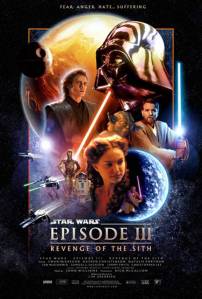 Ironically, the only relationship that does work, not just in spite of but because of this tendency of presentation, is the relationship between Padme and Anakin. Critics lambast the awkward dialogue and stilted romance between the two, but to do so is to not really appreciate the nature of both the characters and their relationship. Anakin, as previously discussed, is impulsive, given to act first and then brood heavily on the results of that action later. He’s also emotionally stunted, taken from his mother at an early age and inducted into an order which has members of the opposite sex within it, but strongly discourages romantic interaction of any sort. The result is that Anakin has a fixation on the first woman he ever had a crush on. This isn’t love as we might normally understand it – it’s infatuation, the idealisation of a beautiful woman he met as a boy and then spent the intervening ten years fantasising about before finally meeting her again. For her part, Padme is a woman for whom romance has never really been much of an option before. We learn that she has a very limited romantic past before Anakin, and this is unsurprising given that she was a young queen and then a senator. Their relationship, by any gauge, is dysfunctional at best.
Given all of this, the rush from faltering romance to all-consuming passion for the pair of them makes an awful sort of sense, as does Anakin’s eventual abusive attitude towards Padme, and her inability to leave him. Even having learned that he has murdered children, her instinct is to go to him and beg him to come away with her somewhere far away from everything. Indeed, her response after learning he had murdered an entire settlement of Tuskens, ‘even their women and children’ was to marry him. Theirs is not a normal relationship, and measuring it by the standards of one will obviously have it falling short. Anakin’s petulant attempt at choking the woman bearing his child, for whom he has supposedly done all the terrible things he has out of fear of losing, carries a horrible logic when viewed through this lens. It’s perhaps time that people stopped mocking Lucas for his terrible ability to write romantic dialogue and recognising instead that he writes incredibly perceptively for the characters he is portraying.
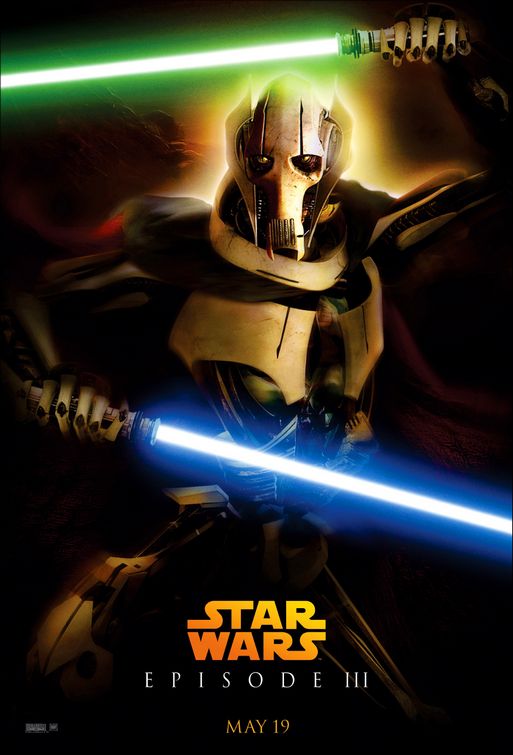
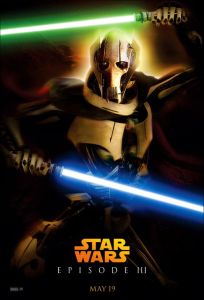 Of course, with the action of this film being centred on progressing Anakin down those final steps of the path to being Vader, the ‘villains’ of the piece end up feeling sadly wasted. General Grievous appears on screen carrying so much potential, but ends up basically being every bit as disposable as Dooku before him. There’s actually a consistency here – Palpatine’s disdain for those who serve him once they have outlived their purpose is a characteristic that permeates the entirety of the original and prequel trilogies, from the eager greed to replace an ageing Vader with his own son to the casual dismissal of the lives of Dooku, Maul, Nute Gunray and anyone else. Palpatine’s sole motivator is always power, absolute and total. Anyone who helps him on the road to that power tends to have a short life expectancy once their part is played. Still, it would have been nice to have seen a little more of the enormous, armour plated Grievous with his multiple limbs and collection of lightsabers.
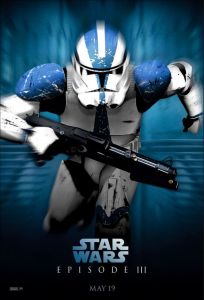
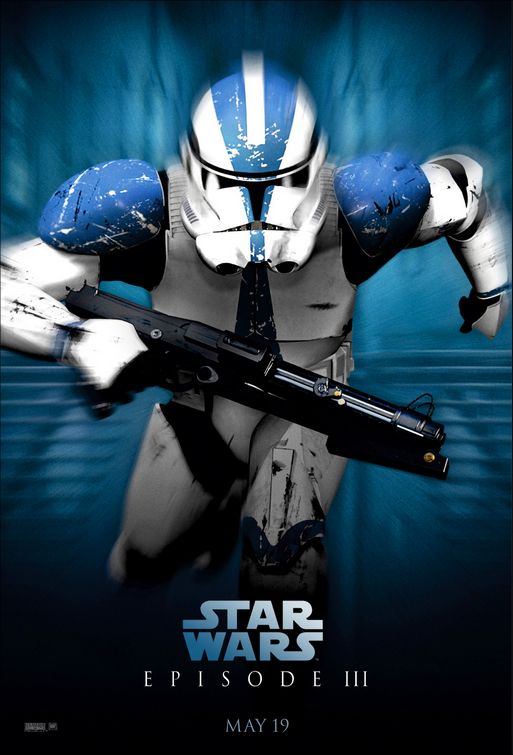
Order 66 hits home as well as it can – again given that a lot of the actual Clone Wars happens off screen, it doesn’t have the sense of attachment between the Clone Troopers and Jedi that it requires for the scene to fully hit, so Lucas cheats a little by having Yoda hanging with the Wookiees (and Chewie) on Kahsykk to give it a little more emotional resonance. It’s a neat little fudge, almost as if Lucas recognised he’d run out of movies to do it properly.
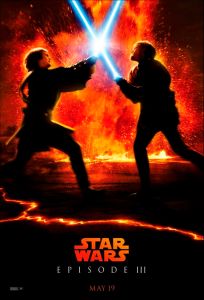
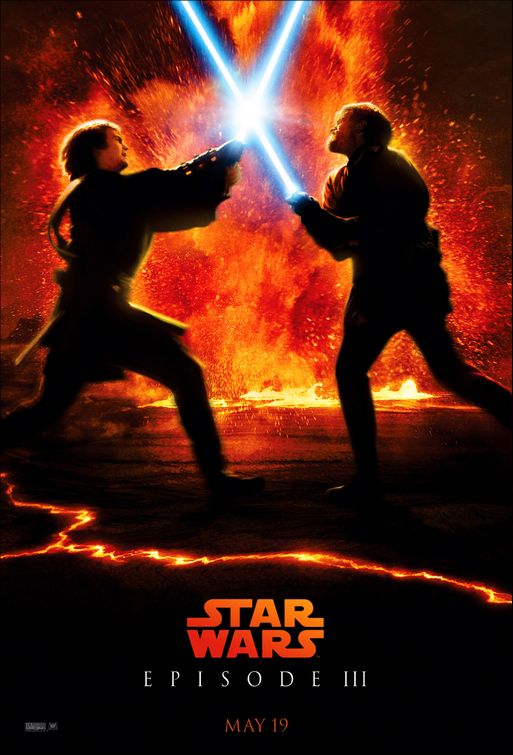
 But it all comes down to the final act. What everyone is waiting for is the final conflict between Anakin and Obi Wan. By involving Padme in this as well, Lucas again seems to recognise that he’s running out of road, and needs to shortcut things a bit. The duel is impressive (though for my money not the best choreography, nor the most emotionally loaded – Phantom Menace and Empire Strikes Back respectively), but again, it’s relying on an emotional resonance that just isn’t really there. When Obi Wan screams at Anakin that “you were my brother”, that he was supposed to be the chosen one, the gut punch that the line is aiming for just doesn’t land, regardless of how much McGregor sells it. In fact, given all the stick that Christensen gets, it’s to his credit that his final moments of actual dialogue are intensely affecting and one hundred per cent in keeping with the character he’s portrayed. Screaming pure hatred at Obi Wan like an angry teenager even as he is literally burning to death is exactly what you expect, and whereas fanboys might not appreciate having seen the mysterious, powerful Vader’s origins reduced to a moody, emotionally stunted young man, it makes perfect sense when you actually think about it – after all, even years later, Vader’s response to news he doesn’t like from subordinates is to Force choke them to death, hardly the actions of an emotionally healthy adult.
 In the end then, if there’s a criticism to be made of the prequel trilogy as it draws to its end, it’s that Lucas’ ideas often outstripped his capabilities. From the use of the very latest CGI techniques, which did not always age well, to the attempt to cram so many elements into the space of just three films, if there’s one accusation that cannot be levelled at these movies, it’s lack of ambition. It’s also worth noting just how much they did right, from taking the Jedi down off the pedestal on which the original trilogy had placed them, to really examining what kind of individual would go from an apparently good man to one of the most feared monsters in the galaxy. To have done all that and produced films which entertain young children to this day is no mean feat. The prequels may not have been perfect, but they aimed high, and it’s difficult to fault a storyteller who does that.





 Sci-Fi Bulletin: Exploring the Universes of SF, Fantasy, Horror and Spy-fi!