Review: The Moor
Starring Sophia La Porta, David Edward-Robertson, Elizabeth Dormer-Phillips, Bernard Hill, Mark Peachey and Vicki Hackett Directed by Chris Cronin Produced by Nuclear Tangerine Decades after her best friend Danny (Dexter […]



Starring Sophia La Porta, David Edward-Robertson, Elizabeth Dormer-Phillips, Bernard Hill, Mark Peachey and Vicki Hackett Directed by Chris Cronin Produced by Nuclear Tangerine Decades after her best friend Danny (Dexter […]
 Starring Sophia La Porta, David Edward-Robertson, Elizabeth Dormer-Phillips, Bernard Hill, Mark Peachey and Vicki Hackett
Directed by Chris Cronin
Produced by Nuclear Tangerine
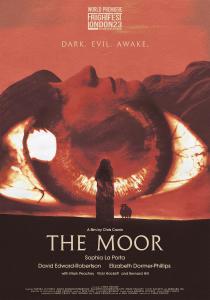
Decades after her best friend Danny (Dexter Sol Ansell) was snatched and killed, Claire (Sophia La Porta) is reunited with Bill (David Edward-Robertson), Danny’s dad. Bill has never stopped looking for his son’s body and despite the pleas of retired investigating officer Thornley (Bernard Hill), Claire joins Bill, mountain rescue specialist Liz (Vicki Hackett) and dowsing father and daughter Alex (Mark Peachey) and Eleanor (Elizabeth Dormer-Phillips) in the search.
Director Chris Cronin and writer Paul Thomas have talked about wanting to do a legitimate Yorkshire folk horror and that’s exactly what they’ve achieved. The Moor is shot through with documentary inserts that echo The Blair Witch Project and the hunt for the Yorkshire Ripper, each bookend spectres in the fog of this story. The found footage elements come in from Claire’s body camera and the size and desolation of the search area. There’s a repeated motif of stepping off the road onto the Moor that’s especially effective, and the folk horror atmosphere here is very real. The Yorkshire Ripper, and other Yorkshire based real life horrors, are evoked by the sense of uncertainty that wraps around the movie like the fog on the moor.
Edward-Robertson’s Bill is both consumed and frozen in place, a man convinced he’ll find his son alive, well and a child two and a half decades after his death. Geography as uncertainty, the second child’s shoe never quite dropping. It’s bleak, hard stuff but everyone involved knows what they’re doing and where they’re going, even if the characters don’t. Hill, a cameo here and one who serves as a lighthouse beacon of reason in Bill’s collapsing world, has one of the best moments. Claire shows him where Bill has been searching and Thornley shows her what the Moor truly is: an area so large the map covers the floor of the room.
Cronin’s direction works with this unease, especially in the second hour. There, Eleanor and Alex come to the fore and change the dynamic to drastic effect. La Porta’s Claire is here to understand, and perhaps, to keep Bill in check. She’s a passive observer, a not-quite-failed podcaster running from the existential trauma that defined her childhood. Eleanor and Alex are a high functioning family, the only one in the movie and they pay a hefty price for that. Their psychic abilities are presented in what may be the most Yorkshire way of all, with a pragmatic set of rules that render it almost mundane. Alex uses pi to re-ground Eleanor after an experience and that becomes both a framework for the movie and a battleground for it. Alex is driven, kind and rational. Bill is just driven. Claire is a passive observer trying to understand. Eleanor is trying to not understand so much it kills her. The conflict between them is far more ideological than physical but along with Hackett’s fantastic, stoical Liz, it becomes the only landmark on the abstract landscape. Until, suddenly, it isn’t.
 Thomas’ script is a deliberately slow burn but it rewards perseverance for character and audience alike and the final half hour here pulls multiple rabbits out of hats. The actual killer becomes a presence, but never seen. Eleanor’s spirit guide is far more tangible than expected and shadows in a tent are used to absolutely terrifying effect. The ending is even better, managing the near impossible task of being ambiguous but providing you with the closure you want. Just not necessarily the closure anyone deserves.
Verdict: The Moor is as relentless and vast as its location and, like that place too, rewards exploration. 9/10
Alasdair Stuart
 Doctor Who News Star Trek News
 Sci-Fi Bulletin: Exploring the Universes of SF, Fantasy, Horror and Spy-fi!