Feature: Does Holy Spider test boundaries of horror?
Martin Jameson discusses the nature of horror movies with reference to Holy Spider, the new movie about serial killer Saeed Hanaei There’s no way of discussing this without spoilers, but […]



Martin Jameson discusses the nature of horror movies with reference to Holy Spider, the new movie about serial killer Saeed Hanaei There’s no way of discussing this without spoilers, but […]
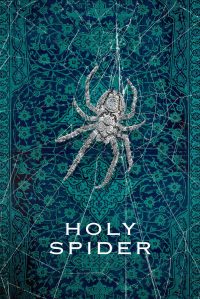 Martin Jameson discusses the nature of horror movies with reference to Holy Spider, the new movie about serial killer Saeed Hanaei
There’s no way of discussing this without spoilers, but as Holy Spider is based on a true story, I don’t think it will ruin it if you haven’t seen it.
Last year, when reviewing British indie-flick All My Friends Hate Me, I asked: When is a horror film not a horror film? That movie was a dark comedy of paranoid millennial manners which exploited familiar horror tropes, whilst not containing any actual horror at all.
Spool forward nine months, and, at the other end of the spectrum, it’s not unreasonable to ask the same question of Ali Abbasi’s Persian language fictionalized account of a real-life serial killer, Saeed Hanaei, who murdered 16 women in Iran in 2000-2001, all or most of whom were reportedly sex workers. There’s not a single humorous frame in Holy Spider, and whilst it’s not ‘gory’, it doesn’t spare the audience any detail. The horror isn’t a cipher for anything; the film, and the events it depicts, are simply horrific.
 This isn’t horror as storytelling, it’s horror as confrontation, and it poses its own particular challenges. However the detail has been fictionalised, Saeed Hanaei’s victims were real people, so does that mean the film maker has different and more complex responsibilities in dramatizing what happened to them? Is it asking something exceptional of the audience as well; demanding that we think very carefully about how we respond to it?
Holy Spider is a tough watch, and not just because of the trail of murder it depicts. Hanaei was ultimately caught and executed, but along the way, the killer became a folk hero of the religious right because of his claim that his murderous spree was a divinely inspired mission to cleanse the streets of ‘corrupt women’. In light of today’s protests by women in Iran against the strictures of the ‘Morality Police’ the story feels prophetic, suggesting that Hanaei’s twisted mentality is now enshrined in a state sanctioned murderously misogynistic national DNA.
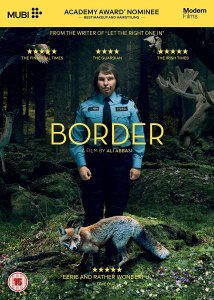 I think it’s hard to argue that Holy Spider isn’t a very good film in many ways. It’s brilliantly made, utterly gripping, with superb acting all round (in a standard review, I’d give it 9/10). Ali Abbasi, is himself Iranian (although he lives in Denmark now) and some might remember his work from the very bizarre Border which came out a few years ago based on a story by John Ajvide Lindqvist about a Troll working as a customs officer. It’s a fantastical idea made powerful by being imagined in a very real and recognisable world.
Holy Spider treads a trickier path because its source material involves the awful deaths of real women, but it is expressed through the cinematic language of the serial killer thriller. It’s illuminating to look at how fact and fiction bump heads uncomfortably here.
Abbasi is keen not to glorify the perpetrator, so the film follows an incredibly determined brave woman journalist, Arezoo Rahimi, who finally entraps Hanaei by posing as a sex worker and pursuing justice on behalf of his victims. However, Abbasi also wants to explore Hanaei’s psyche (embittered war veteran, religious zealot etc), following him as he commits murder after murder, which he gets away with because, as with Peter Sutcliffe in the UK, there is little sympathy for his sex worker victims who are seen as largely responsible for their own fate.
To tell this part of the story, the director decides we need to watch not one, not two, but three very brutal murders, dwelling in graphic detail on highly disturbing images of their strangulation. While there is an attempt, certainly with two of the victims, to give them a hinterland beyond being simply cinematic murder-fodder, there is clearly some justification for the accusation that Abbasi is being unnecessarily voyeuristic. Some reviews have been particularly scathing, suggesting that this aspect of the film perpetuates precisely what it is attempting to critique and garnering the movie some disapproving two stars reviews.
I found myself very conflicted. In recent years, especially in the writing community, the consensus has been that we should give far less narrative air time to perpetrators, and where possible make our stories about those who suffer at their hands. In 2021, in The Investigation, a brilliant Danish dramatization around the murder of journalist Kim Wall in a wealthy entrepreneur’s private submarine, the perpetrator was neither named nor featured at all. It was an incredibly affecting and powerful drama.
 The thing is, while I was blown away by the power of that Danish series, I can’t in all honesty believe that this is the only way of respectfully telling these stories; after all, sometimes it is our duty as writers to dig down into why people transgress in the way they do. In the case of Iran, where Abbasi is making a broader political point about ingrained cultural, political and religious misogyny, not to explore who Hanaei believes himself to be would be to render the whole enterprise utterly pointless.
Indeed, although Hanaei was caught after a potential victim managed to escape, the journalist’s brave, empowering entrapment story, gripping though it is, appears to be little more than worthy wish fulfilment. The truth of the film – and truth is what we’re about as writers and directors – lies in the parts of the movie about which well-meaning, politically astute observers are so righteously critical.
So, could the film have been made without forcing us to watch those murders? Would one or two murders have been enough? The answer to that is yes, but I seriously doubt it would have been anywhere as powerful a statement as it is. It could reasonably – if uncomfortably – be argued that to do so would be less respectful of those victims, not more so, because in narrative terms the crimes would be sanitised for the audience, and Abbasi is addressing an audience who, he believes, simply do not take the issue of violence against women seriously. If there are men – sometimes controlling entire nations – who see violence against women as an abstract idea justified by a higher force, as divine retribution, then showing it as cold, brute, murderous evil done, repeatedly, by men (not gods), is thematically and politically justified. After all, that is the truth of the world.
When we meet the parents of one of the murdered women, torn apart by grief and shame, it is a hair-raising moment, precisely because we have lived the young woman’s terrible death with her. When Hanaei’s son coolly, proudly re-enacts his father’s crimes with his toddler sister, as if playing a children’s game, we flinch precisely because we have borne witness to the full horror of the deed as it happened.
 And in a brilliant and shocking final act, the execution of Hanaei is seen to be equally brutal, the audience forced to watch in grim detail just as they have the murders of his female victims. We could equally ask do we really need to see that in all its horror? The answer for me is yes, because it exposes the suffocating pointlessness of any culture driven by retribution, divine or human.
It has become easy to eschew voyeurism, and often there is good reason to be wearily impatient with tropes where women feature primarily as corpses, but equally there are times when those stories need to be told, and when perhaps those images need to be seen, to be confronted.
Whether the balance is right here, and whether a woman director would have made this differently, or as effectively, or better, I genuinely have no idea. All I can say is that Holy Spider is an extremely powerful and disturbing film which I shall be thinking about for days if not weeks if not years, where a more discreet cinematic style might have been a good deal more forgettable.
A true horror, that made me rightfully angry at the crime, not at the film maker, and I’ve never been one for blaming the messenger.
Martin Jameson
 Doctor Who News Star Trek News
 Sci-Fi Bulletin: Exploring the Universes of SF, Fantasy, Horror and Spy-fi!