 The fifth instalment in the Underworld franchise – Blood Wars – has just been released on Blu-ray and DVD. Visual effects supervisor James McQuaide chats with Paul Simpson about the development of the franchise and how the effects industry has changed over the course of the last 15 years…
As well as being visual effects supervisor, you’re also an executive producer on the movies, so how far ahead in pre-production do you get involved?
Probably in this case about a year in advance. We get the script in from the writers, then look through it. As soon as it seems to be kind of locked down, we start the pre-vis process, working with the director to figure out the sequences within the budget. These are low budget movies by Hollywood standards so it’s imperative we figure out ways of doing things that are effective and fun to watch, and within the budget. That requires quite a bit of preplanning along the way.
Also, in a weird way, we develop the movies in pre-vis. The script will say one sentence, and we have to make a couple of minutes out of that in pre-vis, getting to the nitty-gritty and making something that’s fun to watch. The Coven battle at the end of Underworld 5 I don’t think there was more than a paragraph or two. In pre-vis it was 15 minutes of this massive sequence which got cut down a little bit for various reasons in post – but from those couple of paragraphs we created the third act. That requires time.
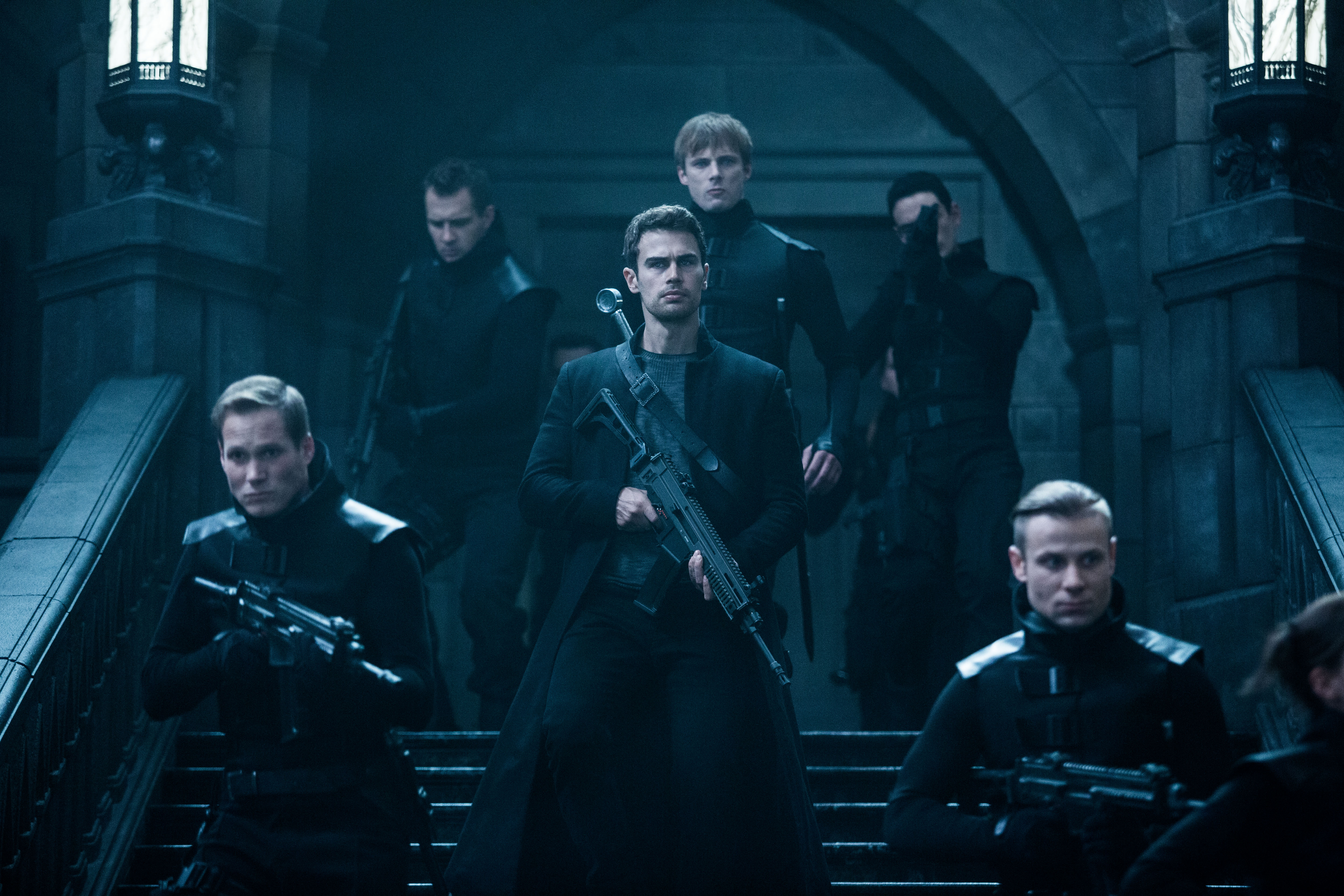
Every movie is different: the first two were done by Len Wiseman, but the other movies have had directors coming in who haven’t done them before. Patrick Tatopolous [who helmed the third film, Rise of the Lycans] had worked on them but hadn’t directed one so he knew the world a bit – and the other two directors have come in from the outside world. Even in the pre-vis process you’re making sure that some of the biology is clear to everyone. There’s a certain style to these movies – they’re visually blue but there’s a kind of vibe that we try to maintain.
During that year we can try things out, so when we get to production, we are as prepared as we can. That’s not to say that we don’t continue to develop things in production and again in post.
T hings always do change…
We do stick pretty closely to what we’ve devised; not always but if you start shooting randomly – and I’ve been on pictures like that – you can make things work in post but it’s really hard. The schedule on these pictures is also quite tight so there’s only so much invention you can do given the amount of time you have to work with. I think if you compare the finished sequences with the pre-vis you’d see lots of very similar stuff. We try to stick to what we have planned to put the most up on the screen.
Were there elements you were able to get into this movie that you’ve wanted to previously but for whatever reason haven’t been able to?
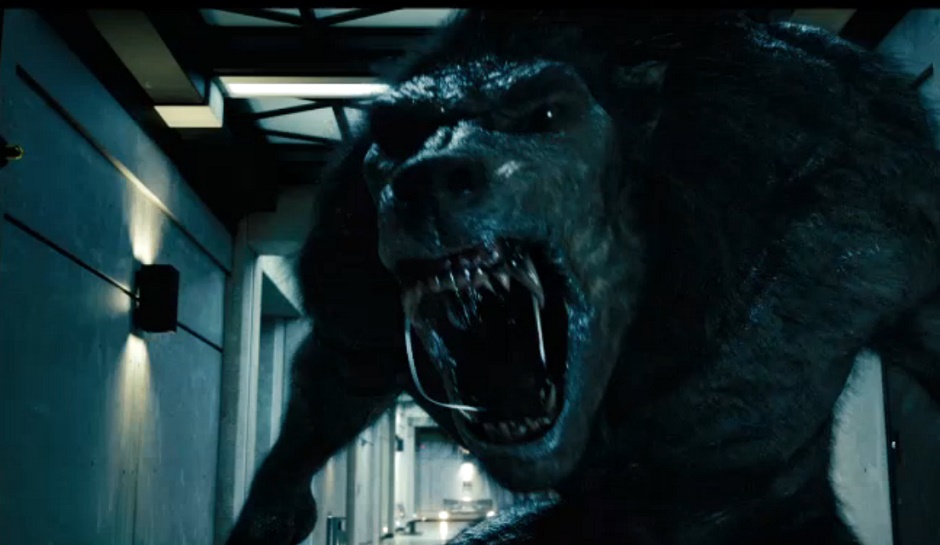
The thing that jumps to mind when you said that: I know when we were doing Underworld 2, in the initial script, Len wanted to do a Lycan that was quite large. For various reasons – budgetary and quite frankly technologically at that point (visual effects even then, in 2005, were relatively in their infancy compared to where they stand now), doing that kind of sequence would have been challenging. In this picture, the Marius character isn’t quite as big as the one Len had envisioned for Underworld 2, but it is a larger Lycan than the technology could do then. The advances in the whole visual effects industry make it possible to do a creature like the hybrid Marius that we probably couldn’t have done at any level on Underworld 2.
 How much are there practical effects involved and how much is CG?
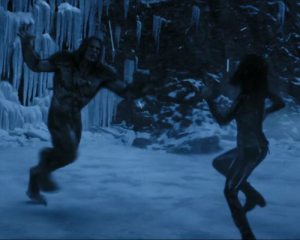
The idea of the picture from the get-go was to do as much practically as possible. The first Underworld was done in 2001/2 when visual effects were really in their infancy; there was not a lot we could do. Unless you were James Cameron doing T2 – and even that was a pretty rudimentary character – you didn’t see anything that was photoreal. So for technical reasons and budgetary reasons, there was no way we could afford to do much, so there are a couple of CG Lycans in the [first] picture, but we really relied on the suits because that’s what worked for us budgetarily and aesthetically. They looked real.
Of course fur and hair were the real problem areas to do in CG in those days.
A hundred percent – absolutely true. The Underworld franchise sort of parallels the development of the visual effects industry. Underworld 1 we couldn’t do CG creatures; Underworld 5, I’ll be honest – I went into the picture lobbying not to do practical effects. In the last couple of movies we did things with guys in suits and it looked like guys in suits so we had to replace it digitally, or let it go and cut it fast to try to get through it before anybody noticed.
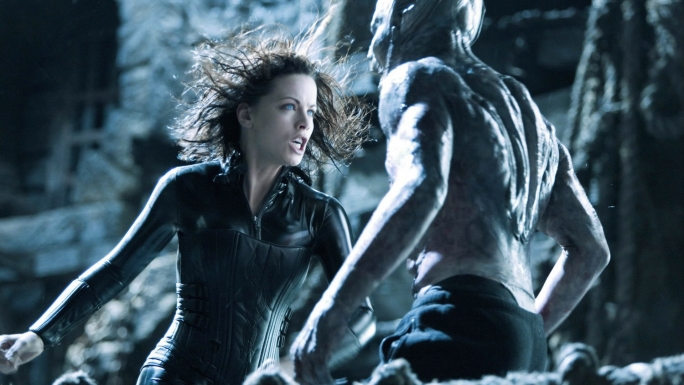
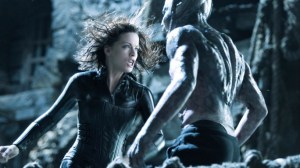 Digital effects are now at the point where they look more photo-real than the suits and you can do a lot more – they can move, they can emote, they can do things that guys in suits, no matter how good they are, simply can’t do any more. We had a hero suit and a back up suit on Underworld 5 but I don’t think there’s a single shot that involved just the suits: quite a few of the ones where we went in thinking we’ll still use the suit in the shot, we ended up replacing with a digital creature because we wanted more of the shot than the suit offered.
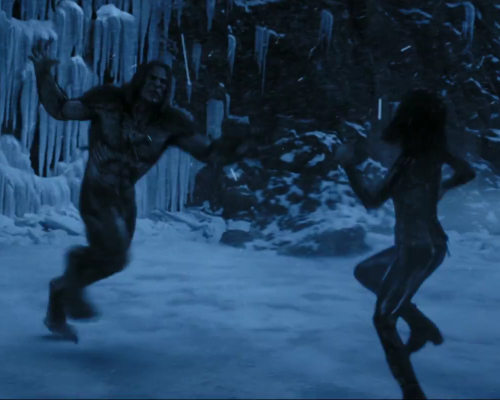
We started off not able to do anything and ended up here in Underworld 5 with a shot of a hundred-plus Lycans performing all at the same time, which would have been unheard of, unimaginable in 2001. I don’t want to say it’s a throwaway shot, it’s kind of a hero shot in that sequence, but it isn’t the only big hero shot in the picture. It’s one more thing – and even that’s got to the point where it’s not impossible as it would have been.
 And the primary concern is still presumably the story telling element – does the shot advance the story?
A hundred percent. Every shot we try to do that.
Your director on this, Anna Foerster, has a background in effects…
She understood: she’d seen the four movies before and had her strong opinions about what worked and what didn’t work – which very much aligned with mine.
I’ve worked with a lot of first time, or relatively first time directors and their trust in digital effects isn’t always there. I always have to reassure them that it will be fine and not to worry, and most walk away more convinced than when they came into the process. That was the great thing with Anna: because she’d done so much visual effects work I didn’t have to go through that process. She got it – I was talking to a peer, somebody who had worked in visual effects enough to know what could be done successfully. That’s a blessing.
So often I have to try to convince a director to do it this way and rely on visual effects to do something and they’re adamant that they think they can do it practically, with stunts or whatever. I say, “If you don’t believe me, do what you want to do, and we’ll meet again in post and if it doesn’t work we’ll fix it. If you want to spend your production time shooting something that’s never going to be used and you think you’ve got that time, go and do it.” But then I end up with a plate where I’ve got to remove the guy in the suit that I knew was never going to work before I can add the digital creature. Anna understood this, so there were none of these kinds of conversations. She let the visual effects do their job.
 When you’re in that circumstance, is there the temptation to ensure a clean plate is shot because you know you’re going to need it?
I always ask for a clean plate at the end of the set-up so I have that in the bag so if it doesn’t work I can always fall back on that and avoid the clean outs!
What was the most challenging aspect of this particular instalment?
The most challenging – beyond time and money? Time and money you can’t ignore: the budget is a fifteenth of what Guardians of the Galaxy has, and it’s tiny for what we’re trying to accomplish. If you’re going to make this sort of movie, and give the audience that kind of ride, you have to figure out a way financially to make that work.
One of the way you can make that work is to simply delay the start of visual effects shots: we wait for the picture to be almost locked. We can’t afford to throw anything away. As a result the window for completing visual effects shots is shrunk.
Most movies start much earlier than we do and they throw away a lot of stuff, because things changes, or it’s not used. We wait until the end and as a result in this picture we had 12 weeks to push through 645 shots – that was something of a record. That pushed everybody quite hard. Luma’s first or second picture was Underworld 1 so they’ve been with us throughout this whole ride, involved with every single movie. In some ways their company history matches the franchise – in the first Underworld they did clean up work. All the companies were pushed on the schedule quite hard.
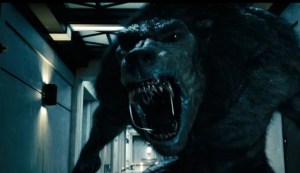 The challenge on all these pictures is to make sure that the effects don’t look like effects, that they blend in. Even if Michael is cutting a Lycan head to sternum right through, somehow that feels real. I know that’s a ridiculous impossible thing to try to pull off, but we try to make the shots feel as real as possible so you’re not taken out of the story.
Sometimes visual effects are “look at me, I’m a really cool visual effect”. I don’t know if that’s the aesthetic any more; it’s certainly not the aesthetic of Underworld. We try to make the digital creatures look every bit as good as the guy in the practical suits; that’s always a challenge and in this case because there is so much CG creature work done, the challenge is that much greater. There are a couple of hundred shots that involve CG Lycans and I would defy anybody to find them all. Some it’s obvious because of what’s happening but some they are just walking around, or replacing a guy in a suit.
 One more thing that was interesting about this picture: for the first time we had a creature that had to very closely match its human counterpart. In his performance, we had to see the Marius human actor [Tobias Menzies]. It needed to move the same way, to emote the same way, and really very much have a character. Lycans are like rabid dogs – they don’t have any really complicated performance requirements – but in this one we really needed to sell the human performance part of it in the large CG creature. That was a unique CG challenge for this picture which we had not come up against previously.
Underworld: Blood Wars is out on Digital Download, Blu-ray & DVD now
Thanks to Sarah Holland and Katie Ollerenshaw for their help in arranging this interview







 Sci-Fi Bulletin: Exploring the Universes of SF, Fantasy, Horror and Spy-fi!