Tremors: Interview: Michael Gross (2018 – A Cold Day in Hell)
Tremors: A Cold Day in Hell sees Michael Gross’ Burt Gummer – along with his recently-acquired son played by Jamie Kennedy – tackle the Graboids in probably the last place […]



Tremors: A Cold Day in Hell sees Michael Gross’ Burt Gummer – along with his recently-acquired son played by Jamie Kennedy – tackle the Graboids in probably the last place […]
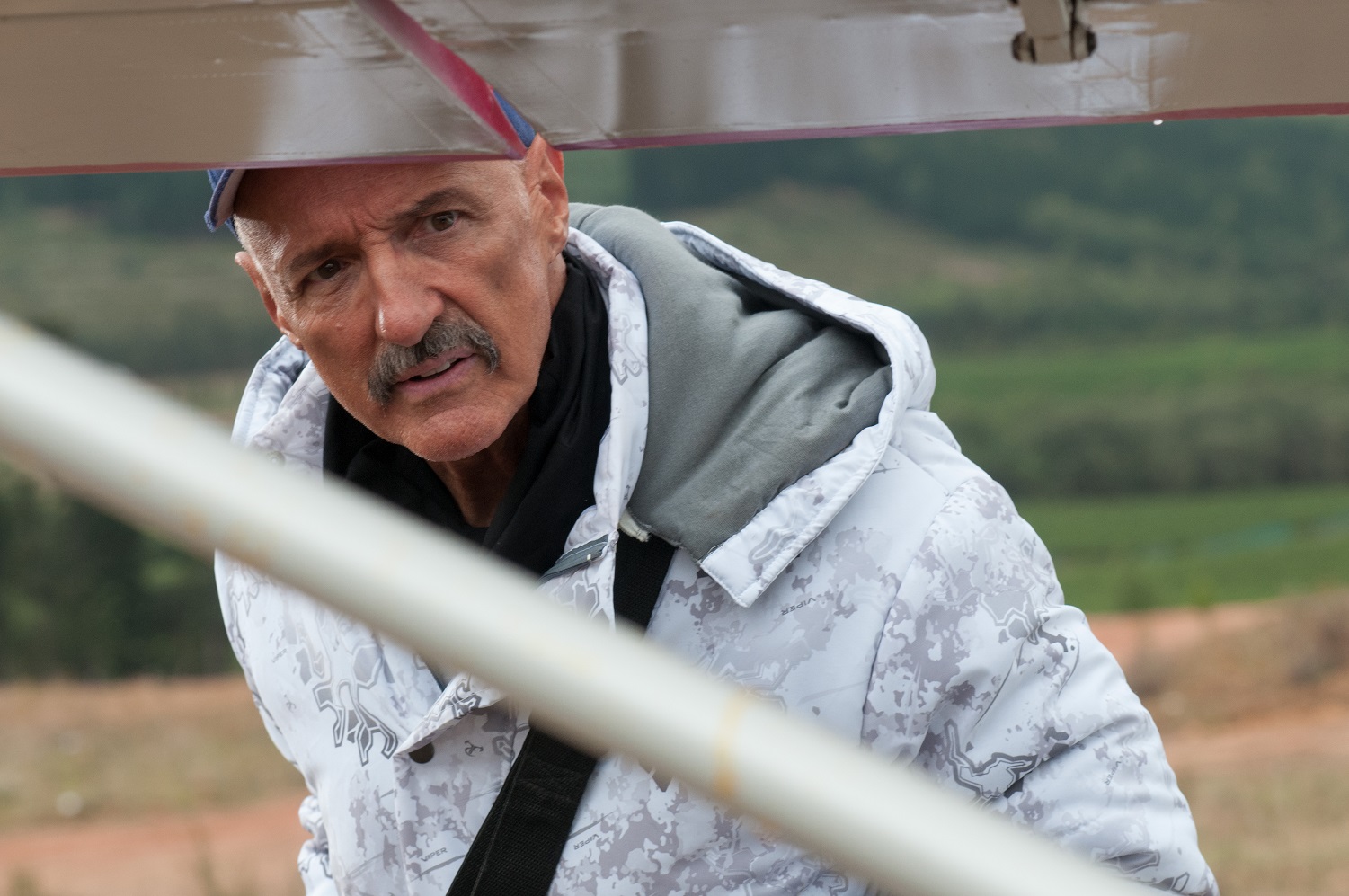
 Tremors: A Cold Day in Hell sees Michael Gross’ Burt Gummer – along with his recently-acquired son played by Jamie Kennedy – tackle the Graboids in probably the last place you’d expect. A couple of weeks before the sixth movie was released, Gross chatted once again with Paul Simpson…
Thank you for another enjoyable chapter in the Tremors saga.
We’ve got a lot to live up to. I’m too close to be critical of it. I just have a list of complaints why it could have been better, and why I could have been better, so it’s always nice when someone says they enjoy it.
But that’s the same with all creative people: it’s very hard to assess something you’re involved with yourself! When we spoke after Tremors 5 you were concerned that people might have a problem coming back after 13 years to the franchise. What was the feedback like?
It was just wonderful. Naturally this is a very enthusiastic and vocal fanbase. There are some people who will never ever accept any Tremors but the very first one. None of them will live up to it and I understand that feeling. There are others who will debate the fine points of every film that we do, the pros and the cons, but in general it was very well received.
It’s the reason there’s a sixth – the response to 5 was so great. God bless them – for me, revisiting Burt after all that time was an absolute hoot. Who knew that we would even have another life like this?
He’s fun to revisit. I love the comic obsessive compulsive disordered paranoia of this man. Comedy is in many cases is about extremes and there’s no one quite as extreme as Burt Gummer.
 And such a major character change for Tremors 6… a different cap!
(laughs) I must confess – I’m from Chicago and so when the Chicago Cubs won the World Series and they were doing another Tremors I had to lobby for us to honour the Chicago Cubs with no explanation. People keep asking him if he’s changed teams – “no, just hats”. As simple as that.
And it adds a nice running gag to the movie.
That is literally a tip of the hat to my home town baseball team. I know how all you all are about rugby and football over there – you’ll understand my passion.
It seems paradoxical to shoot a movie about the Arctic in South Africa!
We could explain it all by global warming! Burt is seriously overprepared with his Arctic gear – but it fed into the storyline. Originally it was to be shot in full-on snow but our choice of locations had so much snow that it was impossible to move equipment and so we had to have a fall-back. The weather conditions were so extreme where we were supposed to film, it would be one hurdle after another and cost us time and money.
The original idea was something we’d tossed around for some months – we’re always desert dwellers, we’ve had four films in the desert. Why not change it up somewhere? The idea of climate change seemed particularly apt. These things have been trapped in ice, and global warming and climate change are bringing them out of icebound hibernation to affect a different part of the world. We found that interesting and fun. We liked the change up and we were able to justify the warmer weather by very much playing up the global warming aspect.
 How much are you involved with the creation of the films prior to shooting – scripting and story level?
To a degree. The last couple of films we’ve really wanted to throw up more personal hurdles for Burt. For the first couple of films he’s a wonderful character of extremes but I also wanted to challenge him personally as well as professionally. The professional challenges have always been the monsters but personally we wanted to throw some other things at him – having a son he didn’t know about, someone like him who’s basically a loner to have to share his life with somebody else is a real hurdle for him. Not easy.
And in this one facing his own mortality – giving him something he can’t fix, he can’t control. He is the ultimate control freak and for him to be not able to control his own destiny because of this medical problem and for him to hand over, to cede control to this idiot son of his he doesn’t entirely trust is another hurdle. We thought those challenges would make this film more interesting.
 In the last movie, Jamie Kennedy was the new boy; this time, you’re both returning and are the thread between them. Was it a different relationship this time out?
Yes, obviously there was a familiarity the way we worked. The first film was getting to know each other – how do we work, how do we feel each other out, how do we approach the process – so in the second, there was a greater familiarity with each other and much more of a great comfort level. We know how we prefer to do things.
 The impression that comes from the B roll material is that you have quite different ways of working.
(laughing) You’re absolutely right! Jamie is far more loose. In this film there’s some improvisation on my part where we wound up filming some things and doing some things in the middle of a scripted scene that they kept. But I’d rather not do it that way. Jamie likes to go off script and try some things.
My thing is, particularly with Burt, his voice is so specific as is his tone and the way he looks at life that I’m afraid if I improvise too much I will lose that tone, and part of me or some other character will creep in. I like to go through several different drafts with Burt for his language and the way he looks at life. I prefer a little more precision and a little more of a script.
The way Jamie and I have learned to work is, let’s do it as scripted and then if you want to riff a little bit we’ll do that too. We’ve grown comfortable with that.
It’s not that I don’t enjoy improvisation – I can do it and it can be fun – but I don’t want it to be wrong. Here’s the thing: I don’t want it to be the wrong tone. It could turn out to be funny and wrong and I don’t want the director and editor to say “let’s include it because it’s funny” if the tone is wrong. I’d rather get the character right and sacrifice a joke then say something stupidly and cheaply funny and they say, “That’s great, let’s go with that.” I hesitate – it’s just the way I’ve learned to work with Burt. He’s precise and I want to have the precision in the dialogue and I’m afraid to take too many chances with it.
A nd people playing comedy mustn’t know they’re funny – the audience is suddenly laughing at them and not with them.
The one of the things I say is funniest about Burt is he has no sense of humour. He doesn’t get it. He doesn’t joke. He tickles me!
One of the things you’ve been discussing on social media is the situation vis-à-vis Burt and gun use. Have you examined that more in light of recent events and how you approach Burt for a future film?
Burt will be affected by it. Burt has already been affected by it to a degree.
First of all I will one say that one thing that distinguishes us from a lot of films that do have a lot of guns is that Burt never turns his weapons on another human being. That’s always been important to me from the very beginning. It’s an old-fashioned type of horror film – the good guys, the humans, versus the bad guys, the monsters. We don’t fight each other. These are not armies, they’re not assassins. It’s old-fashioned in that way.
You’ve seen me with Africans, Asians, people of different generations and different races in all of these films, and we’re all allies, one great human family fighting the monsters. That’s one of the reasons I try to justify this.
I myself happen to be a gun owner. One of the things I’ve decided to do – and I can easily justify it in the films – is that Burt does not have a National Rifle Association sticker on his bumper of his car. I can justify this not because I’m political or apolitical but Burt is not a joiner. He’s a world of one. He would like to join anything that has a constitution or a set of rules because they would never quite satisfy him. He likes to make his own rules.
I t’s the Groucho Marx thing isn’t it!
Very much the Groucho Marx comment – he would never want to belong to an organisation that would have him as a member. In Tremors 1, way back in 1990, we talked about that, way before this slew of school shootings: do we want an NRA sticker on his windshield? I said I didn’t think so. He’s a community of one, a loner. He’d come to blows with everybody. He’d never shut up, talk out of turn and have his own strong opinions. You wouldn’t want him.
I’ve talked to Universal – they’re very aware of my feelings about weapons and how I think we need far more restrictions particularly on so-called assault weapons. It’s something I struggle with – I’d be less than honest if I didn’t ask myself sometimes, “Am I part of the problem?” All I have to do is keep the comic level up and remind myself that in the Tremors films we don’t shoot other human beings and hope that’s enough.
Burt in some ways Burt is iconic because he reflects that paranoia that is one of the reasons that feeds the gun lobby – we’re afraid. We founded a country revolting against a king, against a strong central government, and I think there’s a paranoia out there. The way Burt talks about the government: there’s a thing in America where we’re at war with ourselves – we want individualism and yet want a strong central government for some things and not for others, and there’s a fear of too much power in a central government’s hands.
We’re really torn as a country about that and I think it’s one of the things that feeds this – the John Wayne character, the Clint Eastwood character and in some ways the Burt Gummer character is that strong solitary individual out there and it’s one of the things that makes him work. It taps into an ethos that is particularly and peculiarly American.
Tremors: A Cold Day In Hell is available on Digital Download now and Blu-Ray and DVD from May 14
Thanks to Nina Beeston and Hannah Sherry for their help in arranging this interview
 Doctor Who News Star Trek News
 Sci-Fi Bulletin: Exploring the Universes of SF, Fantasy, Horror and Spy-fi!