The Wind: Interview: Nico Mastorakis
It’s a dizzying business, dipping one’s toes into the cinematic career of Nico Mastorakis. Be it capraphiliac carnage in Island of Death (1974), drag comedy in The Naked Truth (1992) […]



It’s a dizzying business, dipping one’s toes into the cinematic career of Nico Mastorakis. Be it capraphiliac carnage in Island of Death (1974), drag comedy in The Naked Truth (1992) […]
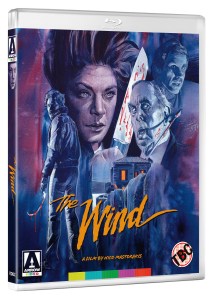 It’s a dizzying business, dipping one’s toes into the cinematic career of Nico Mastorakis. Be it capraphiliac carnage in Island of Death (1974), drag comedy in The Naked Truth (1992) or even his award-winning documentary Mykonos, the Soul of an Island (2018), Mastorakis has carved an eclectic career in film for over forty years.
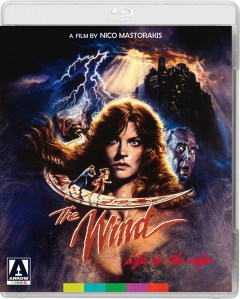
This week brings the blu-ray release of his 1986 gale-force Grecian slasher, The Wind. Starring Meg Foster as a novelist hoping to find the peace to write in a Greek rental cottage, her plans are soon scotched by a scythe-wielding psycho. To commemorate the release, Guy Adams spoke to Nico both about this movie in particular and his work in general.
I’m tired just reading about your career! Journalist to DJ, songwriter to television producer… Filmmaking is only part of a very long list. Is there a common thread to the work you’ve done? What prompted your move from one career to another?
Each change, every transition was a result of coincidences conspiring with both restlessness and ambition. I also started each of these “crafts” very early in life, so I either succeeded early or got bored early.
I was a stills photographer at the age of 13; I published and printed my own school newspaper at the age of 16 and at the age of 18 I was a front page reporter for a daily and a weekly paper. I scored local and international scoops (such as posing as a bouzouki player to infiltrate Onassis’ private island and his hosting of Jackie and Ted Kennedy.)
I had music pages in five Greek weekly magazines and was hosting radio shows. So press and radio were parallel in my life.
 I also wrote lyrics for Vangelis [the electronic music legend probably most famous for his movie soundtracks such as Blade Runner and Chariots of Fire] while producing records for Greek pop groups.
This led me to bringing the Rolling Stones to Athens, for what was a disastrous concert on April 17th, 1967, in the turmoil of riots and protests, which ended with the military coup on April 21st that year.
Six months earlier, I had started my TV career as a host, producer and director of a half-hour pop music programme which we shot on 35mm film, unknowingly creating the very first music videos.
During my TV years I did everything there was to be done. I wrote, produced, directed and hosted, working on sitcoms, soap, talk shows, specials even built the first independent TV studio in Greece.
Finally, the time came to say goodbye and move on to the forefather of all media: film.
My first attempt at features was Death Has Blue Eyes which is probably the first paranormal thriller that came out of Greece. You see the common thread?
Innovation, hand in hand with determination has pulled you from one skill to the next, learning all the while.
 Making a feature film is a complicated business, what did you learn while making Death Has Blue Eyes and is it something that aspiring filmmakers today would do well to know?
One of my undisputable assets in life is the importance of “now.” I’m not the type who calculates, considers, thinks about it and then decides “nah, too risky, won’t do it.”
The decision to make Death Has Blue Eyes was made with a handshake over dinner with the top soft porn producer in Greece and his wife. I saw in them the opportunity to finance the movie and they saw in me the chance to go into more legit films.
So my advice to aspiring film makers is “don’t think about it too long, go with your gut feeling and make the damn thing.”
You’ve commented before that viewing The Texas Chainsaw Massacre was instrumental in you making your second feature, Island of Death. What was it about the film that was so inspiring?
I loved it for its boldness and also its cinematic values. It was a challenge for me to make what was, by Greek standards, unheard of: an extremely violent movie, something diametrically opposite in nature, principles and philosophy to what I am.
My motivation was crude but sincere: to make money. So, I thought, if Tobe [Hooper, the movie’s director] made a fortune, so will I. That decision was on a Friday night, I spent the weekend writing the script on a portable Olivetti and by Monday I was already looking for financing which was in place by evening of that day! Thanks to the low budget – some $35,000.
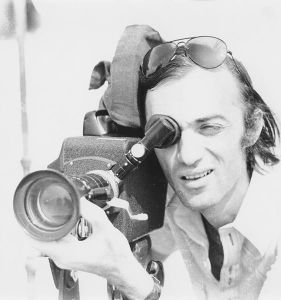 With Island of Death you had to take on extra roles, working as your own Director of Photography as well as acting in the film. Do you think there’s an advantage to learning skills by simply having to do them?
All my skills (writing, directing, producing, editing, sound mixing, music supervising, promoting and distributing) I learned on the street. I mean, no formal education in those fields, just the necessity to do it and the stupid belief that nobody does it better than you.
When my DP for Island of Terror announced that his previous film had been delayed, I was already on the boat to Mykonos with actors and crew. What other option did I have than to light and operate myself? Zero. At a budget of $35,000 you can’t waste a minute, let alone a week.
But, see, I had the experience from stills photography and my 16mm Bolex, with which I had shot miles and miles of black and white footage for TV. And my work wasn’t bad at all, contrary to my performance as an actor which was pathetic. I was the worst actor of the movie and I couldn’t even fire me!
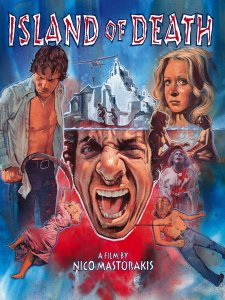 Island of Terror is a veritable shopping list of depravity. A movie that takes unquestioned glee in finding a taboo and then puncturing it violently with something sharp and rusty. You knew what your audience wanted; why do you think they wanted it?
An awful lot of analysts have tried to understand that and the consensus (not unanimously) is that we go to the movies to see what we don’t have in our ordinary day-to-day life. So scary movies are a safety valve to let off steam, to release our subconscious fears, while feeling safe in our theatre seat. The love of violence is probably a by-product, as no good scare can come without violence.
Now, as to whether we can treat real traumas by watching violent movies, the jury is still out but many claim that excess doses of onscreen violence can turn someone to violent crime.
Let me confess here that I don’t watch movies with gratuitous violence, I go as far as Bond or Mission Impossible levels but not Jack Reacher. Not entertaining.
Island of Death makes full use of the beauty and flavour of Greece, as do your later movies Blood Tide and, of course, The Wind. What do you feel the setting brings to horror?
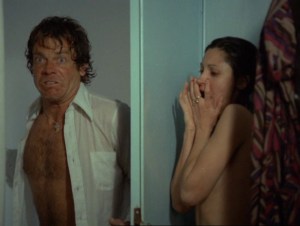 In Island of Death, using the beauty, light and whiteness of Mykonos was never meant to be metaphorical. When a reviewer pointed out that I intentionally used the white of the walls to contrast the darkness in my protagonists’ souls, I said to myself “Shit, I’ve inadvertently done something deep, to satisfy a critic’s inner desires.”
I learned my lesson: everything you do, no mater how naïve, cheap, phony, obvious, ridiculous, it will always have a metaphorical meaning to those who intend to see it.
A movie set or location are vital elements to suspense and horror. As long as they’re not too “on-the-nose”. So, the more idyllic the background, the easier to seduce the audience and suspend their disbelief. Monemvasia was the ideal location for The Wind, as it replaced the typical claustrophobic “cabin-in-the woods” cliché, with the claustrophobia of an inescapable town which has only one exit!
A question you didn’t ask: Has Greece appreciated what you’ve done for them, with so much exposure in so many movies?
To be appreciated in Greece, there’s only one way, subscribe to the left. I subscribe to no party so you can rest assured that I haven’t even received a “thanks.”
 Sticking with The Wind, Meg Foster – the strangest eyes in movies! – carries a great deal of the film and does so with a quiet strength not always found in horror thrillers of the time. Was she your choice and what do you feel she brought too the role?
Meg was my prime choice, precisely for those eyes and for my visual affliction to extreme close-ups. However it would have been a shame to waste her in the role of a typical scream queen. My choice to have her underplay the tension and the terror and instead let her speak with her eyes and her deep-tone vibrato voice, was justified by the end result, also proving that it’s worth it to go against the grain and resist the temptation of such clichés.
During the days we spent in the Monemvasia isolation, Meg sucked her role in and even began to show some psychotic symptoms herself.
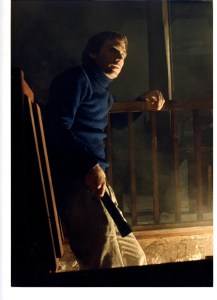 On the subject of psychos, what is it about Wings Hauser that convinced you he should carry a scythe with mad intent?
Casting Wings was a sign of ignorance. I didn’t know at the time that he would play the role so close to his personality. I usually succumb to my gut feeling about people and my gut feeling in this case was adamant and whispered over and over again “don’t cast that guy, he’ll be trouble.” As always my gut feeling was right, but I got exactly what I wanted from his performance. A pain in the ass indeed, but the gain had a soothing effect.
And we can’t ignore Robert Morley. They last time he played a role with such vigour he was about to be fed his own poodles by Vincent Price. Do you have any particular memories of working with him?
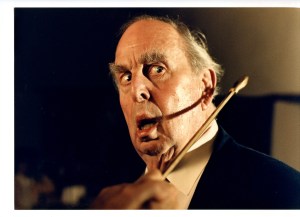 Oh, what a gentleman, what an actor. His personality was so wonderful that I rewrote his character. That “dear girl” phrase came from him and I was determined to allow the dialogue to give vent to his vitriolic sense of humour.
He’d happily turn that sense of humour on himself, especially about his lack of mobility. When I asked him to shoot a walking scene in narrow cobblestone streets his reply was pure sarcasm. “Dear boy,” he said “congrats, you picked the right actor for this scene.” He made it down the narrow alley, even if he was out of breath by the time I shouted “cut.”
 The music was by the renowned Stanley Myers working with protégé Hans Zimmer, a composer who would get his first solo credit on your next movie, Terminal Exposure. What were they like to work with? And how important is a soundtrack to a movie?
My origins are deeply woven in music, so I think of the score when I write the script, I count beats when I shoot the scene, I have the score in my head when I edit. To have a dynamic duo like Stan and Hans scoring my movies (we had already done three) was a breeze, a pleasure, a fun process.
For the late, great Stanley there are no words to describe his talent, professionalism and his eye for talent. Hans was his alter ego, taking over action pieces and keyboards where Stan didn’t feel comfortable. The two were also bound by the same sense of humour, which lifted both meetings and studio sessions. I loved working with them and I’m thrilled and proud not because I gave Hans his first solo feature, but because he became the giant he is today. His fame is justified by his immense talent and his passion for film.
 In a previous interview, you mentioned being attracted to the supernatural and yet most of your films are rooted in fact, though the end of The Wind can be said to have a hint of the otherworldly. What is it about the supernatural that attracts you?
Even in factual storytelling you can find underlying paranormal shades and shadows.
It’s convenient to take The Wind on face value, but if you dig a little deeper, then the wind of the title could have been Meg’s worst enemy but also her best friend.
Equally, behind every murder in Island of Death you can find an element which cannot be logically explained – hence the stupid term “coincidence.”
The supernatural has always been an attractive adversary for film writers and directors and I’m no exception. On the one hand, it’s a great tool, you manipulate the audience easier, you play against the rules. But it’s also deadly if you overuse it or handle it clumsily.
I recently wrote a novelette, “My Life As A Ghost,” which is the basis for a film, and the more I wrote, the more I discovered the lust of throwing logic in the garbage and let your imagination take the wheel.
You’ve written (or co-written) the majority of your movies. Do you enjoy the process of writing as much as the act of directing?
I hate the process of writing as much as the next guy. I’m a writer at heart but also a people’s person and love to be on the set. Writing is a lonesome craft and you can’t do it any other way. It’s also a torment to never be happy with your work and writing with the intent to re-write.
 Oh, as a writer there’s a point in everything I’ve ever done where the perfect, exciting initial idea becomes work. It becomes something that’s going to have flaws, compromises, something that’s a job rather than pure pleasure. Is that similar for you? Do you have a “mental movie” that you’re always trying to recreate? Do you ever manage?
Bringing your “ideal” script to the screen is a question of status. Spielberg can do it, Nolan can do it, I can’t do it. And I don’t mean by talent alone, but by name also.
When the script is bigger than my mediocre talent, I sense the danger and back off but never quit.
I write on formula as a business but I also write my “mental movie” which has been in “mental” and practical rewrites since 2007. Twelve years and it’s still challenging me and we still fight and it’s still winning. But with the COVID situation and my discipline to stay home, I believe that the final rewrites for “Necronauts” (the title of my “mental” movie) will be completed and I’ll go out in the cruel world of rejection and collect the usual “not for us” bullshit.
On the subject of business, you made Island of Death with the simple intent of making money. How possible is that in movies now?
 Yes, that was my crude but honest intent and if you look at the studio movies of today you can’t deny that they’re made with the same philosophy, albeit on a much bigger scale.
Despite the downfall of the indie market and the hurdles of making an indie movie, yes, it’s still possible to make a film that makes money but only under strict provisions:
You have to have full control, not only creative but business also. You need to be up to date as to what domestic and foreign markets want and, if you’re making a miniscule budget movie, make it so fuckin’ original that you’ll make a killing when you pitch it (or show it) to potential buyers.
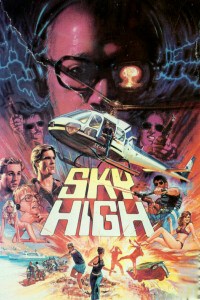
That was my philosophy and I was so confident it would be rewarded, that I made Skyhigh (1985) which was my first movie without funding. I paid everything on my American Express card, knowing that my account would not cover the debt.
Under that pressure, I worked fast, I cut together (on ¾ inch tape) an exciting promo and went to the MIFED Film Festival in Milan to pre-sell the film. In a week, I had advance cheques covering the cost of the film, post production and some profit. And that was only twenty-five percent of my total sales!
Naturally, for this recipe, there’s only one genre: the thriller/horror gig. Also, the art of spending $100 and making it look like $1,000 once it’s on the screen.
I actually have two such projects in mind at the moment but I’m currently in development for a couple of studio flicks, so those two are waitlisted.
 I can never resist asking filmmakers what movies they love; can you name any favourites and what it is about them that makes you love them?
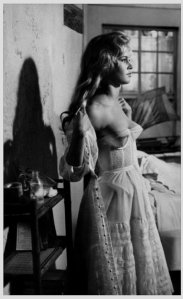
Too many to mention, from the first Dracula I watched as a boy to And God Created Woman which introduced me to Brigitte Bardot’s sexuality when I was 15. So many… Casablanca; E.T. – the Extra Terrestrial; La Dolce Vita; Chinatown; The Exorcist; The Godfather; 2001: A Space Odyssey; The Conversation; Don’t Look Now; and all of Chris Nolan’s films. These are only a few of the movies which affected me both as a moviegoer and as a director.
Finally, is there one of your films that you wish had had a bigger audience? A piece of work you feel wasn’t seen by as many as it deserved to be?
I don’t know of any creative person who hates applause. At the same time, I’m pragmatic and see things realistically, so the equation of reality and ambition produces balance.
I made movies on the spur of a moment, always hoping for theatrical releases but not once fooling myself to think “red carpet.”
Although, to he honest with you, having watched that ridiculous Parasite flick, in my opinion the biggest of many Oscar shames, I’m sure that under different circumstances even my worst movie could have also won an Academy award. If Parasite can do it, any shitty movie can do it.
The Wind is out now from Arrow Video
 Doctor Who News Star Trek News
 Sci-Fi Bulletin: Exploring the Universes of SF, Fantasy, Horror and Spy-fi!