Star Wars: Rogue One: Interview: Visual Effects Supervisor Neil Corbould
A lot of Sci-Fi Bulletin readers’ Blu-ray collections are likely to include a large number of films that Neil Corbould has worked on – from his debut on Superman: The Movie […]



A lot of Sci-Fi Bulletin readers’ Blu-ray collections are likely to include a large number of films that Neil Corbould has worked on – from his debut on Superman: The Movie […]
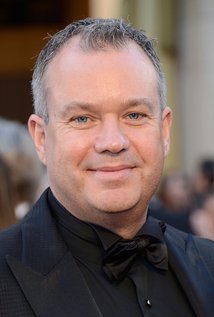
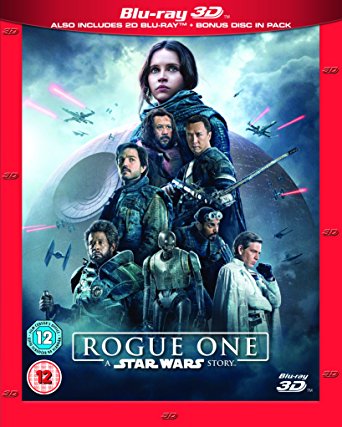 A lot of Sci-Fi Bulletin readers’ Blu-ray collections are likely to include a large number of films that Neil Corbould has worked on – from his debut on Superman: The Movie in 1978 via Licence to Kill, Saving Private Ryan, Gladiator, Black Hawk Down, Superman Returns (among many, many others) to the most recent Star Wars movie, Rogue One, which comes out on Blu-ray, DVD and digital download on April 10. At the end of March, Corbould chatted briefly with Paul Simpson about his time in a galaxy far, far away…
What was your first reaction when you were asked to work on a Star Wars movie?
I was gobsmacked, happy and thrilled about it. I didn’t think I’d get a chance to work on one. My brother [Chris] did The Force Awakens so I thought he’d probably go on and do the lot of them. But when I was asked to do this one, I couldn’t turn it down.
 What’s your first memory of Star Wars? Did you go and see it when it first came out in 1977?
Absolutely – I went to the screening as soon as I could. I’d heard the hype about it and wasn’t disappointed. It was ground-breaking for its time and still holds up to this day. It put me on my way to wanting to do special effects.
Rogue One has to tie in to Episode IV: how much was that a limitation, and how much was it an opportunity that you had to be “five minutes before” something made 40 years ago?
I think it was great to have that immediate connection with it. We knew that we would be working with all the new modern technology, but in the same breath, we wanted to keep as close to A New Hope as possible, just using the modern techniques to jazz it up a bit.
 Were you things that you specifically created for this movie?
Because of [Saving] Private Ryan and Black Hawk Down and other war movies that I’ve done, I was bringing that side of it into the Star Wars universe and just giving it a bit of a tweak so it didn’t look out of place. That was a lot of fun.
When I first met with [director] Gareth [Edwards], he did bring up Saving Private Ryan, Black Hawk Down and Apocalypse Now as what he felt the look of the movie should be, which was great for me. Having done two of the three, it was a great starting place.
 What was the biggest challenge for you involved with Rogue One?
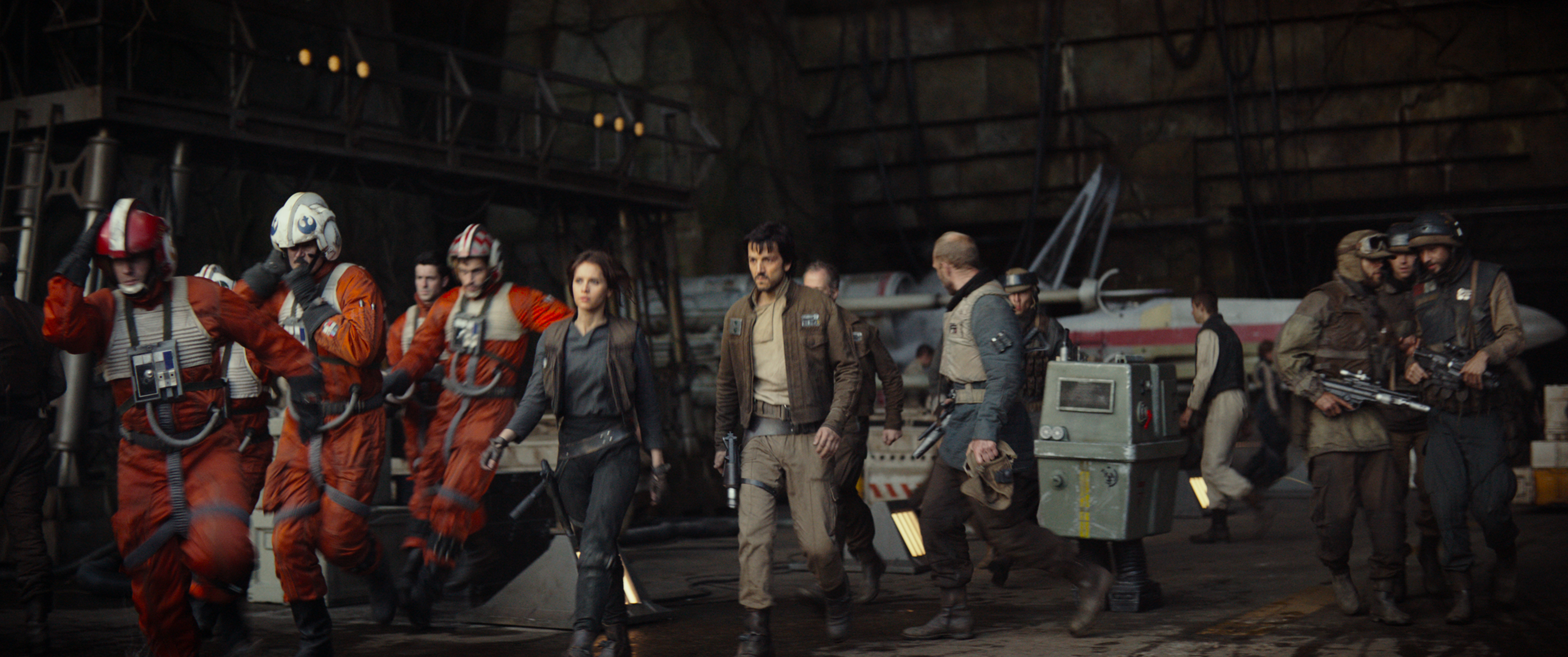
It was really the whole movie, trying to keep as close to A New Hope as possible and that was not a burden – we didn’t want to upset the fans by taking it too far one way or another. The battle sequences took quite a long time and a lot of planning because they were quite big scenes, quite big sets to fill in with pyrotechnics and explosions.
We made loads of doors as well – at one point we called it Star Doors because we kept making all these moving doors for all these different sets!
I was visual effects supervisor so we did all the pyrotechnic effects, the hydraulic motion bases, the crane rigs for spaceships. We had a big scene on the set with torrential rain – we basically took one of the stages at Pinewood and made it a wet set. Nothing stayed dry. We poured thousands and thousands of gallons a day down on to the people and on to the set. It was running out of the doors that it was so heavy.
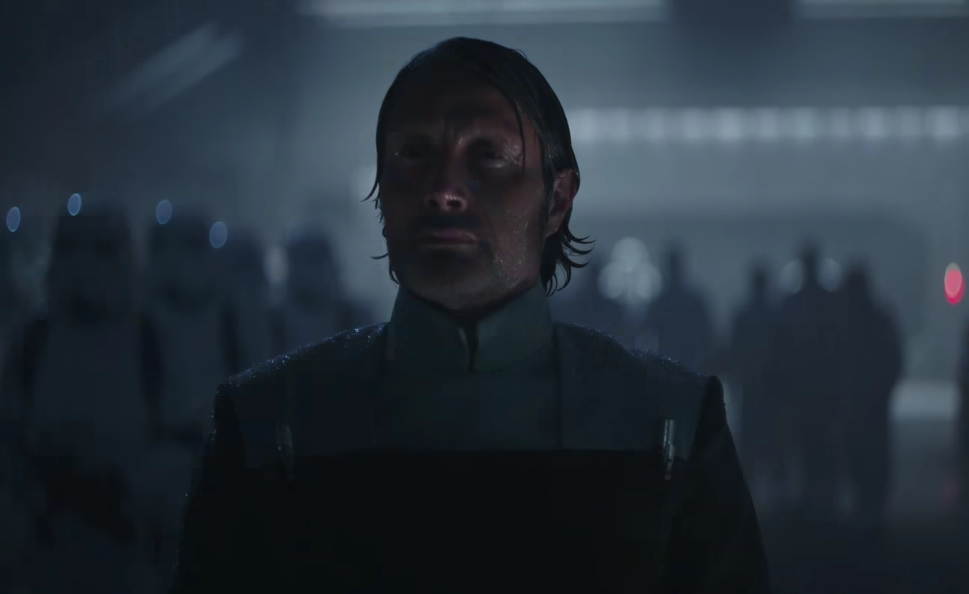 That looks like an outdoor location…
A lot of that was all done on a huge set, and with the seamless visual effects that they put on to it, it feels like outside – which is what everybody wanted.
The film went through various iterations; were there any particular effects that you worked on that didn’t make the final cut that you’d have liked to have seen on the big screen?
No, not really. I think that everything that was up there was perfectly matched to the movie. Stuff that we did that wasn’t in there didn’t take away from the movie at all.
 When you saw the final movie on the big screen, what was the effect or the sequence you were most proud of?
The battle sequences – I always want them to be realistic and have people talk about them. They’re what I’m known for and I wanted to make sure we did a good job in the Star Wars universe and that people believed in them.
It puts the Wars back in Star Wars more than any of the other movies to date…
That was Gareth’s take on it – he said to me, “Let’s face it – this movie is called Star Wars, and I want a war movie.” That was great.
With the prep for the battle scene, how many people were involved with the planning – not the implementation but the planning: was it seven or eight of you, or dozens?
Probably twenty-plus. There’s vigorous testing: we test every effect from small bullet hits into large scale explosions. Everything is tested and safety distances are then calculated. We almost shoot the movie in testing just so that we know people are going to be safe and cameras get what they need to get. We shoot it with different cameras, cable cams, in rehearsal – it’s a full on scale rehearsal before we take it to the set.
 How long were you involved with the film?
I was involved for about eleven months, but saying that, I was involved with discussions before I actually started on the movie, so probably three or four months before I was put on the payroll, so to speak.
What’s your overriding memory of working on the film?
I’ve been in the business nearly 40 years now and walking around a Star Wars set, recognising sets and looks and stormtroopers, always put a smile on my face. You pinch yourself that you’re on the set of Star Wars. Every effect man’s dream, I should think.
 And if the call comes to come to work on another Star Wars film, would you like to go back to the universe?
Yes, if they would have me back, I would like to do it. But I’d probably have to wrestle it off my brother!
Rogue One: A Star Wars Story is available on Blu-ray 3D, Blu-ray and DVD from Monday April 10; check SFB on Monday for a competition to win a Rogue One Blu-ray
Thanks to Pete Connell at Premier for his help in arranging this interview
 Doctor Who News Star Trek News
 Sci-Fi Bulletin: Exploring the Universes of SF, Fantasy, Horror and Spy-fi!