Star Trek Beyond: Interview: Justin Lin
Justin Lin isn’t necessarily the first name that would come to mind when you’re considering potential directors for the Star Trek movie franchise, but it was to the Fast & […]



Justin Lin isn’t necessarily the first name that would come to mind when you’re considering potential directors for the Star Trek movie franchise, but it was to the Fast & […]
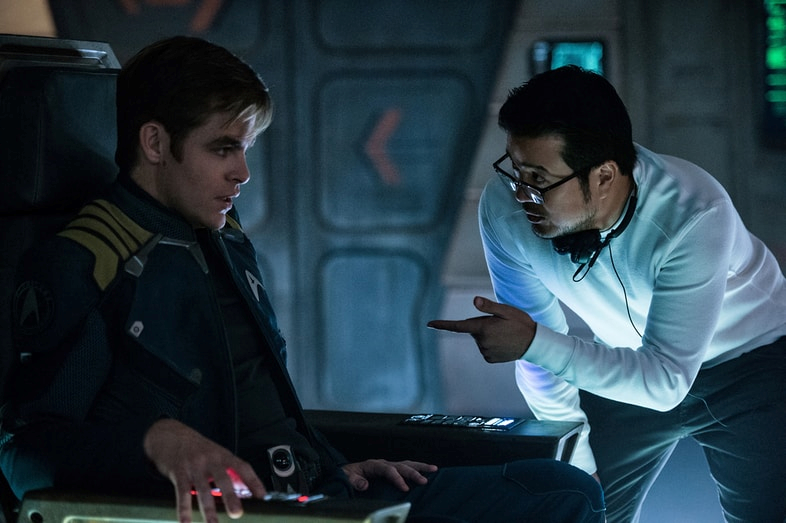 Justin Lin isn’t necessarily the first name that would come to mind when you’re considering potential directors for the Star Trek movie franchise, but it was to the Fast & Furious helmer that J.J. Abrams and the Bad Robot team turned in 2015 when they needed someone who could come in for what Lin himself describes as “a rescue mission” on the third of the Kelvinverse films. He gave a detailed interview for the film’s electronic press kit, portions of which are on the DVD and Blu-ray release of Star Trek Beyond, discussing the logic behind some of the plot decisions…
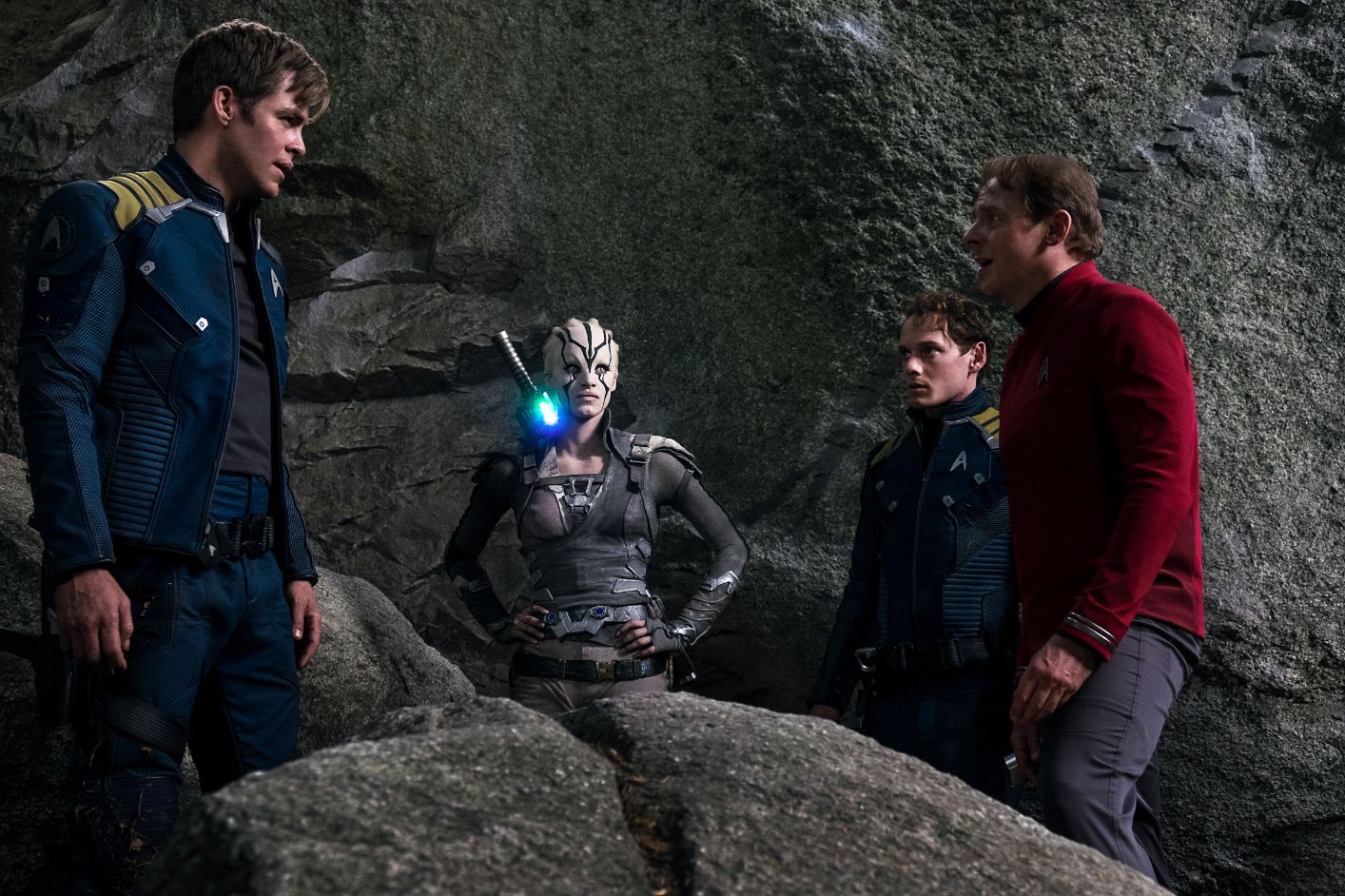 Can you discuss the early conversations you had about coming onboard as the director of Star Trek Beyond?
Well, first I got a call from J.J. [Abrams] – it was unexpected. I was shooting and he tracked me down in my hotel room. We talked a little bit about Trek, and he didn’t know if I had any connection to it. So that was our first conversation.
I met him a couple days later. I’d had some time to think about it and it was very exciting to me because it was not something I was seeking out, but I realized how much it was part of my life growing up and that for me tipped the scale of wanting to try to be a part of this franchise.
Were you always a fan of the series or was this something you became invested in later in life?
I grew up in the 80s, [with] the reruns of the original series. By no means am I a Trekkie or anything – I don’t know every episode by name – but I think ten years of it being on in our living room every day, and because it’s the only time I got to spend with my parents, the crew of the Enterprise became kind of our family. And it also was very interesting because it was in a way very progressive for its time. It had a very multi-ethnic cast, and it has this sense of exploration that I really liked as a kid.
 How was it working on the script with Simon [Pegg] and Doug [Jung] and Bad Robot?
I kind of knew what I was signing up for with the crazy schedule. I’m used to making big budget movies on very tight schedules, [but] nothing I’ve done compared to this schedule. And in many ways this felt a little bit more like a rescue mission. When J.J. called me he was very clear on wanting to start over – clean slate – and the fact that we had to be rolling camera basically in five months.
Knowing that, I felt it was important to make sure I had the right collaborators. I felt very fortunate to be paired with Simon and Doug. I remember being in London with them and [producer] Lindsey [Weber] in a room and just trying to hash out ideas. It was really interesting because in the process of doing that, I realized Star Trek is one of the few franchises that has crossed mediums. Having done TV, I realized why there was a bridge in the original series and how they would have adventures weekly. But Star Trek kind of moved medium and went from TV to film and then in many ways, J.J. restarted it in this kind of tent pole world. It was really interesting having that conversation of “What can we capture, what is the essence that is Star Trek, so that it can thrive, hopefully, in this bigger budget environment?”
I felt like it was important – especially with this film coming out on [Star Trek‘s] 50th anniversary – that we hopefully can find a way to deconstruct what has made Star Trek, the Federation, Starfleet so great and having it last 50 years, but at the same time hopefully at the end of it, by deconstructing it, we can reaffirm why it’s been with us for so long and why there’s such a great relationship with the fans and the viewers.
Why did you choose to start the film in the way you did? There’s a lot of humour and angst right up front.
The Teenaxi prologue in the beginning, I think part of this is to hopefully establish something that is grounded but then absurd. I had a big idea for a prologue, and Simon had an idea, and I think Doug had an idea and we kept playing with it. Somehow I think at the end of the day, it kind of morphed into one.
It was about establishing a tone that hopefully is unique, but at the same time feels familiar to the Star Trek that we all grew up on.
 Can you talk about the genesis of the Enterprise takedown?
When I talk about deconstructing Star Trek, the takedown of the Enterprise is probably the most literal interpretation of deconstructing.
On a very personal level, I remember as a kid watching this show and I loved the way the Enterprise looked, but I didn’t understand why. I was eight years old and I thought, “Wow, it looks like it has a big head and lanky” – and it took me watching the reruns for a while and then realized, “oh they’re explorers”, and the lasers and the fighting – that seemed to be added on later.
At the core of Star Trek, they are explorers and so the deconstruction of Trek – to be able to pull all of these characters apart – they all bond on their family, their home is the Enterprise. When we did the take down, I didn’t want it just to be a quick fight and then over. I really did want to explore the ship, in a very literal way, as we were tearing it apart and tearing all of the characters apart. But I feel like that idea was in my head since I was eight, thinking, “Wow, it has such a long neck. Wouldn’t you just go after the neck.” And so it was pretty amazing being able to be part of this and bringing that to life.
 Can you talk about the decision to split up the crew into teams? It was something more common in the TV shows than in the movies.
I think it’s because Star Trek lived in TV and we got to really be with these characters week after week.
It’s surprising but in reality there’s not a lot of interaction between these guys. I have always wanted Spock and Bones [together]. I think as a fan of the show, I assumed that they would hang out even if I don’t see it. I would assume that they would talk and hang out off-screen somewhere, or Chekov and Sulu would. Because you don’t actually see a lot of that on the show, it was something that I felt like if I was going to make a Star Trek film, I wanted to see on-screen. I wanted to move the camera and put it on these characters.
I think that Spock and Bones have always been the two characters on Kirk’s shoulders, and I thought it would be interesting when we were talking about how we were going to split them up to put Spock and Bones together. Let’s remove Kirk and not have him be around and see how they interact with each other. That was something that I think, again, as a fan of the show I wanted to see that, and I don’t think we’ve been privy to that.
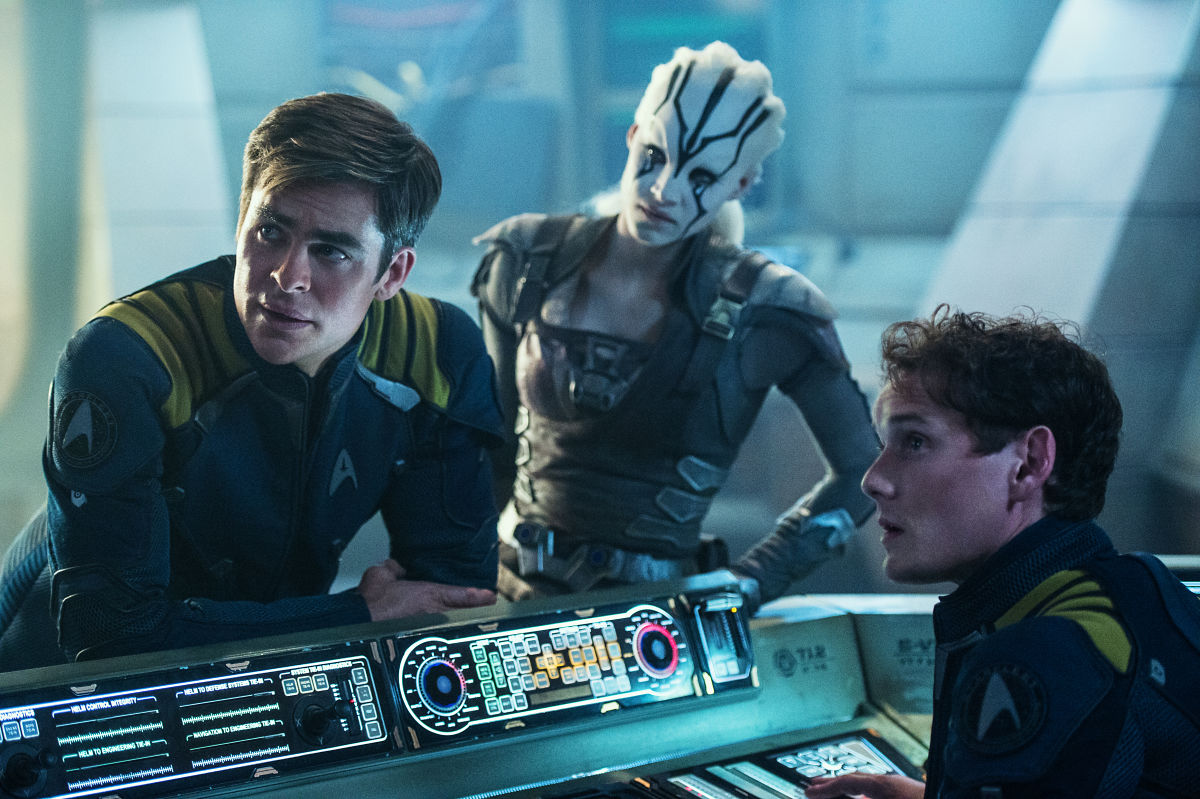 In this film, we look back into the past with the introduction of the Franklin. Can you talk about that story element – that Trek has a history?
I felt like it was important to try and maybe embrace what came before so we can move forward. And obviously that becomes a twist in the film.
But even on a very superficial level, I wanted to explore and, again, embrace everything in the canon of Star Trek. And to do that I think we came up with an idea that services the plot and services the themes – but it was also something that, when we talked to each other and the idea of the Franklin came up, it was a good day in the writers’ room, because it felt pretty organic. It felt like it was a really good match.
From the minute you see the motorcycle and Kirk, you know that he’s eventually going to climb on and something with it. Can you talk about that assault on Krall’s compound?
 It’s interesting because when we were coming up with the idea of Franklin, we were just talking about how in very little time, things just shift and evolve. I grew up in the 80s and there were no iPads and there were barely any computers and now my son’s life is all iPad.
So we talked about the Franklin, and the idea that there could be something with wheels on it and that was kind of the running joke. Then when we scouted Vancouver, and I realized that we can have a quarry and have it designed any way we want, it fell in line with my attempt to try and make things more tactile. There is nothing more tactile than when the tires meet the dirt. It felt like it was within the canon in the sense that we have seen Kirk on a motorcycle in [the 2009] Trek, and it just felt very organic.
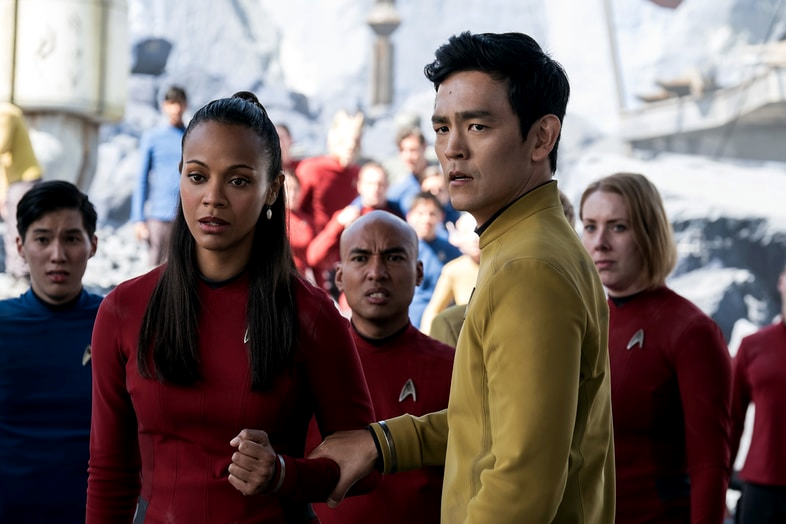 I think the whole prisoner escape was a great idea in concept, and it was a great idea in the script but in the logistics of making it, it was insane. Everything you saw in that motorcycle chase, we basically did in two and a half days’ first unit. I think we had one and a half days second unit shooting the jumps and stuff like that. Having done movies with a lot of cars, that is not supposed to be possible, and so I think it was one of those scenes that I wanted to present to the crew and make it a challenge.
Sometimes on these big movies a sequence like that can kind of wake you right back up. But it really was kind of impossible, and I give the crew and [stunt coordinator Mike] Gunther and everybody on the stunt team all the credit. We had no [margin of] error for anything, and we ran into weather problems and we still made it out, and I think the sequence worked out really well. But at the same time, I hope that when people see the film it in a way celebrates what was so great about the original Trek, which was that everything was practical.
 Can you discuss the origin of the Yorktown and what it represents in terms of Roddenberry’s vision for the future?
In a very literal way we wanted to have something that embodied the utopia of Starfleet, of the Federation. For me, it was important to be able to hopefully explore this idea of utopia of the Federation world, but at the same time to push that into the discussion of frontiers and exploration. So it was really exciting to talk about with [production designer] Tom [Sanders] and [visual effects’] Peter [Chiang] as we were designing the idea of Yorktown. You keep hearing on the show of exploring and the frontier, and to be on the edge of it and to be able to have this place where it connects everybody – [but] that connection, what is most positive about it, can potentially be its downfall too.
I thought it was very important to have that kind of representation – not to be on Earth, but to be able to bring those ideals that we’ve seen all these years grow and grow and be on the very kind of outer limits of these philosophies.
T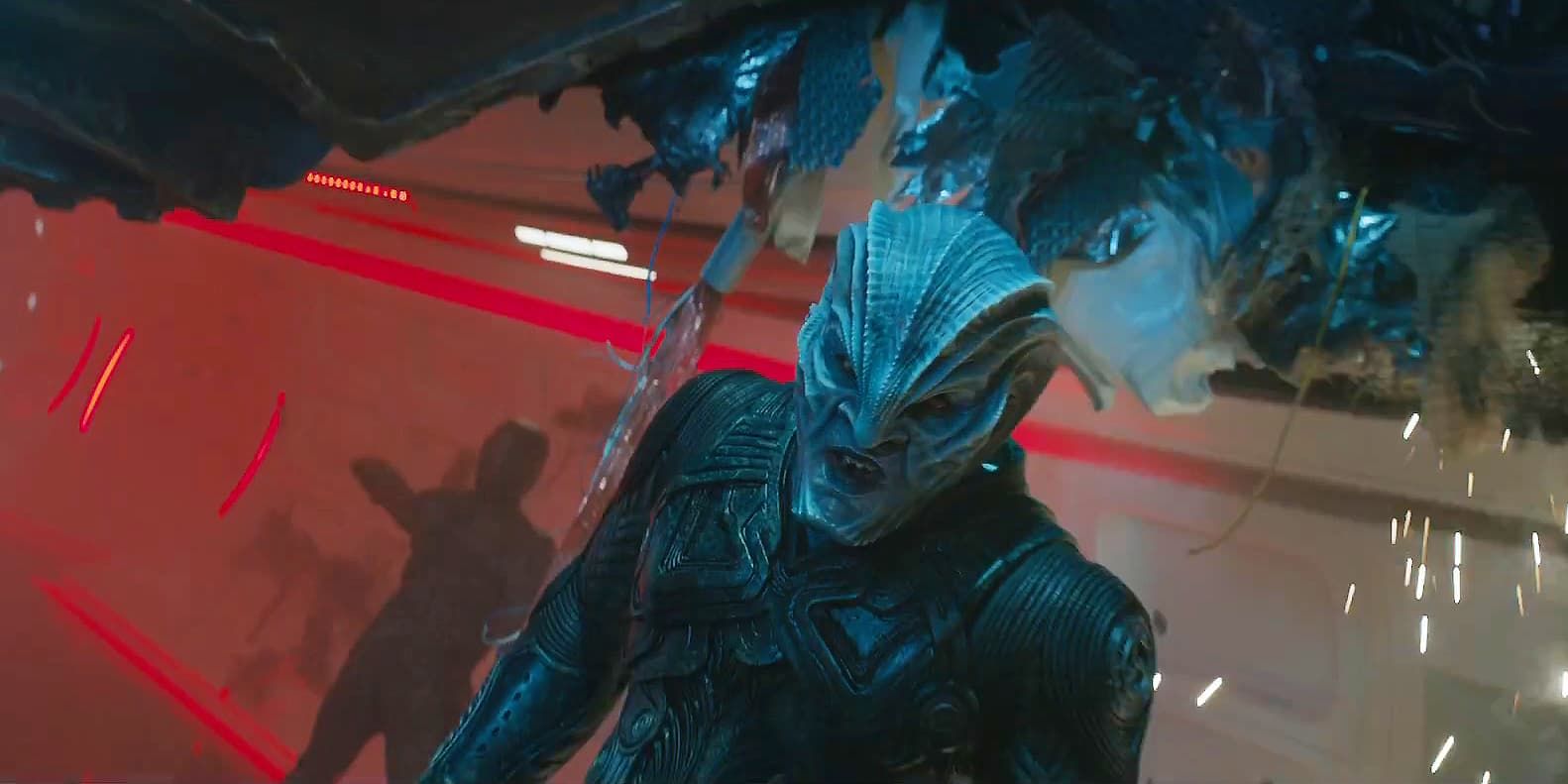 he confrontation between Kirk and Krall at the end of the film is as much a fight as a philosophical argument. Can you talk about the genesis of the gravity fight?
I couldn’t help myself. I felt like a lot of the times – even doing the Fast & Furious films – I’m pushing the laws of physics. But here we got to have some fun with it.
It was very organic though, because as we were developing Yorktown, I felt like real estate was going to be very important because if you are going to take all of these species and they are all going to live in one place and it’s going to be M class with oxygen, they are going to have to design it so that every square inch is thought of. As soon as that came about, I thought, “wWell now if you’re doing that you’re going to control gravity, and what happens when you have a nexus that doesn’t follow the rules that we are used to here on Earth?” And that became the playground.
I felt at the very end of the movie in the third act, when Kirk and Krall finally get together, I didn’t want it just to be a fight. I wanted to have two characters that had their own journey and in many ways kind of parallel journeys, but have very valid points of view and philosophy. And my greatest hope was to mix that in the sandlot and play so that you can actually experience it, so that you can actually agree that they are both valid, and so that it’s done in a way that we have never seen before.
 The film acknowledges the passing of Leonard Nimoy in the passing of Spock Prime. Can you discuss how that tribute was developed?
Leonard Nimoy’s Spock has been pretty much with me since I was eight. I know that he’s such a big part of not only this franchise but of our world. J.J. was so great that he was able to bring Leonard’s Spock into this canon, and I felt that it was our responsibility to address it in some way. I’ll give Simon all the credit, because it was his idea. When we received the news I felt like we should find a way to address it in the right way. And when that idea came it felt like it was just the right touch.
I know it’s hard for a director to pick because they are all your babies, but what was your favorite scene in the film?
It’s really interesting because I feel like when you watch this film, you are going to feel the effort that everybody put in. You are going to get a sense of all the connections to the characters because the cast themselves are a family. And I think that those are the extra little gems that you get in this film.
 I have to say that the one scene that I had such a fun time shooting – which is usually the worst scene to shoot, when you shoot scenes with ten different characters – is the scene where they are trying to figure out where Uhura, Sulu and the rest of the crew are and Spock reveals that he gave an amulet to Uhura that became a tracking device. There’s something really nice and simple about that.
Also it was in the Franklin and it was one of those days on set that it felt like everything was just falling in as if it was meant to be.
For me to be on set that day it felt like that’s when everything came together. I’s also an unexpected scene and in the film everybody’s always moving forward and doing things, and that scene just pops up. I had a great time kind of making it. And it has no VFX and has nothing but it kind of represents a lot of what I was hoping to get out of Trek.
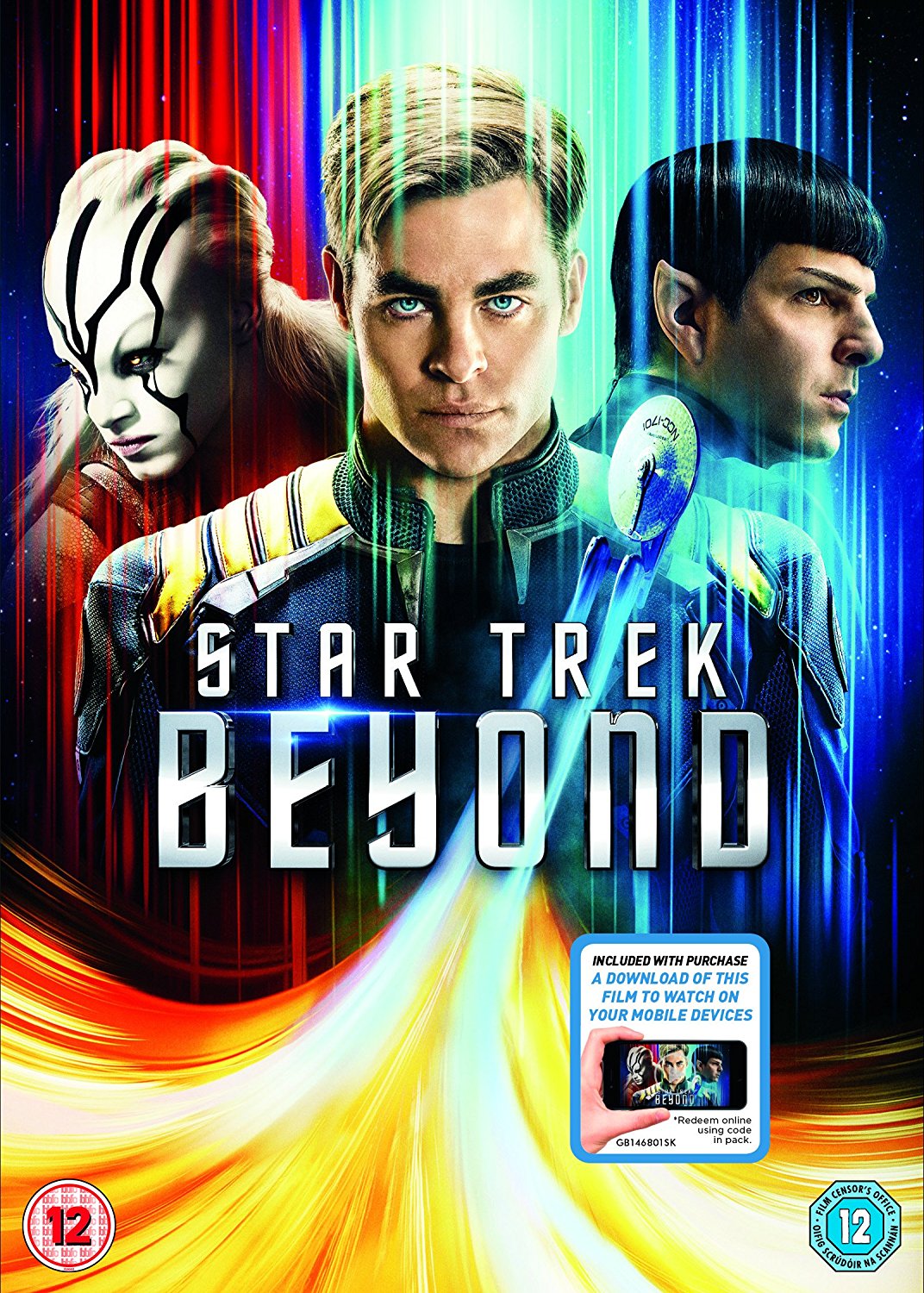 Star Trek Beyond is available on Digital Download, Blu-ray and DVD now!
 Doctor Who News Star Trek News
 Sci-Fi Bulletin: Exploring the Universes of SF, Fantasy, Horror and Spy-fi!