Interview: Wes Craven (2007)
From his controversial debut The Last House on the Left in 1972 to the self-referential success of Scream in 1996, Wes Craven continually redefined the horror movie. On the 10th […]



From his controversial debut The Last House on the Left in 1972 to the self-referential success of Scream in 1996, Wes Craven continually redefined the horror movie. On the 10th […]
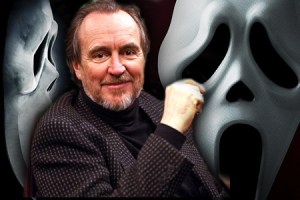 From his controversial debut The Last House on the Left in 1972 to the self-referential success of Scream in 1996, Wes Craven continually redefined the horror movie. On the 10th anniversary of his death, we present this archive 2007 interview with the much-missed filmmaker, who spoke to Matt McAllister about how to shock jaded audiences and his then-recent return to The Hills Have Eyes franchise.
Are audiences harder to shock nowadays?
I suppose there is much more of a sense of acceptance, or a tolerance, on the part of critics now. I think part of that comes from a new cynicism, almost, or certainly a hardness to the horrors of everyday. It’s created a generation who are willing to take on violence in a way that earlier audiences couldn’t.
I think earlier audiences would look at films like I Spit on Your Grave and Texas Chainsaw Massacre and say, “Oh my God, the people who made that must be crazy!” But now the media is so drenched with what’s going on in the real world that there’s no longer that kind of reaction.
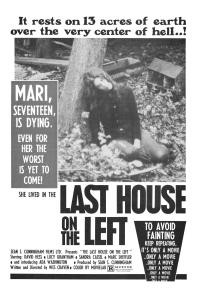 There’s been a return to raw 1970s-style horror movies in recent years. Do you think that’s down to the similar political climate then and now?
Yeah. Both times we’ve been immersed in wars that seem to have no end, and have been far beyond what our leaders thought they were going to deal with when they went in.
I think there’s real despair and dismay about what our government has gotten us into. We had this horrendous cataclysm of 9/11, which shocked people right to their foundations. Everybody wanted to get back at somebody, and the Bush administration seized that opportunity. Certainly now, the overwhelming opinion is that it was not the right fight to pick.
Are horror movies a good outlet to express this fear and despair?
I think so. I’ve always said that horror films are the nightmares of the nation. There have to be stories to go with the dark areas of rage and of terror, and that’s what horror films do.
We’re in a universe where we’re killing civilians in order to get at people who are willing to blow up themselves and cut heads off and show it to the camera. So you have an environment that’s incredibly deep and disturbing, and one of the ways that people, especially younger people, deal with that is to have these very hard-hitting stories that put their psyches to the test. It’s just a way of dealing with that trauma.
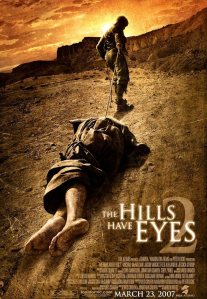 The Hills Have Eyes 2, which you recently produced, features a terrifying unknown enemy and is dotted with references to the war in Afghanistan. Is this a comment on ‘the war on terror’?
No, not at all. We didn’t want to make a political statement; we wanted to make an existential statement. I have my political opinions, but we were more interested in how these characters react to a situation that is so different from what they trained for.
In Afghanistan and Iraq you’re talking about trained troops, equipped troops. But when the National Guard go in, they’re not well enough trained or well enough equipped and it’s not their fault. They realise too late that they’re fighting people who know the territory like the back of their hand. That was the kind of terror we were interested in.
You weren’t tempted to remake your original Hills Have Eyes Part 2, then?
No! It was always going to be a new story. I don’t have any great loyalty to that movie. It was what it was, but it was shot on a very, very low budget and we were just trying to get a production going. We had all sorts of problems and it didn’t exactly do that well, so we weren’t about to go out and try again.
The film was co-written with your son, Jonathan Craven. What was that experience like?
You know, it turned out really well. I think, like any father and son, we were a little bit wary about going into a room and locking the door for a month! But we both stepped up and he didn’t bring any of the son stuff and I didn’t bring any of the dad stuff and basically we were two writers. We had common ground in areas that writers normally would not, so it was nice.
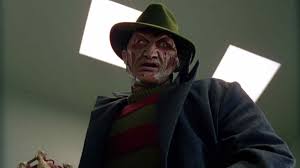 Are we ever likely to see you direct another Elm Street picture?
The telephone hasn’t rung, that’s the simplest way to put it. That project, like many of the pictures I did at that point of my career, was one that I sold, so New Line Cinema actually owns Freddy Krueger. I have a percentage of that character, but it’s up to them.
Is there another interesting Freddy picture to be made?
It depends what they do with it. There’s this paradigm of Freddy as the presence of people’s nightmares. It’s powerful, and my interest is to keep it pure and not just a joke-fest or a slaughter-fest, you know? With Freddy Vs Jason I felt they were kind of cheapening the franchise.
 What horror movies have made an impact on you in recent years?
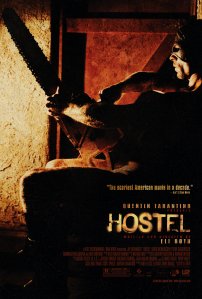
Hostel got a lot of criticism, but I thought it was very hard-hitting and much better than I was expecting it to be. They got a hell of a lot on the screen with a miniscule budget, and beautifully exploited the buildings and the environment. They made it feel real. I think they did a very good job.
Are you a fan of the Saw franchise?
I wouldn’t say I’m a fan exactly. I don’t like torture particularly. I guess I had a little bit in Last House on the Left, but it’s not something that I cared about putting on screen. For the first time in my life, it’s so much in the news and on the screen and it’s very shocking. But things will come out that shock the public and filmmakers will pick up on that.
Is it true that remakes of Shocker and The People Under the Stairs are on the cards?
There has been interest expressed and I do have partial ownership of both of them, but there’s nothing concrete. I wouldn’t be surprised, put it that way. But it will be way down the line.
 Doctor Who News Star Trek News
 Sci-Fi Bulletin: Exploring the Universes of SF, Fantasy, Horror and Spy-fi!