Flight of the Navigator: Interview: Randal Kleiser
Randal Kleiser is probably best known for helming Grease (“That’s the one that will be on my tombstone,” he comments during our interview), but for genre fans, it’s his work […]



Randal Kleiser is probably best known for helming Grease (“That’s the one that will be on my tombstone,” he comments during our interview), but for genre fans, it’s his work […]
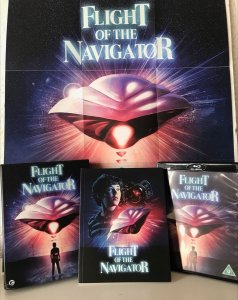
 Randal Kleiser is probably best known for helming Grease (“That’s the one that will be on my tombstone,” he comments during our interview), but for genre fans, it’s his work on the 1986 Disney movie, Flight of the Navigator – out 26 August from Second Sight in a glorious new edition with a lot of previously unseen material – that sets him apart. Intriguingly, when Paul Simpson told him that he enjoyed the movie, Kleiser’s immediate question was – do you have a brother? (Spoiler: no)
A lot of people who have brothers love the story because they imagine what it would be like for their brother to become older or younger. It’s a theme that people love.
 Did Flight of the Navigator mark a particular stage for you in your career?
I had always been a fan of sci-fi movies and loved visual effects – the opening of the Red Sea in The Ten Commandments is why I became a director. I wanted to do something exciting like that.
Flight of the Navigator was my first time to work in visual effects and I was obsessed with finding a way to make it different from all the other sci-fi movies that were coming out at the time. My brother Jeff is a visual effects supervisor, doing commercials and experiments with different types of computer graphics, and he showed me a Tide bottle changing shape. That’s where I got the idea for that. Then I got a book on visual effects, called Special Effects, and the last chapter said that the future was going to be reflection mapping, where you take the background and map it onto a digital model. I thought, “Wow, I wonder if we can combine that with the changing shape?” I went to my brother and he figured out how to do it. It was very satisfying starting off doing something that had not been done before and actually achieving it.
How much experimentation was there along the way or had you reached a point with your brother on the process that you knew what you were doing when you started work on those elements?
No, it was actually a long process. On the extras of this release of Flight of the Navigator, we have put the original tests I did to try to get the look of the spaceship. We have a paper plate covered in Mylar and some silver paint running down to try to get the look. All the things that went wrong while we were trying to find a way to do it. It was kind of fun to look and see how things didn’t work when we started doing the tests. Also the original computer graphics test to see if it would work is there. It’s very interesting on this particular Blu-ray, the amount of stuff we have in the extras.
 Did you find material you’d completely forgotten you’d shot?
Some of it, yes – it was all in a box in the attic. We got hold of the original designer of the spaceship, Ed Eyth, who lives in California now and he had all the drawings that he did, and the storyboards, so we put those on the release too. It’s going to be a great thing for any fan of the movie to look at the extras
We also have screen tests, one of Joey Cramer and one of Chris O’Donnell, and we have the tests of the little animals, and the chair that comes up from the floor – we have the original test of that.
 How much did the screenplay alter to work round the effects, or were you always finding a way to bring the script to life?
Because we were doing the changing shape, we worked that into the dialogue – “oh my God, it’s changed shape” was added because of the way we were doing the ship. Most of it was there in the script, but there were little adjustments here and there to acknowledge the way we were doing it.
Did it make a difference to you in the way you viewed the material that you weren’t involved from the get-go?
No because I was so excited about the idea of doing visual effects.
What was the biggest challenge outside the effects?
We shot in Florida, but there were some blocked funds in Norway, so they wanted us to shoot something in Norway, which didn’t make a lot of sense because it was set in Florida.
The only thing we could do was the interior of the spaceship, so we took this three-storey set apart, flew it to Norway, and put it in a warehouse an hour outside of Oslo. We all flew there and in the dead of winter we were driving through the snow to this unheated warehouse to shoot the interiors. That was a bit of a challenge – it was uncomfortable and I understand that the blocked funds never came through! All that could have been done right in Florida!
 Would you do the script differently now – in terms of the look, rather than the effects?
I think the style works pretty well. I would update some of the visuals but mostly I think the story works really well, the family drama and the emotions and the characters. The boy who’s terrified at what’s going on, the idea he doesn’t believe his brother is really his brother, he sees his parents all changed – all that stuff works really well – and the ending works when he comes back and sees them all back to normal. I think there’s a lot of emotion and Joey Cramer was excellent at conveying that.
Presumably he had to shoot out of order?
Yes, but he was extremely good. In the audition he was able to cry, right on cue, and I knew that I didn’t have a problem with him getting him into the emotional moments of the movie. He always came through – he was a very sensitive kid, and he’s still a sensitive adult.
Is he involved with the new release?
I believe he did a new interview for it, but I do know we are making a documentary about him called Life After the Navigator and it’s all about what happened to him after he did the movie. He went through some crazy stuff – he got onto drugs and tried to get off them. He couldn’t, then found out about a rehab program in a prison. He tried to go there to enrol, they wouldn’t let him. So he robbed a bank so he could get into prison and get off drugs!
There’s a movie there – fiction let alone non-fiction!
I know. We’re shooting the non-fiction now, and maybe the other will come.
 You mentioned the parting of the Red Sea inspired you. Were you in love with film as a child?
Absolutely – Walt Disney movies I loved. I wanted to be an animator at first and I watched the Walt Disney [TV] show every week on Sunday nights, and emulated what I saw there – I tried to make cartoons, painting on one side of plastic cells. I was obsessed with movies from childhood.
What was your path in?
I applied to USC Film School in 1964; nobody was doing that. On the campus at USC, people looked at us like people who were studying basket-weaving, people who were just trying to get through college easily by watching movies. We were not respected; everyone thought we were lowlifes trying to skitter through college easy.
We were also told that we would never enter the film business because we needed to be related to somebody to get into the film business. But that class was one where practically everyone went somewhere – George Lucas, Walter Murch, Willard Huyck, John Carpenter all came out and did well.
Was it the fact that you were told you weren’t going to that fired you up?
Possibly – but I think it was a changing of the guard in terms of the studio system. The movies that were being made at that point – Rock Hudson and Doris Day movies, big musicals like Finian’s Rainbow – were old-fashioned and the youth culture wanted movies for themselves. Easy Rider came along and suddenly the industry was noticing there were young people out there who wanted movies that related to them.
What’s the movie you’re proudest to have worked on?
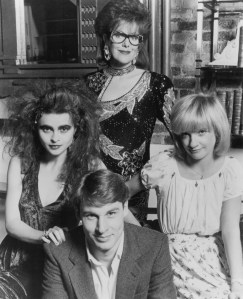 I did a movie called Getting It Right, which was shot in England. It was based on a novel that I loved, and it was like those movies from the 60s I saw in college – Georgy Girl, Alfie. This novel had the same feeling. I got the rights and raised the money with Sir John Gielgud and Lynn Redgrave, Helena Bonham Carter. It was a wonderful experience and worked out the way I hoped it would. The experience of working with a British crew was wonderful.
I loved the sophistication of everybody – the actors, the crew. On a Friday night the crew was talking about going to the theatre; in America they were talking about going water-skiing on their boat. Everybody had a real love of movies and not so much daily life. They were cinephiles, and the actors had done theatre. It was a step above most stuff in America.
Being able to work with a lot of people who were in the movies that I was trying to emulate was fun too. Lynn Redgrave was the star of Georgy Girl and here I was trying to do a tribute to those movies and she was in the movie.
Do you get asked about a lot of your other work outside of Grease?
 That’s the one that will be on my tombstone! The Blue Lagoon people ask about a lot, Flight of the Navigator and White Fang. I think White Fang holds up pretty well still – that was all real animals. They’re talking about a remake with CGI wolves. Even a movie as great as The Lion King – which I’ve seen three times now – is very moving, very real looking but you know they’re not real animals. White Fang they’re real animals and there’s a feeling you get from that.
 You’ve also clearly continued to be intrigued by technology – are you looking at something and thinking it’s the next stage for film?
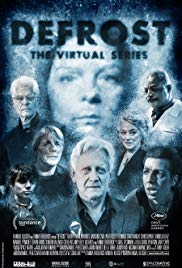
I just released a twelve-part virtual reality series that I did for 3 years, called Defrost, at defrostvr.com That was fun to work in 360 degree 3D; it’s twelve 5 minute episodes that tell a story about a woman who’s been frozen for 30 years, wakes up and meets her family that have changed.
I have just finished a music video for Intel and Paramount based on one of the songs from Grease and that is augmented reality, where you use an iPad and see the characters dancing in 3D on your table, kind of like Pokemon Go.
Defrost has a certain thematic link to Flight…
I do have a theme about how time changes relationships – that’s something that has always fascinated me.
 Is there a moment in Flight that really sums up the experience of making the film for you?
I think when the boy comes back and walks out on to the dock and sees his family, that’s a really magical moment. You see this really American family on 4th July, a total Disney moment. That’s the Disney moment that Walt would have loved.
That encapsulates the feeling of the Walt Disney movies that I saw as a kid.
Flight of the Navigator Limited Edition Blu-ray is released 26 August 2019; thanks to Debbie Murray for her assistance in arranging this interview
 Doctor Who News Star Trek News
 Sci-Fi Bulletin: Exploring the Universes of SF, Fantasy, Horror and Spy-fi!