Dog Soldiers: Interview: Sean Pertwee
Neil Marshall’s Dog Soldiers is out now in a new 4K edition from Vertigo, revealing the grime and the gore in full detail. Star Sean Pertwee – more recently seen […]



Neil Marshall’s Dog Soldiers is out now in a new 4K edition from Vertigo, revealing the grime and the gore in full detail. Star Sean Pertwee – more recently seen […]
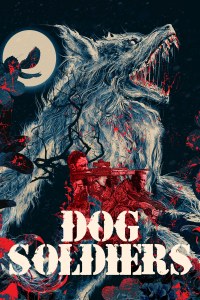 Neil Marshall’s Dog Soldiers is out now in a new 4K edition from Vertigo, revealing the grime and the gore in full detail. Star Sean Pertwee – more recently seen as Alfred Pennyworth in the long running Gotham TV series – still has great time for the movie, eighteen years after its release, and chatted with Paul Simpson about the film and much more…
Dog Soldiers still holds up as a thriller and as a horror film. What was your reaction when you first read the script for it?
I found it extraordinary. I hope I’ve got this right: I initially heard about it through Jason Isaacs who I’d been working with prior to it. I think Neil had seen some of my work – I was working quite a lot at that time in independent film. Jason said, ‘You should really have a look at this, I can’t do it’ – Noel Gay and Chris Figg had approached him – ‘Just have a look at it’.
So I read this script and I wasn’t sure what the hell was going on to begin with – whether they were aliens, Nazi aliens, what was happening – and then of course there’s the lycanthrope and there’s the reveal which I found really interesting. I loved the parallels between it and Zulu, and I loved the military jargon, which is something that I wasn’t accustomed to, even though I’ve pretended to be soldiers in the past. Neil Marshal definitely knew what he was talking about – of course I found out later that he was in the TA and everything like that. He was going to be sent to Iraq.
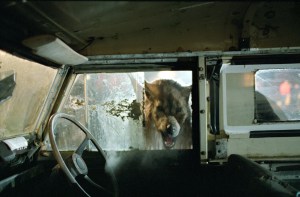 So the language and everything… I always look for things like that in films where people speak with great alacrity about something they know. People aren’t definitive enough. I find a lot of the time they try and please. I think that’s what I loved about the film and the script so much to begin with.
Because it was very early days, they were trying to raise money, I gave Neil the rights, and I said, ‘If you want to use my name please do’. Then I got a phone call three years later I think, quite some time later anyway, from Chris. I was on another job and he said, ‘We’re going, we got it. We start in two weeks’ time’. And I said ‘Where are we shooting in Scotland?’ and he said ‘No, Luxembourg.’ Of course that doubled up nicely!
So we went to Luxembourg and then we started training and we only had two days before Kevin McKidd started. On our very first day, we did a twelve page section. So after that we felt like we’d known each other for a very long time.
 That’s almost a theatrical rehearsal in that sense, getting that amount of time.
Absolutely, but I think that that as a jump off point was possibly the best thing that Neil could have done, because, as you know, in film and television and theatre, it’s all about trust. And we knew each other very well after that because there’s nothing like being scared together. Which again, adds to the camaraderie, adds to the constant jibing and the relationships.
The thing that I was so pleased about the movie, you never feel that one particular character is cannon fodder per se. You care genuinely about them, there’s a real sense of loss when these characters start to die because we shot chronologically, which is every actor’s dream.
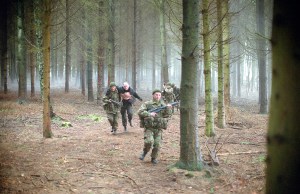
 That was heaven because there was a sense of surprise always just around the corner. You never knew quite what to expect. We were shooting out in the field, we were yomping with our 70 pound packs and we were out there – and whatever shit flew, stuck. We were in the muck and the mire and it snowed and we fell down things… all of that I think transposed to the film greatly.
Also, when people died they were flown straight from set. Because it was low budget, they couldn’t afford to keep them in a hotel hanging around so they packed them off straight back to Blighty. When people die they really do seem to die and there’s a real palpable sense of loss. So much so that when I died – spoiler alert for people who haven’t seen it in the last twenty years! – I kept ringing Kev McKidd up and Kev was ringing me from the cellar saying, ‘It’s so fucking weird, I’m down here on my own, where have all my buddies gone? You’ve all gone.’ It was very strange and it was a great experience.
Have you done anything else, film or television, chronologically like that?
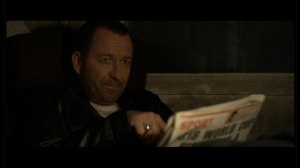 I did; it was another terrifying experience. I did a film called Four which I stepped into because an actor had dropped out and my friend Craig Conway was in it. He’s in all Neil’s films as well – actually, he’s not in The Reckoning, that’s the only one he’s not in. We shot that chronologically and it was equally as terrifying.
They said, ‘You’ve read the script, this actor’s dropped out. Please can you come down.’ So I said ‘When?’ and they said ‘Now’ – and my son was really alarmed because they arrived in a police car, and I thought I was being arrested at my house. They’ve got the blues and twos on but it was an extra standing there. I called the producer and I said ‘When do we start?’ and they said ‘Tomorrow morning’!
Craig Conway and I did a schools version of Macbeth with Michael Bogdanov and we shot that chronologically. Again, that was terrifying because we had ten days to rehearse it and twelve days to shoot it.
I’ve been lucky enough to actually say that I’ve done it but it very rarely happens and you often wish that it would and did. But that’s why it’s got this sort of energy – it still has got this energy.
It changes the feel without question. If you were shooting your death scene first because that happened to be handy for the effects being done, it would have had a completely different feel to it. Whereas you look like you are at the end of your rope and you are going to get these fuckers if it’s the last thing you do.
(Laughs) That’s right. That’s it, yes.
What was the biggest challenge for you in terms of playing him? Was there anything that you had to go ‘OK, this is new, I’ve not done this.’
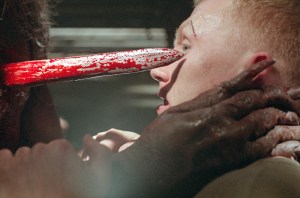
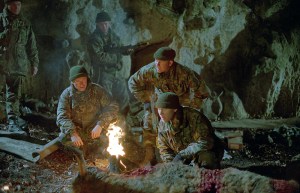 The only thing, the only major challenging thing, was putting my trousers on every day because it was freezing cold and I was covered in so much blood that you could literally stand them up in the one trailer that we had. That was horrendous, taking these off, on and off.
The great thing about our profession, it’s not ageist, and I suddenly realised that a lot of these younger actors hadn’t had a lot of experience per se in film. So I was their mother and their father, someone who could stand up for them and question things, and talk to about concerns or worries. So we slotted into our roles, and Neil and Chris Figg cast it I think impeccably because the people really embodied those roles. They call it NAR, no acting required, do you know what I mean? I learned to be responsible.
What did you bring away from that shoot that you hadn’t expected to? Every film, every project has things you aren’t quite anticipating.
My mother has an aversion to blood, having grown up during the Second World War in Nazi Berlin, having experienced horrendous things so I knew that she would never see it – my Dad had just passed away a few years before – but I rang her to tell her this.
What I took away from it was one of the most joyful experiences I’ve ever had as an actor. It was really weird because it was so un-de rigueur at the time to be making a horror movie, let alone a werewolf movie. But Neil Marshall is a genius: he went, ‘No, I like soldiers and I like werewolves.’ He absolutely breathed life into the horror movie genre for the first time since Hammer House. So to be part of that was just nothing but a joy really.
I had the pleasure of chatting with [creator] Bruno Heller about Gotham – which I thoroughly enjoyed – and Pennyworth at the beginning of the year and it sounds like Gotham was a lot of challenges and a lot of fun. What do you look for in a script or a project?
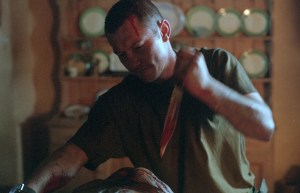 Well, I look for a filmic quality. Interesting you should mention Bruno Heller.
Neil’s very dialogue-centric. He writes dense, fast dialogue which sometimes, when you read it off the page, doesn’t appear to have syntax, but when you know what you’re doing and who you are, and you know who the people you’re on set with are, it works.
Whereas Bruno is extraordinary, the absolute opposite, because he pares it away until there’s absolutely nothing there. Actors’ vanity as you know is just ridiculously huge so you think you know better, you tweak and change. Especially, as I was the only Brit in Gotham I was adding in, as you can tell, local stuff, things mates of mine had said and everything. I always thought I was being really clever but I always ended up saying verbatim every single word that Bruno ever wrote! It’s so abstract on the page, it’s like, “What the fuck is he talking about? What’s going on?” But it works. When you know what the impetus is, what the situation is, it absolutely works.
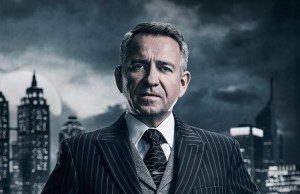 So in a script, I look for a sense of real focus and understanding of the writer’s world, even if I don’t necessarily grasp it to begin with, because that’s where I think art comes from. It comes from difference and I think that’s what’s lacking at the moment. With certain projects I think that’s where sparks begin to fly, when you have frisson and things are difficult.
Going back to what you were saying, what do I look for in a script? It’s writers when they’re absolutely driven and 100% sure of their world. That’s what I look for.
One of the things about Dog Soldiers that really works is you know these guys have been together for a great amount of time and we’re just coming in now. It’s as if the cameras arrived on a Friday and they’ve been together for the three weeks beforehand or whatever. It’s not “oh look, they all arrived together” which you can get in a lot of films, where there’s no sense of life before the film.
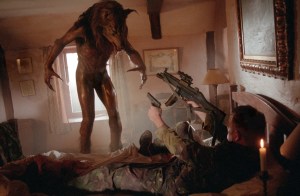 Doing a twelve page scene on the very first day gave us a great sense of bonding. Like I said, it’s about trust.
When someone with an outside perspective, someone like Neil who’s not necessarily overtly vociferous on set, when he has trust in you and you are together and something happens… That’s why I love working with Neil. I know when he’s happy and I trust him implicitly to know that he’s got what he wants. It is a really difficult thing to trust someone and let go but that’s why I like working with him.
It’s that fear factor of going ‘Are you sure?’ because invariably, believe it or not, the narcissist that actors are, you stand back and watch something and you go ‘That was terrible’. But you look at this and go, ‘Oh that’s actually rather good’ (laughs) and Neil goes, ‘I know’.
What he does so well, and what he did so well in films like The Descent, is that they’re so well cast that people just are. The people just bumble along through good and through bad… it’s that “no acting required”, it’s that thing of, you turn up and you’re in it, you’re in the shit together. I think that’s where the frisson of excitement stems from in this production.
Is Dog Soldiers a tentpole for you in the way Doctor Who or Worzel Gummidge was for your father?
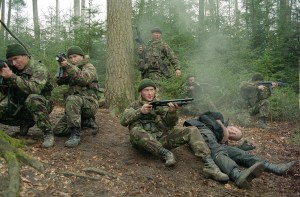 Very much so. It’s something that I’m still very proud about. I don’t like that cliché thing of people who say, ‘Oh I never watch myself’. I don’t particularly enjoy it because invariably your voice and your body change and your face changes. Whenever I see myself I normally think, ‘Why do I sound like that? Why am I doing that?
But I watched Dog Soldiers with my wife when it was on TV. It seems to be on some bizarre one month loop and I said, ‘I must tape it actually because I don’t think my son’s seen it’. So I taped it and we ended up watching the whole thing. I suddenly thought, “Goodness, it’s still got legs and it’s eighteen years old. It’s still relevant, it’s still got that mad energy, it’s vaguely ridiculous but everyone’s in the world and you don’t ever really question it. It’s 100% committed.” I’m just very proud of jobs like that, that I still feel are relatively relevant to a younger audience.
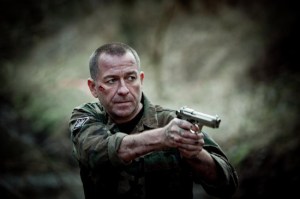 I was very lucky with Bruno and Danny [Cannon] casting me in Gotham, a little like my Dad doing Doctor Who at his age. I was about the same age as my father when he was in Doctor Who: I was just about to be 50 and I found myself in a show written by the brilliant Bruno – I’d always wanted to work with Bruno, I’d worked with Danny before – in a world where you are still relevant to a younger generation of filmgoers and television lovers.
I’m very thankful to things like that, I’m very thankful to films like Dog Soldiers. I’m very proud of the fact that it’s still got legs. I’m very proud of my working relationship with Neil. He says jump and I say how high?
Dog Soldiers 4K will be released in select cinemas from 23rd October and available on Digital from 12th October
Thanks to Tom Hewson for assistance in arranging this interview
 Doctor Who News Star Trek News
 Sci-Fi Bulletin: Exploring the Universes of SF, Fantasy, Horror and Spy-fi!