Dark City: Interview: Alex Proyas
One of the often overlooked gems of late 90s cinema is Alex Proyas’ Dark City, released in 1998 in what the director describes as a “compromised” version, complete with unnecessary […]



One of the often overlooked gems of late 90s cinema is Alex Proyas’ Dark City, released in 1998 in what the director describes as a “compromised” version, complete with unnecessary […]
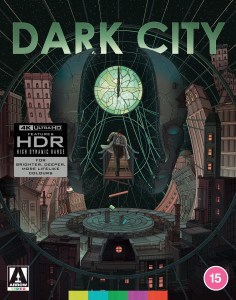 One of the often overlooked gems of late 90s cinema is Alex Proyas’ Dark City, released in 1998 in what the director describes as a “compromised” version, complete with unnecessary voiceover that spoils many of the film’s reveals. Proyas’ Director’s Cut from 2008 has now been released in 4K by Arrow (alongside a lot of new extras and a 4K version of the theatrical version), and the director chatted with Paul Simpson about it recently…
I saw Dark City in the cinema but could never get hold of the director’s cut, so watching that this week was a real revelation. Thank you very much for a very enjoyable and thought provoking movie.
Well, thank you for saying so.
When you look back on it now, nearly 30 years later, what’s your overriding emotion connected with it?
 God, it’s hard to say. I’m not one to actually go back and look at my films because it’s usually just a litany of disappointments. You always make huge compromises every step of the way to get a movie made; every movie’s filled with compromises otherwise nothing would ever get made. I don’t think there are many filmmakers who are in a privileged enough position to be uncompromised on every movie they make. I don’t know any such creature exists, quite frankly, because studios will always twist your arm whether you’ve got final cut or anything else. It’s always about money at the end of the day.
I don’t sit there and watch them but sometimes I’ll catch up with one if I’m in a hotel somewhere and it’s playing on the TV. I get sort of suckered in, like you’re driving past a car accident and you can’t avert your eyes. (laughs) I’m being unnecessarily cruel…
It’s a bit unfair to yourself, that one.
 …because I’m often pleasantly surprised if it happens randomly like that. I often go ‘Hey, that’s kind of OK’ and end up watching more of it. But with Dark City, I hadn’t seen it for many many years and when Arrow Video sent me the new transfer so I could do my new director’s commentary I found myself being pleasantly surprised and going ‘That’s OK’ but wishing [the studio had] let me release my damn director’s cut rather than the theatrical cut, which is very much a compromise, a huge compromise that I was forced into. It’s going to be a real pleasure to be at The Prince Charles Cinema in the next couple of weeks to see the actual director’s cut theatrically, because I’ve never seen it screened theatrically. I’ve only ever seen the theatrical cut. That’s going to be fun.
Was there anything that came out of those “discussions” that led to the theatrical version that you actually thought ‘That might work slightly better.’ Or was it very much a ‘I’m having to murder my babies in order to get it up on the screen’?
 No, there was little of any real merit. Look, it was vehemently supported by one faction of the studio and then not so much by a probably more important faction of the studio and of course when you do your test screenings, a studio will always use them as a way to make you do what they want you to do, which is to appeal to the most people and make the most money for them. That’s what they do.
So, no I can’t say there was a great deal that was positive and for me, I wrote the voiceover at the beginning of the theatrical cut because that was the quickest way to kill my child and leave much of it intact. There were a lot more destructive ideas coming at me, in order to make it play to a bigger audience.
The studio clearly knew they had something of artistic merit and the two factions were fighting about that a little bit. The voiceover was my way of giving that poor child a quick and painless death (laughs) hoping that maybe one day [I could revisit it]… I think Ridley [Scott] inspired me when he did the same on Blade Runner – I went ‘Well, Ridley did it for the same reason. It worked for him.’ That’s why I did it as well and that took a bit of the heat off the more destructive stuff that was being asked for.
At least you didn’t end up with footage from The Shining at the end of it showing Murdoch and Emma disappearing off into the mountains or something.
(Laughs) I may have suggested that at one stage but they seemed to be pacified by the voiceover, so…
Obviously you’d worked on the story and the script of this for some years before you went into production. Are there any elements of that early version and the versions that you went through that you wish had made it into the final version of Dark City?
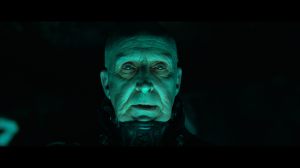 Oh, without any question, because the director’s cut is of course the best one we could salvage. It went through so many edits, there were so many versions that I literally didn’t have the resources to go through, because when we did the director’s cut years later, obviously you can only go so far to reinstate. Even the entire pace of the movie, in its original incarnation, was probably a lot more languid, a lot longer. The whole film was a lot longer – you can’t reinstate every edit because you trim frames. Every single cut has frames trimmed, so that of course has been lost forever and a day now. So yes, the director’s cut is not really the director’s cut, it’s really like the best possible salvaged director’s cut that we could come up with. But it’s still a lot closer to what my original vision was.
It was more the original version I was thinking of, in terms of discussions that you had taking the idea from 1991 through to ’96 as other writers became involved. Were there things when you first thought of the concept that you never got to bring to the screen at all, even in the director’s cut?
Oh, for sure. There was stuff we never got to shoot in the most recent draft but the one I wrote before my co-writers became involved was a very different movie.
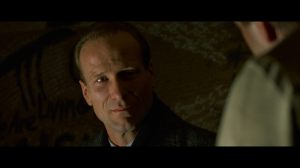 I finally got studio interest in the project after I made The Crow and The Crow had done well. It went through three different studios before we got it made. The first one came to me and said, ‘Well, clearly you’re completely mad but we’ll give you a co-writer to make it more commercial.’ And I was like ‘Fine, whatever. If it means I get to make it, fine.’ I actually suggested Dennis Potter because I knew he wouldn’t make it more commercial. I still have this lovely letter that Dennis sent me. He loved the original script and so the letter that he sent was like ‘Don’t mess with this, it’s a brilliant work of art. No I’m not going to work on this, make this movie.’ (Laughs) It was a wonderful bit of encouragement from someone whose work I valued so highly. But of course the studio were like ‘Dennis who?’ which was crazy. I eventually managed to find a couple of writers in David [S. Goyer] and Lem [Dobbs] who were more studio friendly, Hollywood guys who were producing some good stuff. They weren’t the guys that the studios wanted me to work with, to turn it into yet another action movie which I think is what the studios wanted.
I think we retained a great deal of what made it unique, and I think Lem and David brought a more audience friendly voice to the story.
It’s still very much a movie that you can’t “second screen” – this ridiculous idea that you’ve got to keep repeating stuff for the people who are doing the ironing or scrolling through their phones, who don’t concentrate on this film so get lost. Is that the sort of movie that you enjoy watching?
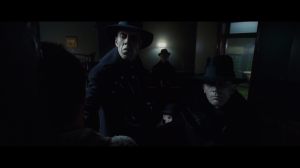 Yes, all of my movies are movies that I want to see, that’s why I make them. I have no patience for the telephone viewers, people watching movies on their phones. I still value the quasi-religious experience of sitting in a big theatre with a lot of other people. It’s almost like the church of art and I still value that.
I’m as guilty as anyone in terms of soaking up social media and all that sort of stuff. I hate the word “content”. I have my own home theatre where I screen 4K on a pretty big screen, in fact somewhat bigger than some of the screens in my multiplex down the road, which are not very big and they’re usually presented better! Sadly that’s the world we live in. But God, I miss that and it is a thing that maybe won’t be with us for very much longer.
As you said, it’s almost a religious awe feel of it. Just out of interest, what’s the first movie you remember watching?
Oh, 2001 A Space Odyssey, that’s the first film – it made me want to be a filmmaker at the ripe old age of six or something, I can’t remember how old I was.
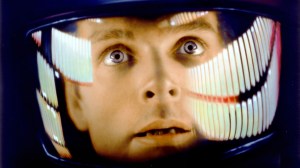 I don’t believe that I saw it on its initial release, I think it was re-released, but my dad dragged me along. The reason I think it was the re-release is I still remember to this day this funny smell in the cinema. It was at this wonderful cinema, which again is no longer with us, called The Plaza, which was the first Cinerama screen in Sydney – first and only one in Sydney, I think. I don’t know if it was shown in Cinerama – it probably was because I remember the curve of the screen and I think you could only get that with the three projectors. I remember the sound and this beautiful curved screen, how big it was and I remember this funny smell, right? Which I now know… (laughs) you’re laughing because you know now what that smell was, right? I remember asking my dad, ‘What’s this smell?’ He was an older, Greek Orthodox guy so he didn’t know what it was either. It was the days where I think you could smoke in the theatre but they were smoking funny cigarettes. We didn’t know why they smelled that way – he thought they were just regular cigarettes.
Herbal cigarettes wasn’t it, our parents’ generation used to call them. Wacky baccy.
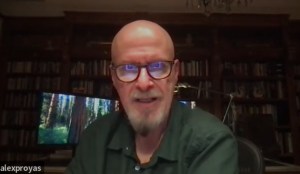 (laughs) My dad was even more straight laced than your parents, he didn’t know what the hell it was. But yes that’s what got me. It inspired me to become an astronaut because Kubrick transported us into outer space, but then very quickly I went, ‘No, no, I want to make movies, that’s what I want to do.’ I started making movies when I was ten, only a few years later. I was pestering my parents to buy me a Super 8 camera and they eventually did – being an only child they eventually splashed out and bought me a Super 8 camera for a birthday and I was hooked from them on.
Why did you choose Trevor Jones for Dark City’s score? I think it’s brilliant, one I’ve had on shuffle for years.
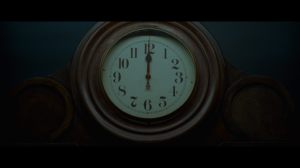 I think it’s a great score too, I agree, and I love a good score in movies generally. It’s always wonderful if you happen to nab one for your own movie. It’s one of the very rare moments where you hand over your creative vision to someone and you hope to God it’s one other individual that you hope is inspired enough to do something great.
I’m a huge music fan but I’m hardly a musician so I don’t speak the language of a musician, I speak the language of a non musician, so there’s only a limited amount of directing I can do in that regard to a composer. He really hit a beautiful thing and I think he did a great job.
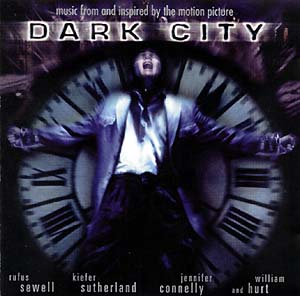 I was aware of many of his scores and I liked them all. I think what particularly attracted me to him was his fusion of synthesised atmospherics and traditional orchestra. He seemed to straddle those two extremes very well. Marco Beltrami, a composer that I’ve worked with on numerous films, again same kind of thing – he’s not scared of creating this fusion of synthesisers and orchestra.
I love synthesisers. Growing up, particularly in the 80s, they liked the synthesiser, they weren’t scared of it and that fusion of electric guitar and synth was where my background lies in terms of my own musical taste. I think that’s what I got. For me, the 70s was Pink Floyd and David Bowie, that’s where it started and then in the 80s it became Ultravox and Joy Division.
You’ve returned to the Dark City universe with Mask of the Evil Apparition; is that around anywhere to watch? All I can find are trailers.
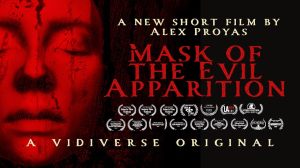 Yeah, there’s a thing called Vidiverse, it’s a streamer: vidiverse.com It’s a great streamer and it has films from amazing filmmakers from all over the world. All my shorts are on there including Mask and my most recent one called Dark Sister. I know it’s a great streamer because I made it with a bunch of other friends and colleagues! You should check it out. We split whatever meagre income we receive with the creators, with all the filmmakers. There’s hundreds of films on there. It’s a subscription model, you subscribe for some lowly price [£16 for a year currently] and it’s a great thing. A lot of people are very excited about it, including me.
Dark City is out now on 4K from Arrow Films.
Click here to find out more about Vidiverse
Thanks to Thomas Hewson for assistance with arranging this interview.
There are a few tickets left for the Dark City screening at the Prince Charles Cinema, London on July 14. Click here
 Doctor Who News Star Trek News
 Sci-Fi Bulletin: Exploring the Universes of SF, Fantasy, Horror and Spy-fi!