Crossover Point: Interview: Antony Johnston
Antony Johnston is probably best known to genre fans as the creator of Atomic Blonde, the basis of the recent movie with Charlize Theron. He’s also behind the Brigitte “Bridge” […]



Antony Johnston is probably best known to genre fans as the creator of Atomic Blonde, the basis of the recent movie with Charlize Theron. He’s also behind the Brigitte “Bridge” […]
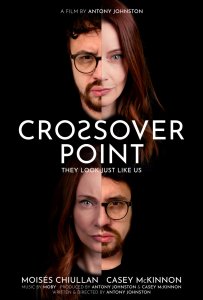 Antony Johnston is probably best known to genre fans as the creator of Atomic Blonde, the basis of the recent movie with Charlize Theron. He’s also behind the Brigitte “Bridge” Sharpe thrillers, and during lockdown came up with the idea for a short SF film, Crossover Point, which premiered on 1 July. A few days before, Paul Simpson chatted spies and parallel worlds…
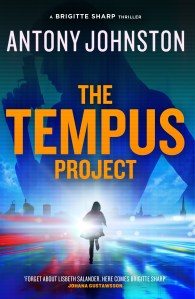 With its discussion of computer viruses and all that sort of thing, the latest Bridge book, The Tempus Project, is quite timely.
Yes, that timeliness is definitely one of those things that I worried about writing the books but turns out to have been OK.
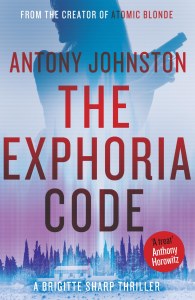
What was the reception like to the first book, The Exphoria Code?
The reception was wonderful. Critically we got an amazing reception. It still has a very high rating on Amazon and Goodreads from readers. It went down really well, but unfortunately sales were not reflective of the critical acclaim. That’s just the way things go sometimes.
What’s more important to me is that people who did read it, almost all really liked it and the reception was very positive. Which is what encouraged me: I had always planned to write a series but it definitely encouraged me to then go on and write another book.
How many did you have in your head to begin with? Did you have a trajectory for Bridge – I don’t want to say an arc for it because to an extent she seems to be very much reacting to current threats and a year ago none of us would have known what the current threat is.
 That’s true, although some of that is just down to fortuitous timing. I actually do have an arc, a very broad arc, in mind for Bridge. and it would encompass about six or seven books. Whether I will be able to write all six or seven of those books, who knows? That really does depend on reception and sales but in the short term, I would at the very least like to do a trilogy. That was always the plan and obviously I’m now two thirds of the way there. I am working on planning the third book at the moment.
It’s difficult in the current situation because as you say, it’s not so much that Bridge is affected by current events as the plots are, and that is very important to me. I want them to feel relevant even though I also don’t want them to feel dated, so that is a very tricky balancing act that I have to try and pull off.
The problem I’m having at the moment of course is that nobody knows what the world will look like in a year’s time. We don’t even know what foreign travel will look like, which obviously is a big part of these books. Bridge travels all over Europe, she has family in France. That’s really important to the character and to the flavour of the books and we have no idea how that will work in the future, not only because of the pandemic but also because we’re facing Brexit.
It’s enormously frustrating for someone in my position. I have friends in the crime and thriller community who have been working on books with similar premises, some of whom have abandoned them because they think, “In a year’s time, will people want to read about something like that for entertainment?” and some of them are deciding no, they probably won’t.
One of the other things I’m working on at the moment is a straight crime novel. I’m writing it as if the pandemic has never happened and time will tell whether I can safely set it next year and things will be more or less back to normal and it’ll be fine or I’ll have to say the story takes place in 2018. We’re not going to know for quite some time. are we?
No. It’s going to be an interesting year.
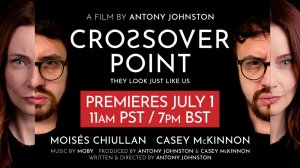 That segues neatly into Crossing Point. Obviously the idea of parallel universes and the idea of a Zoom type conversation like we’re having now are not necessarily the most immediate adjuncts you’d think of. What was the process? Was it that you wanted to do something with that idea or was it that you wanted to do something during lockdown? Which came first?
I think it was lockdown that came first. I woke up one morning and just thought to myself, “If you had to make a film in lockdown, in isolation, how would you do it and what would it be about?” That got me thinking, it would of course have to be over video call. We don’t specifically say that it’s Zoom but everybody is so familiar with video conferencing that as soon as you see it you think “oh, they’re having a video conference”. Everybody knows what that looks like now, which is something you couldn’t have done six or twelve months ago because not everybody did, but now everyone is familiar with that idiom.
That seemed inevitable, there seemed to be no way around it and so again then led to: what would it be about? How could it be an interesting story with a nice little twist? I think short stories work better if they have some kind of little surprise or twist at the end. That’s my favourite form of the short story medium
 It came together in my mind pretty quickly. I woke up with the idea, I wrote the screenplay that day, finished it by about 3 o’clock in the afternoon and then set about recruiting friends to play the parts. Little did I know that writing the screenplay was the easiest and fastest part of the entire process!
I’ve never directed before. I directed plays in high school and I’ve directed voice actors for video games in recording booths. But I’ve never directed live actors for filming and honestly I never wanted to direct. It’s not something that I ever had an ambition to do. I was even shipping a spec script around last year, a low budget indie, and people were saying ‘oh so you intend to direct this as well do you?’ And I was like, “No! No I really don’t.” Even though I’ve never done it, I’ve seen that process and I know that it takes over your life and I don’t want to do that. I don’t have that ambition.
Of course in this instance I didn’t really have any choice because it’s just a short indie. I thought OK, I’ll direct it. And now, it just confirmed all of my fears that it really does take over your life.
 It did for a while. There’s so much work that you don’t see if you’re not familiar with filmmaking or really any kind of creative process, that goes on behind the scenes. So much pre-production, technical testing that we had to do with the webcams and voice recording and all of that sort of thing. Then once you’ve got the footage you’re going through all of the takes and doing shot selection; syncing up your audio to your video; really boring prosaic stuff but those mundane elements are what make the magic of movie making. Get any of them wrong and people will know instantly. It’s one of those things where, even if people don’t know how movies are made, they can instantly tell when one has been made badly. They may not be able to articulate it, but they know that something just isn’t right. So, getting all those elements right turns out is a lot of work.
You’ve got two friends involved. How did you pitch it to them? Because Casey McKinnon’s producing as well
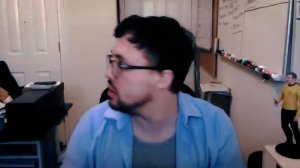
 Moisés Chiullan is an old friend from the podcasting world; he’s a trained actor in theatre and does voice acting work. I kind of wrote the character of Doctor Jackson with him in mind. I had his voice in my head while I was writing it and I was fairly confident that he would say yes just because he’s always up for things like that and sure enough, he was. I literally just contacted him out of the blue and said, “Hey, I’ve written a short script, here, have a read. Do you want to play the part of Doctor Jackson?” and he said ‘Yes, of course’. That was easy.
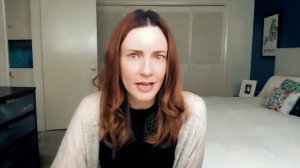
Casting the other character, Jamie Clark, took a little longer just because I don’t know that many female actors. I’ve known Casey for about a decade, possibly longer but we’ve never worked together before. She’s done lots of indie film and web series. I got to know her because she interviewed me for a web series she used to do called A Comic Book Orange, which I think was in 2009 and we’ve just stayed in touch ever since, been casual friends.
I know that she’s an actor and I know she’s good and I thought she’d be good for this. So, again I contacted her out of the blue, said ‘Look, I’ve written this short script, do you want to read it? Are you interested?’ and she said yes.
She then came on board as a producer because she is familiar with negotiating the actors guild SAG/AFTRA and so she was able to take on that part of the process and handle all the paperwork, which I was more than happy to delegate to somebody else who’s familiar with that process. I’ve never been through that. She’s also been invaluable with helping on the technical side and the PR side.
Did you shoot them together or did you shoot them separately?
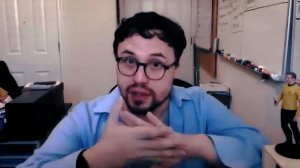 I shot them separately. Moisés lives in Austin, Texas, and Casey’s in Los Angeles. Just because of the way schedules worked out, it was easier for me to do it separately.
I recorded them each separately, with me cueing their counterpart lines. I’m sure that must have been a little strange for them but obviously at the same time, they both know me, they don’t know each other. I think that helped: there was an element of familiarity because obviously they had no opportunity to get to know one another before filming.
It also made it technically easier because I recorded two up in ‘Gallery View’ as Zoom calls it and I only had to separate out my own audio and video from one person, rather than separating it from two people who might talk over one another. It just made things easier, for the same reason in video games we record one actor at a time, doing voice in the booth. We don’t tend to get multiple actors together, like you might in, say, animation because it’s just so much easier to separate everything out and then put it back together with the picture.
That’s what I did here and luckily my experience in editing podcasts really helped with syncing up audio. By now I must have edited something like 200 hours of podcasts over the years, so I’m very familiar with syncing up audio and cleaning it up.
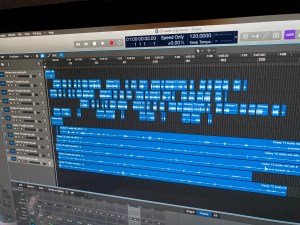 And of course you’ve got that ironic thing that you don’t want to clean it up too much, otherwise it loses the verisimilitude of a crap video call.
That is true and I did do a little bit of audio jiggery-pokery to make it not quite perfect. A little trick that I learned having seen films made from the other side: I also made sure that I got recordings of their rooms with nobody speaking. This is getting very nerdy but there are cuts within the picture where I’m using an image from a separate take altogether and cutting the audio from that and putting what we call the ‘room tone’ underneath so that it sounds natural. If you just have dead silence it sounds really weird.
How long did it take to get the recordings of both of them?
That wasn’t too bad. I did calls with them beforehand just to set up the technical aspects of it and we talked about things like costume and where they were going to position the camera so that we had a correct appropriate background for them. Once we’d scheduled the shoot, I think each one maybe took two hours.
We did a good four, five, six takes. We did complete runthroughs, rather than taking each line, which would be pointless when it’s only a two hander and you’re going back and forth. So we did complete runthroughs, like I say, four five six times of the entire script although Moisés, we had to go up to his costume change about four-fifths of the way through. Then we recorded four or five takes of that last section separately.
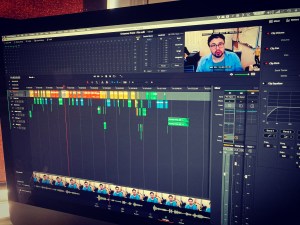 It was fairly smooth. It probably could have been faster except for the fact we were dealing with the technical aspects of recording Zoom calls and recording audio separately and syncing them so we had toy clapperboards to sync up audio and picture, recording each take separately to make sure that if one was corrupted it didn’t ruin the others. All these things that, you’ll know yourself if you’ve ever been on a set, the acting, the performance takes very little time at all, it’s everything else around it and setting up each take and resetting each take that takes all the time and that’s what all the hanging around is for.
I always say, the first day you go on set is one of the most interesting of your life, the second is one of the most boring.
That’s the technical side of things, so let’s talk about the idea of parallel worlds, of everything like that. There’s a lovely little model of Jim Kirk on view…
That was Moisés.
Did he provide that or did he have to order that from Amazon?
No, he provided it, it wasn’t in the script. That was his own addition and a really good one.
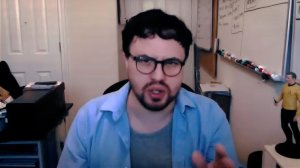
It just actually tells us everything we need to know about the character. It’s interesting in terms of, straight off he’s a scientist and he’s a nerd (or a geek if you’re American).
Yes. The whiteboard behind him with all the Nobo markers as well was a nice touch.
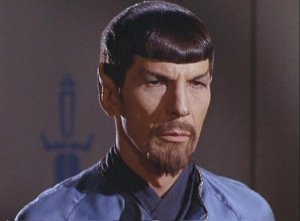 What was your fascination with parallel worlds? Why do you want to do something about this?
It is an area of science fiction that does intrigue me along with quantum physics and string theory and the theory of the multiverse. One theme I wanted to get across is that human nature doesn’t change, even in a parallel dimension. That’s a theme running through all my sci-fi work, really. No matter where or when you go, people are people, and mostly horrible.
But it was a practical decision as much as anything, because I knew that each actor would be on their own and it would only be them. We had zero budget so I couldn’t ask people to do ridiculous makeup effects or anything like that. So, when I was thinking of the story I was thinking, what could you set up? And how could you end it in a way that would surprise and delight an audience? The idea of having a parallel universe and doppelgangers and misunderstanding who is who and which universe they’re in just seemed like something I could do with static cameras over a video call where people aren’t able to physically verify a situation with their own eyes.
One early idea I had actually was the idea that the call itself would be taking place across parallel universes.
It crossed my mind about five minutes in was that what was happening..
Right – if people wonder that, all to the good, I ultimately decided against that because I thought this story worked better but any canny viewer will realise very quickly, as you did, that you can’t quite trust what you’re seeing. If those thoughts then come to mind, all to the good because the whole idea of it is that you’re not quite sure what you’re looking at until you get to the point where you are!
It’s also like The Sixth Sense: if you go back and rewatch it you pick up so much more, particularly in Casey’s performance… You can’t ever watch this twice the same way.
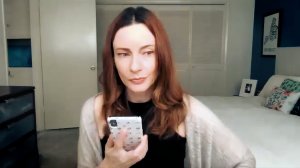 Right. I love The Sixth Sense and The Usual Suspects is one of my favourite movies ever. I’ve seen it so many times and one of the reasons I love it is precisely for that feeling of revelation. You get to the end and you realise everything you just watched has a completely different meaning to what you thought it did at the time and now you need to watch it all again.
I love any kind of story that does that. To me it felt like a natural way to treat this story as well. I hope that people do go back and watch it again with fresh eyes as it were and realise that all of those moments are there in the script, you just won’t necessarily see them the first time around.
You wonder why certain things are happening and it sets up a lot of stuff. The other classic for that of course is Memento.
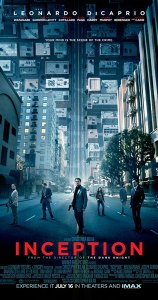 Oh yes, of course, another movie that I absolutely love. Christopher Nolan is one of my favourite directors and while I don’t love every film he’s made, some of my favourite films, such as Memento and Inception, are his.
Inception does the same thing: if you stop and think too much about Inception it completely falls apart. But Nolan has this ability to sweep you along through the quality of his writing, his direction, scene choices so that you’re wrapped up in it so much and you’re enjoying it so much that you kind of don’t care.
Now obviously this is only a seven minute short and I’m not suggesting it has that scope or capacity (laughs) but that sort of thing is always in my mind. I like stories that do that. The Bridge books do that to an extent, there are elements of those which, if you’re thinking about them very analytically as you read, you’ll go, “Wait a second” but my hope is that I can sweep readers along so that they don’t think too hard and are instead, caught up in the action and the excitement and then get the revelations towards the end instead.
But I think part of that is the genre isn’t it? I mean, you analyse any Bond film…
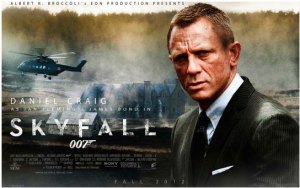 Yes. The Bond movies are a good example. Take the recent movies: Skyfall has been heavily criticised because the plot doesn’t make any sense. If you analyse the villain’s plot it makes no sense whatsoever and relies entirely on coincidence throughout the whole movie. Spectre by contrast actually does make sense: if you analyse Spectre all of that makes good logical sense, the villain’s plot sticks together, doesn’t fall apart – and yet I would watch Skyfall a dozen times before I watch Spectre again because it’s just a better movie. As a piece of movie making, Skyfall is a much more entertaining movie than Spectre.
Going back to the idea of the parallel universes, did you watch or have you seen Counterpart? The Justin Marks TV series?
 Yes, I’ve only seen the first season. I wouldn’t say I know Justin but he’s a sort of distant acquaintance, so I was delighted for him because I thought Counterpart was an extraordinary series. Just getting a show like that made is an amazing achievement frankly, in the modern media landscape. It was so intelligent and intricate and also so emotionally engaging. It had that very intricate cerebral plot that obviously, as sci fi readers, we all love, but it also had fantastic emotional character elements to it as well. I thought it was superb.
There was almost a sense in Crossover Point that somebody’s found out about what’s going on in Counterpart…
Except the point of Crossover Point is that there are hundreds of these crossover points and they can only exist, as the doctor says, at certain points in time – or that’s his theory in any case.
 So would you like to do anything more with Crossover Point? The core idea has the potential obviously to become something bigger.
It has and I’d be lying if I said I hadn’t thought about that but I haven’t had any concrete thoughts about it. We’ve been so focused for the last few weeks on just putting the film together, getting it out there and trying to get people to tune in and watch it that I haven’t sat down and really planned anything else in the same universe.
But, I can’t deny that it has crossed my mind. What form that might take, I couldn’t say at this moment.
 What else are you working on at the moment, or are you just recovering from doing this?
(laughs) Well, I am doing that but I’m also coming towards the end of a very big video game project that’s been going on for a couple of years. I am, as I said before, thinking about the third Brigette book. I am working on a straight crime novel that I mentioned. I’m pitching a movie around, which is an adaptation of somebody else’s book at the moment, I’ve had some calls about and I’ve got more calls coming about that. I’m also talking to an animation studio about an adult cartoon series.
 Doctor Who News Star Trek News
 Sci-Fi Bulletin: Exploring the Universes of SF, Fantasy, Horror and Spy-fi!