Choose or Die: Interview: Simon Allen and Toby Meakins
Toby Meakins and Simon Allen’s latest movie as director and writer is Choose or Die, Netflix’s chart-topping horror movie. The pair chatted with Paul Simpson about the project’s genesis and […]



Toby Meakins and Simon Allen’s latest movie as director and writer is Choose or Die, Netflix’s chart-topping horror movie. The pair chatted with Paul Simpson about the project’s genesis and […]
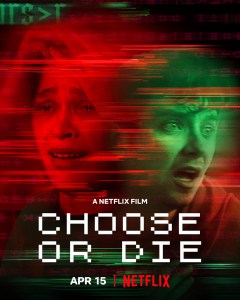 Toby Meakins and Simon Allen’s latest movie as director and writer is Choose or Die, Netflix’s chart-topping horror movie. The pair chatted with Paul Simpson about the project’s genesis and challenges…
How did the two of you start working together?
Simon: Toby is my best friend and one of the reasons he’s my best friend is that I come from a very difficult background, so does Toby, and we both went to university late. In Toby’s case he went late because he travelled the world and had adventures; in my case I went late because I had a child at a very young age and it was financially and physically very difficult to go to university.
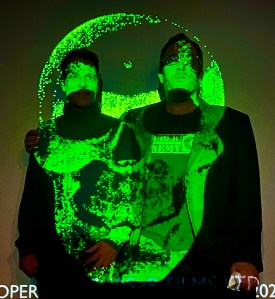 So my first year of university I was commuting up to Surrey, I was doing a media degree, the same degree that Toby was doing, and I encountered something which I think a lot of men don’t encounter which is quite a discriminatory attitude from some of the tutors towards the fact that I had a baby. I had responsibilities, I was working four night shifts at Sainsbury’s at the same time and they were like “I don’t think you’ll be able to do this.”
So I tended to keep the fact that I had a child secret and Toby was the first person that found out. I think he found out a good year into me knowing him and his reaction was just to phone everybody and go “Simon’s a father, isn’t it amazing?” I thought ‘Oh my God’: Toby made it alright for me to be in that space and feel welcome in that space and from then on we were firm friends.
We always tried to make things whenever we could, on the side; some of them were good, some of them weren’t so good. Then we really got good at it and started getting attention for the short films with something called The Magic Mile which, again, like every film that we’ve made that’s good and that has done something – whether it’s this one that’s gone out on a global platform and been watched by millions of people, or whether it’s the ones that have won awards and done festivals – has always started with Toby saying ‘I want to make a film and I’m going to make a film and do you want to be part of it?’ Sometimes there’s an idea and sometimes there isn’t anything but it’s that desire. I think that energy and desire is what you need to drive these things through.
Is there a specific short that inspired this? You often hear the ‘Oh, I’ve made a twelve minute film and it’s become this two hour blockbuster’ and actually the resemblance between the two is zero.
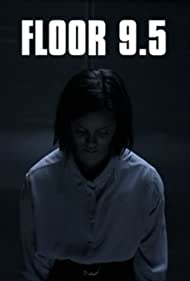 Toby: Yes there was – a short we made called Floor 9.5 for Fox.
Fox put out a call to 100 filmmakers that were all repped. They approached me and said ‘We’re going to make these twelve two minute shorts, will you pitch?’ I went to Simon [to discuss ideas] then I pitched a very loose idea to Fox and they went with it. They picked twelve filmmakers and we made a film for American TV.
Halloween is a massive big deal in America. I think it was Mars who were the sponsor so ours was ‘Skittles presents Floor 9.5’ and it went out in the ad break of the World Series. And we went mad on Twitter – it was just normal people watching the baseball game, it wasn’t genre fans, and it freaked them out.
It was very successful. We won a Cannes Lion for it which was brilliant because half the world treated it as a piece of advertising – hence winning the Cannes Lion – and the other half of the world treated it as a short film. It got the best of both worlds, reaching people who don’t follow every genre magazine. Having them react to something you’ve made in the genre space is an amazing thing. So from that we were like, ‘OK, what can we do?’ And we came up with Curs>r.
Simon: We got a lot of people very excited about it. It’s funny – so much stuff gets made and so many things can just disappear. But this broke out in a way that doesn’t compute and people reacted to that in the industry.
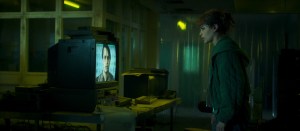 We had this idea, Curs>r, about an old 8-bit game and there was a bidding war to take it from us because we were pitching it as a short form TV series. We really wanted to do something to extend the work we were doing with the shorts and we ended up with Ridley Scott as the executive producer on it and Jeffrey Katzenberg getting involved and buying it for Quibi.
We spent a year developing it for Quibi; we got to the point where, literally, Jeffrey Katzenberg had said ‘It’s greenlit.’ And then Quibi collapsed and Toby took a deep breath and a step back and said, ‘Actually, the work we’ve done on this, I think it could be a feature film.’ And the financiers that were involved in it agreed with him.
Obviously lockdown happened but there was a window in lockdown where we found a little keyhole through which we could get our little indie horror movie made, with very limited resources, with some amazing cast and that’s what we did.
How much did you have to restructure it for the feature?
 Toby: We wanted to make something that had bite for a normal audience but also was as disruptive as possible. So the first iteration of the scripts that got sent to Quibi, it was really disruptive. There were eight episodes and I think it was about a 70 minute show, and it really messed with structure and narrative and tone and form.
When we went through the process with Quibi, they really straightened it out, it became like a baggy 14 episode, ten minutes a piece thing. So, funnily enough, when we turned it into a feature, it was two things really: with Quibi the budget was a lot more, like about six times more, than we had for the feature, but also, it was too long. You’d think it would be the other way round with the TV show but actually it was too long. It was a matter of stripping it back and cutting our cloth and trying to remain as disruptive as we possibly could, because we knew if we’d made a short straight genre film, we wouldn’t have gotten the interest.
Simon: Unless you make a five star art house horror, that gets five stars from Kermode or something like that then you’re not going to get to make another movie. We’re doing this to keep on working, we’re doing it to find an audience.
Also, with Quibi, the whole point was that there are the mini cliffhangers to an extent at the end of each of their episodes.
 Toby: We always fought against that, we thought that after the second or third episode people would be in or not. There was a lot of talk with Quibi about that. We know how to draw an audience in, so that’s what you kind of rely on.
Simon: This was the biggest horror movie in the world, it was the number one movie around the world on most territories on Netflix. It’s been watched by millions of people, it did sixteen million hours in its first 48 hours so by any metric it’s been absolutely massive.
Even though it’s presented as a Netflix film, a Netflix Original, it’s actually a little British indie horror, made under very constrained circumstances, and arguably because of that, it’s one of the biggest British success stories from the independent film sector for a very long time.
It turned a huge profit for its investors, and nobody could have foreseen that. Nobody could have foreseen that happening when we were shooting in Wembley and Holloway Prison last spring. It’s just an extraordinary thing and it’s been rather overwhelming!
If you’d had the Netflix money going in, would you have changed any of it?
 Simon: The film does have a playful streak, as Meagan at Bloody Disgusting said. She liked the playfulness, but I think a lot of that playfulness depended on having access to the pop culture artifacts of the 80s and the pop culture resources of the 80s.
Toby wrote an episode for the series that I still love, I still think it was one of the best things in it, that we weren’t able to execute in the feature film because we didn’t have the resources. It involved the characters going to a nightclub where the pop music from the 80s was weaponised – you had to choose between songs, and bad things happened according to which song you chose. It was an amazing playlist but to license the music would have been the most expensive thing in the film.
So things like that, you make choices. We’re very used to that – the short films we’ve made together, we’ve always been under constrained circumstances. We’ve always had to think creatively, we’ve always had to compromise and box clever. It does affect your story choices and what you’re able to show, of course it does.
Toby: You’ve got to remember as well I come from an advertising world where the budgets are bigger. I had a really great crew on this and they really pulled the stops out – my D.O.P I’ve worked with for a long time, my sound recordist is a BIFA winner and she’s great – but the majority of the crew on this film weren’t as experienced as the people that I’m used to. I was expecting to go onto a feature film and being one of the least experienced people on there. So that was a bit of a shock to me.
We lost our production designers a week before the shoot because we were at that stage where everybody was waiting for the industry to start up again after Covid. Everybody was being offered jobs and didn’t know which ones to take because they hadn’t been working and they wanted to work. It was very difficult and complicated to put together.
 Simon: It’s a well known thing in the British film and TV industry even now, that there’s so much content being made that it’s very difficult to secure crew and hang onto them because they always get better and competing offers – and this was a low budget indie film. It’s kind of a miracle that it happened because it was facing so many headwinds, and that makes it the victory of it being the number one film in the world all the sweeter and all the more remarkable.
Toby: The producer of this one, Matt Wilkinson he’s made twelve or fourteen indie films – everything from The Sentinel which is a sci-fi film coming out, to a World War II movie. You make a film for £800,000 or a million pounds and you need that same amount of money again for anybody to see it. How do you go about making a film that people actually get to see? That’s what we want to do: we want as many people to see it, and hopefully you capture an audience.
How complete was Curs>r before it went to Netflix?
 Toby: They were heavily involved in the edit. They bought it after the director’s cut.
Simon: Netflix, it was so fascinating to hear their thought processes. Everything that they were doing, they were thinking about the audience. They were always thinking about the audience, specifically their audience, specifically their 213 million subscribers, and it was a very different and more direct way of working and of thinking about story and thinking about what you’d done. I know they’re coming in for a lot of criticism right now about the content they make but this film has been seen by millions and millions of their subscribers who enjoyed it.
Netflix do know and understand their own business model, they do understand how to bring satisfaction to their customers and they’re very good at it. Obviously they’ve refined their model over the years and they know what works and what doesn’t. There were notes that you sensed were in some way coming from an understanding of the algorithm that they had, that we out here can’t see but who can argue with it? It worked, it delivered, the film was number one around the world, and it found this vast audience so these guys know what they’re doing.
At any point did you feel you were having to compromise your vision for the movie?
Toby: When you’re making a film on an indie budget you’re compromising your vision from six weeks out.
But it’s your compromises and you’re making those choices.
 Simon: The facts are that you write a script, that script has to satisfy and please and impress hundreds and hundreds of people, all of whom have to understand it and be enthusiastic about it and all of whom have thoughts about it. It has to survive that, it has to survive the process of being made and executed – and that in itself has a whole host of logistical challenges that come up when you find things can’t work or you lose a location or an actor decides to do something slightly different.
Then there’s the edit which is a rewrite in itself, and ADR is one of the many tools with which you rewrite the story.
It’s a whole holistic, complex process that requires fortitude and resilience, and quite often I worry about some of the people you see on Twitter talking about screenwriting with these absolute values of protecting their vision and making sure that what they write is there on screen and so on. I think, ‘I don’t know if you’re going to last five seconds in this business because that is not the reality, that is not how it works.’ If it does work like that for anyone then they are the luckiest most privileged people in the world.
 The only thing I would describe as a real compromise was the title. Even then they were very good, they gave us our day in court. We wanted it to be called Curs>r, it was always called Curs>r, we thought that was a really cool title with resonances and connotations that people would enjoy.
I did a 45 minute pitch to this mosaic of wonderful suntanned L.A faces trying to tell them this is why it should be called Curs>r. They heard us out but their view was that the title Choose or Die was more likely to drag the subscribers to the film from all across their platform and it did, it worked.
Toby: I remember calling up my mother-in-law was like, ‘They want to change the name of my film!’ And she said ‘To what?’ She’s like in her 70s, she’s watched everything on Netflix. I said, ‘To Choose or Die.’ and she’s like ‘Yes, that’s a much better name.’ I was like ‘Noooooo!’
It’s a very interesting thing as well, making a film and not taking it through a festival circuit. You don’t build an audience in the same way. There’s another hard truth about making films for streamers: they pretty much embargo reviews because they don’t want to risk it having a festival run and it going badly. But the flip of that for the filmmakers is that they don’t go out and get to create the narrative for their movie before it goes out. So, literally you’re sat there on a Thursday not knowing what’s going to happen the next day, you haven’t really spoken to anybody, so it’s such a shock to the system.
 Simon: The movie is something that doesn’t compute particularly for independent film in Britain because hardly any independent films are bought by Netflix for this kind of money, and certainly those that are, none of them get to number one. It might have happened before but not very often and definitely don’t get the sort of audience this got.
It’s an indie horror film. This is not a complaint just an observation: we’ve never received support from the BFI or any of those institutions. We’ve never been a part of that world and it does seem that part of that world, from the outside, tends to produce the same kind of thing in the same kind of way. Some of them work and go over the top and find an audience; an awful lot of them don’t.
I think this is a really good example of two guys from very deprived backgrounds, when we started out, being able to make something like this and get it to go this big. I hope that people in the industry and in the UK look at it and think, ‘Well, if they can do it maybe we can too. Maybe there are other routes and if we’re not welcome or don’t feel included in certain institutional circumstances then maybe there are other ways in which we can do this.’
We have to credit our financiers Anton for having the guts and courage to fund it in the first place, particularly as we were going from one lockdown into another one and just taking that opportunity, that narrow window of time, where we could get people like Asa Butterfield and Eddie Marsan before they were hoovered up by the big shows and the many other demands on their time to get this made.
 Toby: And equally they had the ambition to make this as popular as they possibly could. They didn’t want to limit themselves to a small movie that ended up playing at fifteen festivals and not seeing the light of day. They did have big ambitions for it, but they understood that we had to do it in a different way to try and make that work with the budget and the time and the lockdown conditions we had.
Shooting in lockdown, you lost hours of your day, walking from one knife edge to another. You have a day’s shutdown because somebody might have Covid and then they don’t have Covid but you’ve still lost that day and then you’ve got to try and make it up somewhere else.
Simon: It was a completely weird thing for me, going to a lockdown set. I’d done a lockdown pickup shoot for The Watch, but the protocols were only just being established at that point. I’ve worked with Toby on set before, but seeing him on this set with all those challenges, it was really impressive to see how he dealt with it all, how everything was being managed, how he was still finding space to be creative despite the fact it’s this quite austere setup and quite regimented and very slow and frustrating.
 Toby: You really have to learn to cut your cloth. There’s a scene near the end of the movie, before they head off to Unit 254, where Kayla has come out of the smoke. They’ve woken up and they’re having this really heartfelt and emotional discussion about her brother. We shot that, literally, in twenty-five minutes. That’s what you have to do because creating horror set pieces takes an awful lot of time, to do it properly, unless you’re going to rely on a ooooh sound at the end of it. To make something different and interesting takes a lot of time, especially in Covid on an indie budget, so you have to trust the actors.
I had forty-five minutes to do that scene and the actors wanted to talk through it so we sat down and the crew went off – it was lit fortunately. With forty-five minutes to shoot it we sat down and spoke for twenty minutes, then shot the scene for twenty-five minutes. I wasn’t panicking: these guys had questions about the scene and they were worried about how they were going to play it. If you just hurry them through and go ‘Just do the lines.’ the scene would never have stood up emotionally, so you cut your costs there. You go ‘OK, I’m going to get one or two takes of it. But us speaking now for twenty minutes means we will get the scene in the bag’ because you know exactly what you’re doing.
That’s experience though, I guess. I do understand why people have so much concern of using a first time director for a movie because what you have to take on and where you have to go with it and the stamina you need to take it through is beyond anything I’ve ever done, and I’ve shot all over the world.
In some ways it’s bringing the principles of guerrilla filmmaking into it, isn’t it?
 Toby: Yes, which is where, funnily enough Simon and I started out. You just get used to working one way then you go back into this world that you understand. For years I’ve been told to turn up to a room and shoot in that room, but for your first feature you don’t want it to be like that – but you’ve just got to accept it is. You make your choices. You go ‘OK, I’ve got this much time and this much money, what’s important to shine?’
We shot the first scene in the movie, in the first two days. Straight in with Eddie, straight in with an incredibly difficult scene to shoot because you’re trying to make the computer work… We had the computer working at the same time, and had a programmer on it so that Eddie could interact with the screen. And of course Eddie’s a really professional brilliant actor. He could have made me look very stupid if he wanted to, I could have lost the crew in the first twenty minutes but it didn’t work like that. In fact it worked completely the opposite: you get Eddie in and he’s brilliant and then the first half a day, the crew are like ‘This is going to be a great movie.’ And you build from there – but doing that in itself is a risk. We’re not just doing an easy first day where you’re shooting a few exteriors and building out a scene, you’re going straight into the bit of the movie that you’ve got to hook the audience in with.
What is the biggest challenge with this film that you felt you overcame?
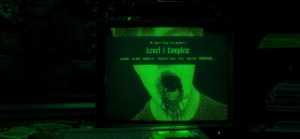 Simon: Every time you sit down and write something, it’s an act of faith because you’re spending time alone, your forehead bleeding, trying to make something work, trying to make something hundreds of people need to believe in, in order for it to happen. It’s really easy to believe it won’t happen because most times it doesn’t. The reality of writing scripts is that most things you write don’t get made and that’s something as a writer and creator you have to accept and if you can’t cope with that, whatever. With this, it required the person that carried the faith; on this was Toby.
It was Toby that absolutely believed that we would land the cast we needed to get the finance because the finance was contingent on getting Asa Butterfield and Eddie Marsan. It was believing that that would happen, and believing that it was worth the late nights and the energy and all of the investment you have to make as creators in order for something to happen. And it was wonderful to see Toby’s faith vindicated because what Asa, what Eddie, what Robert Englund responded to was the script, and also the short films and the vision and the deck that Toby had put together.
Toby had had to imagine the whole thing visually before he even knew for sure whether or not it was going to happen. I think that is always the biggest challenge with anything: it’s you almost have to act like you’re making it in order to have any chance of making it and then accept that you might have the pain of not getting to make it.
 Toby: Yes, I think so too; actually making it is a joy.
When Simon says hundreds of people have to believe in it, it’s absolutely true. Only one or two people end up making the final decision but that’s influenced by these multitudes of people that read and see this stuff before it even gets a chance to get made. It’s astounding how anything gets made really. It’s a lot of work and you’ve got to have a lot of stamina and resilience – and you’ve got to be able to listen as well, I think.
But hey, it works. I’m going to get to make another movie, Simon’s going to get to make more telly. It’s like wow, there you go! What could be better?
Choose or Die is streaming now on Netflix
 Doctor Who News Star Trek News
 Sci-Fi Bulletin: Exploring the Universes of SF, Fantasy, Horror and Spy-fi!