Between Waves: Interview: Virginia Abramovich
Virginia Abramovich’s new movie Between Waves is out now on digital, starring Fiona Graham and Luke Robinson as Jamie and Isaac in a tale of loss, grief and the multiverse. […]



Virginia Abramovich’s new movie Between Waves is out now on digital, starring Fiona Graham and Luke Robinson as Jamie and Isaac in a tale of loss, grief and the multiverse. […]
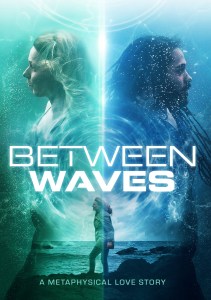 Virginia Abramovich’s new movie Between Waves is out now on digital, starring Fiona Graham and Luke Robinson as Jamie and Isaac in a tale of loss, grief and the multiverse. Paul Simpson caught up with the Canadian film director to discuss its themes…
Where did Between Waves start from – was it a particular image or idea?
It’s great that you ask about image. It’s always been a story about loss and making choices, [and] in that loss finding yourself. The island of São Miguel was always something I wanted to [use to] tell the story.
There’s a particular image that’s really strong when we were talking about the film. I was talking with Stephen Krecklo, the composer recently and he said, ‘Oh you sent me this image’ and I didn’t even remember I did that. It was an image of rust – I saw Jamie as water and Isaac as fire and when they come together it’s this corrosive beautiful blue red orange that come through rust.
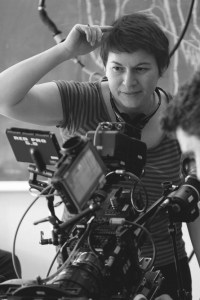 Did you think of it as more of a short film or did you always intend it as a feature?
No, the story was always meant to be a feature. I knew it needed the time, it would be a different story to explore in a short.
The multiverse aspect of it came into the story later. It was always a story about loss, about not knowing, about a loss with reality as well. That place where the character’s not sure anymore what is their reality?
I have always been a huge science fiction fan. As a teen I read sci-fi literature like crazy; I consumed it, devoured it and had always been a huge fan. As the story was progressing there was a point where it just clicked for me that there was more. Then it became something interesting.
It was always the way I wanted to tell the story but as I was developing it there was a point where I was like, “This is now interesting for me”. Then I didn’t want to burn the script anymore!
 It’s also a story about grief which is a universal common theme.
And that’s something that movies often skirt round: a death is a catalyst for something, it’s not necessarily something that’s actually looked at and absorbed by the characters.
Yes, it’s an event, or it happened but it’s not explored. That was also something that was there from the very beginning, exploring death and guilt again, from my own personal hurt and things like that.
You’re credited as co-writing it; how did that process work? Was it something that you came up with and then brought to the other writer?
 Yes, it was my idea. I have a lot of ideas and then I’m very fortunate to work with very talented people that help me realise them.
That’s what I really like about film, it’s a really collaborative process. So the same way I saw the images coming together, it’s the same way I look at writing.
I work with Katherine Andrews. We’re working on other projects together and she’s just a fantastic writer. She taught me so much about writing and storytelling.
We would throw the script back and forth and I would write some things that were OK but then she would take it over and really elevate the whole story. I think when you’re both creatively working, it’s about working respectfully, respecting each other’s creative collaboration but also being honest and saying. ‘This is not going to work’. You have an extra perspective or an extra filter so I really enjoy that process.
I’ve had people say to me, ‘How do you write with a co-writer?’ and I’m like, ‘Actually I love it and love the process.’
Some people can do it because the combination of talent multiplies whereas others if they’re forced into a collaboration like that it ends up almost being a negative process and losing something of both people rather than becoming a multiplication.
Yes, absolutely. It’s got to be the right person.
When did Fiona get involved? Was it purely at the casting stage or was it earlier on in development?
 It’s a great question because she was actually involved at the very beginning before we started to write the story.
I met Fiona at a film festival in Houston – I was there with a short of mine and she was there with a film that she had acted in. I saw her film because ironically a Canadian director, who I knew, had directed it. We wound up sitting together; it’s like fate. The universe brought us together maybe, if you believe in that.
Then we wound up sitting at the same table at the banquet and became friends. We just laughed and had a really good time together. For years after that we kept on going, ‘We’ve got to do a project together.’
I got a writing grant from the Canada Arts Council for this – very fortunate that we have that because it took time to write and it gave me that space to write it. Part of my proposal when I wrote the grant was, ‘I want to develop characters’ because I felt like this was really going to be based around a character who was going to drive the story. I wanted to develop it and also to workshop some of the scenes. The first thing I did before we started writing it, I went to New York, where Fiona lived, and we spent three intensive days of just working out this character.
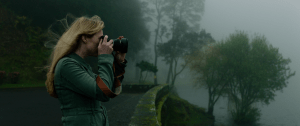 Then I came back and Katherine Andrews and I started writing. We had notes and notes and notes of who this character Jamie was. As we were writing the script, every few drafts – not all the time but, once in a while – we’d send the script to Fiona and she would have her say. It was always about the character: she’d be like, ‘Oh I don’t think Jamie would…’ She really owned that character.
When Katherine and I were like ‘OK, the script’s ready, we want to shoot it’, we went to New York. We got a studio and we workshopped scenes that were in the script but also that were set before the script happened.
I would love to do this again with a different story because it was so rich, and when we came to filming, I didn’t need to have a conversation about the character with Fiona. Jamie was hers.
It sounds a very Mike Leigh way of working as well.
Oh my God, I wish! I wish! Yes, that guy takes all of this to a whole other level, he’s awesome at what he does. On a small amateur level of what he does, yes, a little bit like that, a version of that.
Was there much the same process with Luke as Isaac? We’re never quite sure what side of the moral line he’s on. He’s partly sympathetic, partly very definitely not. Was he working purely from what you gave him in the script?
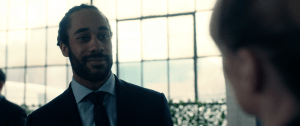 Yes he was. We did spend time together just workshopping a little bit with him and Fiona. The script was already written, the character was already there and Luke was cast in a very traditional casting process where people came to audition and we were like ‘OK, this is our Isaac.’
Whereas I think with Fiona we just felt like we had so much time to prep for Jamie because it was years of writing, Luke was way more traditional and he had to grow into the character with time and filming. I saw him take ownership and really become Isaac or the different Isaacs, as the story progressed. Also I think Fiona really feeling who Jamie was, was really able to help Luke, ground him in his character.
In terms of shooting, did you do the Toronto or the São Miguel scenes first?
Toronto – eleven days in Toronto and then we wrapped on Friday, we had the weekend and on Sunday night we were on a flight going to São Miguel. We did nine days in São Miguel as well as a half day while everyone else was getting ready. We took a very small splinter unit and drove through the island to places we knew were too remote to take a bigger crew.
Presumably you know the island well enough to be able to do something like that.
 I knew the island because my husband’s father’s side of the family lives there, so I’ve been there many times. I fell in love with the island, I wish I could go back right now. It’s one of those places that I actually jones to go back to, it’s spectacular.
I had an idea of some of the locations and was writing it with places in mind but we did go in February and do a scout with the director of photography and the first assistant director where we actually physically went there and locked in our locations.
It was a year pre-Covid, no clue that it was going to happen. We would never been able to do it with the resources that we have. São Miguel was actually locked off for a long time. They just closed it down.
 What was the biggest challenge for you in making this?
In terms of logistics it was shooting in open water in the ocean. That was the thing we were most apprehensive about and that was the hardest. There was also a day in Toronto a few weeks later, when we shot in a pool. The stuff underwater wasn’t in the ocean, it was in a pool.
I guessed it was more controlled circumstances.
Absolutely.
Everything where you see the ocean and you see the open waters, that was the most dangerous. It was logistically the hardest thing to organise and had the biggest risks.
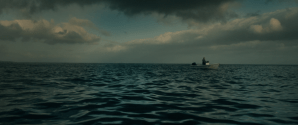 I think we did it on day three: there was a small window because we were only there for a small amount of time and we had to do it when the weather was in the right place. You can’t have choppy waves – it’s enough just to be out in open water.
We had the hero boat that Jamie was on and that had a captain that was driving it. Fiona was there with Jason, our director of photography with a gimbal device called the Ronin 2, which is like a poor man’s Steadicam but it’s an awesome device. He was strapped into it and had a knife in his pocket so if he went over [the side], he was just going to cut himself free because that’s like 30 plus pounds of just weight.
Once we shot that it was like phew! There’s a whole level of relief that was lifted.
 The other challenge was it was the first time I made a feature film, so just the stress of knowing that I was going to make this and there were so many things that kept on falling out. Every day something would happen that would make me think ‘Oh, OK I guess the shoot is off.’ And then we would figure out a way to move forward.
It was just this weird thing that kept on going. There was so much good energy and so many good people around it that kept on championing it and moving it forward. I would just go, ‘OK, one day at a time. We’re gonna get through today’ and somehow tomorrow something would happen and I’d be like ‘OK, I guess we keep on shooting!’
Between Waves is out now on digital download. Click here to read our review
 Doctor Who News Star Trek News
 Sci-Fi Bulletin: Exploring the Universes of SF, Fantasy, Horror and Spy-fi!