Review: My Father’s Dragon OST
By Mychael & Jeff Danna Netflix, out now How Not to Train Your Dragon… This score for a new animated Netflix movie is composed by the Canadian Danna brothers – […]



By Mychael & Jeff Danna Netflix, out now How Not to Train Your Dragon… This score for a new animated Netflix movie is composed by the Canadian Danna brothers – […]
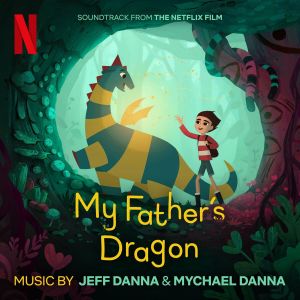 By Mychael & Jeff Danna
Netflix, out now
How Not to Train Your Dragon…
This score for a new animated Netflix movie is composed by the Canadian Danna brothers – Mychael, who won an Oscar for Life Of Pi, and Jeff, who composed scores Resident Evil Apocalypse and the like – who have previously collaborated on The Imaginarium Of Doctor Parnassus and the two recent animated Addams Family movies.
We know, therefore, that this score has a decent pedigree.
It opens with a somewhat annoying and rather unstable attempt at a witful feel-good song, “Lift Your Wings” sung by Anohni, before launching into a series of tracks that seem to have been produced under the instruction “be as different from the How To Train Your Dragon music as possible.” They certainly succeed; the HTTYD music is awesome, and this is… different.
From the outset, you can tell this is meant to be a score for a children’s production – there are plenty of pianos, harpsichords, and deep vibrations that seem rather, well, burpy. That isn’t automatically a bad thing, having worked well for the Addams Family animated movies, and indeed the wide range of instruments added to the orchestra is a positive and imaginative change.
That said, every track seems to be from a different episode of TV series of five-minute episodes, rather randomly bringing in this or that instrument. It’s true that there are recurring themes and leitmotifs throughout – for example that deep groaning burp sound that represents the ancient guardian of the island in “Wild Island” and “Aratua’s Cave” to name but one.
What the score ends up with is a collection of semi-related individual musical vignettes that don’t hook up into a consistent album despite the reuse of themes and instruments in the various tracks. The expansive use of the wider range of instruments is a great strength for the album, but it isn’t enough to make any but a few of the individual tracks flow.
There are some good tracks to be found scattered through; “Iris In The Trap” for example, and there is some imaginative use of the choice of instrumentation in the likes of “Crocodile River” too, though that track also end with a buzzing low in the mix which is difficult to decide whether it’s intentional or a flaw in the recording or mastering. There’s some good piano work too, while “Riding Clouds” takes the presumable “be unlike How To Train Your Dragon” brief to the extent of being so exactly the opposite of that franchise’s music as to actually work as an inverse on almost the same level!
Verdict: The composers have had some great ideas, and some not so great ones, and as a result have ended up with an album that just feels random and bitty with occasional unexpected moments of “hey, why didn’t they do more of this?”. It may be that, as is often the case with film soundtracks, it simply works best in the film, accompanied by the pictures. If so, though, it’s not the best encouragement to see the film. 4/10
David A McIntee
 Doctor Who News Star Trek News
 Sci-Fi Bulletin: Exploring the Universes of SF, Fantasy, Horror and Spy-fi!