Review: Doctor Who: Books: The Black Archive 9: The God Complex
By Paul Driscoll Obverse Books, out now Making the way through the maze of Toby Whithouse’s Matt Smith tale. This latest Black Archive is one of those in the range […]



By Paul Driscoll Obverse Books, out now Making the way through the maze of Toby Whithouse’s Matt Smith tale. This latest Black Archive is one of those in the range […]
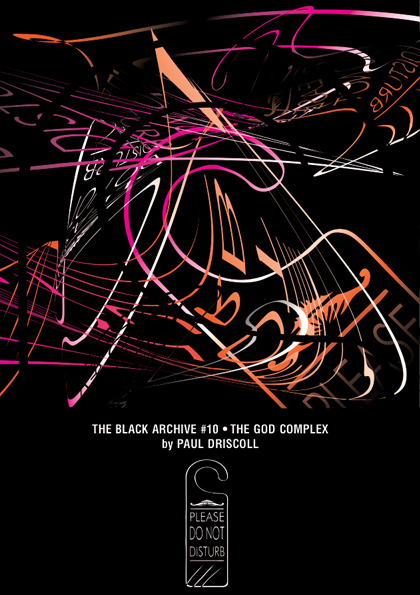 By Paul Driscoll
Obverse Books, out now
Making the way through the maze of Toby Whithouse’s Matt Smith tale.
This latest Black Archive is one of those in the range that requires the reader to concentrate carefully on what’s being propounded by the author – it gets into quite some detail on various themes, and very definitely takes the original script as the basis for a much wider discussion of them within the whole 53 years of Doctor Who. The God Complex isn’t necessarily regarded as either one of Whithouse’s best scripts, or indeed one of the show’s more outstanding segments, criticised on a number of levels (criticisms which Driscoll addresses across the book).
Driscoll begins by examining the Minotaur, both as it has appeared in Doctor Who over the years, and in general mythology with reference not just to the obvious (The Horns of Nimon) but also Swiss poetry (although not, intriguingly, the BBC’s most recent treatment of the subject, Atlantis). From there he moves onto “The Ministry of Love”, an Orwellian reference to lead into a discussion of the links between 1984 and the episode, building out of Whithouse’s need to expand the script by adding “big moments”, i.e. what’s in the rooms.
“A Shining Example” is the punning title of the next section, which looks at the influence of Stanley Kubrick’s version of Stephen King’s novel The Shining on the script and on the direction in particular. (I’d hoped for more discussion of King’s original book’s themes as they relate, but this confines itself to the movie.) Driscoll is critical here of the ending of the episode, particularly given its influences.
“I’ve Made a Terrible Mistake (Again)” is a discussion of the story’s roots within Doctor Who itself and succumbs to the temptation sometimes to see patterns that aren’t there, or at least weren’t intended by the production team – a human failing, as the Seventh Doctor pointed out! This morphs into a look at the treatment of faith and religion in Doctor Who over the decades with some interesting insights into both The Curse of Fenric and Gridlock.
From there we move to “The Psychology of Terror”, which is the first of two chapters (“The Folly and the Courage of Faith” is the other) where you may well find yourself disagreeing with the author over certain elements, particularly when it seems a little over-reliant on previous studies. Both these perhaps would be better suited to – and have more convincing arguments if used in – an overview of the series, or one era thereof.
“The Fallible Hero” and “The Role of the Companion” are better argued, looking at the Doctor and his companions in a more holistic way, and then referencing them back to The God Complex. There’s still a tendency to want to make points about stories outside the terms of reference of the topic but this is better controlled here.
“So Long – But What About the Fish?” deals with the question of the fish eaten by David Walliams’ character. Which it does in the first 20 lines (including four of dialogue). However, Driscoll then does his own miracle of the feeding of the five thousand, turning some poor fishes’ demise into a complicated symbolic discussion that spreads over multiple pages, and sadly fails to convince. Sometimes a fish being eaten is just a fish being eaten…! Unlike previous volumes, there’s no discussion of any ancillary issues as appendices.
Verdict: An interesting – if sometimes flawed – discussion of an interesting, if flawed, episode. 7/10
Paul Simpson
 Doctor Who News Star Trek News
 Sci-Fi Bulletin: Exploring the Universes of SF, Fantasy, Horror and Spy-fi!