Review: Doctor Who: Books: The Black Archive #36: Listen
By Dewi Small Obverse Books, out now Obverse Books’ ongoing series of monographs focusing on a Doctor Who serial or story hits 2014’s Series 8 story, Listen. As a Steven […]



By Dewi Small Obverse Books, out now Obverse Books’ ongoing series of monographs focusing on a Doctor Who serial or story hits 2014’s Series 8 story, Listen. As a Steven […]
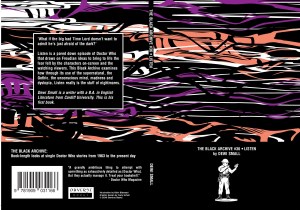 By Dewi Small
Obverse Books, out now
Obverse Books’ ongoing series of monographs focusing on a Doctor Who serial or story hits 2014’s Series 8 story, Listen.
As a Steven Moffat story, Listen is something of a curiosity, being neither a season opener or finale, and on the face of it being of low relevance in the Doctor’s chronology. But as author Dewi Small reveals in his concise analysis, there’s an awful lot going on here, and you might not have realised.
Right from the outset, Dewi nails the story by reminding us that there is something for everyone among the meandering narrative and myriad different ideas. It’s a melting pot of invention, and the author doesn’t profess to have all the answers (if indeed there are any) to this deliberately ambiguous story. We’re told that the barn scene of the Doctor’s youth on Gallifrey is pivotal to the story’s structure and the character of the Doctor. And like it or not, Impossible Girl Clara’s Bootstrap Paradox did have an major influence on our favourite Time Lord.
Dewi gives us a light introduction to Freudian analysis, particularly his work on The Uncanny and repression, indicating how these phenomena are used in the story, as well as the concept of a safe space (initially Gallifrey and then the TARDIS). We also address the fan anger (in some quarters at least) that Clara’s role is over important, shaping the Doctor by talking to him as a child – ultimately you’ll decide if this divisive character was given too much relevance.
I enjoyed the section on the depiction of the end of the universe, contrasting with the same event playing out differently in episode Utopia. I also hadn’t been aware of Frederic Brown’s original Two Sentence Horror Story – Knock – which is clearly referenced in the episode. I guess the only aspect I missed was some context around the making of the episode. As it stands, the book looks at the episode as transmitted, but I prefer my Black Archives to look at the production too: Were there challenges? Did the script change? What did director Douglas Mackinnon bring to it?
Verdict: An easy read that doesn’t profess to have all the answers, but certainly offers up plenty of evidence to let you make up your own mind, with some added Freud for good measure. I’m off to my safe space now. 7/10
Nick Joy
 Doctor Who News Star Trek News
 Sci-Fi Bulletin: Exploring the Universes of SF, Fantasy, Horror and Spy-fi!