 By Sarah Groenewegen, Kara Dennison, Alyssa Franke
Obverse Press, out now
The Twelfth Doctor loses a companion, and gains a new perspective.
A trio of narratively linked Peter Capaldi episodes were the focus of a 2018 trilogy of entries in the Black Archive series of books examining selected Doctor Who stories. It makes sense to take these three stories (or are they one long story?) together, but using distinctly separate authors has both strengths and weaknesses. The strengths include offering individual views for each of the trio, but a weakness might be that some deeper arguments or thematic explorations that might have been pursued across the three stories as a whole get slightly lost. In fact, these three individual volumes give a taste of the range of diverse approaches across the Black Archive range.
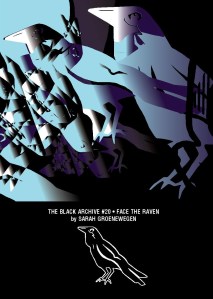
Sarah Groenewegen takes a largely character-based approach to unpacking Face the Raven, focusing on both Clara Oswald (whose first exit occurs in this story) and Ashildr/Me (Maisie Williams’ proto-antagonist who recurred throughout the season). They make an interesting contrast, with Clara’s over-confidence leading to her downfall and Ashildr’s cunning leading the Doctor into a trap he doesn’t foresee. Each character thinks of themselves as ‘Doctor-like’, and Groenewegen shows how their different approaches both leads them astray and ultimately brings them together.
Clara in particular was a divisive companion character, given perhaps too much focus and agency across two Doctor incarnations, but like her or loathe her, Groenewegen expands upon her character and motivations that throws a new light on her role and importance across the wider series. That’s not to say the author neglects other unique aspects of the story – the concept of Trap Streets and issues of refugees, whether from space or another country on Earth, are also given their due in an academic-leaning essay that some might find a bit jargon heavy.
 Face the Raven, is of course indispensible in the way it sets up Heaven Sent, an episode that provided a showcase for Capaldi, probably the single best actor ever to take on the title role (regardless of how he actually did playing it). This is a truly unique instalment of the series, like nothing that came before and unlikely ever to be repeated, so Kara Dennison has her work cut out in attempting to capture just a sliver of its brilliance. Befitting the episode, Dennison engages with Capaldi’s Doctor, a character some fans found difficult to like. What’s unexpected, perhaps, is the accessible, almost chatty writing style employed here – it might have been supposed that such a ‘heavy’ episode would get a jargon-heavy academic deconstruction. There’s plenty of ideas here (and plenty of footnotes, still the bane of this series), so her analysis is not lacking in academic depth, it just comes across as more accessible than some in the range. Unlike the previous volume that focused almost entirely on Face the Raven, Dennison was probably left with no choice but to not only refer back to the previous episode but also to look ahead to Hell Bent in her take, which brings in all sorts of meta-textual information to fuel her analysis.
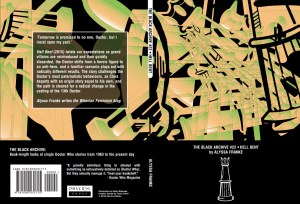
For the Series 9 finale, Hell Bent, Alyssa Franke take a more personal and unabashedly enthused look at the story. She also takes an avowedly feminist approach to this episode (as do all three of these writers, to one degree or another), but to put Hell Bent forward as ‘the most explicitly feminist episode of Doctor Who’ might be over stating things a tad. That’s fine, perhaps, as an approach to analyse both Clara and Ashildr, but when it is used to denigrate Capaldi’s gender as a way to ‘highlight some of the Doctor’s most profound flaws’, that’s digging a little too deeply into the gender culture wars. It also feels forced even if, no doubt, some will agree with this take. Fine, tackle the character through class (he’s a Time ‘Lord’, after all), but to pin character flaws on gender, while praising Clara’s virtues through her gender is a small lens to analyse a big issue (that of ‘character’, regardless of ‘gender’). However, having said that, this book is very of the moment – take it or leave it on that basis.
Verdicts:
Face the Raven: Academic but accessible analysis of character, 7/10
Heaven Sent: Chatty, but deeper than it appears, take on the Doctor, 8/10
Hell Bent: Gender-driven take down of Capaldi’s Time Lord, 7/10
Brian J. Robb




 Sci-Fi Bulletin: Exploring the Universes of SF, Fantasy, Horror and Spy-fi!