Review: Doctor Who: Books: Diamond Dogs
By Mike Tucker BBC Books, out now Diamonds might be a girl’s best friend, but once Bill accidentally triggers an alarm in a vault of the precious gems, she and […]



By Mike Tucker BBC Books, out now Diamonds might be a girl’s best friend, but once Bill accidentally triggers an alarm in a vault of the precious gems, she and […]
B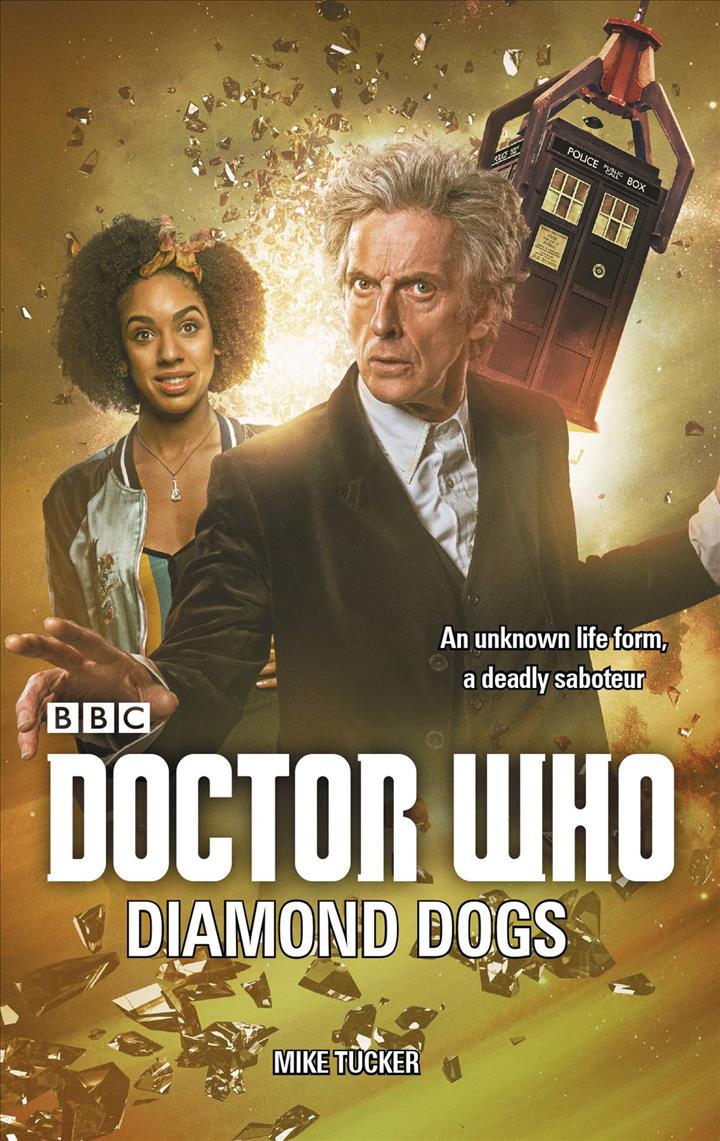 y Mike Tucker
BBC Books, out now
Diamonds might be a girl’s best friend, but once Bill accidentally triggers an alarm in a vault of the precious gems, she and the Doctor find themselves in the midst of a space war, fought in the shadow of the rings of Saturn.
Oh, how we do love a ‘base under siege’ story in Doctor Who, be it the lunar surface of The Moonbase or an underwater facility in Before the Flood. As a storytelling device it’s timeless, isolating a group of people in such a way that there’s no easy escape or way to run away, relying on their ingenuity to resolve the problem locally, and typically with the added stress of something stalking or hunting them down. Into this well-trodden arena steps Doctor Who special effects supremo and latterly novelist, Mike Tucker, relishing the opportunity and challenge to say something new on the subject.
The Doctor has planned to steal a diamond from a bank where there’s so many lying around that he reasons it won’t be missed. This, we discover, is what has been financing his stay on Earth, in between lecturing at St Luke’s University and guarding the mysterious vault in the basement. It was meant to be a quick in-and-out job, but Bill’s accidental tripping of the alarm means that they are soon captured and asked to reveal their motives. As has happened many times before on Doctor Who, the wider alien threat soon becomes a greater and more immediate threat, and the Time Lord is allowed to play his part to prove his good intentions and save the day.
Tucker’s story cannot avoid its heritage and debt to many similar Doctor Who serials, but rather than just saying ‘here we go again’ it treats the formula in such a way that you’re invited to experience the events as if they are being presented for the first time ever. Part of the appeal of this new trio of 12th Doctor and Bill books is that they can be picked up by new, younger readers, so why shouldn’t this old chestnut be resurrected and given a 21st century sheen? What makes the author’s prose such a joy is the enthusiasm in which he describes the wider environment. Every time Mike talks about the thrusters on a ship or the way that it locks onto another ship you can almost see him building the models from scratch in his workshop, ensuring that the components work as described.
Tucker also throws in allusions to other planets in the Who-niverse (like Androzani Prime) and makes a specific reference to the events of The Invisible Enemy, with a footnote to the Target novel. He knows his stuff, he wants to share this with you, and feels he has a duty to link this into the wider lexicon.
Verdict: Old school Doctor Who for new or younger readers – this isn’t so much Space 1999 as Space 1970. It might not win awards for discovering a new concept, but the echoes of Frontier in Space and countless other classics means that there’s plenty of retro-futurist derring-do to justify its 250 pages. 8/10
Nick Joy
 Doctor Who News Star Trek News
 Sci-Fi Bulletin: Exploring the Universes of SF, Fantasy, Horror and Spy-fi!