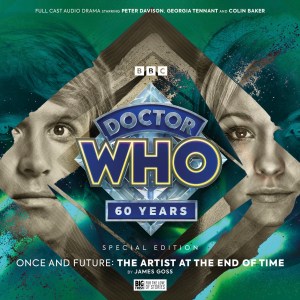
 At the end of time, but not quite out of time themselves, the Doctor stabilises into their fifth incarnation. They go to the Last Gallery, an art gallery whose name is also its mission statement and encounter Jenny, as well as the final artist alive and discover just who their biggest fan is…
This second entry in Once and Future trades the arc plot for rage, added to by the timely release of this story. As I write this, an entire Star Trek show is being rendered near impossible to see, countless TV shows and movies have been shelved, un-renewed, cut or simply removed from access, and writers and (hopefully soon) actors in the US entertainment industry are protesting conditions that prevent them being able to live, supported by colleagues worldwide in similar, equally horrible boats. Not a day goes by without a story breathlessly championing the global art theft of the latest AI algorithm, sometimes not even a half day. There have been worse times to be in the creative fields. But not this century.
Enter, stage left, James Goss’s story. It can’t solve the problem, but it can help express the rage.
Peter Davison’s Doctor, mild and traumatised, is the perfect foil for this exploration and Jenny is the perfect sidekick. Davison and Georgia Tennant’s familial connection is obvious and tremendous fun and it maps onto their characters’ personalities to elevate them both. Jenny mocks her dad for wistfully thinking about cricket. The Doctor refers to Jenny as Scrappy Doo. You could have an entire hour of them good naturedly bickering and it’d be a good time.
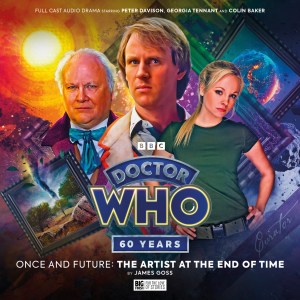 This is better. Adding Colin Baker’s version of The Curator gives the story scope and binds the cosmic to the personal. It also continues the exploration of the Curator as a character and gives Baker a chance to make the role his own once again. He’s less flamboyant, and a little more focused, than we see the character in Day of the Doctor but also deeply, fundamentally the same. An artist who defines their life by art and art by life, horrified by the realization their art may be an instrument of destruction.
The three leads bounce off each other with some real snap and energy and the core idea of identity is explored between them; the Doctor and Jenny have complementary issues of identity, one rebuilding it, the other building. The Curator’s identity is being challenged in the most visceral of ways and the second half of the story here gets very personal even as it expands.
Abi Harris’ GLADOS-esque Roboguide is a breakout character whose polite malice brings the main theme into sharp relief and is central to an ending which riffs on 2010 even as it reminds every Time Lord in the story who they are and comments, again on art as commodity. It’s a furious rebuttal of what it’s been like to work in the godforsaken age of Web3, a touching exploration of creative joy, and things explode. There really is something for everyone.
Verdict: This is complicated, angry, kind fiction. It’s a little muted but it needs to be and the issues here are explored with honesty, humour and anger that anyone who works in these fields will find very cathartic. Excellent, eccentric, essential stuff. 9/10
Alasdair Stuart
Click here to order from Big Finish




 Sci-Fi Bulletin: Exploring the Universes of SF, Fantasy, Horror and Spy-fi!