Interview: Doctor Who: Peter Howell
Peter Howell’s music has been part of life for many SF fans over the years – not just for Doctor Who but many other pieces composed while he was at […]



Peter Howell’s music has been part of life for many SF fans over the years – not just for Doctor Who but many other pieces composed while he was at […]
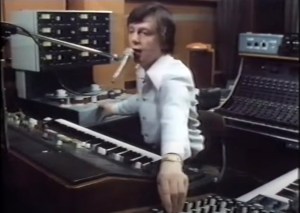 Peter Howell’s music has been part of life for many SF fans over the years – not just for Doctor Who but many other pieces composed while he was at the Radiophonic Workshop. With his new autobiography out this week from Obverse Books (read our review here), Paul Simpson caught up with the composer…
How did the book come about? It’s very much a personal odyssey which hits so many high points for the Workshop and for electronic music in this country
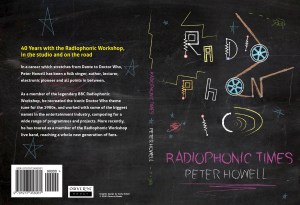 It’s nice of you to say that because that really was the idea behind it.
It was a series of events. People knew that I had done some writing because I was actually writing plays before I was working in music then when the music came along it just totally took over so I hadn’t had the chance to go back. They were saying, ‘You ought to write a book’, and I always thought, ‘Well, I don’t really want to write another straightforward history of the Workshop’, of which there have been quite a few, and I sort of shelved it and didn’t really think it was possible.
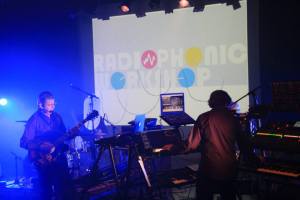
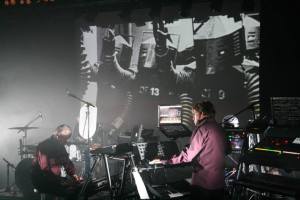
Then when we started to go out as a band, The Radiophonic Workshop, on tour, various things happened to us that were so hilarious and bizarre that I started to think, ‘Well actually if you did both – if you did the band stuff and the personal history – that might make a reasonable book because you could bounce between the two.’
So that’s where it started and when I was talking to [Obverse Books publisher] Stuart [Douglas] initially, I was very keen to make sure we knew who the audience was for this because I didn’t really want it to be a totally geeky audience – in other words, people who were just interested in the pitch bends and voltage control and all the rest of it. I thought that would limit it and it wouldn’t allow me to say what I wanted to say. So really what the designed audience for it is fans that come to our concerts but also their partners.
In other words, OK you put some technical stuff in and you can talk about some technical stuff but you don’t have to be boring about it; you can actually talk about it in such a way that puts across what it felt like. For instance the arrival of MIDI: that was an awful shock to the system for people who were used to having a whole room full of gear, and suddenly you were looking at these little things.
I wanted to include the milestones but in a way I was sitting right across that because when I first got there, John Baker was still there and I worked right through to the end. I wasn’t there for the early period but other milestones I actually was present for.
 You do also bring in some of that early stuff because it becomes relevant to the people. To me, what makes it work, is it is accessible and you’ve told a story of machines through people.
Yes, that’s a very good way of putting it.
When you were writing it did you jot down the anecdotes and work out which ones fitted with your autobiography or was it a little bit of put it down and then work out the order later?
Great question. I wouldn’t ever let anybody see it but I used Scrivener to write it and I’ve got a whole great long left hand column of ‘things I might put in’. They were absolutely anything, including which concerts I might talk about. There were three or four concerts that might have been in the book but just simply wouldn’t shoehorn in – so you’re absolutely right, there was a list. I felt I had to be responsible for history and in a way I did look at the list and how does that pan out with my experience?
Were there any times you went ‘Good grief I never realised that’ while you were writing it?
 It wasn’t anything in particular, it was an overall ethos really. First of all, that I was very lucky to have done it. The more I wrote it, I realised this was a lucky break to beat all lucky breaks. And also that, although I’m very musical, I’m not conventionally a musician. I’ve been in the company of many highly trained musicians, and I really enjoy their company, but there isn’t any doubt about the fact that I use a different skill set to them. I think it was extremely lucky that I did end up at the Workshop because if I’d tried to actually get into any other “musical” arena I wouldn’t have made it.
The way I work, I describe it as ‘inside out’ rather than ‘outside in’, in that I work from the sounds I’m making: they suggest not just other sounds but music itself, so I get it from inside out whereas people who are classically trained, which I’m not, tend to have their first way of thinking about it as outside in: ‘how can I bring my skills to bear on the problem?’
 I didn’t actually have that ability so I had to do it round the other way. Now. as I say, in other areas of music it would have been a disaster. In fact, I’ve been shooed out of various things along the way because my sight reading is so dismal, or various things that I just don’t fit in with, whereas this sort of arena I do fit in. I think that’s what came across to me really when I was writing it, more and more.
As you rightly put it, it’s a story of machines but through people so in fact it’s the way that human adaptation or interference with the machine can result in an artistic result. That is what I found very exciting from the start, even when I had a studio at home down in Hove where we did all those early albums. I was equally interested in the technology as well as the creative side and that’s the difference really.
I read the piece that you did for the Guardian a few years ago where you were talking about how normally a composer would find something that goes wrong and say ‘Get it right, machine’ (obviously I’m paraphrasing), whereas you would take that and go, ‘Right, how can I run with this and do something new with it?’ Is that a disadvantage when you’re doing something like scoring for a set piece – if you’ve got to do 7 minutes 2 seconds of a cue and you’ve got something that needs 8 minutes 13 to fully realise…
It’s a perfectly reasonable question but you have a slightly different mindset.
When you’re writing music, so called ‘applied music’ – music that is applied to picture or a timeline, a drama – you’ve already got something sitting there that is asking for a solution. So it’s not like you’re actually winging it solo; there’s already two of you. There’s you and the drama or the film, so I would never be in the position of saying, ‘Oh, it’s a pity that sequence wasn’t longer because I needed it’ because the sequence would be dictating what I did next. You would never be in that situation – in fact if you were in that situation you would be wasting a lot of time.
 I think for all of us when we’re working with the band it’s fantastic because the deadlines aren’t “tomorrow”. It’s so refreshing. The deadlines were horrendous at times; I’m not saying they always were but I think I mentioned you literally could say to a director, ‘Well, if I never went to sleep from now until the final mix you still wouldn’t get what you want’ because they were asking for a lot.
Obviously we were working solo. In the old days a composer would score on paper then send the parts to a copyist; in the meantime the session would be booked and an inordinate amount of music would be put down on tape all in three hours.
It’s a totally different thing when you’ve got one person laboriously working through a series of jobs from the ground up, from 0 to 100% on each one. It’s a totally different experience, and I think directors certainly in the middle period – less so latterly because they’re much more intelligent about how it works – were a little bit ignorant about what they were asking of us. It was quite a tall order.
Did you find that that sort of horrendous deadline increased the creativity or was it a question of creativity had to take a backseat because ‘Hell, we’ve got to get this damned thing done’?
 It’s a cop out to say it’s a bit of both but it’s sort of true. You’re absolutely right: most of the people there given an inordinate length of time would take it, if offered it, and would probably come out with something that was really derivative, horrid and not worth much. There was definitely an element of benefiting from somebody standing over you with a stopwatch saying ‘What about it?’ but then there were other times…
Say I was working on a Doctor Who adventure: what tended to happen was it would concertina. The shooting and/or editing would spread a bit so the amount of time left to do the music before this brick wall of a final mix would be concertinaed. That used to happen worse as you got through an adventure so if it was a six part story, literally episodes five and six would be a rush job and under those circumstances that’s not very creative because by that time it’s got ridiculous. But early on, and probably in the middle, it is very creative because you know you’ve got to do it. You can’t say you’ll have an evening off, you’ve got to do it and that does help certainly.
There’s that old thing about writing: you’ve got a sheaf of paper and you stare at it until your forehead bleeds. It’s just got to be done.
 Yes. Also I think there’s a similarity with writing and composing in terms of there is no such thing as a blank page. You don’t have writer’s block: anybody who says they’ve got writer’s block just aren’t writing. All you need to do is write; all you need to do is just play, when you’re composing. If you’ve got a sequence where you really don’t know what the hell is right to do with it, you just look at it and think, ‘Does this even want music?’ Maybe it isn’t necessary.’
The best way to find out is to put something with it, not to actually stare at it wondering whether it could be this or that. Just start with something. I’ve got an eBook on Amazon about writing music to picture that has various techniques in it and one of them is the washing line technique. You put a single high string note through the whole sequence, normally a D for some reason or another. It just sits there like a washing line and you just start to hang things on it. That will inevitably start to work with the pictures and you can then make decisions whether it’s good or bad – but as soon as you start making decisions, you’re writing the music. There’s no excuse really.
I never had a problem with actually writing stuff. I did occasionally have problems with very vacuous material on the film. Because I work inside out, it’s the film that’s got to dictate to me what’s necessary and if it’s terribly vacuous and not very specific and there doesn’t seem to be any reason why something should be there, that’s the hardest for me. I find it very difficult to find a way in, because often when you put something with it, nothing really leaps out at you because really there isn’t much content.
I think it’s fair to say in the last 20 years, music has got more prevalent in TV particularly. Scores can be virtually for an entire episode rather than the ten minutes that they were. Do you think that things are slated almost the wrong way at the moment?
 Yes, I do. I’m at risk of sounding like an old fart but put it this way: there are two points at which a piece of music is fantastically valuable – when it starts and when it stops. If it only starts at the beginning and stops at the end, you’ve just lost all those occasions when you could have actually had an effect.
I tried to watch a National Geographic programme the other day on the laptop and I gave up. It was like the longest advert you’ve ever seen in your life because the music was so welded on from the beginning to the end and relentless that it just seemed like it was constantly trying to sell you something. It was like a commercial. And to me, that isn’t effective at all.
I think you realise when you watch older stuff just how silence there is in scenes that now would be wall to wall full orchestral sound.
Yes absolutely, and they really lose so many opportunities by doing that. Also if the composer is being asked to write wall to wall music he’s almost being asked to ignore the content because if you were to respond to every single thing, you would have music with a nervous tic. It would just not work. So consequently you have to step back, and then that doesn’t work so you step even further back, and in the end you end up with this umbrella piece of music that just covers it and is very nonspecific.
I think it’s a pity. It doesn’t work for me at all.
 What has surprised you about doing the live gigs?
A lot, and I think we’re all in the same boat, because we were working solo in our own studios. We had not once played with one another ever. It was so weird – suddenly we were actually rehearsing together and we were working out chords to stuff and things that most of the public would think we already knew. But suddenly I was playing Paddy’s stuff and I never dreamed of playing Paddy’s stuff!
I suppose as composers you became performers which you haven’t been, you were a group of composers..
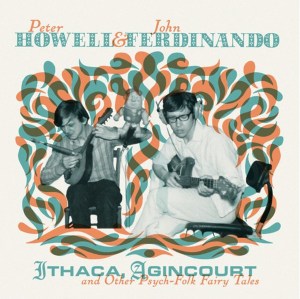
I tell you what, the last time I could be classed a performer was when John Ferdinando and I tried to have a few bands and they all had different names. Because we were interested in more instrumental stuff, it was never very popular with the punters so we never got very far. Then after that I got my own studio, then I got into the BBC and the Radiophonic Workshop… so you can imagine the aeons that have passed since I’ve been a performer. And suddenly there I was being asked to perform. It was a hell of a shock, I tell you. It was like I needed some sort of lobotomy and have a different chip put in frankly, but I absolutely loved it.
I really do enjoy it now but initially it was so hard to rehearse something well enough to be able to play it live when previously I would only ever rehearse something well enough to record it and once I’d recorded it, it would be immediately blanked out. I would forget about it completely and go onto the next thing. Suddenly with the band that was not on. We have a repertoire and you have to keep all those things in your head. It’s a completely different experience.
 The other thing without a doubt: it was an absolute joy to meet people who were enthusiastic about the Workshop. Before we started out touring we got a researcher, a young lady who had never heard of us at all, to go out and do a few vox pops to see if anybody was the slightest bit interested. She came back with her jaw dropping because she didn’t know who we were at all! The great majority of people said, ‘Oh yes, that sounds like a great idea’.
We were fairly confident there was interest but it’s another thing for people to actually go out on a wet night and actually decide this is how they’re going to spend their evening. So we’re extremely grateful for all the audiences, it’s very rewarding. It’s lovely.
Radiophonic Times is available now from Obverse Books.
Check out Peter Howell’s website at www.peterhowell-media.co.uk
 Doctor Who News Star Trek News
 Sci-Fi Bulletin: Exploring the Universes of SF, Fantasy, Horror and Spy-fi!