Interview: Doctor Who: Paul Magrs
Paul Magrs’ latest Doctor Who story is told from a very unusual vantage point – that of the Doctor’s car, Bessie. It’s the start of a four-CD cycle for the […]



Paul Magrs’ latest Doctor Who story is told from a very unusual vantage point – that of the Doctor’s car, Bessie. It’s the start of a four-CD cycle for the […]
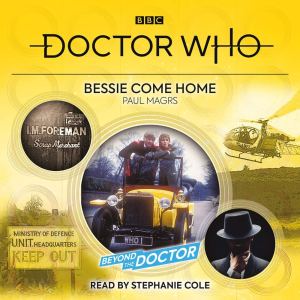 Paul Magrs’ latest Doctor Who story is told from a very unusual vantage point – that of the Doctor’s car, Bessie. It’s the start of a four-CD cycle for the Beyond the Doctor series of audios, and Magrs chatted with Paul Simpson about its creation…
You’ve written for BBC Audio (or AudioGo as they were originally) before with the Nest Cottage stories. How did you get involved with those?
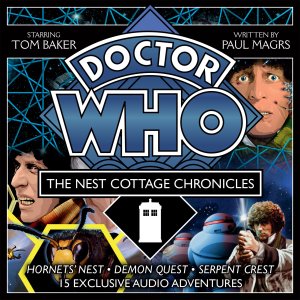 I knew Michael Stevens slightly because he’d done the audio of my 10th Doctor novel Sick Building in 2007. I was down at the Bath Literature Festival doing a panel with Steve Cole, Mark Morris and a bunch of others. I heard about a few things that they were up to with BBC Audio, that they were expanding doing their own thing. The following year Michael Stevens contacted a bunch of us about doing something for Tom Baker. It was secret – at last they were going to get him because they’d tried over the years but Tom’s Tom and he either likes the writing or he doesn’t.
At that point the bare bones of the idea was there, put in place by Michael Stevens, of the Doctor being in a cottage with a housekeeper, in disguise and like Holmes at the end of his career. So I pitched one story and then I pitched another, and ended up pitching the whole lot. I wrote that whole first season and then the second and the third. It was just all mine and it was just bliss. That was three years of fantastic fun really, finding a corner of the Doctor Who universe that didn’t exist before and making it my own, which is almost impossible to do.
 The thing about Tom is that every season he came back on TV he was slightly different, whether by accident or design or just capriciousness. He changed over seven years; he was an evolving Doctor which, as a kid, I remember being exciting. He was a growing character.
So in 2009,10,11 he played the Doctor, how he saw him then in collaboration with me, which is what it felt like over the years, and it was bliss to do stories that were a bit more macabre and peculiar. We had monsters and robots as well but there were other things too, things you can do with audio that you can’t do with other kinds of stories.
This series was our little island of fun and nonsense. Michael Stevens was the man in charge, really, and it was all down to him that the project got going and kept going. It was he who had the faith in commissioning me to write every episode of these adventures. We had a very intense and creative working relationship – and then there was the marvellous Kate Jones directing everyone in the studio. She’s someone else I’ve worked with quite a lot since, just as I have with Tom and Sue and Michael Stevens. We’ve all worked together again since because we enjoyed it all so much.
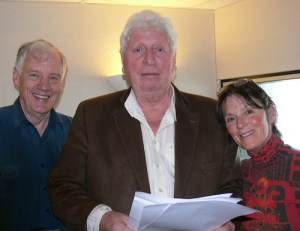 We used to record them the old-fashioned way with about ten people around one microphone in a studio in Soho – all these amazing people crammed around shouting at each other. It’s the chemistry between people, and the fact that Tom leans over and says things straight into people’s faces over the mic…
All of that was great and then it was a few years of doing more audio books which has allowed me to revive some of the characters and some of the ideas. In Mrs Wibbsey, Susan Jameson, I created a companion the like of which we hadn’t seen before, this curmudgeon, and she’s somebody that I’ve been able to continue with.
I tend to write for older women in the Doctor Who universe really, looking through. There’s an awful lot of often older working class women who can come back and give a voice that maybe hasn’t been there in the series so much, because in the end it has been quite a middle class show full of old blokes and people with guns and southerners. I suppose I put in people like Iris or Mrs Wibbsey or a talking car to put a different voice in, a different viewpoint.
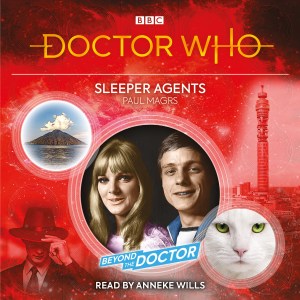 ‘Beyond the Doctor’ was meant to be all different people writing it. Again it’s a project created by Michael Stevens, and I’m glad of his asking me to pitch ideas and come up with new takes on old characters. The fantastic Steve Gallagher did one in this series, just before I did, with Romana. I think he’s brilliant. Covid in a way changed the nature of it all.
I understood that it was a series about companions the day after or the very day that they left the Doctor so I began with one about Polly and Ben in 1966. That’s the first one I wrote, well before Covid. Something I do as a freelance writer, I drop things in that are like bombs that I can develop into something further. It’s just a sensible thing to do and because of the delays in production it meant that I had space to develop further stories about these particular antagonists, Ms Leamann and Mr Harmer, and this spy story. They are characters who come after the companions and they’re after something.
Because of the contingencies and the complications of Covid, and getting people in to record, and the fact that the releases were delayed by more than a year, and then dropped out of order each story could suggest itself organically, which is what I love. You have a story about Polly with these villains and the natural thing for me to do at that point is to invent one about Bessie a few years later and Bessie having this consciousness that not everybody knew she had. And then to go back and have one about Ian and Barbara and then to have one with Mrs Wibbsey that’s going to finish off that set of four. They grew out of each other, and that’s the perfect way for it to go for me: one story leading to the next.
I love stories that suggest themselves and need to be written. That’s my standard for anything, especially when you’re doing tie-in stuff because there’s loads of this stuff and it has to be a case of “Why bother doing this? Why does this have to exist?”
 I’ve heard people working in this world who just go ‘Oh it’s just merchandise’ and I’ve never believed that. You’re going into this amazing world and playing with this stuff but you’ve got to have something to say that’s yours, that is recognisably you. I don’t want to write anything boring. I’d stop. In fact if I find myself being boring I stop, it’s not there.
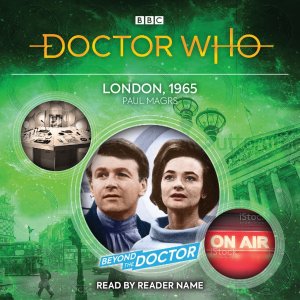
I don’t think I’ve written anything set in 60s Doctor Who before but doing two in that world, I found the voices are just there. It’s very odd, it’s like a form of possession. I do want to know what they do, where they eat their tea on the day that they land back in London. How do you cope with splitting up and then meeting the next day? What’s gone on? Those sorts of questions are the beginning premise of Beyond the Doctor although it soon becomes epic and they’re all having their own adventures.
I think it’s an important thing to say, they’re not just retrospective “this is what we got up to”. This is about the day they get sucked into a different kind of adventure without the Doctor.
So the first one released is the Bessie story and it’s, perhaps not surprisingly, not quite what you expect. Why Bessie?
Phil Purser-Hallard tweeted two or three years ago after something particular came out with some jokey comment about ‘There will be a monologue by Bessie at some point’ and I was like ‘Yes, I’ll have that’. He’s the person that absolutely popped it into my head as an inevitable thing and if anybody was going to write it, it would be me
Was there a particular image of Bessie or a particular moment from the series that sparked a) that personality but also b) the way that you told this story?
I think it’s probably Barry Letts’ novelisation of The Dæmons.
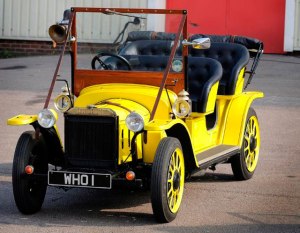
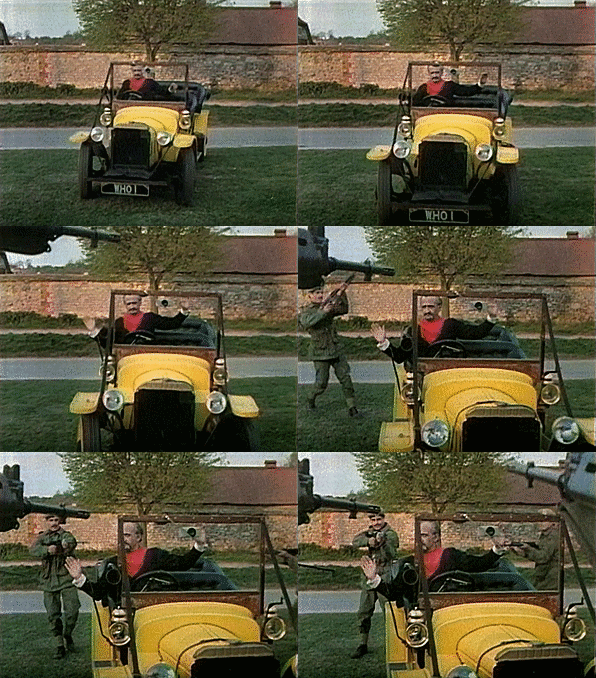 There’s a split narrative in this where she’s looking back on her whole life, going back to 1910 through to the present, and one of her big turning points is capturing the Master which she sees as this amazing moment. I’ve made it into a double bluff. In the TV show the Doctor pretends she’s alive, but she’s not – ‘It’s science not magic Miss Hawthorne’ as he famously says – but we know, at this level of storytelling, that she was alive. Did the Doctor even know? There’s an ambiguity over that and that to me has pathos and well as silliness, that he’s pretending with this “Good old Bessie stuff”. Is she alive? Is she not? It’s his silliness. The idea that she is but she can’t quite make herself known to him is blissful to me.
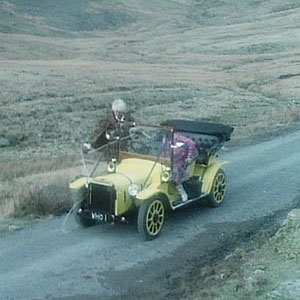 She should be a slightly aunty-ish person. She is a nice old lady who can be a bit stern and a bit frosty when she wants to be but essentially a good egg. She sees herself as the heroine of all these adventures. Things like turning up for Terror of the Zygons or The Android Invasion and nobody notices. or getting left in the Death Zone [in The Five Doctors]. I think that image where the car’s left behind in the Death Zone back when I was thirteen when that was on, I knew there was a story there. How does she get back? So I guess I just endlessly had an idea in my head of who she was.
There’s almost a PG Wodehouse Aunt about her.
Yes that’s not a bad comparison, that’s quite funny.
That sort of caring for the Doctor but also having to keep an eye out to make sure nothing quite goes wrong.
Yes and you see that she approves of some companions more than others as well and approves of some Doctors more than others. The fourth Doctor’s not a very good driver!
I did wonder if the inspiration might have been the shot, which I think is from Inferno, where she’s in the garage next to the console.
Yes, there’s bits suggested by Inferno but I’ve never been as attached to it emotionally as a story, I don’t know why.
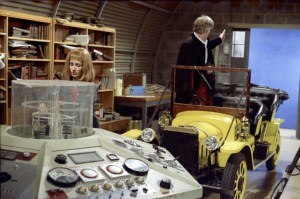 She has a bit where she says she’s never actually been inside the TARDIS and that gave me pause for thought because I thought “Why not?” And then she says she couldn’t have gone off with the Doctor and Sarah during their adventures because, yes, she could have gotten inside the TARDIS because later on in the books he had a Volkswagen, but then she says ‘Their adventures consist of going up ventilation shafts and down caves. I’d be hopeless.’ That to me is the heart of the character as well: that she’s OK so long as there are motorways or country roads!
I did wonder if you were going to use that line from The Three Doctors novelisation, where Jo’s thinking that the Doctor always said he could drive Bessie up the side of a house and it seemed to Jo that he proved it…
I’d forgotten that actually, I should have had that in. That’s one of the things that you read in the books and then you see the TV show and no, it didn’t happen.
The fact that they’re being released out of the original planned order, has that affected anything in terms of the ongoing plot line?
 No not really, because in fact it adds a level of intrigue that might not have been present in the same way. It’s just like beginning a novel in the middle of the action and then you go back, and then you go further back and then bring the characters all forward. It’s just a more sophisticated way of dealing with the story. Who are these people, going after Bessie? And then we learn a bit more about their past and previous adventures. It’s serendipity, isn’t it? One of those things that we wouldn’t have heard without the need to reorder things.
Again it’s the organic thing and I really trust in that. In storytelling, things happen for a reason and you have to be alert and listen to them.
It’s daft that in a TV show that’s about time travel and causality and history changing and different dimensions, so much of the storytelling has been ploddingly linear. It’s something that Steven Moffat was really intrigued by and wrote about a lot, that it doesn’t have to be like that. The game of consequences can be played all sorts of ways with Doctor Who and that’s one of its great joys.
Cause and effect don’t have to be in that order.
Yes, not necessarily that order. That’s great fun but I think you have to tell people all the bits. All the bits have to be there by the end and I hope with this, they are.
Bessie Come Home is available now from BBC Audio; read our review here.
Paul’s new book The Panda, The Cat and the Dreadful Teddy is out from HarperCollins in September; click here to pre-order from Amazon.
 Doctor Who News Star Trek News
 Sci-Fi Bulletin: Exploring the Universes of SF, Fantasy, Horror and Spy-fi!