X-Men: Interview: Stuart Moore (Dark Phoenix Saga)
Winner of the Eisner Award for Best Editor, Stuart Moore’s comics and graphic novel work includes the original science-fiction series Earthlight, Shadrach Stone, and PARA. He has written Web of […]



Winner of the Eisner Award for Best Editor, Stuart Moore’s comics and graphic novel work includes the original science-fiction series Earthlight, Shadrach Stone, and PARA. He has written Web of […]
 Winner of the Eisner Award for Best Editor, Stuart Moore’s comics and graphic novel work includes the original science-fiction series Earthlight, Shadrach Stone, and PARA. He has written Web of Spider-Man, Namor, and Wolverine Noir; the adaptation of the bestselling novel Redwall; and two volumes of the award-winning The Nightmare Factory. Following his MARVEL prose novels Civil War and Thanos: Death Sentence, he recently penned The Dark Phoenix Saga, an adaptation of the renowned X-Men tale – and answered a few questions from Paul Simpson…
The Dark Phoenix Saga is one of those key events in the Marvel timeline that stick in the mind for a long time – when did you first read it?
I should refuse to answer that question because it dates me…but yeah, I read it when it first came out.
Had you read the Claremont/Byrne run sequentially up to that point, or did you read it out of order (i.e. dipping into issues or storylines)?
A friend of mine had shown me the first few years of the book, most of which was drawn by Dave Cockrum, before John Byrne came on board. I missed a few issues after that, but by the time Jean Grey met back up with Cyclops, I was firmly on board.
It was pretty mind-blowing stuff…extremely intricate subplots that ebbed and flowed, harsh character conflict, and a more direct use of large-scale, cosmic science fiction elements than I’d ever seen in superhero comics. Plus, of course, Chris’s insistence on using as many female characters as possible. He was way ahead of his time, in so many ways.
 Why do you think the story resonated so much with the readers back in the day – and why is it still so well regarded that we’ve had two different live action movie treatments of it as well as the animated ones?
At its core, this is the story of an ordinary person trying to deal with infinite power. That’s a very basic, primal dilemma. What Chris and his collaborators did brilliantly was to place that power in the hands of a young woman, which ran counter to pop-culture and comics tropes of the time. It also brought up fascinating issues about the treatment of women in our time, and the rage they feel toward oppressive male authorities. Forty years later, and with a bigger canvas to play on, I tried to expand on that as much as I could.
What was the biggest challenge for you in tackling the adaptation?
There were several. One was keeping the focus on Jean, as much as possible. Scott Summers’s perspective is necessary; it grounds the story, gives us a normal person’s reaction to the events. (Well, a normal mutant with devastating eye-beams.) But I felt that, in a novel published in 2019, this had to be about Jean first and foremost.
I also wanted the Phoenix Force to be ineffable, not clearly defined. To the Shi’ar, it’s an ancient mythic force. To Dr. Corbeau, it’s a side-effect of genetic mutation. And on a very basic, grounded level, it’s a manifestation of Jean’s inner rage and frustration.
The ending was also tricky, for reasons I can’t fully discuss without spoiling the living hell out of it. People remember that ending for its shock value and emotional power, and I didn’t want to tinker too much with that. But it wasn’t planned ahead of time—this has been extensively discussed by the original creators—which means the logic behind it breaks down a bit when you really examine the events building up to it. It’s also a little dicey from a modern feminist point of view. I’ll be very interested in how the new film deals with it.
 It’s very much a contemporary take – did the plot twists and characterisation of the original cause issues bringing them into the 21st century? Was there any pushback against fleshing out the characters, particularly Emma, in light of “future” events in the comics?
No pushback to speak of. I’ve worked extensively with Marvel on their novels, both as a writer and sometime freelance editor; I have a good relationship with them, and they trust me. I did flag the new subplot involving Wolverine and Professor X, because it’s a little harsh. But apparently it fit the characters well enough that they were fine with it.
I’ve written a bit about the Emma stuff elsewhere…that was very important to me, partly because she’s become such a rich and beautiful character over the years. Mainly, though, I wanted to seed the hints of her future relationship with Scott Summers because it deepens the understanding between Scott and Jean. Just as Jean is tempted by the Phoenix force and by Jason Wyngarde, in this version Scott is tempted as well. Their love for each other is deep and enduring, but they’re human. Things happen.
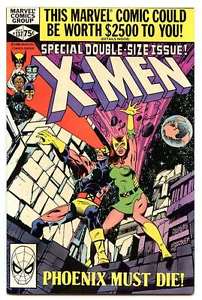 There are certain key images that stick in the mind from the graphic novel – did you approach any of them differently, knowing how they’ve become so central to the X-Men mythos (e.g. Jean’s rebirth, her death etc.)?
Those set-pieces are so powerful and beautiful—I kept most of them, and worked in the new material around them. The Earthbound battle against the Phoenix, on the grounds of Jean’s family home, is one of the finest superhero team scenes I’ve ever read. Every character has their moment, and everyone has a different relationship with Jean. I tried to preserve the power of those scenes.
What part of the book are you proudest of?
Well, I liked having Emma Frost describe herself as a fourth-wave feminist.
I also had fun with the cosmic sequences; that’s candy to me. Most of all, though, I enjoyed getting inside Jean’s head—showing her as a strong person, but one who’d never really had to make a decision about her own life. Until now.
X-Men: The Dark Phoenix Saga is out now from Titan Books; click here to order from Amazon.co.uk
 Doctor Who News Star Trek News
 Sci-Fi Bulletin: Exploring the Universes of SF, Fantasy, Horror and Spy-fi!