Interview: Robert J. Sawyer (2016)
Robert J. Sawyer’s most recent SF novel, Quantum Night, was published earlier this year, and the multi-award winning Canadian author chatted with Paul Simpson about the background to the story […]


![[REC]: Interview: Paco Plaza and Jaume Balagueró](https://i0.wp.com/scifibulletin.com/wp-content/uploads/2021/01/rec_012.jpg?fit=1200%2C900&ssl=1&resize=200%2C200)



Robert J. Sawyer’s most recent SF novel, Quantum Night, was published earlier this year, and the multi-award winning Canadian author chatted with Paul Simpson about the background to the story […]
 Robert J. Sawyer’s most recent SF novel, Quantum Night, was published earlier this year, and the multi-award winning Canadian author chatted with Paul Simpson about the background to the story – as well as sharing his thoughts on the process of writing, and the current state of play of publishing…
I felt Quantum Night was a more theme and philosophical driven book than plot driven, particularly coming after Triggers and Red Planet Blues.
I had a great time with ABC adapting my novel FlashForward, and I think for a time I was a little too wrapped up in trying to think of things that I thought might easily sell to Hollywood. Even with FlashForward, which was a very philosophical novel about fate vs. free will, it was always that stuff that was being toned down or thrown out. They took FlashForward the novel and turned it into a conspiracy theory thriller as a TV series.
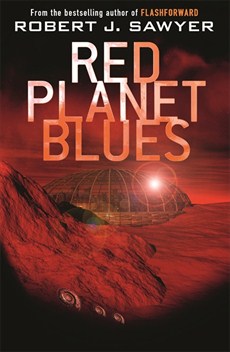
I really wrote Triggers very much hoping that somebody would pick it up as a Hollywood property, and the same for Red Planet Blues. I have a great fondness for hard boiled detective fiction. It was a legitimate love of mine, it wasn’t something that I did in any kind of calculating way, but I knew it was a different kind of book than my audience was used to.
And I heard about that! You get letters, you get feedback, you get reviews. Particularly with Red Planet Blues, people said, “This is great fun, it’s a romp, we really enjoyed it but when are we going to get a real Rob Sawyer novel?” I took three years to do Quantum Night but I wanted to give the biggest and best Rob Sawyer novel that I could. My editor in Toronto says it’s my best yet, you’re saying it’s my best, at least of my recent work, so I think I succeeded in what I set out to do, hopefully.
This is a book that you’re thinking about the themes when you’re not reading it, rather than wondering what the hell’s going to happen next to the characters. When you were plotting the book, did you work through all the reveals for the characters beforehand, knowing who and what they were before you started writing, or were the characters growing as you were writing them?
 Jim was a well constructed character before I started writing the book. I understood that I wanted to riff off Peter Singer (right), the real, famous utilitarian philosopher, so an awful lot of who Jim was or what he did, came out of dealing with that.
The other characters? No, they grew organically as I was writing them. I was as surprised as some of my readers have been about the revelation of Kayla’s past but I think it was organic. Of course once you write that, you go back and you revise what you’ve written previously to make it seem organic and logical when it happens, but it had not been my initial intention that would be the case.
Jim was very much constructed as the lecturer with the back story, the utilitarian philosophy, thinking that he’d almost died twenty years ago. All of that was very carefully worked out to get me through the philosophy – not the plot, but through the philosophy that I wanted to cover. Menno, Kayla, Victoria were the ones that came in when I was writing the book.
For a while, Victoria and Kayla, the two researchers, were one person. I split them in two for a variety of reasons, one of which was there’s a paucity of female scientists in science fiction, and I really did need two different specialities. I thought, “What the heck, let’s have two female scientists and let’s have them talk periodically over the male scientist’s head.” I rather enjoyed when Jim would say to Kayla’s son, “let’s go play while the women talk.”
There definitely was a feel of “we’ll play while the grown ups are talking”…
Exactly! I know lots of very great people in all sorts of scientific disciplines and we still use this phrase, “I’m not a rocket scientist”. Rocket science is really simple Newtonian mechanics. What we really should be saying is “I’m not a quantum physicist. That’s over my head.” That’s what we were delving into here.
It’s perfectly reasonable that an experimental psychologist and a Ph.D., a tenured professor, a guy who has a reputation internationally in his field, still would have the mathematics of that go over his head. It goes over my head; I’m not surprised it went over his.
 In the early pages, with the science, the characters pulled me through so that when we got to the third act, and the circle idea, I understood enough even if I didn’t get the mechanics…
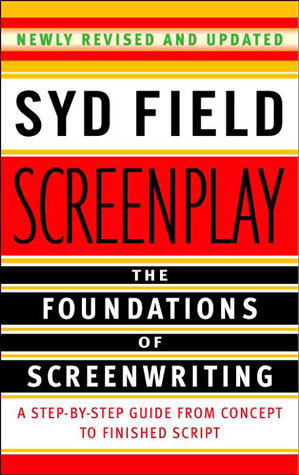
You used the phrase “the third act” in your review as well. My training is in scriptwriting, my degree is in broadcasting and I did diagram the book out per Syd Field’s classic three act structure to make sure it worked that way. I don’t think it is the only template for telling a film story, let alone any other kind of story, but it’s a fascinating exercise in thought mechanics to see if you are hitting the key points at about the right percentages of the way through the story.
I freely admit that I would love to see somebody make a movie of this, and the easier it is for somebody else to look at it and say, “okay it fits the paradigm, the Syd Field model”, the more likely this is to happen.
The pace changes as the book progresses. What starts as a personal investigation leads into this much wider scale which almost felt “Marvel end of movie” scale, with characters who are so far from Jim and Kayla – Putin, the US President…
 I think that’s a valid comment. My all time ultimate science fiction film is 2001: A Space Odyssey. Unlike almost any other modern film, it comes up with title cards “THE DAWN OF MAN” “JUPITER MISSION 18 MONTHS LATER,” “JUPITER AND BEYOND THE INFINITE”. And when it goes into that third act – JUPITER AND BEYOND THE INFINITE – it becomes a completely different film, and you are either ready for that quantum leap, if I can use a phrase, of going to a whole new level with the story, or you’re not.
I’m having an interesting debate with the producers of a TV series I’m developing here in Toronto: I’ve outlined the entire first season, eight episodes, and they said, “We think we’re going to send the first six episode outlines out to backers because it gets so cosmic and big at the end. It’s brilliant, everything comes together perfectly, but we’re afraid that in outline form it will just so overwhelm them.” My attitude is the flipside, which is of course that if anyone had actually known that the creators of Lost had no real ending for it, they never would have greenlit the show. We have a real ending for this.
It ramps up – I think that’s the thing that science fiction does. I have many definitions for what science fiction is, depending on what point I’m trying to make, but one of them is that it’s the fractal literature. It is the only kind of writing that is interesting no matter what level of magnification you bring to it. See it as a little tiny moment in the novel: Jim never even says to his wife back when he was married, “we can’t have this kid”. He just has this look and he brings up another topic. A little tiny moment in his marriage shatters because of it. Then pull way way back to the whole transformative, transcendent ending of the book…
Hopefully it works on what[ever] level of magnification the reader looks at it. Only science fiction can do that, and not all science fiction does.
 The book has a definite currency – as I was reading it, Putin pulled his troops out of Syria, and I was thinking, “Where did that come from…. Hang on a minute… This feels as if someone has been playing around in Winnipeg…”
I spent a lot of time in Winnipeg when I was writing this book, about half a year on and off over ten trips. The real world anchoring is very important to me.
The one that I don’t want to happen to my science fiction is for it to be dismissed as crazy fantasy stuff. You’ve seen it in the press: “It’s just science fiction, crazy science fiction stuff”. They conflate science fiction and fantasy, and at every point where I can, I ground it so people can’t dismiss it. I actually think that’s a paradigm shift for science fiction.
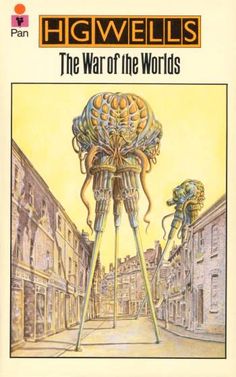
When HG Wells wrote The War of the Worlds, he’s talking about British colonialism; with The Time Machine he’s talking about the British class system – because he couldn’t talk about them directly. But what topics can we not talk about directly in mainstream writing? The Best Picture Oscar this past year went to Spotlight, a film about exposing organised paedophilia in the Roman Catholic church. If we can make a blockbuster film about that, we can talk about anything now.
Science fiction used to be the literature of metaphors and disguises, of parables and sneaking up on the reader what it was you were talking about. That necessity is no longer there. People will willingly engage with any topic you want to talk about.
Given that, I think the new paradigm for science fiction has to be: “here, let me convince you I know what the real world is like, and here’s an extrapolation that, because of that grounding, you should take seriously.”
Johnny Carson, the great American talk show host, used to have a simple line about a joke: “if they buy the premise, they’ll buy the bit”. If you ground them enough in reality, then no matter how outlandish the punchline is, they’ll go with it. But if you lose that reality, if you can’t get them to buy the premise, no matter how absurd the joke might be, you’re lost. I think that’s absolutely true of science fiction too.
 People in a comedy sketch or series can’t know they’re funny…
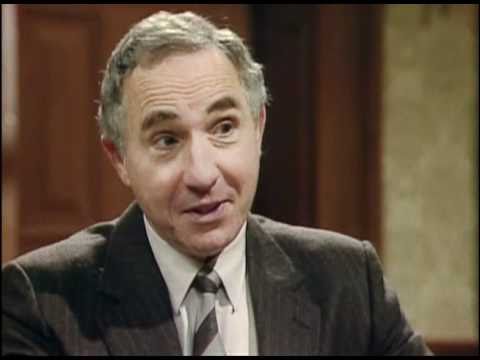
Which is the most unrealistic thing of course. I love situation comedy. One of the great situation comedies was the original version of Yes Minister and the thing I loved about Nigel Hawthorne [who played ultra civil servant Sir Humphrey Appleby] was he’d allow himself to smile at Sir Humphrey’s wit. He realised that Sir Humphrey’s lines were funny but going over the head of the Minister, and so he allowed himself a little smile. You never see that in American sitcoms. “That’s very brave, Minister” – and he knows he’s said, “You’re out of your f-ing mind, Minister”. The actor who allowed himself to know he was funny because he was brighter than the character he was dealing with – that was a charming variance from the usual sitcom formula.
One of the things I’ve enjoyed consistently about your work is that your characters are in situations that take them completely outwith their own experience, but they never react in a “oh we must be in a movie” sort of way…
Yes absolutely. There were two things that drove that home to me. First, I was very lucky, early on I had a writer mentor in Toronto who sadly is not a particularly well known writer these days, Terence M. Green – who went on to be a two time World Fantasy Award nominee. He had a decent career for about a decade. When I was writing in my twenties and I’d have a character scream, he’d say, “Nobody screams. They might scream if they’ve forgotten the anaesthesia and they’re opening up your chest for open heart surgery. Otherwise you’d just look away – you’d have no reaction whatsoever.” I thought, “That’s right, I don’t think I’ve ever seen anybody scream the way they scream on TV.”
 And then The Empire Strikes Back comes along and Darth says, “I am your father” and Luke has this hissy fit of a four year old boy, screaming and stomping his feet – “No! That can’t be true!” – and I thought, my friend was absolutely right. Luke should have just been gobsmacked – to use a good UK phrase – instead of histrionic.
I did learn. I didn’t know it intuitively, I was taught that less is more in characterisation. Best lesson I’ve ever learned.
Do you think a lot of writing skills have to be “caught not taught”? I’ve maintained for years that a lot of editing skills can be honed, but the core ability has to be there.
I have taught creative writing a fair bit, including at the University of Toronto, and I share your concern – in fact once I taught a week-long writing workshop and one of my students had a bachelor’s degree in creative writing from York University, which is one of the better known Creative Writing Programs in Canada. I said to him on the second day, “I know you’ve got a bachelor’s degree, but you can’t write. Let me show you what’s wrong with this: this is redundant, this is using the same word over and over again, instead of different language; this sentence could be half the length it was. This character is superfluous.”
We went through it, and at first he was quite pissed off, but at the end of the week he actually stood up in front of the class and said, “I want to thank Rob because nobody ever cared enough in the whole process of four years of getting my degree to actually tell me what my faults were.” He’s gone on to win two Aurora awards, Canada’s top award in science fiction, and I’m delighted with his progress.
But that guy had some knowledge of plotting, characterisation and dialogue – could you take someone off the street and do that?
 I do not think you could do that. One of my best friends, a very nice lady named Sally, is a very gifted musician. Practically the only time we ever had an argument is when I said that there is such a thing as talent. She said, “No, there’s only skill which can be trained in.” But if you don’t have it, if you weren’t born with it, you won’t be able to do it.
There’s a vast list of things that other people do with great ease that I can’t – I’m lousy at sports, I have poor hand-eye coordination, I am not a gifted singer. Malcolm Gladwell promoted the idea that it takes 10,000 hours of practice to become expert at any human activity, and that’s the core of his non-fiction book Outliers. You could give me 10,000 hours of practice at being a rock musician and I would never be as good as somebody who was born with that talent.
I do believe there is talent. And I do believe you can steer people in the right direction. I was at a science fiction convention in New York – Lunacon – and there was a section called “Writing for Teens”. I told them they had to change the name. I don’t do that. The woman in charge said, “No, it’s for teens who want to write”. I said, “Call it that”. So they changed it, and this 18 year old woman came. She was the only teen who wanted to write who showed up – it was the middle of the afternoon on Friday – and I spent an hour going over with her. She said, “That makes sense, that makes sense.”
 The last thing I said to her was, “For Godsake, don’t waste your time writing fan fiction”. She was askance – because that’s what she does. She kept saying, “I don’t have time to practise, I’ve got school, a part time job.” It turned out she was dissipating all of her creative energies aping characters from her favourite TV shows. I said, “Just walk away from that.”
I love Star Trek: I had a cameo in Star Trek Continues. It’s great, I love it. I love talking about it. But spending my whole life writing Star Trek fan fiction – or even Star Trek licensed tie in novels – would have been, as Mr Spock once said, a waste of material. My first best destiny – any creative person’s first best destiny – is creating original work, not aping other people’s style.
Your books are known for their detailed research; do you sometimes find when you’re researching topic A you find something that sidetracks you onto topic B, or do you find it easy to stay on focus?
I actually trust my instincts, so if something intrigues me, I’m quite willing to follow that and see where it leads.
Sherlock Holmes, one of my favourite fictional characters, famously knew nothing about astronomy – it was of no use to him, it had no applicability to his narrow focus – and in one of the stories Watson is stunned that Holmes didn’t know that the Earth revolved around the sun instead of vice versa. Whereas his arch nemesis, Moriarty, all we know about his academic background is that he wrote a paper called ‘The Dynamics of an Asteroid’. He – the criminal genius, the Napoleon of crime – did think there was some applicability.
Who knows which approach is right? I’m more like Moriarty. I’m fascinated by everything.
I gave you one of my definitions of science fiction – fractal literature – and another is that it is “the literature of intriguing juxtapositions”, where you take things that would never normally be side by side, hang them together and see what sparks fly. In Quantum Night it’s experimental psychology, the rise of Hitler – and whether something similar could happen today, or the fact that something similar is happening today – and quantum mechanics. Bang these things together.
[That comes from] going down tangents and following my nose wherever it leads, rather than saying, “I’m supposed to be researching some recondite aspect of quantum mechanics today and I can’t allow myself to be distracted”. I don’t think that’s an effective way to do it.
The research is my favourite part. If I could be paid just to do the research, that’s all I would do all day long – but on my agenda, not on somebody else’s. Obviously there are jobs for professional researchers, but since nobody will just pay me to follow my nose wherever it leads me – through Wikipedia, through science conferences, wherever it happens to be – I write books to support that habit.
The nature of publishing is changing…
 I get Publisher’s Weekly’s daily newsletter, which has the highlight stories, and today the lead story is that Penguin Random House, my publisher, had record profits last year. I love Penguin Random House but advances are getting smaller, they’re taking the lion’s share of eBook royalties, they’re offloading on to authors all the promotional duties for their own books and in many cases – and I have excellent editors, so I don’t want to disparage anybody – offloading much of the editorial process into critique circles. The manuscripts come in in much better shape than they did 20 years ago, I imagine. And they’re having record profits. Of course they have record profits, because they’re keeping it all!
I’m now twenty-five years a published novelist, and when I started with my first novel I submitted a word-processed manuscript, but the publisher manually re-keyboarded that into their typesetting system. Every single economy that the digitisation of publishing has produced in the last quarter century, every penny of that has been retained by the publishers. There’s not one time in that 25 years that they’ve said, “You know what? Let’s disperse some of that new found money back to the authors.” Instead it’s always, “Let’s cram the author tighter and tighter.” It’s blindness on the parts of the publishers who keep thinking authors have no alternative. We have tons of alternatives now.
One alternative is self-publishing which was anathema when I started out 25 years ago; for fiction writers you had to be a benighted fool to think you could possibly self-publish a novel successfully. But now Hugh Howey and Andrew Weir – the list goes on – are millionaires because of their success in self-publishing.
Hugh was in the right place at the right time. There was a hunger for science fiction, cheap science fiction, inexpensive content. You’d broken the bank buying your Kindle – Kindle first came out at $279US – and you’re looking at content to fill it with: it’s either cheaper free public domain authors or here’s a guy selling his book at a fraction of what you would pay for one of my books as an eBook.
Hugh’s a very nice guy – he’s an evangelist. The problem with his evangelism, all due credit to him, if that he doesn’t recognise that he’s an outlier. He says everybody can do this. Maybe five years, you could; a handful of other people got in when there was a huge hunger for cheap science fiction. But now the market is flooded, and most of it is unreadable in the 99c range in the Kindle.
 And you’ve published Quantum Night as an eBook yourself.
I’m quite candid about this. Right up to Red Planet Blues I was being published in the UK by Gollancz. They let me go, so I didn’t have a UK publisher. I had a separate Canadian publisher, and a separate American publisher, and nobody doing the British rights. I started thinking about that. There are all sorts of places all over the world where people read books in English that aren’t Canada or the United States: Australia, New Zealand, India, all over the Caribbean and so forth.
Looking at my contract, lo and behold, my Canadian publisher had Canadian rights; my American publisher had American rights including eBooks in their separate territory, but I’d not sold anybody the world rights. There was a somewhat awkward conversation with my agent, but I basically said, “Given that we haven’t managed to find another UK publisher, I’m going to publish this myself.”
I decided to price it aggressively. It’s £2.99 in the UK, €3.99 or the equivalent in Australia dollars rounded to the nearest .99. People say it’s so much cheaper than the Canadian edition which is about $18. But I get about the same amount of money per copy and I do not think that print publishers bring three quarters of the value to an eBook when they do it. They’re all pretty adamant that the split should be 25% of net royalties to the author, 75% of net royalties to the publisher. All I’m asking for is the same worldwide.
The eBook edition is the one that has been worked on by you and the editors at the Canadian and American publishers, but you are publishing that: normally their work goes into the product that goes out under their imprint…
 That’s an interesting point, I suppose, and yet for decades I’ve sold the rights. Gollancz was not an editorial participant in my books that they were publishing and they weren’t licensing typesetting from Ace in the United States. There’s not a word in my novel written by any of my editors – none of my editors ever change my language. Traditionally, people have turned their finished manuscript to foreign markets. The fact that it’s now the e-manuscript [is irrelevant].
I spent three years writing the book. Editors at most publishing companies are editing a minimum of one book a month; at others, two or four books a month. I brought 150 weeks to it, and somebody else brought four.
It is definitely the edited text and they are acknowledged, my American and Canadian editors in the acknowledgements there, but at my stage in my career, the edits are no more than suggestions. Nobody has ever said, “Here’s what the line should read”. In this particular novel, there were scenes that I cut if they said, “Do you really need this scene?” It’s all good feedback.
This idea that you take your manuscript and sell it in other territories after it’s sold in the United States and Canada or Great Britain? There’s nothing new about this. Very often in Canada, we’ll get a sublicensed edition of a book that was first published in the UK, not sublicensed from the UK publisher but from the author or the author’s agent. I don’t think it’s nefarious.
You’re a rare person going on record about this…
 I used to be the President of the Science Fiction Writers of America. I have a history of being active in authors’ advocacy. I am a member of the Authors Guild and the Authors Guild in the States have been articulating their fair contract initiative. They’ve been going point by point after the fact that advances are often paid more than half after the book has been done more than a year; that advances are smaller than they ever were; that option clauses make authors effectively indentured to their publishers; that eBook royalty rates are egregiously unfair. I share their concern in all these things.
I have been lucky – partly because of the FlashForward TV series and other film and television work that I’ve done over the years, and also because I have a lucrative side line as a keynote speaker at science and technology conferences, to have what is impolitely called fuck-you money. I don’t have to take, “We’re going to pay you the same advance that we’ve paid you for 25 years and we’re going to claw back even more rights and we’re going to do this that and the other and you have no other choice because it’s either this or go flip burgers”… I have a choice and I am not in any rush.
I love my editor at Penguin Canada, I love my editor at Ace in the States and I’m hoping that way up high the publishers will recognise that there has been an unfortunate tilt in one direction in what was traditionally a win-win partnership arrangement.
Any hints as to what you are going to tackle next?
I always, always, always try to do something new each time.
 Doctor Who News Star Trek News
 Sci-Fi Bulletin: Exploring the Universes of SF, Fantasy, Horror and Spy-fi!