Interview: John Scalzi
If there are still Renaissance men around, John Scalzi has to be one. Best known as the New York Times bestselling author of the Old Man’s War series, he has […]



If there are still Renaissance men around, John Scalzi has to be one. Best known as the New York Times bestselling author of the Old Man’s War series, he has […]
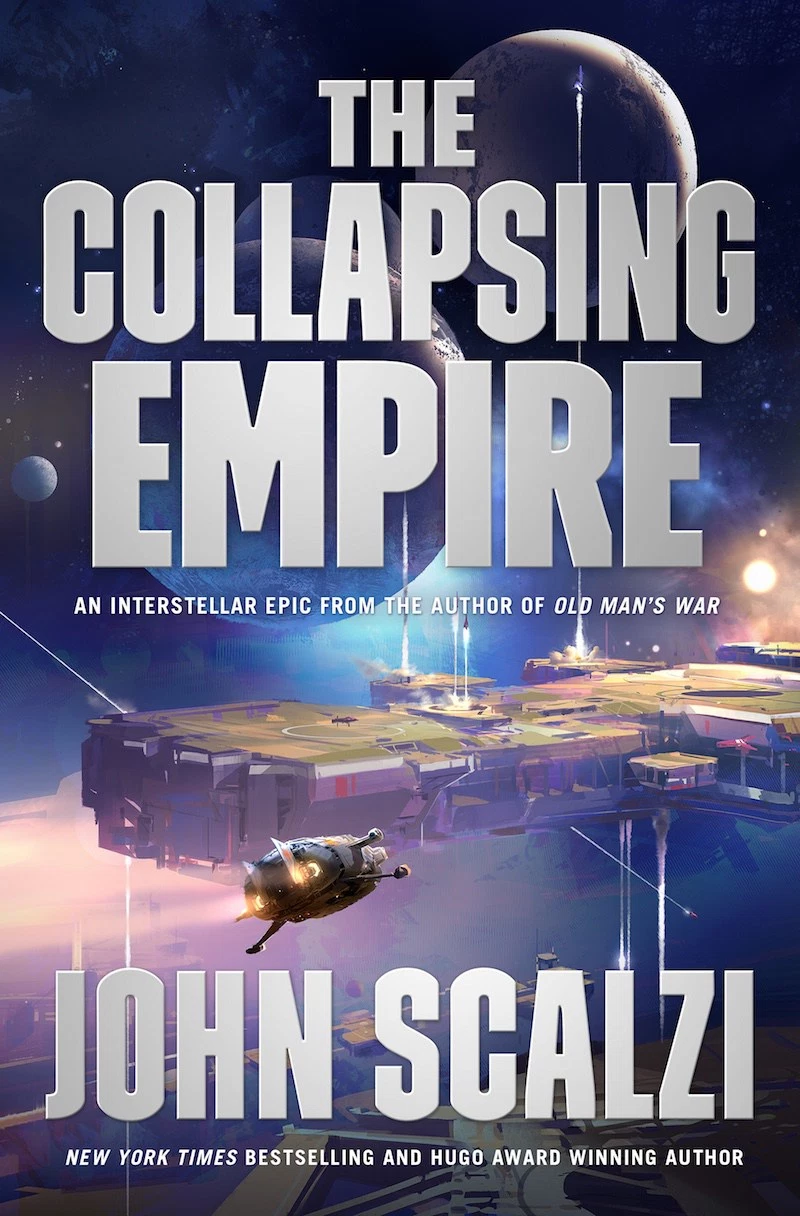 If there are still Renaissance men around, John Scalzi has to be one. Best known as the New York Times bestselling author of the Old Man’s War series, he has won three Hugo Awards, the highest honor in science fiction. Before that, he wrote on a number of topics including finance, video games, films, astronomy, and writing. He has been a newspaper columnist, a writer for America Online, the president of the Science Fiction and Fantasy Writers of America, a fundraiser, and a creative consultant for the TV series Stargate Universe. His blog Whatever (whatever.scalzi.com), which he started in 1998, gets up to 50,000 visitors daily. And he is quite the negotiator, making nationwide news in 2015 for signing a 10-year, 13-book deal with Tor worth $3.4 million. Anthony Aycock chatted at length with him…
At a recent science fiction convention, you talked about how, for your first novel, you picked a subject you weren’t passionate about just to see if you could do it, and it didn’t matter if you failed at it. Is that something you would recommend to new writers?
I kinda do. There are a lot of writers who decide they are going to write a novel, and the idea they have is an idea they’ve had forever, something that’s very, very important to them. And that’s basically like saying I’ve just picked up this guitar, and now I’m going to play the guitar solo from “Crazy Train” in front of 50,000 people.
And so, for me, I wrote that novel, and I called it my “practice novel.” The whole point was not to sell it, not for it to be good, but simply to see if I could tell a story over a novel length, which is about 90,000 words. I picked a story that was interesting and would be fun to play with, but one that, if I failed miserably, I wouldn’t be beating myself up.
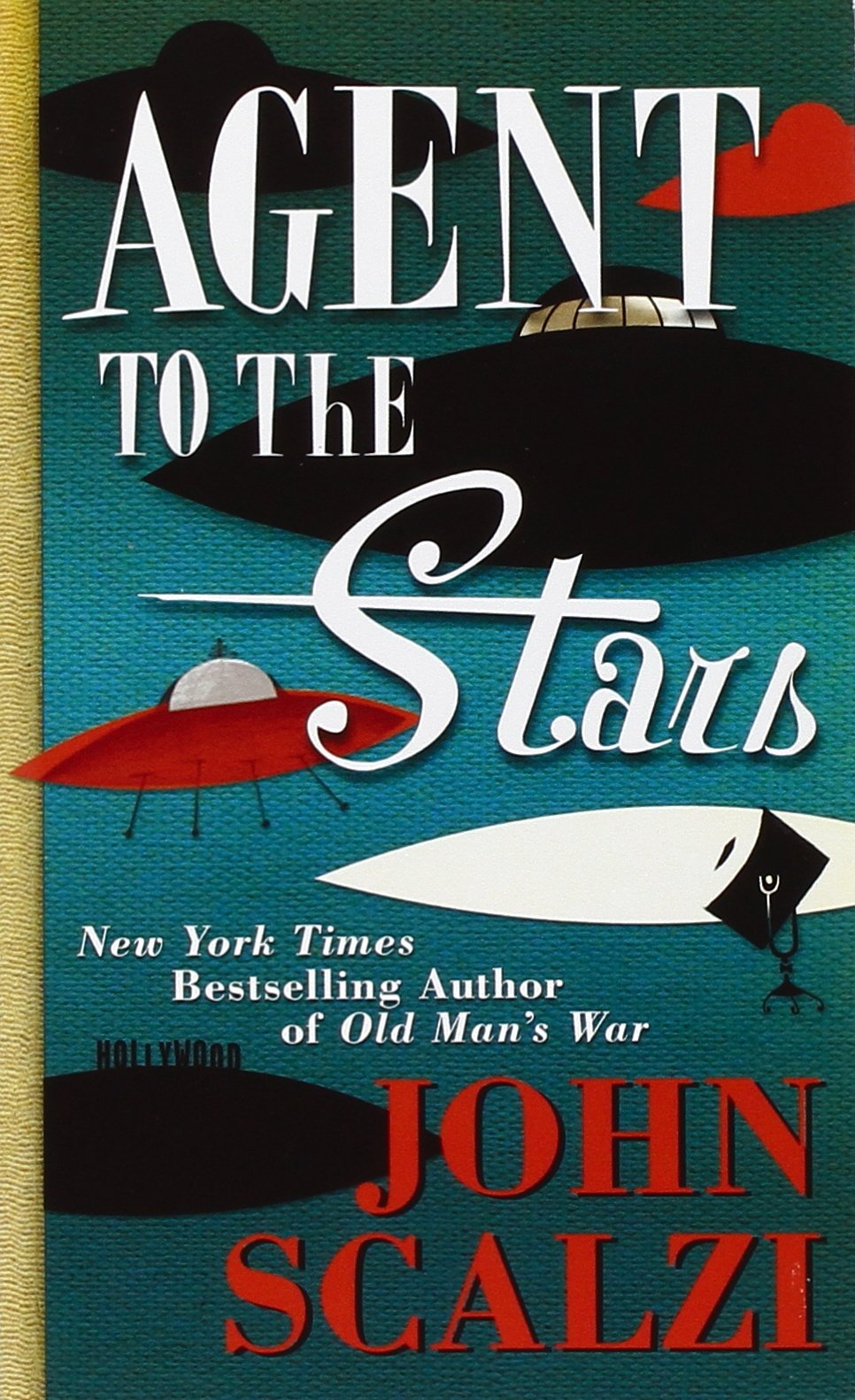 What was that story?
The idea was that aliens come to earth, want to reveal themselves, and seek Hollywood representation to do it. It was called Agent to the Stars. [This became Scalzi’s second published novel after his debut, Old Man’s War.] The thing is that, like I said, it’s a great idea and fun to think about, and my desire to write or my desire to tell stories wouldn’t take a hit.
So I absolutely recommend that, the first time you try a novel, just like the first time you practice guitar, you do it in a room without other people around. You remove all the things that would give you pressure except the one thing you’re really going to do, which is write the whole thing. And once you write the whole thing, you go, okay, what do I do well now? What do I need to work on? You learn these things in a low pressure environment.
There is a thing called the National Novel Writing Month. Happens every November, and the whole thing of it is, you get a whole bunch of people to write a novel, about 50,000 words, in the space of a month, and the whole point of it is not to be brilliant but just to write that big chunk of words to see if you can do it. That is not a bad thing at all. It demystifies the writing process and puts the focus on getting the story out rather than having it be this perfect crystalline entity.
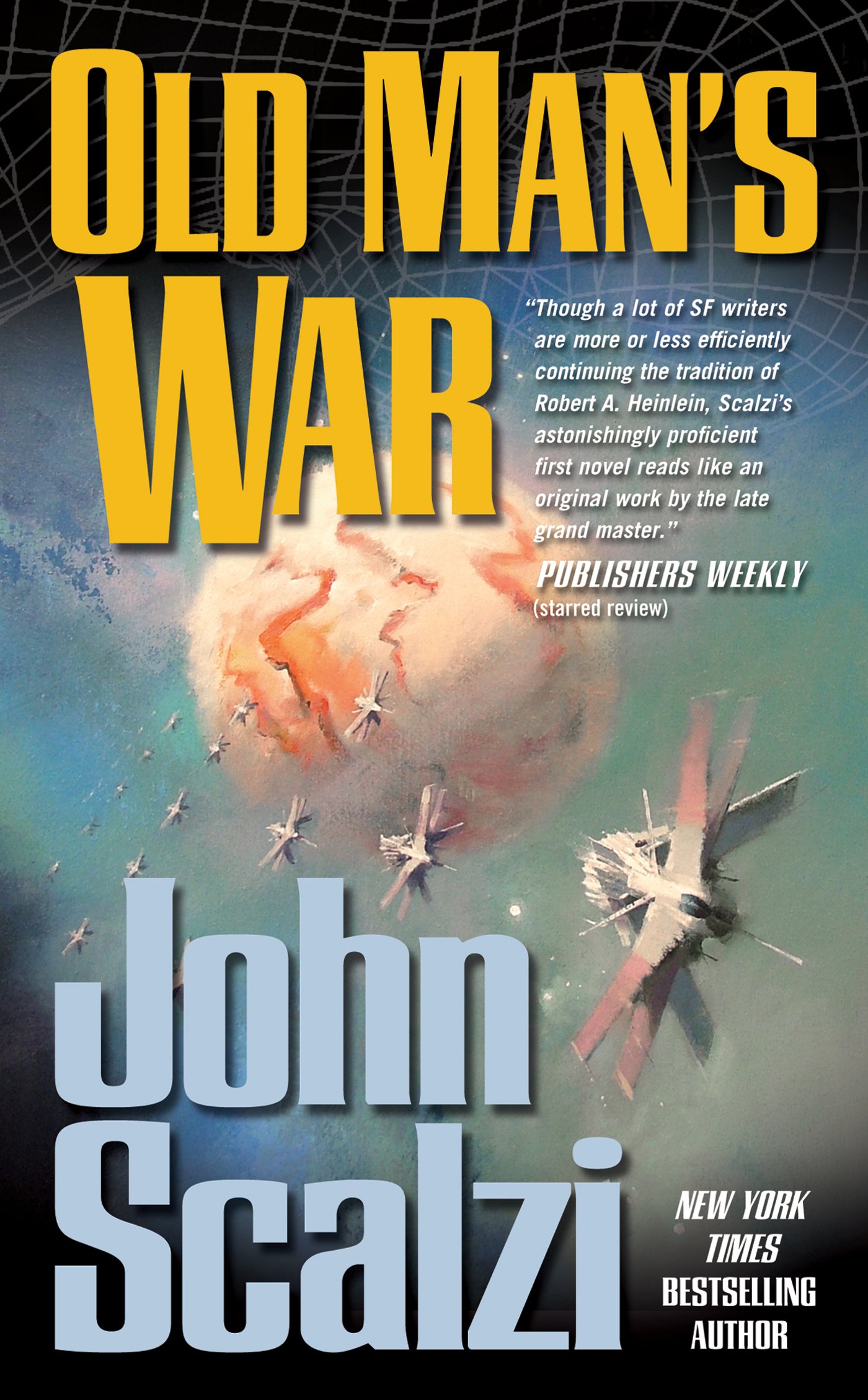 I read an interview with you in which you talked about the writing of Old Man’s War, and you used the word “mercenary” to describe your approach to writing military sci-fi. That is an unromantic approach to a profession that is highly romanticized in our culture. How would you respond to someone who accuses you of robbing literature of its romance?
Guilty, guilty. Put me away. I was a journalist before I was a novelist. I was a consultant for corporations. I was a freelance writer for magazines and newspapers. I did this as a job, my only job. So when I approached it as a novelist, in addition to the creative side, I also looked at it very much as, how do I do this as a business?
Novels take a long time. They are a lot of work. I wanted to make it worth my financial while. Otherwise, I wouldn’t write as many novels as I do. I would probably still write because, when I’m not writing for work, I’m writing for fun because that’s what I like to do. Be that as it may, I don’t want to have to do anything else but writing, so I approach it as a business.
Now, when I said I was “mercenary” about it, here is what I did. I went into a bookstore and I was like, Okay, I’ve written my practice novel. I know that I can write a novel. Now I want to go in and see what kind of science fiction was selling. It seemed to be a lot of military science fiction. Having established that seemed to be the place to go, what I then did was ask, what would be the novel in that genre that I would like to write that I would also, for example, like to read?
And that’s the thing. One of the things that writers get asked a lot, as I’m sure you know, is where do you get your ideas? The problem is not getting ideas; it is deciding which ideas you’re going to use. I have tons and tons of ideas, but ideas are easy. Implementing them is hard. So for me, when I’m looking at writing as a business and deciding what in that genre I’m gonna do, it wasn’t that I did it in a sort of bloodless way. What it meant was, what kind of cool ideas can I come up with in this genre now? And a whole bunch started coming in.
So that’s how I look at it. At any particular point, there might be opportunities to do things in a commercial fashion or that have commercial potential, and you marry them to the vast range of ideas you have going on in your brain. There will usually be something that lines up. I have more ideas—and I suspect many writers have more ideas—than I can write in a lifetime. So being able to look at it from a business point of view and marry it to that vast store of ideas is not a problem. You gotta have both, if you want to be a professional writer. Some people don’t.
 For those who do want to be professional writers, what are a couple of things they can do immediately to start treating writing as a business?
For one thing, they need to systematize on the back end. What do I want to do? Short stories? Novels? Make a plan of product. Make a plan of how to get it out there. Am I going to self-publish? Am I going to get it published through regular publishers? For short stories, which markets do I attack? And you just basically plot it out. A lot of that strategizing is something you can do very easily.
The other thing to do is to start paying attention to it like you are running a small business. Know what your expenditures are. Know what your income is going to be. Take the end result of what you have coming in and take some of it and put it away as a buffer against things that are going to happen in the future.
Another thing is not to overly romanticize it. There are a lot of people who would be like, I’m gonna be a writer, and I’m gonna quit my day job so I can write. You’re an idiot. Your day job gives you money, gives you security, gives you health insurance and a 401K, and it can help you establish the thing you want to do—be a writer—without going into a financial hole. That is a dispassionate way of looking at it, and a lot of people don’t want to hear that. It’s not a romance of writing, but it is the romance of not starving. Suppose you said, instead of wanting to be a writer, that you wanted to be a bluegrass player or a sculptor. Would you quit your day job to be a sculptor? Probably not.
 Something else you have said is that you are good at two things: writing and schmoozing. What can writers do to become better schmoozers?
A lot of that is knowing who you are as a person. It is not difficult for me because I like talking to people, and I seem to have a talent for making people comfortable. Not every writer has that. The more you understand yourself, the better you can effectively communicate with other people.
For example, someone who is not a natural schmoozer should not be going out and going, “Hey, how you are you, it’s great to meet you.” They will be miserable, and the people they are trying to schmooze will figure out rather quickly that they’re miserable, and that would be bad for everyone.
Instead, they should put themselves into an environment where their natural talent for communicating comes to the fore. So, if you’re better at one-on-one communication rather than schmoozing, then you do things where you don’t have to be in front of a lot of people. Like maybe do a podcast or a video log.
The marketing aspect of writing is very important—the schmoozing, the social media, the interviews, all that sort of stuff. But the thing is, not one size fits all. And it never has. There are people who are very good at interviews or book tours. I enjoy the hell out of book tours.
I’ve heard other writers say that they’re miserable.
Right! Exactly. And so, for them, it’s not the best way for them to do publicity. They should find the things that work for them. One of the reasons I get put on tour so much is because I’m good at it. There are other writers who are not, but they have skills that I don’t. So it all balances out. The important thing is figuring out who you are, what your tolerances are, and what you are interested in doing in terms of promoting yourself. When you find out what those are, then master those.
 Similar to book tours are conventions, which you also do a lot of. How did you get started doing conventions?
My first convention was Torcon 3 in 2003. [Held in Toronto, Ontario, it was the site of the 61st annual World Science Fiction Convention.] I had sold Old Man’s War, and I had never been to a science fiction convention before, so I figured I should go and find out who my audience was. My editor introduced me to some writers, which helped. And I also don’t have a problem going into a room and introducing myself.
I let them know ahead of time so they could put me on panels and stuff. It’s not that difficult. If you are a writer, find the people in charge of programming, send them an email, and say you’re a writer and you’re happy to do programming, and they’ll give you one thing, maybe two the first couple of times, until you become a known quantity and they know you’re not going to do something stupid.
Why have conventions become so popular?
People like to meet with other people. It’s not just science fiction conventions that are popular. There are conventions of people who like automobiles. There are conventions for baseball card collectors. There are conventions for people who like politics. Science fiction is not unusual in the idea that people get together and celebrate the thing that they really enjoy. I think it’s just natural human behavior.
What has changed is that conventions have become more popular with more than just the “geeks.” For example, comic book conventions are more popular than they were just ten years ago. It’s a good business model for getting a bunch of people together. They persist because they make sense.
 Lots of crazy things happen at conventions. Do you have a crazy fan story?
No, I don’t really. Most of my fans are actually fairly decent human beings. I’ve never had anyone really sort of go over the line with me. And I think part of it is I have the reputation that, if someone were to go over the line, I would say, “Why are you doing that? Stop it right now.”
The closest thing to that was the year Zoe’s Tale was nominated [for a Hugo]. I was signing in Montreal, and a guy came up with a copy of Zoe’s Tale, and he was like, “Well, here’s Zoe’s Tale, and it’s been nominated this year, and I don’t think it should have been nominated. I don’t think it’s really that good, but it did get nominated, so will you sign it?” And I was like, “Yes! I will sign that book for you.”
Because what can you do? It was clear the guy was operating on the spectrum in some sort of fundamental way. So it was hard to take offense. But also, I fully accept that not everybody thinks that one of my books should be on a Hugo ballot.
I’m sure you’ve had other people go to pieces over meeting you. Who are some people you would go to pieces over?
It’s hard to say. I was a film critic before I was a novelist, right? And part of my job was to interview filmmakers and movie stars.
 So you have experience meeting people like that.
Yeah. So what happens is, when I meet people who I admire, I have training not to lose my brain. But, for example, the very first party I went to at Torcon, I struck up like a twenty-minute conversation with Robert Silverberg. Not that I knew it was Robert Silverberg at the time, right? I got to talk to him a lot over the years because he knows who I am and we’re friends. I was president of SFWA for a while, and he is a Grandmaster, and we’ve had many occasions to sit down and have a drink . And every single time, he takes his leave of me and I’m like, Oh, that was Robert Silverberg! How awesome is that?!
So there are writers who I do intensely admire. Like I said, I don’t tend to go to pieces around them simply because, one, the journalistic training, and second of all, speaking as somebody who has been on the other side of it, I much prefer that the interaction not be someone completely losing their mind because that is not a good representation of who they are as a person, and who they are as a person is what’s interesting to me.
I would love to meet Ursula Le Guin. She is super fabulous. And I met John Woo once, which was very cool. But, by training and by temperament, I tend not to lose my shit.
You just talked about having been a journalist and film critic. How did you develop your critical voice?
A lot of it was just by doing. I got the job when I was twenty-two, and so what that meant was, at the very beginning, it was less about my particular voice than the voice of critics I admired. For example, Roger Ebert is a very good example of someone I leaned on a lot because he was a newspaper reviewer just like I was. He had a very good turn of phrase. And he knew that the gig was to tell people whether or not it was worth their $15 to go see this movie.
Pauline Kael was another. She was writing longform because she was writing for The New Yorker, but she was very observant, and she had also had a good turn of phrase. So those were sort of my guideposts as I was trying to do my own writing. Obviously, because I was working in newspapers, I was leaning more towards the Roger Ebert model than the Pauline Kael model. But the thing is, having those at the beginning was an effective way for me to learn on the job, and eventually your own voice comes out.
And I think this happens no matter what you do. The way I describe it to people is like, when the Beatles first started coming out, they were playing Chuck Berry covers and Buddy Holly covers. Their first albums, you know, Meet the Beatles and that all sort of stuff, were half-and-half Lennon and McCartney original and cover tunes. And so they started off as basically this cover band, and ten years later, they were doing Sgt. Pepper.
So I think that happens to everybody. When you first start out, you are besotted by your influences, and eventually you learn that your influences, while they still influence you, are not you. You either develop your own voice, or you stop being someone who has a voice at all.
 A lot of writers and intellectuals think that serious criticism has been diluted by the Internet—blog comments and that sort of thing. What is your reaction to that?
I think blog comments are their own dynamic. The phrase “don’t read the comments” is often really good advice. Someone has to put the effort in to moderate comments and make them worth reading, but when they are, when you have a good group of people who have cogent things to say, they can be fantastic.
Roger Ebert, again, was an example of this. He had correspondents from all over the world, and they were passionate about film. He basically held this online salon of people who love film, and it was glorious to read. So it can be done. I don’t think the Internet is killing anything. Certainly, the commercial dynamic of what sells ads and so forth is changing, but then again, it’s always been the same. People are complaining now, for example, that you have to have, like, Buzzfeed, right? Where you have to have fourteen pictures of cats doing cute things in order to support longer-form journalism. I’m like, Did you ever read a newspaper? Because the newspaper was, you know, sports scores, comic strips, Dear Abby, horoscopes, and every once in a while, a longer, more substantial story. There always has to be something that drags people in, that has to be an attractive, eye-catching thing in order to get them to read the other stuff. You give them a candy bar so that you can feed them some kale.
So I don’t think criticism is in trouble. Frankly, there are too many people who like to go on at length about stuff, and ultimately, longform stuff can go as viral as cat pictures if it’s the right thing at the right time, which has been the case for as long as there has been journalism.
 Let’s switch gears a little bit to a couple of writing practice questions. Which character or characters have been the most fun for you to write?
Well, they’re all kind of fun, which is a useless answer. Fun is a hard thing to quantify. For example, I like writing amusing characters. On the other hand, one of my favorite characters is a guy named Rod Acuna, who is a villain in The Android’s Dream. He is not funny at all. He’s a jerk—a murdering jerk, in point of fact. But he was fun to write because he’s amoral, and it’s fun to write someone who’s just like, I don’t give a crap, I’m going to have to shoot you now.
Something like that is fun to write, but it’s different than writing someone like Harry Wilson, who is the protagonist of The Human Division and The End of All Things. He was fun to write because his sensibility is actually close to my own, which is different than writing Zoe of Zoe’s Tale. She was fun to write because that was a character who was so different from who I was. I’ve never been a sixteen-year-old girl, so getting that character right was a real joy. In many ways, if you’re writing a character who does what that character is supposed to do really well, it’s always a joy to write. It’s the ones who are just kinda there, kinda mushy, that you don’t care about.
The most recent character that I really enjoyed writing is Hafte Sorvahl, who is an alien diplomat in The Human Division and The End of All Things. She’s alien, for one. She exemplifies the competent bureaucrat, for another. And she has a nice acidic wit. All those things make her fun to write because they work.
I once heard Lisa Cantrell talk about a scene in her novel The Manse where a character stood looking at a house. She wanted the character to enter the house, but—and this is how she explained it—“he told me he was not going into that house. So I didn’t make him go in.” Have you ever had a moment like that?
Well, I’ve had situations where I’ve wanted a character to do something, and then I couldn’t write the scene, which is not the character saying, “No, you can’t do that” because then you’re hearing voices and you should get help. But my writing brain is saying, “You’ve developed this character in this particular direction, and now you’re trying to have them do something inauthentic.” The writer brain knows it and doesn’t want to do it. The part of your brain that just wants to be done is saying, “Come ooooooon. Have them do this thing.” And the writer brain won’t do it.
So I’ve definitely had the case where I’ve had trouble writing a scene because ultimately that’s not what the character would do, and despite all my trying to get the character to do it, my brain was just like, No, that’s not gonna work.
 I’m sure that’s what she meant. She just phrased it more stylishly.
Oh yeah. She phrased it in the way that is easiest to communicate. But, yeah, you get that thing where you’re like, Nope, that’s not right, and I can’t write that.
You just hope you don’t get too far into it before you come to that conclusion.
The good news is that, if you’ve developed the character early, then you know early that you’ve screwed up. And if you get that far in before you realize things have gone off the rails, then that says there is more going wrong in that story than just that character.
Do you miss anything about the freelance journalism days?
I miss being in the newsroom because you had people around. That’s one of the great things about conventions. Writers love conventions because they get to hang out with other writers, and they get to talk writer things. So being in a newsroom was wonderful because you got to be there with other writers and talk shop. You helped each other out. You exchanged witty banter.
I mean, I write from home. My co-worker is my cat. I do miss people. And that’s actually one of the reasons so many writers are on Twitter: it’s really easy to do the sarcastic back and forth with each other.
How would your wife describe being married to a writer?
Generally, she likes it, except when I’m on deadline and I’m 30,000 words behind and I have to write all those words in the space of a couple of weeks as opposed to a span of three months like I should have. Then she doesn’t like it at all because I become this thing that lives in the room and only comes out to eat and, you know, go to the bathroom.
Other than that, I think she likes it just fine. I mean, I work from home, which was wonderful for us when our daughter was much younger because I was able to be a stay-at-home parent. That meant she had the ability to do lots of other things outside the home, which suits her disposition. Also, she likes my writing, which is nice too.
Did you find it hard to be a stay-at-home dad and write?
No, not at all. I worked around the kid, right? The kid took a nap, I got some writing done. When the kid was awake, I didn’t get much writing done, except answering emails or small things like that. Not every dad gets to spend as much time with their kid as I did. I had a lot of fun with it. It was great watching her grow up and being there all the time.
It did mean, for a while, that people thought I was a bum, especially before I became a novelist. We moved into a house while my wife was pregnant. The neighbors came around and were like, “What do you do?” She was working in an office, and I was like, “I’m a writer.” You could immediately see that over my head was this flashing light that said BUM. When my daughter was born, I wrote a piece for The Washington Post about it, and it went on the front page of their life section. This was back in 1999. And my neighbors came around were like, “You really are a writer!”
 Doctor Who News Star Trek News
 Sci-Fi Bulletin: Exploring the Universes of SF, Fantasy, Horror and Spy-fi!