Interview: Jane Thynne (C.J. Carey)
Jane Thynne’s new novel Widowland is out this week. Published by Quercus under the penname (or should that be nom de guerre?) C.J. Carey it’s an alternate history set in […]



Jane Thynne’s new novel Widowland is out this week. Published by Quercus under the penname (or should that be nom de guerre?) C.J. Carey it’s an alternate history set in […]
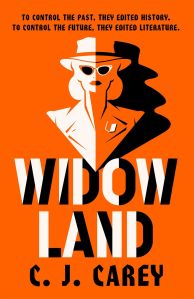 Jane Thynne’s new novel Widowland is out this week. Published by Quercus under the penname (or should that be nom de guerre?) C.J. Carey it’s an alternate history set in 1953, on the verge of the coronation of King Edward VIII and Queen Wallis, in a Britain that is a Protectorate of the Third Reich. In a wide-ranging chat, she discussed the challenges of the book with Paul Simpson as well as the means by which governments keep their people from asking difficult questions…
Having just written a dystopia, this thing about government messaging is tremendously interesting, about keeping people uncertain of what the rules are or changing rules very quickly in a somewhat maverick way. It’s something I’ve become really interested in, particularly writing the sequel to Widowland, where I’ve imagined how a government and a regime work. Also because I’ve worked as a journalist, I’m really interested in government messaging, how we’re not quite sure what the message is and sometimes you’ll get two government ministers on the same programme saying different things.
 If you’re a fiction writer, you can’t help thinking: ‘Is there an element of intentionality in this?’ because it messes with your psychology.
I’m a very firm believer, if it’s cock up or it’s conspiracy particularly where the British government is concerned, it’s cock up.
But being a journalist, you interface a lot with government departments so you know the cock up thing is so big – and instinctively I’m like you, much more cock up than conspiracy – but just occasionally…
I’ve been very very interested in the use of behavioural psychology in managing the pandemic and how a population can be persuaded to think and act in a certain way.
That’s really my number one interest, that people will do things they thought they’d never do. That’s why in Widowland, when the Alliance [between Britain and Germany] is formed and people adapt to it quite quickly, I wanted to show how actually things you never thought you’d do or imagine complying with, you’ll go along with quite easily.
 It keeps reminding me of B.F. Skinner, the behavioural psychologist, in 1956. His experiment was on rats and not people but what he was doing was working out how to make rats obey your message. So what they did was: there was a little lever and the rats would push it with their paw and there would be sugar on the lever – but it was more effective if there was only sometimes sugar on the lever. Sometimes they’d go in, they’d push it and there was no sugar, but that made them more crazed and more desperate, whereas if there was always sugar on the lever they were a bit more ‘OK, we don’t have to do that’ laid back.
That’s a terribly important experiment in behavioural psychology, to not make people feel secure about knowing what the future is and knowing that they have control over their destiny, to make people think things are random, maverick, so you can never know what’s round the corner. One day it’s ‘We’re all going to open up on June 21st’, next day ‘Actually we’re not’.
I’m not a conspiracy theorist in any way but I can’t help but think some of these techniques either deliberately or by accident have entered into public messaging and it unsettles people.
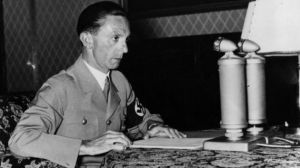 My earlier books that I wrote set in Nazi Germany are focused a lot on the propaganda department. Goebbels’ propaganda department was fantastically sophisticated, and had lots of input into psychological modelling and how psychology works. At one point there were obviously lots of denunciations. People were endlessly lining up to denounce their neighbours and they opened a denunciation office but very soon they had to introduce laws really heavily penalising people for denouncing wrongly because they were absolutely swamped with people prepared to denounce their neighbours.
One of the things that Goebbels did was: the propaganda department had a joke department where people had to make up jokes about the Nazi leaders and they would put the jokes out into the wild. They’d go out and tell them in pubs and then they’d track the telling of these jokes across the country. Where the jokes became popular was where you knew it was an area of dissent and that’s extraordinary.
I’m generally quite an upbeat person. I don’t mean to write a dystopia but sometimes you just find it flooding out of you.
One of the things that grabbed me most about Widowland was the amount of world building that you had done. I love the Berlin [you created], where you go through the Brandenburg Gate and there’s Nelson’s Column…
 (Laughs) Well, they were doing that, that was one of the things they wanted to do. They wanted this avenue with famous buildings!
A real life diorama.
One of the reasons I wrote this book under a pseudonym was because having written seven books now set in war time Germany and using all that knowledge I thought I’m now doing something completely different where I’m making up a world.
It’s very liberating because you’re using elements of reality but actually you’re saying ‘what if’. One’s whole instinct as a journalist, and to an extent a historian, is to stick to the facts, so it was a really liberating thing to do but I thought I’ll do it under a different name and see – it’s for a different audience really.
I could see how you had gone from our 1938 and then extrapolated what was going on if the Nazi empire continued. The fact that you don’t necessarily show your working but that clearly you’d done the working, that impressed me.
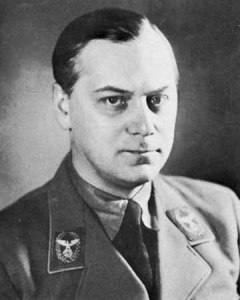 Well, thank you very much. One of the two geneses of this book was coming across a book about the Rosenberg taskforce in World War II. We just have this blanket view that Nazis burned books and I was so amazed that there was this taskforce of people who went into libraries and corrected the history. You just couldn’t make that up.
I was so blown away by that and then, obviously, I made the imaginative leap of ‘Actually, why don’t we correct fiction too?’ but of course that’s happening today. It’s a modern thing very much anyhow.
So that was one genesis. The other genesis was a very strange thing in that I was married to Philip, Philip died, and I went to lunch with an old friend from the Daily Telegraph who said, ‘Look, I’m really sorry to hear about Phil, would love to invite you to dinner’, and so I said ‘Great’, and he said, ‘But we only have couples to dinner’ and I was like ‘Whoa’.
I remember walking home from that lunch and thinking ‘Oh I’m living in Widowland’… then thinking ‘What if that is actually a place?’ and just running back to my office and beginning the synopsis. That idea of a metaphor turning into a real place, I have him to thank for that. The two things came together..
It must feel like your personality’s been somehow altered in people’s perceptions.
 Yes of course and your identity. I think it is very difficult for couples to relate to a single because it seems disruptive and I can imagine for some women, if you’ve just been a couple and all of your relationships have been couple relationships, that must be a difficult thing.
The other thing about the widows was, I wrote a book called The Words I Never Wrote which spanned the whole of the Nazi era. Towards the end of the war German civilian rations were graded according to how valuable you were. There was a category called Friedhofsfrauen – cemetery women – who were women over 50, without children, who were single. They really were the bottom of the pile because they were of no use to society. So they got the lowest rations apart from Jews – but by that stage in the war they weren’t any Jews around. How many calories they should have is stipulated! I don’t know if I’ve kept to the exact calorie count in Widowland but I remember being blown away that they had the actual calorie count – but that was the Nazis for you.
That level of bureaucratic detail to an extent pervades all bureaucracies, just as you said cock ups do as well. That level of nitpicking detail is truthfully why I was always very interested in the Nazi era and their approach to controlling women because they’re so specific about it.
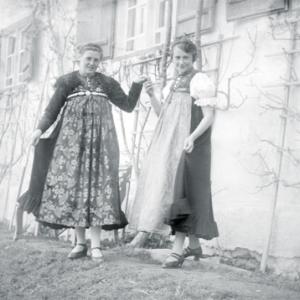 My first book set in Nazi Germany was set in 1933 and it was about the Reich fashion bureau. It just astounded me to discover that back in ’23 when Hitler was in Landsberg prison, he had evolved the idea that one day there would be a fashion bureau and it would dictate what different women should wear. That level of detail is chilling, that authoritarian control was stunning to me.
That’s why, in a way, the pandemic’s been very interesting because we’ve also witnessed a period in which some things are curiously specific. In some ways seemingly trivial details about distancing or at what point you have to put your mask on and off have come into play in our minds and it’s not what we’re used to, it’s new.
I’d finished this novel before the pandemic started. I remember at some lunch with the publishers in February 2020 we were slightly talking about the virus but not particularly. Although now it’s great fun writing the sequel because you’ve got all this stuff coming in, which has been brilliant.
Is the sequel a direct follow on?
It’s three years later. What interested me was how you can adapt to the idea of an occupying force and then it becomes normalised. In the sequel we’ve got a scenario where the people who you would think of as having been prominent Nazis have now distanced themselves and they’re just seeing themselves as ‘We didn’t have much to do with that… that’s over, we’re in a different [time now]’. That’s what history does, people do airbrush.
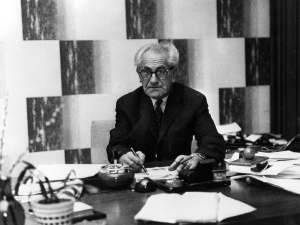 I’ve always been amazed by the Auschwitz trials in Frankfurt. In 1963 there was a trial: there was one lone crusading lawyer, Fritz Bauer, who decided that he would try to prosecute one of the guards at Auschwitz and was met with this enormous resistance – but what he really met was that most people hadn’t heard of Auschwitz in Germany.
I’ve seen contemporaneous vox pop: people didn’t know what it was, they had no idea. Although we all have that idea that Germans were paraded through concentration camps immediately [after the war], people didn’t want to talk about it and so when you come to 1963, the majority of people literally didn’t know and didn’t want to know.
And once it was pointed out, they really didn’t want to know.
It’s an interesting moment in German history. This crusading lawyer did actually push forward these trials; they happened and various guards were imprisoned but it was a turning point. So I’m very interested in how quickly you forget things that you think would be searing.
My daughter was born in May 2002, and 9/11 is something from history to her. Whereas I can tell you exactly where I was, exactly what I was doing when I heard about it.
History is definitely speeding up, and not only speeding up but I definitely think that the way that we encode history is changing. I’m sounding like a real cliché here, so I have to watch myself, but I definitely think attention spans are shortening. I wrote about that in Widowland: people won’t be reading these great long works of literature anymore because they won’t be able to. I’ve met lots of adults, and I’d probably count myself among them, who find sustained deep attention a more complicated thing than they would have done, even ten years ago.
I feel actually quite relieved that I’m dealing with a historical era because I would find it very hard to write a modern spy novel. It’s too techy and much too complex now.
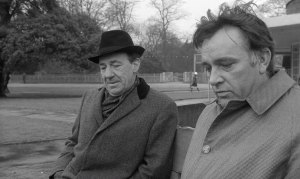 And yet something like The Spy Who Came In From The Cold, the Alec Leamases of this world, are still there. HUMINT is still there.
And brush pasts, and dead letter boxes…
Tradecraft that’s been around for millennia is still being used because spying is based on the fact that human nature can be treacherous.
My favourite [spy] novelist is le Carré and obviously I love his tradecraft, particularly his argot, his invented vocabulary. One of the things I really like doing in a novel is inventing vocabulary because “mole” and “lamplighter” and “scalphunter” and all those terms, they were just made up and then people just accept it. I think that’s particularly pleasurable.
One of the things I liked about doing the names of the different castes of women was that people thought, ‘Oh we’ll just give it a nickname and that’ll make it better’ and of course nicknames don’t make it better. They are just as sinister – and if you nickname things, actually you’re weirdly colluding in the whole process. So I kind of liked that, that everybody would just use these slightly more wholesome or jolly nicknames, not say ‘You are Class 3 category 4’, that sort of thing. It’s the way people use language which is another way of shaping people obviously.
Talking of the Gelis, I was pleased you wove in the true story about Hitler’s niece.
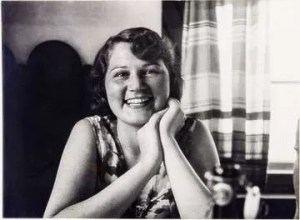 Geli was patently just a massively important influence in his psychology. That whole process of when she died and the horror of all his henchmen trying to cover it up, they were really terrified that it would spoil his election chances because everybody thought there was a suspicious relationship between them. I’ve been to his flat and been in the room, interestingly, where Geli perished in Munich and I’ve never really managed to conclude whether there genuinely was an incestuous relationship between them or if it was just an infatuation and a control thing.
But it always interested me that a large number of women around Hitler killed themselves. One of his early girlfriends, Geli – getting involved with Hitler is never a good idea for a woman, Eva Braun tried to kill herself lots of times.
I’m also very careful not to use the word Hitler [in Widowland] because I didn’t actually want it to be Hitler. Although obviously it is Hitler, I wanted to keep a bit of a distance from Hitler. If it’s somebody just called “The Leader” it’s slightly more generic and I wanted it to be much less anchored. This sounds like nonsense because I’ve used real details from Hitler’s life, but I just thought by not using the name it anchored it slightly less to the specific that was Hitler and made it more how you think about Hitler rather than Hitler the man.
In the last few years, apart from Hitler becoming an icon to extremists we’ve also had him as a payoff in a Doctor Who story, he’s Michael Sheard in Indiana Jones…
He’s that law of the internet argument, the speed with which somebody equates something to Hitler. So yes, he’s a meme and that’s another reason.
 What did you find the biggest challenge of writing this as opposed to a strictly historical novel?
One of the big challenges actually was myself, in that having been a journalist and then written a lot of historical novels, you always have that question, ‘But did that really happen?’ I’ve always been really strict with my other novels: you’ve got to stay faithful to the dates and the events, you can’t mess around with them, particularly actually at a time like World War II
The biggest challenge was, “Could I imagine a country, Britain, where there is no knowledge of the outside world? Where news is not filtering through and people don’t care – they just see a newsreel and they don’t really care.”
But actually that’s all too easy to imagine, all too easy. And then we walk into a pandemic where you’re not allowed to go anywhere and most of your friends go, ‘Actually I don’t really care, I love going to Cornwall’ – and we’re in that world.
So when I wrote about Rose’s sister saying, ‘Why would you want to go abroad when you can go to Felixstowe?’ I was obviously being satirical but actually, now I bump into people going, ‘Look, it’s so lovely going to the British coast, I don’t think I’ll ever go on a plane again.’ You read that stuff all the time now. It’s frightening how quickly a country can decide to become more inward looking and decide to shut itself off. It’s been weirdly gratifying, watching that play out in real life.
Widowland is published by Quercus Books on June 10th. Click here to order from Amazon.co.uk
 Doctor Who News Star Trek News
 Sci-Fi Bulletin: Exploring the Universes of SF, Fantasy, Horror and Spy-fi!