Interview: Femi Fadugba
Femi Fadugba’s first novel The Upper World is a smartly told science fiction tale with some hard science at its heart. Fadugba chatted with Paul Simpson about the origins and […]



Femi Fadugba’s first novel The Upper World is a smartly told science fiction tale with some hard science at its heart. Fadugba chatted with Paul Simpson about the origins and […]
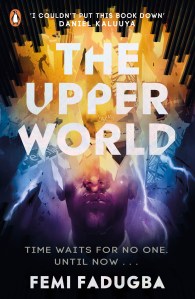 Femi Fadugba’s first novel The Upper World is a smartly told science fiction tale with some hard science at its heart. Fadugba chatted with Paul Simpson about the origins and challenges of writing a story about time travel – in Peckham…
What was the impetus for the story of Esso and Rhia?
The origin really came mostly from frustration. I used to be a materials scientist and I did my masters in quantum computing before going into the working world. I spent probably ten years doing modern physics stuff. I would explain concepts like relativity and quantum mechanics to people and they’d say, ‘God, that’s seriously interesting, I never learned this stuff at school, I’m really interested in it. Where can I find more reading?’ And I’d always struggle to find a book I could recommend to them where I knew that a) they would grasp it and b) that it would give them a reason to give a shit about what’s being explained!
I kept reading these books, almost hoping that I would find that book to recommend and that’s when I realised I had to write it myself. It wasn’t out there. I started getting a little more into the craft of writing and realised that storytelling is integral to us as human beings, so if you’re going to try and explain something to someone, the best way to do it is in a narrative. Give them characters who they can understand and get to know, and use that story arc to take them on a journey. It took me about two and a half years. I hadn’t actually ever written before so I had to learn how to write from scratch by reading books about writing, then writing after that.
And then realising that half the books are useless anyway because once you’ve got the story in your head the most important thing is getting it from there to the computer.
Yes 100%. I think the first draft I didn’t really need or use most of those books. I read Stephen King’s On Writing which isn’t really very specific at all about the structure or anything like that but it was useful in terms of just telling me to get on with it. That was the main thing I took away from that.
So I wrote the first draft as fast as I could write, then I got to the end of it and it was OK. It wasn’t great but I was proud that I finished the thing. You’re right, at that point it was just about getting it out of my head and on the page.
The next step, was making it good, that’s when those books about how to write, how to structure came in handy in terms of editing and refining.
How much has the plot changed between that first draft and the published book?
That’s such an interesting question because there’s a surprising amount of it that didn’t change. I think in some ways a lot of the best bits haven’t changed: the structure, the story and the core of it are still the same in terms of having two characters, and Esso being the character who’s having all of the stuff take place over the course of a day and trying to prevent what he’s seen happen in the future.
I actually sat down and wrote the maths and the derivation for the physics from start to end before I actually got down and wrote the book. That was my first step and that didn’t change much because obviously that was all done by Einstein years ago.
 If there’s anything wrong, it’s Einstein the dog from Back to the Future!
Yes, that’s right! That’s a classic. I actually watched quite a lot of films as well as books just to understand the history of the genre. It stretches back to H.G. Wells and probably a little bit before then.
For background reading did you look at all manner of fiction or was it more ones that were specifically time travel?
All manner of fiction and nonfiction. I’d say each chapter in this book probably had maybe two or three books that I read behind it. A good chunk of them were books on writing, whether about structure or character or theme, settings, description, all that sort of stuff. A lot of the books were about physics, just seeing how different pop science books approach explaining.
Central in all of this, I think, is a really interesting thing: what combines the humanities and the arts is metaphors.
Physics is really just using mathematical objects as metaphors for reality and that helps us do certain things like predict. But when it comes to explaining what’s going on in physics and what’s going on with maths, there’s an art to coming up with a metaphor that will really unpack the details of what’s going on, for someone who’s not familiar with these abstract entities.
So that’s where a lot of the thinking actually came in. There’s a scene where I’m trying to explain what an electromagnetic wave is, what light is and I say ‘You have two different crowds in a stadium doing the Mexican Wave, one is dressed in SE Dons jerseys that represents an electrical wave; and the other in Millwall jerseys representing a magnetic wave, and they oscillate in the same way that light (a hybrid electromagnetic wave) does.’. I was always thinking about how to create an impactful visual to this stuff.
And then finally I read a ton of fiction. I didn’t read that much fiction as a kid – a lot of the books I read were the ones that my teacher made us read and didn’t really speak to me, for a lot of reasons. So I discovered my own love of fiction and what genres I was interested in later on, so I just read a lot to see what the greats were doing.
Were there things that you read that made you think ‘Hell, they’ve done that, I can’t do that’ or when you hit that, do you just think, ‘OK I’m standing on the shoulders of giants. I’m going to do what I need to do for my story’?
 Yes, it’s interesting, isn’t it? It’s sort of like when they say ‘The more you know, the more you realise you don’t know.’ I think there’s a similar thing where the more you read, the more you realise you’re not original!
At first it scared the shit out of me, in the sense of ‘Oh God, this whole project’s going to fall apart, I thought I was doing something new’, and then I think you realise that even those guys and women were doing the same thing that I’m doing, which is taking things that already exist and putting them together in new fresh combinations. That’s all writing is.
I remember there’s an Einstein interview where they asked him what he thinks creative genius is and he described it as combinatorial play: taking different combinations of things and playing around with it until you get something that’s fresh and insightful.
You are the filter it goes through. The way that you tell this story and the way that an American writer in the Midwest would tell it and the way that somebody, say an indigenous Australian, would tell it would be completely different but might have the same core ideas. There’s no way you’d think those three books were the same.
It’s interesting you say that. I’m writing the second book and trying to think about a lot of aspects of that and I think what you’re saying resonates with me because yes, writing a sequel is a different challenge.
There are some things that are easier and some things that are harder. With the original book I was trying to write something that was fresh and original versus everything else and with the second book I’m trying to write something that’s fresh, original versus everything else plus book one. I think what you’re saying is to not put too much emphasis on that and just tell the goddam story!
The last line of this book gives us a clue as to what’s happening in book 2, so obviously you knew that was more by the time it got to print, but did you envisage this as more than one story?
I always did. I see book 1 as an origin story for these two people who are about to acquire a whole new level of proficiency and understanding of both the physics of the Upper World and the powers of the Upper World. They’re going to need it for book 2, there’s someone coming along who’s after blood. I’m keen to make the next one sick.
I think it works to have two stories, in this case, because physics is part of the backbone of the story and physics itself is split into two parts. One is relativity, which I deal with in book 1, and book 2 is going to be quantum mechanics, explaining that in detail.
I’m so excited for it because I think it’s a real opportunity. Even for people like me who studied it for a living, it’s really hard to get an intuitive grasp. I think quantum mechanics is always introduced in a way where you’re told, ’OK, here’s this crazy completely counterintuitive fact about quantum mechanics, now accept it.’ Then you leave blown away but don’t actually fully get it.
I want to take the first principles route, really get to the heart of: what are the few basic principles of quantum mechanics? Once you accept those, everything else makes sense and you can build a world around it. So long as you know those one or two basic fundamental facts, it all makes intuitive sense. It is actually a description of our universe and so I think it’s somewhat important that it makes sense!
One of the writers on Sci-Fi Bulletin describes certain things as handwavium and you look at certain films where the reason for things is ‘Oh, it’s quantum mechanics!’ The Star Trek new films are the classic example, where it’s ‘Oh, it’s alternate universe but yes, Scotty’s going to meet Spock because… quantum mechanics’! Why don’t we just say magic?
It’s gotten worse Paul. I feel like in the last few years half of the sci-fi things now are throwing in the handwavium. It’s different strokes for different folks, people still love it but yes, I think you’re probably in the hard sci-fi camp on this kind of thing.
You’re establishing rules which obviously are based in physics and quantum mechanics when it comes to book 2. Are there things where real life gets in the way of the story you want to tell?
 It’s interesting, I’d almost take the question and subvert it a little bit, if I can?
First of all, the answer is yes. Initially it was really annoying, especially with time travel, where there’s plenty of opportunity to stray away from the physics.
But I realised that following the rules of physics had two advantages. Firstly, they give you some confines within to work with – and everything I’ve read and experienced about creativity says that you are most creative when you have very clear boundaries within which to play. So actually having those guardrails of physics turned out to be quite liberating because I knew where my left and right were so I didn’t have to think about that. I could just think about telling the story in a fresh way.
The other advantage is that because my physics from book 1 hews very closely to real life physics, when it came to book 2 and expanding the Upper World, it would have been really tricky for me if I’d deviated from them. It would be really tricky for me to then come up with rules that abandoned the laws of physics.
Because I kept pretty strict to it, in book 2 the next branch of physics just flows out without too much trouble. It helped a lot with continuity.
Often teens are being written by people twenty, thirty years older but the scenes with Esso in school and outside really rang true.
Thank you.
How did you research those? Was that from friends who are teachers? From friends who are that age? How did you get it so accurate?
Yes, it’s an interesting question. I just really dug deep and tried to remember how I interacted as a kid, and conversations that I heard as a kid, even if I wasn’t the principal person in the chat. Then it also helps that I have a slightly childish sense of humour right now – my sense of humour hasn’t evolved that much since I was a teenager to be honest.
I think most people are actually capable of this, but I think where people maybe slip up is thinking that the toilet joke humour, things that teenagers find funny, may not be “highbrow” enough for a book. I just decided at one point to just throw away that notion.
There are a couple of conversations in the book that are conversations that I had a couple years ago. It was really just not feeling like I had to write in a fancy way and just going with what I thought was funny. There’s a great guide which is, when you’re writing a scene if you’re not amused or feeling the specific emotion you want to evoke, chances are the reader won’t feel that either. It’s always a good sign when I’m writing a scene and I’d read it again and I’d laugh myself and be like, Yeah, I think that will work’.
Some of these things you have to do for yourself as well. I think that’s actually part of the accuracy. These jokes aren’t written for stand up comedy, they’re written for real life and sometimes you tell inside jokes that only a portion of people will get.
Obviously you’ve had a lot of challenges in different ways writing this but what do you think was the greatest one that you overcame?
I would say the greatest challenge I overcame was understanding if it was good enough.
I remember writing the first draft, finishing it and just feeling really pleased with myself. I had a quick read through of some aspects of it and I was like ‘This is sick, this is going to be a really good book.’ I sent it off to one of my mates to review, who’d give me feedback.
I was on the way to go see him to have a beer and chat through his feedback and I just thought ‘Let me just bask in the glory of this amazing thing that I’ve made’. I opened up my laptop and started reading it and I was like ‘This is rubbish’!
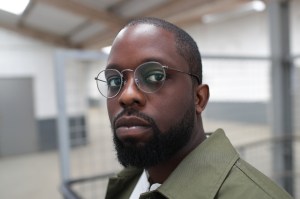
I read the first page and I thought ‘How did I think this was good?’ I literally went from thinking it was up here to thinking it was down there. Anyway, I met with him and he said ‘Look, don’t beat yourself up. This is actually really strong, there’s a lot of potential. It’s just the ending that’s rubbish.’ Going back to your previous question, I changed the ending quite a lot from the original draft.
He was like ‘This is a seven, maybe seven and a half,’ but the one piece of advice that my mate gave me was that the most important judge is: ‘Do you think it’s sick? If you picked this up off the road and it had somebody else’s name on it and you read it, would you think this was a great book?’
And if the answer to that is yes then two things happen. Firstly, it means that it’s more likely that other people will agree with it, especially if you’re honest with yourself and secondly, even if other people don’t agree, at least you’ve written something that you believe is truly great.
That was an emotional challenge I overcame but it helped me then calibrate for the future in terms of just writing, having a look, deciding if I really like it or not and then moving on.
The Upper World is out now from Penguin.
 Doctor Who News Star Trek News
 Sci-Fi Bulletin: Exploring the Universes of SF, Fantasy, Horror and Spy-fi!