Interview: Deon Meyer
Renowned South African crime author Deon Meyer has taken a small sidestep for his latest novel Fever, which is set in South Africa after a devastating virus has killed most […]



Renowned South African crime author Deon Meyer has taken a small sidestep for his latest novel Fever, which is set in South Africa after a devastating virus has killed most […]
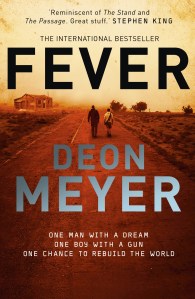
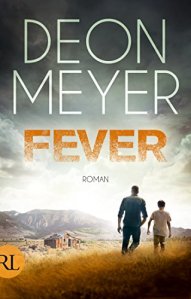
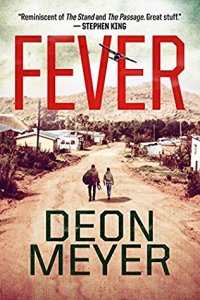
 Renowned South African crime author Deon Meyer has taken a small sidestep for his latest novel Fever, which is set in South Africa after a devastating virus has killed most of the population. Meyer sat down with Paul Simpson at Hodder’s London office to discuss the challenges and rewards of this new project…
What was the inspiration for Fever? Was there a particular image or incident?
There were a lot, but I must admit I cannot remember what was the biggest spark. I have always loved post-apocalyptic fiction. I read Earth Abides when I was at university, I read all the John Christopher books, The Day of the Triffids – all the big ones. I’ve always been in love with the genre.
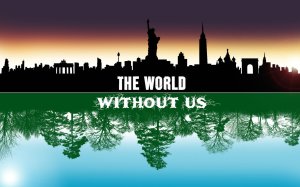
But I think [the spark] was probably a book called The World Without Us, which was a documentary taking a scientific look at what would happen if you could take humans from the planet, how long would it take to either recover or for cities to disappear – that sort of thing. A fascinating book; they also made a television series for one of the National Geographic channels. I think that was the first spark of “it would be really interesting to work this into a novel”. Obviously with Fever only happening over five years, I could only use a very small part of that book.
 There were lots of other things as well: my concerns for what we’re doing to the planet certainly was another piece of the story puzzle that came together. When I was in America six years ago I bought a compendium of post-apocalyptic short stories. You know when you read you think ah, “this is the way a story’s going to go”, and there was one story that for a minute, I got very excited: if it was going to go there, it’s very cool, and it didn’t. I thought “That’s something I would love to explore – that’s a really lovely story idea if you take that story in a very different direction.”
All these little bits came together and it was probably a book that was six years in the making just thinking about it. But I’m a crime fiction author, a suspense author first and foremost. I don’t think Fever’s that much removed from my other work, it’s also a suspense novel … but it was going to be a little bit of a gamble. My passion for writing the story became so big that I wrote the first four chapters. I showed them to my agent; she loved them but she said don’t write the book now, because in certain markets, especially on the continent, I still needed to establish myself as a crime fiction author. Publishers had newly started to publish me.
So for about three years I had a beginning – the first four chapters – and I had a very definite ending, which was the ending of the book but I had absolutely nothing in-between. Eventually when she gave me the green light to go back to the book I was pretty apprehensive, because after three years of it going round the back of my mind, I still only had a beginning and an end. I had no idea of what to do with the huge middle.
So I sat down and I rewrote the first four chapters, then the next chapter happened and the next one and the next one… and it became the most satisfying and creative process that I’ve ever had. It was just a book that I absolutely enjoyed writing.
 Were you writing the testimonies as you went along or put them in later? It feels like we have Nico’s story and then almost a palimpsest of history going on alongside it…
For me, it’s always important to try to get information to the reader in as entertaining a way as possible. So I could either have Nico narrating all of this history, which I thought would become a little bit boring quite quickly, or I could have this History Writing Project and give voice to those people, use their own voices.
I love creating characters, I love coming up with unique voices for characters. They are just short bits that are sprinkled between the other characters, but it was a fun way of giving the reader information that was vital to the story in a unique and entertaining way.
I also used that as it was important that Nico did not say too much about him and his father during the Fever. This is really not about the apocalypse – it’s more of a Utopian novel than a dystopian. Willem – Nico’s father – wants to start this new community and he’s got very strong ideas about liberty and democracy. His idea is that now we are all equal, now nothing divides us because we all have nothing, and we only have one hope, which is to survive and prosper, that he can create this little bit of a utopian place.
It was important to have other people’s stories of what happened during the Fever to show how devastating it was, how damaged everybody was.
 We know from what Nico says at the beginning – we’re investigating his father’s murder – that his utopia doesn’t work out as he planned. Do you personally feel that sort of utopia is never going to work?
I am very much in two minds – on the one hand, there’s a character called Domingo in the book who does not believe in democracy. If we look at the world today, democracy is not doing such a great job. It’s a very messy system, but I still absolutely believe in it.
What I try to do is keep my own ideology completely out of the book. I try to create characters with very different points of view, with very different political and ideological viewpoints, and then put them all into this world and see what happens. For me, it was as much an experiment and an exploration of the possibilities as anything else.
But you have to keep in mind that I am a firm believer that conflict is the mother of suspense, so it’s a little bit deliberate to create characters with opposing points of view and let them struggle against one another. Eventually I think that is fairly realistic because in any sort of community, especially one like this, you’re going to have people with very different points of view, in terms of religion, in terms of democracy, whatever. We are as human beings always in a struggle for status, for wealth, for standing, so I think it is fairly credible.
 The community is built in many ways around Willem, the pastor, and Domingo – whose backstory we learn in an alternate way to the way we do the others. Was it important to you to explain his background, as he is this enigmatic character for much of the book? We always see him through other people’s eyes; Nico almost regards him as a god.
He’s the guardian angel of this community, a guardian angel with a difficult attitude and a difficult personality. For me it was important to tell his backstory eventually so the reader and Nico could understand where this guy was coming from, what shaped his ideology, what shaped his view.
A large part of the book for me was well was a thought experiment in asking the question – are we inherently good or bad? Domingo believes we are inherently bad, we are animals with a thin veneer of civilisation, while Willem believes we are inherently good. I didn’t know the answer to that but I wanted Nico and the readers to discover some sort of answer to that in the course of the book. Having him as a secretive character for most of the book, inscrutable, you don’t know why he thinks this and then have the reveal of that.
Did you always know that Willem and Domingo’s fates would be intertwined?
No I did not know that at all.
Was it a surprise to you?
Yes, it was. But it was also something that I couldn’t avoid. The nature of what was going to happen had certain consequences, and I think the dramatic effect was positive. It’s a very strong dramatic effect and I think that is what entertainment is all about – to surprise the reader, to sometimes shock the reader.
You’ve put yourself very convincingly into the mind of a 14-17 year old boy for the majority of the story – albeit one who’s in his 40s looking back. Were there constraints in writing in that voice?
It’s always a challenge to write in a voice that is different to your own; as a middle aged man it’s always going to be a challenge. But it’s wonderful when you start tapping into that period of your own life and start looking; we have three sons who have gone through puberty, two are still in there, and I could really use them as well. One forgets how it was. Your own puberty, your own youth you see from within yourself, but with the kids you see from the outside, and I think it’s that combination that was incredibly helpful in giving me insight to be that old.
 The most convincing for me is the heightened theatricality – teenagers see everything on a scale of 1-10 and they’re on 15, and it’s rare to see it well written in an adult novel – and the scenes with Nico and Sofia where they’re both completely missing the point! Were there bits of autobiography in there?
I remember the feeling of being infatuated with a beautiful girl who is older than me. I think we all went through that. But you have to go into the head of this character and try to find him.
Willem Storm is very broadly based on my own father who was a very smart man who knew about so many things, although he wasn’t as gentle as Willem, he wasn’t as head in the clouds. There are little bits that one uses but you change it so much for the sake of fiction that I don’t think there’s that much autobiographical stuff in there.
In terms of the writing process, you said you had the beginning and the end and the middle flowed as you were writing – are you a writer who rewrites as you go along or do you get to the end of the manuscript and then start the edit process?
I do both. I edit every morning, whatever I’ve written the day before. That not only helps me to be happy with where I am but also helps me to get my head back into the book. Every day I need at least half an hour to get my mind into it. I will rewrite every day, so by the time I reach the end there isn’t that much editing to do. I will do a complete work through again – that’s mostly cutting unnecessary bits, maybe a little bit of rewriting – but I’m happy to say most of the heavy lifting has been done on a daily basis.
 What was the feedback like from your agent and your editor when they read it?
I was very anxious to know what they were going to say for two reasons: firstly, I invested a lot of time into writing and research and if they were going to say this was no good, I’ve wasted a lot of time.
The other reason I was anxious was that I felt that this was by far the best book I have ever done. For the first time I was really happy with what I had created, so if they had told me it was useless, that would have hurt a hell of a lot.
I’m very happy to say that both my agent and my editor really loved the book; my agent agreed that it was the best thing I’ve ever done, and she really loves this book. That was a huge relief for me.
Do you think this is something you’ll look back on as something that stands alone from your other work or has it fired you up to do something else in the field?
This was such an amazing writing process. I think a lot of it was about the fact that I was unshackled from the very strong structure in crime and suspense novels, and also from the conventions of crime fiction. There are so many strong conventions. Being free from those I had a liberty to go to places and do things that I’ve never done before.
I think I learned a lot from that process. I’ve started a new crime novel and I find that I’m writing with less apprehension, I’m writing with more freedom. I’m also writing with more enjoyment. In that sense I think it has enriched me as an author and I really learned a lot.
I’m a great believer that writing is a lifelong learning process and I feel that I’ve learned more from the writing of Fever than probably from any of my other books.
Because of the freedom?
 Yes, because I had that freedom, and because of the writing process. Writing is such an inscrutable process. I don’t understand the writing process; I enjoy it very much but I don’t really care to understand it too well. It’s got to be a mystery.
I saw the scene in my head of Hennie Flaai in that little plane and them meeting up, but I had no big plans for Hennie Flaai. Then I started talking to a childhood friend of mine, we’re still very good friends, who’s an incredibly good stunt and aerobatics pilot. He gave me the idea for the specific plane, and we started talking about what would happen if fuel started going bad when you were landing a plane. He’s such a great guy: he gave me all sorts of ideas, and then came the idea to have Hennie Flaai fly somewhere and the fuel going bad. These wonderful things happened on the journey towards the end that multiplied my choices, and gave me enjoyable little sub-stories. In that sense it was different from anything else, and I think it does give me the confidence now in taking more risks in the crime fiction as well.
You write in Afrikaans and it’s translated into English; you yourself are completely fluent in English. Do you find when you are reading the English translation that you would phrase things differently, or do you have to step back and let the translator do their job?
I’ve been working with my translator, Laura Seegers, for many years now, and I think we have developed a really great understanding. Initially I changed much more than I change these days, especially in terms of dialogue, because I could hear a character’s voice very clearly and obviously she didn’t hear the same voice. It was important that my version of that voice be heard. So in the first three or four novels I had to change more, but these days it’s much easier. She’s learned to know exactly what I like.
 Do you discuss the book before she starts?
I send her the novel and let her ask questions. With my crime fiction we try to keep far more of the South African texture in the language, but Fever to me is much more of an international and universal story than it is South African. It could have happened anywhere; although the landscape is important, it’s not a uniquely South African story. That’s the only discussion I had with her – let’s not worry too much about keeping that. I think she did a great job.
I work through the whole translated manuscript and make sure that it is exactly what I had in mind, but more and more it’s not hard work with her translation.
Would you like to do another? Are we going to see what happens in the missing years?
If Fever does well enough internationally then certainly I would seriously consider it. There is another story in there. But I’ll have to find a story that is as good as Fever before I write it. I hate it when I read a sequel that is not as good as the original. If I don’t find anything that is as good or better, then I’m not going to do it.
Fever is out now from Hodder; click here to order from Amazon.co.uk
Thanks to Kerry Hood for her help in arranging this interview; Deon Meyer photo (c) Guido Schwarz
 Doctor Who News Star Trek News
 Sci-Fi Bulletin: Exploring the Universes of SF, Fantasy, Horror and Spy-fi!