Interview: Brian Klein
Brian Klein’s debut novel The Counterfeit Candidate is released today by Level Best Books. A robbery in Argentina in 2012 uncovers secrets best left hidden – and how does it […]



Brian Klein’s debut novel The Counterfeit Candidate is released today by Level Best Books. A robbery in Argentina in 2012 uncovers secrets best left hidden – and how does it […]
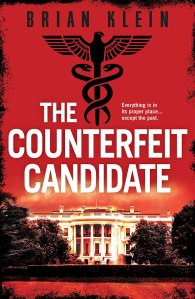 Brian Klein’s debut novel The Counterfeit Candidate is released today by Level Best Books. A robbery in Argentina in 2012 uncovers secrets best left hidden – and how does it all relate to the Republican candidate for the US presidency? Klein, better known as the producer of Top Gear and multiple other series, chatted with Paul Simpson about the genesis of the novel…
You’re known as a producer – how did The Counterfeit Candidate come about?
Nobody’s more surprised than me. it had never been an ambition to write a book, ever.
I’d had this idea for about twenty five, maybe thirty years and I think it came from the fact I studied Hitler at university – Hitler, the rise of fascism and the Second World War – and it always struck me that whilst all his number twos, threes and fours escaped to Argentina or to South America like Eichmann and many others, he took his own life. He didn’t seem, to me, to be the sort of person that would, so I came up with this idea [of him surviving and escaping to South America]. Where it came from I don’t know, it just was an idea and it was always based around the robbery that would then go wrong.
Whenever I told anyone about it they’d go, ‘Oh that’s a great idea Brian, you should do that’ but I’d thought one day I’d find a writer who I can give it to and maybe I’d be a consultant.
I had no ambition to write, I had no belief that I could write at all, but when I think about it, for the last thirty years all I read on holiday are thrillers: David Baldacci, Grisham, Ludlum, they’re all my go-to authors. I’ve never read a biography in my life, I just read thrillers and I think subconsciously, pacing wise, maybe somewhere in my brain…
Here’s a really weird thing: three months before the pandemic I had lunch with Frederick Forsyth as I was making a TV programme called BBC Maestro where experts in their field tell you how to do it. I had a lunch with him and another producer with regards to filming him on how to write a thriller and it was obviously fascinating, brilliant… But when I left that lunch there wasn’t even a 0.1% part of my brain that went, ‘Oh, if I ever write my book I’ve now got some tips’.
 So fast forward to the pandemic, Boris closed things down on 20th March. My diary, for the next months, was completely full, it was bulging. In fact, I was four days away from a big Netflix special for my own production company which all got pulled and cancelled and never ever got made, which was pretty disastrous. But like yours, like everybody’s, my diary became empty and at the same time I was taking the rubbish out the front and I bent over and something went in my back – click! I heard the noise and I don’t know quite what it was but I was in agony and I couldn’t move.
So I’m now laying on the couch, literally doing nothing and I thought ‘I wonder if I should try to write that book.’ Just as a thought really and here’s the weird thing, I don’t know if you believe in synchronicity but this is probably one of the best examples you’ll ever hear. I always knew that this bank robbery had to happen in January 2012 because I knew the book had to end with [a key character] dying on [their] 100th birthday. That was an important timeline, for me, to work back from.
I lay on the couch and I thought I need to find a bank in Argentina that is authentic that I can say has a safe deposit box. Now, here’s the thing: I literally put into Google ‘safe deposit bank, Buenos Aires’ but not ‘robbery’. If you put that in, up pops hundreds of listings of the world’s biggest safe deposit robbery, $100,000,000, thieves tunnelling, a hundred foot tunnel.
Now I’d had the idea 25 years before and the robbery happened on Christmas Eve 2011, exactly a year before my imaginary story. Now, when I saw that I started reading about it and it was things like they put carpet in the tunnel, which I thought ‘What a great idea, I’ll put carpet in my tunnel’ and they put air ventilation in etc. There wasn’t a Cafe Turino [the base of operations in his book] and it wasn’t quite like that but that was a real moment.
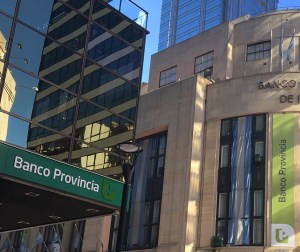 It was so bizarre. The bank was called Bank of Provincia. Up until about two months before the book went to print I kept the original name and then I thought I’d make up a fantasy name for the bank, although I kept the avenue it’s in the same. So probably, anybody in Argentina if they ever read this book will think I got the idea from the real life robbery.
Then I started writing. I was writing 12 hours a day, 7 days a week and it consumed me. I was going to bed and thinking about it, thinking about characters and backstories and my first disappointment was when I plotted. I remembered Forsyth said plot out your chapters and I could only come up with 8 chapters and there’s 57 I think, now. I thought, if I can’t write a book I could write a 10,000 word story but there will never be a book here. Then it grew a life of its own and over ten weeks I wrote what was a 90,000 word manuscript, having never written before.
I wrote it differently to how you read it now. I had part one all being in the present time up to the point where one of the characters discovers the medal in the box and then part two was flashbacks. I got a literary agent – which was the hardest thing in the world, I had well over 100 rejections from agents, but I found an agent who liked it and believed in it – and he said to me ‘That historical stuff is great, people are going to love that but I think it’s far too late in the book’. Hence I brought it up to chapter 5.
The other thing I found, just to tell you when I wrote, once I knew I was going to have these flashback chapters, although I knew roughly what they might be and how they might go to a certain extent, I couldn’t write them in order. I wrote the timeline in one go of everything 2012 then I wrote the flashback chapters so I had a few weeks where all I was going was that timeline and then obviously eventually they’d get interspersed as they were.
Nobody read it until my wife read it after I finished. She was a bit taken aback and said ‘It’s really good’. My daughter read it, who’s into that sort of stuff and then I showed it to some friends. People that have read it say ‘Well, it is a page turner, once I got into it I really enjoyed it’.
Originally there was no epilogue and everyone including the publisher said to me ‘Well, you’ve just ended it’. Well, it did end with [the key character’s] death and they all said ‘Oh, we feel a bit bereaved, we’d like to see more of this. Can’t you leave it open for a sequel?’ and I said no.
I hate watching a Netflix series where it’s been commissioned for one series and halfway through they get a recommission so they bottle out the ending. I had a completely alternative ending which never won through but it just wasn’t the ending I wanted.
People then said ‘Maybe you could do another crime thing in the future with the two detectives? Maybe something happens in LA?’
 I couldn’t think of a way of doing it without really ruining the main ending and watering it down. Then I remembered that I’d written in that [one of the characters] had all these lovers so I put that in and sent it off to the various people who’d read the book and said ‘Tell me honestly, do you like this extra chapter or do you think it’s not necessary or do you think it’s engaging?’ And people on balance liked it.
I enjoyed writing it. There was a huge gap between writing the epilogue and the book and it was like revisiting old friends, writing those characters.
It’s very strange because my life is a television director not as a writer. But my ambition at this point in my life would be for this book to be successful enough that I could go ‘Right, I want to write for the next five years and write books’ but that’s ambition now because I’ve loved the taste doing it, even though it was never an ambition.
I’m also conscious that I only ever had one idea. I can’t sit here and say ‘I’ve had all these ideas for stories’. I haven’t. I had that one idea and I’ve now put it down.
How much did it change in the edit process?
 I would say the difference between that first manuscript that I wrote literally in one go in ten weeks and what you’ve read, in terms of honing it and improving it, there’s at least 25% in terms of tightening – not repeating adjectives, just trying to get to the point.
I also added a bit more backstory to characters. In the very first draft, I didn’t have anything about Vargas’s wife and the whole Jewish connection. I started to realise they were a little bit cardboard cut out characters, although the story was strong. Giving the bad guy the slight weakness that he has, that wasn’t there originally, Richard Franklin’s passion for going hunting for animals… all those things to give them more colour came in the second draft.
I found Bormann became a fascinating character, the manipulator and the brains but nevertheless I wanted to give that feeling he was still in awe of Hitler, in the sense of what Hitler represented and had represented in the early days.
That was the other thing I found fascinating. I tried to bring in as many real characters, whether it was his driver, his chef, or his physician. These people are real and I tried to put them in situations where they would be interacting, working for Bormann or whoever.
A lot of people have latched onto how much they enjoy the historical stuff like Hitler’s birthday party. I even went to the detail of checking where Maria Callas would have been on that day and nobody knows. She wasn’t huge at that point.
Was there anything in the research that you discovered that you went ‘Good God, I’d never have guessed that.’ ?
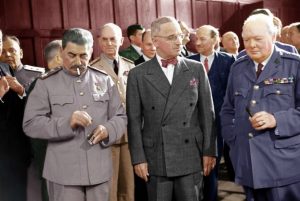 A few things, now you ask. The first was, in the prologue I refer to the Potsdam Conference. Basically three months after the war Roosevelt, Churchill and Stalin met up to divide up Europe and Germany, which is why we got East and West Germany. This is not apocryphal, this is absolutely documented: at a private dinner with the three of them, although the belief was that Hitler’s body had been found by the Red Army and taken away by Russian soldiers, Stalin said ‘We haven’t found the bodies and I believe he’s escaped to either Spain or Argentina.’ Then the next day, the Soviet foreign secretary Molotov, in a press conference to the world said that, and there were front page headlines ‘Is Hitler Really Dead?’
That was amazing to me, that the conspiracy theory of whether they died or not started as early as three months after the war ended. I had no idea about that. Interestingly, people who knock the conspiracy down straight away say his motive for that was to disorientate Churchill and everything. I sort of get that but I also sort of don’t know. You could argue that both ways,
Obviously the bank story I’ve told you, which was astonishing.
The more I researched Bormann… There’s this controversy. Reports, say that he was shot escaping from Berlin a couple days after the war ended. But his body was never found and then, as I mention in the epilogue, a body was found when a bridge was renovated and DNA seems to say it was him. The point was the body could easily have been moved there, for a start. There was nothing to convince me that Bormann didn’t escape, whether Hitler did or not. And also, there’s no question at all that Germans were funnelling massive funds out to South America between ‘43-’45, that’s as factual as you can get. The other thing, which was wonderful was when I discovered the Recoleta Cemetery which becomes quite a big backdrop for the story.
Has writing a 90,000 word novel given you a new way of looking at scripts that come to you? Has it given you an insight into that in any way or is it so completely divorced from what you do the rest of the time that it doesn’t really make a difference?
 The latter. It’s just a different genre I think. It’s slightly affected in the short term, how I read books which has surprised me a little bit.
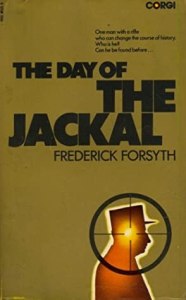
When I was writing, I thought back to that lunch with Frederick Forsyth and thought, ‘What can I learn from him?’, the genius who wrote The Day of the Jackal. He said ‘You know the way you watch an episode of Netflix with your wife but you end up watching four?’ You say ‘I’m only going to watch one’ but you binge it.
He said he always thought of the man on holiday saying to his wife in bed, ‘I’m only going to read one chapter, darling’ and he keeps reading.
So he said, ‘Try to make the ending of each chapter the beginning of the next chapter’, in that they want to turn the page. and so obviously I tried my hardest to do that and find turns of phrases or find jeopardy that would help. I think sometimes I was successful and sometimes I wasn’t necessarily. It wasn’t as strong as it might have been but overall I tried to be as tight as I could.
The Counterfeit Candidate is out now from Level best Books Click here to order from Amazon.co.uk
 Doctor Who News Star Trek News
 Sci-Fi Bulletin: Exploring the Universes of SF, Fantasy, Horror and Spy-fi!