Interview: Ben H. Winters
Ben H. Winters is the author of The Last Policeman trilogy, set during the period leading up to a catastrophic collision between Earth and an asteroid, and Underground Airlines, an […]



Ben H. Winters is the author of The Last Policeman trilogy, set during the period leading up to a catastrophic collision between Earth and an asteroid, and Underground Airlines, an […]
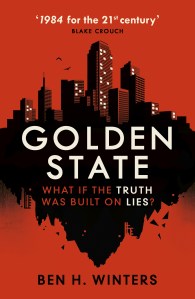 Ben H. Winters is the author of The Last Policeman trilogy, set during the period leading up to a catastrophic collision between Earth and an asteroid, and Underground Airlines, an alternate history of the US. His most recent book, Golden State, is out this month in paperback, and takes place in a world where there are absolute truths… Earlier this year, Winters chatted with Paul Simpson…
Is writing something that you have always had to do?
I’ve always loved writing and loved to tell stories. I’m always wary of people who say they have to do this because it’s the only thing they can do, because there are so many people who don’t have the luxury, even with hard work and ambition, of achieving a career in the arts. I don’t take it for granted. But I have always wanted to write – I bounced around a lot in terms of what sort of writer I wanted to be. I did a lot of theatre stuff and comedy, and writing to perform in the early part of my adult life, but I realised that wasn’t going to be it for me. Fiction came a little later but I realised there are more stories I want to tell so I keep going.
I see myself as a mystery writer but one who’s indulged himself in science fictional conceits. I remember when I had the idea for The Last Policeman, I thought “I want to write a detective story, but how can I write one we haven’t seen before? Here’s an idea.” I hadn’t thought of it as a science fiction novel, but once you put a giant asteroid into your book, it’s a science fiction novel whether you like it or not.
 I was surprised when people said Underground Airlines was a science fiction book – it’s not; it’s speculative but that’s its own subgenre.
I’ve enjoyed the fact that, despite reading widely in this field, I often can’t tell where your stories are going to go…
That’s good to hear. That’s sometimes because I don’t know where I’m going either! (laughs)
The first book of yours I read was The Last Policeman – did you always envisage that as a trilogy?
Quite early on it became a trilogy. When I pitched the book to my then publisher, Quirk Books, I pitched it as one novel that would end as the trilogy now ends but my editor there said the best thing – “That’s a great idea, you should do it as a trilogy.”
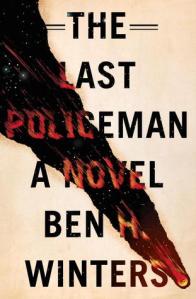
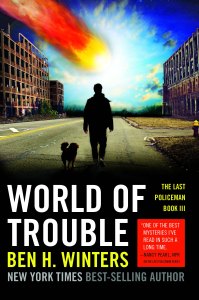
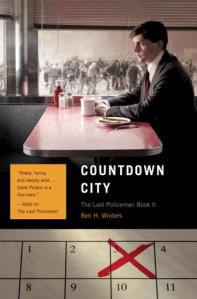 From the time I began writing the first book, I knew it was going to be three. I knew how it was going to end, and that allowed me to slow down the storytelling and really create three separate mysteries, each of which played out against a slightly different canvas. The first book is 10 months out, the second is 4 months, the third is a week: each of those presents a different context and sense of what’s going on in the world.
Each book to me feels more personal, and by the third, everyone is dealing with their own issues, and this is Hank’s way of dealing.
That’s exactly right. They do get more and more personal; the first book is the most traditional police novel because at that time, and in the life of the world, it’s still possible to live a traditional police life although things are beginning to fracture. By the last book it’s a completely different world and he’s a completely different person, so it couldn’t be that sort of novel. It’s a much more anarchic world; although I try to deliver the puzzles you want in that kind of book, everything is falling apart.
 Did you ever consider not having the asteroid hit on 3rd October or was it always going to happen?
I never really considered it. No. To me it would have been such a betrayal of the whole idea. The whole point of the book is not “will it or won’t it, and how are we going to stop it?” We’ve had so many forms of preapocalyptic fiction and movies where that is the game: “how will we prevent this calamity?” I like the idea this is a foregone conclusion and we are dealing instead with what it means for the world. It would always have felt shitty to undo that. Although I did always give credence to the beliefs of those characters, particularly Hank’s sister, who are trying to convince themselves that it’s not real. That mindset would very much exist in that situation.
“This can’t happen to me, so it can’t happen.”
We see that in our real situation with the existential threat of climate change for such a long time. Even now in my country there are a huge number of people going, “nah, that’s crazy”. Even as the seas continue to rise and we see the storms, and wildfires and freak weather, people still can’t bring themselves to accept it’s real. It’s very much a part of the human psyche.
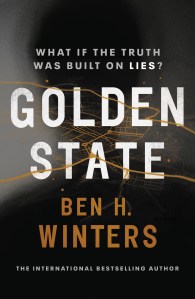 It’s almost become a cliché that science fiction holds up a mirror to society, but your books do that – do you think you could have written Golden State 5 years ago if we hadn’t gone down the path we have?
I could have, but I don’t think I would have thought to. The central idea of Golden State – the dissolution of objective reality – has become so suddenly front of mind for tons of people because, I do think, of President Trump and Brexit: the idea that truth is beside the point, which is startling.
Of course it’s been going on for years: politicians have always lied, people have always lied, truth has been less sturdy than we imagine it to be but I think it has become more a part of our understanding of the world.
So to holding up a mirror? Yes, that’s definitely part of the job, not just of genre fiction but all fiction: here is the world that we live in, here are some elements that we are going to tweak or toy with, and we ask you the reader to think about what this says about our reality.
What was there a particular image or scene that sparked Golden State?
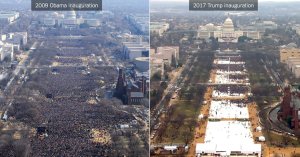 The origin of the book was right after Trump was inaugurated and his press secretary made a big speech about how many people had been at the inauguration – it was pure craziness, it was objectively not so. That was fascinating to me and became a “wow, there is something here that is really valuable” moment.
Originally the title was Sanctuary City, and I was imagining a place where truth had escaped to – there was this one place where there was still truth – and that evolved as I wrote it.
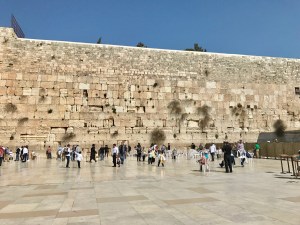 I think visually I started with the permanent record, the idea that there was a place where everything that has happened is archived. What kind of building would that be? How deep does that go? How high? What is made of? What does it feel like to be there? The idea there was a literal foundation where truth becomes a physical thing you can go and touch. There was this image that’s very much borrowed from the Wailing Wall in Jerusalem – people touching it and feeling it, which is a very profound thing when you go there. You feel like you are experiencing God, this thing that is greater than yourself and is permanent.
I transposed that onto the idea of the permanent record – here is this thing that is, and also represents the past, and this collective thing that we all believe in and we can touch it and feel it. That was very moving – without it we all rely on this thing called objective reality. You and I, we both live in the same world but we can’t see that, we can’t say what it feels like. So when politicians and public figures try to corrode that for their own political ends, it’s a scary thing. Where did it go? Where was it in the first place? I liked the idea of this physical place that is the storehouse of reality.
Golden State does feel a very companion piece to Orwell’s 1984 – the Ministry of Truth – and also Dragnet: “Just the facts, ma’am.”
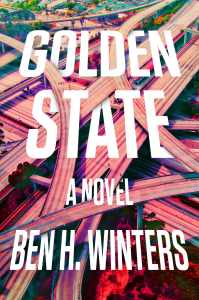 I like that – I’d never thought about that, but I definitely talked a lot with this novel of the noir tradition, the Dashiell Hammett stuff, Marlowe, Chandler, that old detective driven. Dragnet, for certain. The idea of “we are going to get the facts, the truth will out.” That presumes that there is such a thing as truth, there are facts that can be gotten.
Orwell, obviously, 1984 is a heavy influence on this book – the idea of a dystopian society where there are those who are in possession of power, and power is very connected to the control of what is true. The ultimate power is getting people not only to say “2+2=5” but to believe it, to live in a reality where it is true, because otherwise the punishments are too brutal to even imagine. You get past the point you think about it any more.
Like the Star Trek: The Next Generation episode where Picard is being forced to say “There are five lights” when there are only four– accepting an objective reality that you know subjectively isn’t true, which is effectively what Lazlo is facing in the second half of Golden State.
That’s right. He’s trying to figure out how to come to terms with first of all that the truth has been manipulated and second, beyond that, the more existential dilemma: how do you ever know what is true and what is false. So you can say, “I figured out that the powers that be are inventing the truth and been fucking with me, but what does that leave me with?” It doesn’t mean I automatically know what’s true; in fact that gets to the point of the crisis of the college student who suddenly realises that there is no God, or their parents didn’t know everything… That’s when people go down the rabbit hole and eventually arrive at an adult perception of “there is such a thing as what is real and I have to spend my life trying to figure it out by myself with the help of people I trust”.
There’s a maturation process going on in Lazlo’s mind then that isn’t happening in other people’s?
There’s got to be; there has to be. If there’s one thing that I hope brings my work together that you can find as a theme or a throughline in the novels, it’s you can’t have a story where the main character is simply moving through a maze and trying to get to the end of it. The character themselves are the maze – they’re trying to figure themselves out, as we are all trying to do. That’s the real power of fiction, especially science fiction and mystery fiction – it’s not just about the concept, it’s about the character that you put in motion.
 Do you write a first draft through and then go back and layer in, or do you write a section, revise it then move on?
Much more the former; I’ll write the whole thing before I start carefully editing any of it. In general, it would be a huge mistake to say “I’ll make sure chapter 1 is perfect”, because you don’t know what has to happen in chapter 1 until you’ve written chapter 50, particularly in a novel that involves a revelation of secrets, which I think all novels in some way do.
I find it’s much valuable to do a pass of the whole thing, understand what it is, who the characters are, and then you can go in and start tightening the screws. I think you can get side-tracked and weighed down getting some section of it to really shine and perfectly composed when ultimately you might cut that chapter anyway! You always move stuff around – you can’t take yourself too seriously until you’re coming into the home stretch and know all the secrets and know the shape. Now’s the time to polish it up and make sure it sings.
With the trilogy did you find when writing the second and third books that you’d set stuff up that you wish you’d done differently?
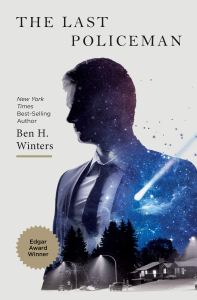 For sure. There were elements that I wish I had not done, or I wish that retrospectively I could have gone back and seeded better. It’s fun to remember things – the dog that turned up in the first book was supposed to be tangential, but I loved writing that dog so it stuck around. There was a character, Cortes, who was a bad guy in book 2 that I loved so much that I wanted to keep writing him and he turned up in the third book.
That’s the part of writing that’s surprising and magical that you try not to think about because it ruins it: you come up with characters and you don’t know what’s going to happen to them. You set them in motion and find out. I hate speaking about writing as if it’s some supernatural enterprise because I think people fall into the trap of ‘it’s not me, it’s the muse’, but once you engage your brain and enter into the dream of the world you’re creating, you’re going to discover things that you didn’t know were there.
 You’ve done a trilogy and two standalones – did you consider a sequel to Underground Airlines?
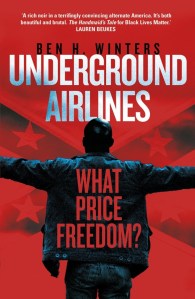
I didn’t want to do a sequel; I toyed with a prequel but I think because of the fraught nature of the subject matter and the brutal imagination that went into the book, I’m asking a lot of the reader to go into that world. I don’t think it would be appropriate to live there again unless there was something I really needed to say.
I hope I made a strong point in that book about the connections between the past and the present and the way the history of slavery informs contemporary racism, and to go back into the world just to tell an adventure story would feel a cheapening of the subject matter, and take something away from the first book in some way.
With The Last Policeman, it felt cohesive to have the three books together, but I don’t know how much there would be to gain with a second Underground Airlines book.
What about another Golden State?
I think that’s trickier, it would really have to be perfect. I get restless – I have hundreds of stories I want to tell and the book I’m writing now I was writing before Golden State, but put it aside to write Golden State because I was excited to write it. I could see continuing Lazlo’s story or another story within Golden State but I’m not sure.
Sequels are often diminishing returns. I don’t want to do a sequel unless it’s Godfather II, unless I can find a way to reset it in some way and tell a yet stronger story that expands on those themes and that world rather than reframing them.
Golden State is published in paperback by Arrow on December 26; click here to order from Amazon.co.uk Read our review here.
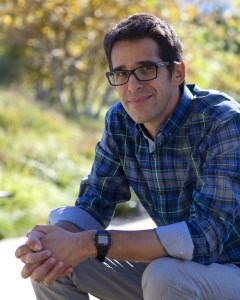
Thanks to Alice Spencer for assistance in arranging this interview; author photo by Nicola Goode and used wth permission.
 Doctor Who News Star Trek News
 Sci-Fi Bulletin: Exploring the Universes of SF, Fantasy, Horror and Spy-fi!