Feature: Writing the Other / Othering the Writer
Adrian Tchaikovsky, author of the Echoes of the Fall trilogy, discusses one of the more intriguing aspects of writing science fiction… If there is a corner of the writing world […]



Adrian Tchaikovsky, author of the Echoes of the Fall trilogy, discusses one of the more intriguing aspects of writing science fiction… If there is a corner of the writing world […]
 Adrian Tchaikovsky, author of the Echoes of the Fall trilogy, discusses one of the more intriguing aspects of writing science fiction…
If there is a corner of the writing world I can claim true citizenship of, it’s that part where writing goes to explore what it’s like to wear another skin, a face with more eyes than is customary, a jaw with too many teeth. Being a phenomenally asocial misanthrope for most of my life, I always did identify with the weirdest damn thing. I watched the Cantina scene in Star Wars over and over, and the 90 seconds in Empire with the bounty hunters. I liked The Hobbit for its complaining, grumpy spiders.
 And then I caught Corman’s Battle Beyond the Stars and met Cayman of the Lambda Zone, a murderous lizard alien, last of his kind, and I learned that these things, that I loved and that everyone else found so grotesque, could be heroes. Not just background scum-and-villainy or bad guys to be gunned down (or Stung), but actual heroes. I can’t overstate just how formative that moment was for me. Cayman was played by Morgan Woodward, by the way, whose IMDB page is as long as your arm, and if I ever meet him I most definitely owe him (and Corman) a drink.
The Other is a hard sell for the reader. After all, a lot of the time those others are there mostly to throw light on human nature, which is a worthy and valiant end in itself. (And sometimes those “others” are there to be less human, to make the human protagonist’s own shonky morality look more creditable, and that kind of ‘othering’ is neither worthy nor valiant.) So what’s the point in writing sections of book from the point of view of a sentient spider or a cyborg dog or a semi-malevolent artificial intelligence, exactly? Or even people with insect powers?
 At least partly, it is exactly that, a window on human nature. You can’t learn about something purely from the inside. The ability to have that two-way clash of perspectives between human and inhuman, that can yet give weight and character to the latter, is something for which SF and fantasy, of all literary fields, can claim a pre-eminent potential. In my Spiderlight, I’m looking at human nature in two ways: how the transformed spider protagonist Enth sees human nature and his own remade flesh, both alien and frightening to him; how his human companions view him through the lens of their prejudices and preconceptions, and how those change over time. The same goes for the scientific spider civilization in Children of Time as it collides with that of the human ark ship Gilgamesh, or Rex in Dogs of War as he wrestles with his orders and his master.
And yet it’s not entirely anthropocentric, in the end of the day. Looking inward is all very well but there’s a virtue to looking beyond as well. One of the virtues of SF is that it can show us the way past our limitations. One way of doing that is through the perspective of something that transcends those limits, something bound by other limits, wear another skin, run on different feet, on many legs, listen to the songs of other senses, know we don’t have to be chained to what we were, or what we are.
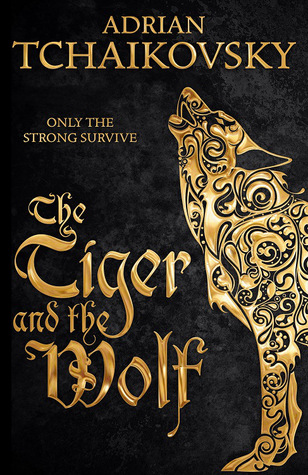

 The Hyena and the Hawk, the final part of the Echoes of the Fall trilogy, is out now from Tor Books.
 Doctor Who News Star Trek News
 Sci-Fi Bulletin: Exploring the Universes of SF, Fantasy, Horror and Spy-fi!